The Labours of Hercules was perhaps an odd choice for the penultimate instalment of Agatha Christie's Poirot, a rather dark rendition of elements from the book of the same name,which in fact brings together a dozen collected short stories. The screenplay by Guy Andrews was well-crafted, especially given the challenge of the task facing him. The production was atmospheric and the cast (as ever) impressive, with Simon Callow really enjoying himself, though the story almost inevitably lacked the tight-woven texture of the best Poirot mysteries.
All the same, it's been quite a week for Christie fans. The CWA celebrated 60 glorious years on Guy Fawkes Night with an event at Foyles, announcing the results of its "Whowunnit" poll of members. And Christie was voted best ever crime novelist, and her The Murder of Roger Ackroyd was best detective novel. Best detective was Sherlock Holmes, and given that Poirot, in his early days, was rather derivative of Sherlock, this seems fair enough.
Unfortunately, due to pressure of work, I wasn't able to make it to London for this event, but I agree with the view expressed by Alison Joseph, chair of the CWA, that the result reflects the long and distinguished history of crime writing. There are those who argue that the likes of Jo Nesbo (good writer as he is) should be ranked with the all-time greats, but it's very difficult to make a sensible evaluation of the potential longevity of present day best-sellers. Some of the stars of previous generataions simply haven't lasted well (a great shame, in some cases.) Anyway, the best of Nesbo and other writers of today may still be to come. Christie and Conan Doyle have unarguably stood the test of time .So although all polls like this one have their limitations, because inevitably, one tends to be comparing apples and pears, the results seem to me to make sense.
Having said that, my own feeling is that the best classic whodunit of all wasn't even on the shortlist. My choice would be another Christie novel - And Then There Were None.
Showing posts with label Agatha Christie's Poirot ITV review. Show all posts
Showing posts with label Agatha Christie's Poirot ITV review. Show all posts
Friday, 8 November 2013

Saturday, 2 November 2013
Agatha Christie's Poirot - Dead Man's Folly - ITV review
Dead Man's Folly, the second in the current series of Agatha Christie's Poirot, was based on a novel from the 50s, when the Queen of Crime's work was rather more variable than it had been a few years earlier. The book has some delicious elements, although the solution has always struck me as rather contrived. The ITV version with David Suchet made the most of the story's merits, notably the marvellous country house and village fete settng.
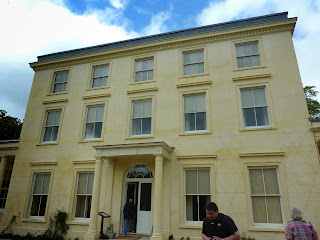
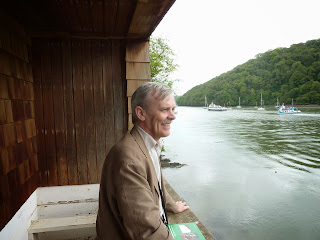
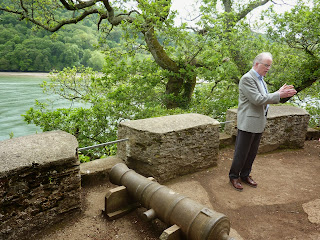
And to make things even better, a very good decision was taken to film the story at Greenway. Christie used her own home in Devon, and its marvellous grounds, in fictional form for the book, so this was a very appropriate homage. I was also reminded strongly of a marvellously sunny day last year, when I had the memorable experience of revisiting Greenway in the company of that great Christie expert John Curran.
Zoe Wanamaker was an effervescent Mrs Oliver as usual, with Sinead Cusack very good in the important part of Mrs Folliat. The early scenes, when Poirot arrives at Nasse House and meets the house guests, and when the fete takes place, were very well done. As in the book, things faltered slightly after the discovery that a teenage girl has been murdered, and the suspects were not perhaps as strongly developed as they might have been. Overall, the screenplay was faithful to the original both in its strengths and its shortcomings, with a slight change to the ending. Verdict - not a classic,but good light entertainment.
And to make things even better, a very good decision was taken to film the story at Greenway. Christie used her own home in Devon, and its marvellous grounds, in fictional form for the book, so this was a very appropriate homage. I was also reminded strongly of a marvellously sunny day last year, when I had the memorable experience of revisiting Greenway in the company of that great Christie expert John Curran.


Zoe Wanamaker was an effervescent Mrs Oliver as usual, with Sinead Cusack very good in the important part of Mrs Folliat. The early scenes, when Poirot arrives at Nasse House and meets the house guests, and when the fete takes place, were very well done. As in the book, things faltered slightly after the discovery that a teenage girl has been murdered, and the suspects were not perhaps as strongly developed as they might have been. Overall, the screenplay was faithful to the original both in its strengths and its shortcomings, with a slight change to the ending. Verdict - not a classic,but good light entertainment.
Wednesday, 23 October 2013
Agatha Christie's Poirot - The Big Four - ITV review
Agatha Christie's Poirot began its new run on ITV tonight with The Big Four, co-written by Mark Gatiss and Ian Hallard. Among other pleasures, the episode reintroduced Hugh Fraser, Pauline Moran and Philip Jackson as Captain Hastings, Miss Lemon, and the world-weary cop Japp, all of whom played an enjoyable part in supporting the great David Suchet in the early days of the series. The main cast members attended one of the most memorable crime events I can recall, the Agatha Christie Centenary Banquet at Torquay' s English Riviera Centre in September 1990. It was a wonderful, unforgettable night, complete with a dramatic firework display over the bay.
Now, although I'm a Christie fan, I'm the first to acknowledge that not all her detective stories are masterpieces. The Big Four was published at a low point in her life, not long after her famous disappearance, and was cobbled together from a series of lurid episodes. As a result, the book is fragementary, and the plot material pretty risible. How do you adapt something like that so as to satisfy a 21st century television audience?
The answer is to do it confidently, but with respect for the strong points in Christie's writing and the characters. Mark Gatiss, a writer I admire, is well qualified to do this, and I felt he and Ian Hallard did a pretty good job, at least until the closing scenes, which were crazier in mood than the earlier part of the story. I sensed the writers' energy flagging a bit towards the end, with Hastings disappearing from the action for no good reason..But anyone who has read the original novel will surely agree that it would be a challenge to adapt.
Some people might argue that in some ways, it is easier to make a success of adapting a poor Christie book than a good one. In support of that view, I felt that, to take just one example, the TV version of The Sittaford Mystery was hugely disappointing. Having said that, the screenplay of The Secret of Chimneys, which was another Twenties thriller in broadly the same vein as The Big Four, was over the top from start to finish. Despite that faltering in the later stages, The Big Four worked better overall..
Of course, the presence of David Suchet is a huge asset to this series. Almost everyone who has responded to my post on Joan Hickson agrees she was the best Jane Marple, and I think there's even less argument about the definitive nature of Suchet's interpretation of Poirot. He was as good as usual in The Big Four.
Now, although I'm a Christie fan, I'm the first to acknowledge that not all her detective stories are masterpieces. The Big Four was published at a low point in her life, not long after her famous disappearance, and was cobbled together from a series of lurid episodes. As a result, the book is fragementary, and the plot material pretty risible. How do you adapt something like that so as to satisfy a 21st century television audience?
The answer is to do it confidently, but with respect for the strong points in Christie's writing and the characters. Mark Gatiss, a writer I admire, is well qualified to do this, and I felt he and Ian Hallard did a pretty good job, at least until the closing scenes, which were crazier in mood than the earlier part of the story. I sensed the writers' energy flagging a bit towards the end, with Hastings disappearing from the action for no good reason..But anyone who has read the original novel will surely agree that it would be a challenge to adapt.
Some people might argue that in some ways, it is easier to make a success of adapting a poor Christie book than a good one. In support of that view, I felt that, to take just one example, the TV version of The Sittaford Mystery was hugely disappointing. Having said that, the screenplay of The Secret of Chimneys, which was another Twenties thriller in broadly the same vein as The Big Four, was over the top from start to finish. Despite that faltering in the later stages, The Big Four worked better overall..
Of course, the presence of David Suchet is a huge asset to this series. Almost everyone who has responded to my post on Joan Hickson agrees she was the best Jane Marple, and I think there's even less argument about the definitive nature of Suchet's interpretation of Poirot. He was as good as usual in The Big Four.
Sunday, 9 June 2013
Agatha Christie's Poirot: Elephants Can Remember - ITV review
Agatha Christie's Poirot began its final series tonight with Elephants Can Remember, featuring David Suchet as Poirot and Zoe Wanamaker as Mrs Ariadne Oliver. The book, it has to be said, is one of Christie's worst, a rambling effort written at the end of her career when her powers were failing and her publishers were too much in awe of her to edit what she wrote with the necessary ruthlessness. I read it not long after its first publication in the early 70s, and was so disappointed that it's one of the few Christies I've never bothered to reread..
Oddly enough, the flaws of the original presented more of an opportunity than a grim challenge for the screenplay writer, Nick Dear, a BAFTA winner whose CV includes a version of Jane Austen's Persuasion. I can think of a number of Christie books that have been ruined by over-the-top adaptatons in the past few years, but Dear did a good job with this "cold case" mystery, inventing liberally to compensate for a lack of dramatic material in the book.
As with a number of other televised Christies, the action was shifted to the between the wars period that seems well suited to puzzle stories of this kind, even when they were written much later. Wanamaker was, as usual, great fun in her zestful efforts to establish the truth about the apparent murder and suicide of the parents of Celia Ravenscroft (well played by Vanessa Kirby, who was equally good in Kate Mosse's Labyrinth). It was a shock to see the super-glamorous Greta Scacchi playing the part of an ageing battleaxe, but like the rest of the cast, she was excellent.
People who don't like Agatha Christie point to flaws in characterisation and wildly unlikely plot devices, and Elephants Can Remember is a book which suffers from these weaknesses. But this lavishly produced TV version showed that sympathetic adaptation can work wonders with unsatisfactory source material. The result was decent Sunday evening entertainment, and certainly the screenplay is better than the book. But it's only fair to add that Christie cannot sensibly be judged by her last few novels. Her reputation is built on those ingenious classic mysteries she wrote long before her powers declined, and could hardly be more secure.
Oddly enough, the flaws of the original presented more of an opportunity than a grim challenge for the screenplay writer, Nick Dear, a BAFTA winner whose CV includes a version of Jane Austen's Persuasion. I can think of a number of Christie books that have been ruined by over-the-top adaptatons in the past few years, but Dear did a good job with this "cold case" mystery, inventing liberally to compensate for a lack of dramatic material in the book.
As with a number of other televised Christies, the action was shifted to the between the wars period that seems well suited to puzzle stories of this kind, even when they were written much later. Wanamaker was, as usual, great fun in her zestful efforts to establish the truth about the apparent murder and suicide of the parents of Celia Ravenscroft (well played by Vanessa Kirby, who was equally good in Kate Mosse's Labyrinth). It was a shock to see the super-glamorous Greta Scacchi playing the part of an ageing battleaxe, but like the rest of the cast, she was excellent.
People who don't like Agatha Christie point to flaws in characterisation and wildly unlikely plot devices, and Elephants Can Remember is a book which suffers from these weaknesses. But this lavishly produced TV version showed that sympathetic adaptation can work wonders with unsatisfactory source material. The result was decent Sunday evening entertainment, and certainly the screenplay is better than the book. But it's only fair to add that Christie cannot sensibly be judged by her last few novels. Her reputation is built on those ingenious classic mysteries she wrote long before her powers declined, and could hardly be more secure.
Subscribe to:
Posts (Atom)