In the last few years, I've become increasingly fascinated by the inventiveness of Asian crime fiction. Even before my trip to Shanghai in 2019, I'd been reading a range of mysteries from the Far East which, although often very different from familiar western detective fiction, and sometimes quite outlandish, are often very appealing. Meeting Soji Shimada served to strengthen my interest in Japanese detective fiction, as did conversations with the critic and writer Steve Steinbock, who speaks Japanese and is a great fan of the country's crime writing. Their enthusiasm is infectious. Coincidentally, I've begun to have books of mine translated into languages such as Chinese, Japanese, and Korean, which I find exciting.
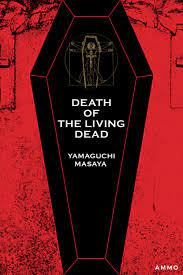
I was, therefore, pleased, when I was contacted a few weeks ago by Masaya Yamaguchi, whom I've never met in person, but with whom I've been in touch for a while. He invited me to take a look at the newly published English translation - by Ho-Ling Wong - of his celebrated debut novel, Death of the Living Dead. and originally published back in 1989. This is a long book, unusual in structure and quite unlike any detective story I've read before.
As other commentators have already pointed out, this is a hard book to review, because of its extraordinary nature. But I can understand why a number of bloggers have enthused about it: see, for instance, the laudatory review on that excellent blog, The Grandest Game in the World. And as someone who has spent most of his life in Cheshire, it amused me that one of the key characters is called...Cheshire.
As the title suggests, this is a story about zombies, and that may put off some readers, who insist on rationality in their detection. But I think it's true to say that, within his own surreal universe, Masaya Yamaguchi plays fair with his readers in a truly mind-spinning mystery. At times, the pace is not fast, but the book is packed with intriguing cultural references - the chapter epigraphs come from John Lennon, Freud, King Crimson, Poe, Arthur Schnitzler, Neil Young, Robert Louis Stevenson and many more. There's a cast of characters, a map of a cemetery, a floor plan (of a 'west wing'), locked room mystification, and flashes of wit as well as a good deal of delving into the macabre - and a number of touches I wish I'd thought of. Yes, this is quite a book.
