Wednesday, 14 February 2024

The Secret of Seagull Island - 1982 film review


'Bizarre but watchable' is the verdict of one website on The Secret of Seagull Island, and you couldn't sum this film up much better in three words. I say 'film' but in fact its origin was a five-part Anglo/Italian TV serial and the jumpy editing that seems to have taken place in the process of adaptation contributes to the off-kilter feel of the enterprise. I was drawn to the film mainly because it stars Jeremy Brett, always an interesting actor. Suffice to say that he's not in Sherlock Holmes mode here...

We begin with a brief underwater scene, which ends violently before switching to Barbara Carey (Prunella Ransome) arriving in Italy to search for her missing sister Marianne, who is blind. A chap called Lombardi seems to know more about Marianne that he admits and Barbara enlists the help of a British cultural attache (Nicky Henson) who soon becomes smitten with her. 

Barbara's investigation leads her to an encounter with David Malcolm (Jeremy Brett) who owns his own island, lucky chap, which he shares with a female admirer and...someone else. There are quite a few twists and turns, and although I should have seen the major twist coming, the truth is that I didn't. 

It's an odd film, and certainly no masterpiece, but it's always fun to watch Jeremy Brett, particularly when he goes into OTT mode. It made a nice change to see Nicky Henson playing a wholly likeable if slightly bumbling character, appropriately called Martin, although I felt Prunella Ransome struggled a bit with a very demanding role. One of the co-writers was Jeremy Burnham, an interesting chap who - uniquely - both acted in and wrote episodes of The Avengers, as well as scripting one episode of Inspector Morse. It rather sums up the eccentric nature of this film that the soundtrack was written by Tony Hatch, better known for writing the theme to Crossroads.

Monday, 12 February 2024

Finishing a Novel


Today I'm sending off to my agent the manuscript of my latest novel. This is the fifth in the Rachel Savernake series and it's called Hemlock Bay. I'm pleased with it, but whilst it really is very important for an author to be pleased with a new book, in commercial terms at least, it's essential for one's agent and editor to approve. So - fingers crossed!

I finished the novel before sending it out and also revised it more than once. This is an approach I've evolved over the years and I don't always follow it - it depends on the book. Usually, I want the book to be in the best achievable state before anyone else comments on it. Before I start writing, I'm often asked for a synopsis, but I don't feel tightly bound by synopses - indeed, there's remarkably little resemblance between the synopsis I wrote for Blackstone Fell, for instance, and the novel that was actually published! They are very, very different. One of the reasons for this, of course, is that one gets fresh ideas during the course of writing a book (and that's perhaps also a good reason for taking a fair amount of time to write a novel, not just rushing through it).

But is the novel really finished when it's sent to one's agent? Without getting too metaphysical about it, I'm almost tempted to argue that a novel is never actually finished. This may seem ridiculous, but it's common for agents and editors to make suggestions for changes. Because I'm fairly experienced as a novelist now, changes made at the editorial stage tend to be minor (the main exceptions in my career were I Remember You and Take My Breath Away, both of which underwent radical surgery at the behest of two very good editors, Kate Callaghan and David Shelley respectively).

And even when a book is published, is that really the end of it, for all time? Usually, but not necessarily. What if a new ebook edition gives one the chance to make fresh changes? I'm an inveterate tinkerer (as David Brawn, my wonderful and long-suffering editor for non-fiction books such as The Life of Crime is acutely aware) and given the chance I would always want to make ongoing changes to what I've written - but life is too short to do this extensively. I did, however, make various changes to The Golden Age of Murder for the paperback edition and I was delighted to have the chance to do so.

I suppose all this springs from my belief that writing is in many ways a constant quest for improvement. In trying to improve as a writer, one is also trying to improve the text. If your mind stays receptive to new ideas, then it's almost inevitable that you'll think of better ways to write a passage here, a paragraph there. 

What will be the fate of Hemlock Bay? At this stage, it's impossible for me to know for sure. But whatever its shortcomings, I have really loved writing it. And doing the research - in particular, visiting Heysham, shown in the photo above, last June. That was a trip that really fired my imagination, though Hemlock Bay is very different from Heysham, not least in terms of the rising body count...

Friday, 9 February 2024

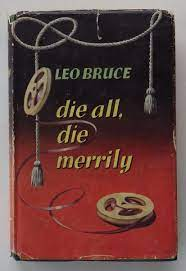
Forgotten Book - Die All, Die Merrily


In recent years I've become a big fan of Leo Bruce's detective novels. His characteristic blend of humour and ingenuity appeals to me, although it was somewhat out of fashion by 1961, when he published Die All, Die Merrily (the title is a quote from Henry IV, Part One), one of 23 novels featuring his amateur detective Carolus Deene. Before I read the Deene books, I tended to assume that they were inferior to his Sergeant Beef novels. But they aren't - at their best, they are truly entertaining.

This book illustrates Bruce's strengths. Deene is urged to get involved with a mystery involving the family of Lady Drumbone, who would nowadays be described as a political activist, and whom Bruce mocks mercilessly. The case concerns a tragedy - the apparent suicide of her nephew. The dead man left behind a tape recording in which he confesses to strangling an unnamed woman - but who was the supposed victim?

It's a teasing set-up and Deene embarks on a long series of interviews, a couple of which are very funny indeed (one interviewee, a woman who is obsessed with featuring in the newspapers, is especially memorable). Bruce was very good on dialogue and it dominates his novels. Of course, one has to suspend disbelief, but the writing is usually engaging enough for the unlikely developments to be a source of pleasure rather than irritation.

The solution to the mystery is cunning and quite complex and I didn't see the key twists coming. Inevitably the characterisation isn't in-depth, and I don't think the culprit's cruelty and ruthlessness - because, as is sometimes the case with Bruce, there is quite a bit of darkness about the crimes - were adequately foreshadowed. For once, however, I didn't mind this, because I had so much fun along the way before all was revealed.


Wednesday, 7 February 2024

Paranoiac - 1963 film review


If you were going to make a Hammer Horror movie, I don't think that a novel written by Josephine Tey would spring to mind as obvious source material. Yet her excellent story Brat Farrar was turned by Jimmy Sangster into Paranoiac, and what is even more surprising is that he made a pretty good job of it. Some Tey fans may hate the over-the-top elements, but the film was definitely more enjoyable than I expected. 

Directed by Freddie Francis - who won two Oscars for other work - the film moves at a sprightly pace, opening with a church service in memory of members of the Ashby family. The death of the parents, followed by the subsequent suicide of their oldest child Tony, meant that the remaining children, Eleanor and Simon, have been brought up by their Aunt Harriet.

But they are a troubled group, to put it mildly. Eleanor (Janette Scott) is haunted by Tony's death and Simon (Oliver Reed, at his most crazed and menacing) is trying to have her committed to an asylum so that he can inherit the whole of the family fortune. Eleanor is being 'looked after' by a glamorous French nurse who is having a torrid affair with Simon, while Harriet (Shelia Burrell) has plenty of issues of her own. The family solicitor and trustee (Maurice Denham) fights a losing battle to maintain order, not helped by the villainy of his son and junior partner. Elisabeth Lutyens' music adds to the mood of melancholy and melodrama.

The quality of the cast contributes to the success of the film. There are incestuous sub-texts that would have startled Tey, and although the 'returning prodigal' character is played rather woodenly by Alexander Davion, there are enough plot twists and moments of drama to satisfy most viewers looking for a Sixties horror movie that is better written than most.


Monday, 5 February 2024

A Reflection of Fear - 1972 film review


A while back, Scott Herbertson drew my attention to the books of Forbes Rydell, a pen-name for two women, DeLoris Stanton Forbes and Helen B. Rydell. I'm hoping to read and review at least one of their books before long. Forbes (1923-2013) also wrote books under other names - Tobias Wells, DeLoris S. Forbes, and Stanton Forbes. One of the Stanton Forbes novels was Go to Thy Deathbed, which was filmed just over half a century ago as A Reflection of Fear. So when this popped up on Talking Pictures recently, I decided to watch it.

The film has a strong cast, led by Robert Shaw, who plays a writer called Michael. At the start of the film, he has long been estranged from Katherine, who is the mother of his child, Marguerite. Katherine is played by Mary Ure, a very beautiful woman who was married to Shaw but who suffered from alcoholism and died in tragic circumstances in 1975 at the age of just 42. This is, sadly, the last film she made. Marguerite is played by Sondra Locke, whose own life was somewhat troubled, and who in this role plays a character aged 15, even though she was in her late twenties at the time.

It's clear from the start that Marguerite is strange and perhaps disturbed. She lives with Katherine and her grandmother (Signe Hasso) in a remote mansion and spends much of her time talking to her dolls and even amoeba collected from a pond. She has grown up apart from her father but seems to have developed an obsession with him and longs to see him again. When Michael turns up, with his girlfriend (Sally Kellerman) in tow, bad things begin to happen...

This is a strange, unsettling film. The final twist is extraordinary, but not foreshadowed (unlike the majority of the plot developments, which are fairly predictable) and it is introduced in a bizarrely off-hand way, via a telephone message. Apparently the film was severely mangled in the editing process, resulting in various oddities which detract from one's viewing enjoyment. So it's a curiosity rather than a masterpiece. Even so, there's something hypnotic about some of the photography (the director, William A. Fraker, was noted as a cinetographer) which makes it worth a look. And I'd be interested to read the source novel - which presumably follows a much more logical path.   

Friday, 2 February 2024

Forgotten Book - Bricklayer's Arms aka Shadow of a Crime


Bricklayer's Arms
is a novel by John Rhode first published in 1945. It's an engaging story and I should say right away that is one of the most enjoyable books that I've ever read by this astonishingly prolific author. All too often the ingenuity of his murder methods is matched only by the flatness of his writing, and in some of the books it can be a real slog to get to the explanation for the unlikely m.o. and the revelation of a culprit whose identity was predictable, even if the howdunit element wasn't. In Bricklayer's Arms, however, Rhode shuffles his story ingredients with real skill. Even the title is a rather pleasing joke (which was denied to American readers, who were presented with the commonplace alternative Shadow of a Crime).

A striking feature of the book is that almost all the detective work is done by Jimmy Waghorn, with the aid of a capable local sergeant. We hardly see Dr Priestley and frankly I didn't miss him. I'm sure that Priestley had a loyal following in his day and that commercially it made sense for Rhode to write this as a series mystery. But, as can happen with a long series, Rhode was trapped by his own formula. By 1945, Priestley's presence in the story - I know it's heresy to say this, so far as some Golden Age fans are concerned! - was not just anachronistic but pointless. In my opinion, this book would have been better written as a conventional police investigation, perhaps rather in the Freeman Wills Crofts mould.   

So what of the story itself? It opens with the discovery of the body of a motorcyclist, a young estate agent who has come to grief on a village road near a railway bridge. It turns out that his uncle was driving on the same road, and that the uncle has a motive for murder. The uncle had been lured out by a phoney telephone call - a device that Rhode uses twice in this book as well as in other stories such as Vegetable Duck and The Telephone Call. But gradually, and rather pleasingly, the plot thickens. A second killing, late in the story, is neatly contrived.

The twists and turns of the mystery are so good that I wish Rhode had paid more attention to presenting his characters in greater depth, so that their psychological motivations were more compelling. Including a map would also have been a big help. At the end of the book, I got the impression that Rhode was in a rush to get finished and crack on with his next book. This is a story with great potential, which is partly realised, but could have been even better. Nevertheless, it beguiled me on a protracted train journey and definitely exceeded my expectations.


Wednesday, 31 January 2024

The 39 Steps and Three Days of the Condor


I've recently watched again two high-calibre thrillers, The 39 Steps and Three Days of the Condor, and it struck me that despite many obvious differences - one is British and one American, and they reflect the concerns of different generations - they have a great deal in common. In each story, an ordinary guy is thrust into a dangerous conspiracy involving high-stakes espionage, and doesn't know who he can trust. It turns out that his enemies are in the heart of the establishment, and he finds himself being pursued both by the establishment (which believes he is a maverick killer) and the really bad guys. 


Each story is based on a novel rather than being an original screenplay, but in each case the script varies greatly from the source material. In each film, our hero relies on an attractive blonde woman - whom he meets by chance - for help, and finds himself bound to her in more ways than one. The pace is unrelenting in each film, with no wasted words or scenes and effective but straightforward characterisation (the jealous crofter and his mistreated wife are brilliant cameos in the Hitchcock movie). And each film benefits from having a strong cast and a gifted director.

A further common factor, I suggest, is that the films are such good entertainment that they bear watching more than once. I've seen each of them at least three times (and I'm not counting the remakes of The 39 Steps); I reviewed Three Days of the Condor on this blog way back in 2012 and my views about its merits haven't really changed since then.

Over the years, there have been plenty of good manhunt thriller novels and films, but this pair are hard to beat. Watching them again was truly pleasurable.

Monday, 29 January 2024

A Kiss Before Dying - 1956 film review


I've mentioned Ira Levin several times in this blog and I talk about him in The Life of Crime. He wasn't a prolific novelist, but most of his books were filmed. He was also a top class mystery playwright, responsible for Deathtrap and the much less renowned but intriguing Veronica's Room. A very talented writer indeed.

Yet even though I'm a Levin fan, for some reason I've not yet covered his brilliant Edgar-winning debut novel A Kiss Before Dying on this blog - one of these days! - although I've mentioned it in passing. Now I've seen the original film based on the book, which dates from 1956. I gather a remake in the 90s was pretty dire, but this one is a good watch.

For reasons I won't elaborate on here, the screenplay structures the story in a different way from the book - and this is a perfectly reasonable thing to do in the circumstances. The young Robert Wagner plays Bud Cortiss, a handsome but slightly raffish young student who is less than pleased to be told that his girlfriend (played by the equally young Joanne Woodward, who was also destined for future success) is pregnant and that her father is likely to disinherit her.

The key plot twist in the film isn't as effective as the comparable revelation in the book, but nevertheless this is a fairly short, snappy movie that kept me entertained. And it's a bonus to see two well-known film stars right at the start of their careers.


Friday, 26 January 2024

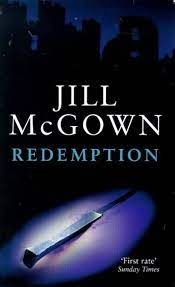
Forgotten Book - Redemption


Redemption was the second book in Jill McGown's Lloyd and Hill series, her fifth novel in all. It was first published in 1988 and it has in recent times enjoyed a new life as a Christmas mystery and retitled Murder at the Old Vicarage. There is perhaps an element of dumbing-down in the alternative title compared to the original, but I suppose that if it helps to draw the book to attention of more readers, that's not a bad thing.

Because it is a really good book in the traditional vein. The early chapters in particular made me think of the writing of Ann Cleeves; there are definite similarities. Jill was perhaps slightly less concerned with landscape and setting and slightly more concerned with plot than Ann, but they are both very good at characterisation and creating engaging police detectives.

A striking feature of this traditional mystery is that the pool of suspects is small and there isn't a sub-plot (in the sense that there's a single puzzle to be solved - one can argue that the tangles of the emotional relationships are in lieu of that kind of sub-plot). At first we see things from the point of view of the vicar, Graham, whose daughter Joanna has a husband who has hit her more than once. Graham's wife Marian is a doting mother and perhaps the strongest member of the family. And then there is Eleanor, a young and very attractive widow, to whom Graham is increasingly attracted. A violent murder is committed early on, and suspicion and viewpoints shift regularly.

I think it's fascinating that the spark for the story came from a joke that Jill McGown was told, and which features towards the end of the book, prompting a lightbulb moment on the part of Judy Hill. One of the interesting features of the story is that the most emotionally compelling writing concerns two affairs - one of them between Lloyd and Hill. In each case, it's clear that the author's sympathies seem to be with the marriage-breaker and that she favours putting an end to a marriage that has gone stale. This approach contributes to the moral complexity and ambiguity of a novel that I found very readable - a first-rate example of Jill McGown's craft. 


Thursday, 25 January 2024

Writing about blind detectives - part two


Today, Christina Koning continues her discussion of blind detectives:

'The stories collected in Clinton H Stagg’s The Problemist (1915), about New York detective Thornley Colton, are no less entertaining than Bramah’s Carrados tales — and no less improbable, as regards their protagonist’s extraordinary powers of perception. Although blind from birth, Colton has an uncanny ability to describe someone he has never met from seemingly inconsequential details — the colour of a woman’s dress is correctly guessed, on the principle that ‘all stout women who breathe asthmatically wear purple’ and so on.

John Fergusons’s The Man in the Dark (1928) offers a more plausible account of blindness, as its central character, blinded war veteran Sandy Kinloch, finds himself an unwitting witness to the murder of a campaigning journalist. I liked the fact that the novel begins in a London pea-souper (as mine does) —so that the reader isn’t at first made aware that Kinloch is blind. The emphasis on what he can hear, touch and smell adds realism to the portrayal too.

Then there is Bruce Alexander’s Blind Justice (1994) about the eighteenth century magistrate (and brother of Henry Fielding), Sir John Fielding, whose blindness — in this story at least — does not prevent him from solving a complicated locked room murder mystery. In this, he is assisted by Jeremy Proctor, an orphaned boy who acts as his ‘eyes’. The wonderful historical detail in this book, the first of a series about Fielding, makes it well worth reading — as does its convincing portrayal of the central character’s blindness.  

There have been blind detectives in cinema and television, too.  In the 1971 TV series, Longstreet, set in New Orleans, the eponymous detective, played by James Franciscus, solves crimes — including the murder of his wife — with the assistance of a white German Shepherd called Pax. More recently, Blind Detective (2013), described as a ‘Hong-Kong Chinese action crime/ romantic comedy film’, starring Andy Lau as a blind detective who makes a living solving cold cases, shows that stories about differently-abled detectives still continue to intrigue.'

Christina's new book, Murder at Bletchley Park, the eighth book in the Blind Detective series, is published by Allison and Busby. I'd also like to take this opportunity to mention the books of Vicki Goldie, the Secretary of the CWA, which include Blind Witness and Blind Pool.