Friday, 29 January 2021

Forgotten Book - Murder at the Pageant


Murder at the Pageant was the penultimate novel of Victor Lorenzo Whitechurch (1868-1933) and was published three years before his death (my copy is the US edition, which came out a year later). By that time, Whitechurch's reputation as a detective writer was firmly established. His early railway-based short stories remain the work for which he is best known, but his first detective novel appeared in 1924 and he was one of the founder members of the Detection Club, contributing a chapter to The Floating Admiral. 

This novel is typical by those of Whitechurch that I've read. The mystery is solidly constructed, the detective work sound, and the general tone (especially when the author, a Rural Dean, pokes gentle fun at members of the clergy) is agreeable and occasionally humorous. Everything is rather under-stated and very English (or at least very English in the way that people outside England tend to think of the English!) 

The setting in and around a country house and small village contributes to the vintage atmosphere of the story. Not only is there a pageant, a sedan chair also features! A jewellery theft plays an important part in the story and this is, of course, a plot ingredient in the tradition of The Moonstone as well as many later Victorian mysteries. The plot is competently constructed and Whitechurch's lead detective, Superintendent Kinch, is hard-working and decent. Whitechurch was supposed to be one of the first crime writers to consult police officers in an attempt to make sure that his accounts of police work in his novels had a touch of authenticity.

Whitechurch wasn't really aiming, in novels like this, to break fresh ground in the genre. He wasn't a Sayers or a Christie, or even a Crofts or a Connington. His focus was on entertainment. His writing was of a higher quality than that of many other detective novelists of his time, and although I wouldn't claim that he was a master of heart-stopping tension - this story is simply too calmly told for that - they have considerable appeal . Especially in a pandemic, when light escapism has so much to commend it.


Tuesday, 26 January 2021

Howdunit and the Edgars


Champagne was quaffed in Chateau Edwards last night, and for good reason. I'm happy and proud to report that Howdunit has been shortlisted by the Mystery Writers of America for an Edgar award. The Edgars are the longest-established and most prestigious of the US crime writing awards, so this news certainly represents one of the highlights of my career. It's timely to mention once again how grateful I am to all the members of the Detection Club who helped me to compile the book. And indeed to the families and estates of deceased members, ranging from Agatha Christie to Jessica Mann, who allowed me to reprint pieces they'd written in the past, which fitted in splendidly with the key themes.

Putting this book together was one of the most interesting challenges of my writing life. What was striking was the utterly unexpected way that the project grew and grew and grew. The book also developed into a work that is, I think, quite unlike any other publication. This distinctiveness is something that one always hopes for - it doesn't, of course, always work out, but this time I was in luck. The idea was to celebrate the Detection Club's 90th birthday and to raise funds to ensure that it continues to thrive. So the contributors (and the editor, of course) were to donate their contributions without a fee. I assumed this would mean that we'd only have a limited number of contributors, and that was my original vision: a quite modest and compact project. But the enthusiasm of everyone to take part was quite wonderful. As a result, the book took rather longer to turn into a cohesive whole than I'd originally envisaged, but it was definitely worth it. A slim volume became, during the course of 2019, a very big book indeed...


The Edgar awards will be celebrated on 29 April, but I will not be in the US this time, for obvious reasons. A shame, but inevitable. I am very lucky, however, to have wonderful memories of my previous visit to the Edgar awards, five years ago. It was a marvellous occasion, made all the more unforgettable by the fact that The Golden Age of Murder actually won.

Win or lose, though, I'm honoured to join that relatively small band of British authors who have been nominated for an Edgar more than once. And I hope that the nomination will encourage more readers to sample Howdunit and to enjoy the collective wisdom of some of the best writers in the business.


Monday, 25 January 2021

Quicksand - 1950 film review

Several films have been called Quicksand. The 1950 movie which is the subject of this review is an American film noir. Now plenty of films are described as 'film noir' which don't really fit that description in a meaningful way. When it's applied to British films of the Fifties, for instance, the term often seems just to be a synonym for 'black and white movie drama'. But here we have a classic film noir situation - an everyman figure whose life goes into a downward spiral following his encounter with a femme fatale.


The everyman in this case is car mechanic Dan Brady. He's played by Mickey Rooney, who is by no means my favourite actor; here, however, even though cast against type, Rooney gives a very good performance. He borrows twenty dollars from the till at work, in order to take a new girlfriend called Vera (Jeanne Cagney, sister of Jimmy) out on a date. He intends to pay the money back, but soon his troubles multiply and he gets deeper and deeper into trouble. Hence the title of the film.

The screenwriter was Robert Smith, whose script is admirably taut; we could do with him writing some of today's TV shows and cutting out some of the padding. There are some nice touches, and a great performance by Peter Lorre as Nick Dramoshag, the villainous owner of a penny arcade. The resort setting (Santa Monica) gives the film plenty of atmosphere, and there are some good minor characters, including Vera's horrible landlady (the splendidly named Minerva Urecal). There's even that rarest of creatures in a film script, a thoroughly decent and competent lawyer. 

The story isn't flawless, though. Dan behaves so stupidly at times that it's hard to sympathise with him. His treatment of the adoring Helen is especially reprehensible and difficult to understand. Helen is played by Barbara Bates, a beautiful woman who had a tragic life, cut short all too soon. I wasn't sure about the ending of the film, although in some ways it was satisfying. Not entirely in keeping with the film noir tradition, though. Overall, however, I found this movie a pretty gripping example of noir and it deserves to be better known.  


Friday, 22 January 2021

Forgotten Book - Whistle Up the Devil

Whistle Up the Devil is the only novel by Derek Smith that was 'traditionally published' during his lifetime. He was a devotee of locked room mysteries, and there's a good deal of welcome information about him in an excellent omnibus of his work that Locked Room International published a while back, and which includes Whistle Up the Devil as well as two other novels. I'm lucky enough to possess an original first edition, dating from 1953, which Smith inscribed to that great locked room mystery expert Bob Adey: 'For one "locked room" enthusiast from another'. But I have to confess that I've only recently got round to reading it.


Before I did so, I checked out various online reviews of the novel. They wax lyrical about the cleverness of the plot, which includes not just one but two ingenious killings in a sealed environment. So the reputation of this once highly obscure and almost unobtainable book has worn very well. And I can see why. Not only are there some very entertaining references to the locked room mystery form in the early pages, the story zings along nicely to the end.

It's fair to say that Smith's inexperience as a novelist and limitations as a prose stylist are evident. I lost count of the number of times that one character is described as 'an old rogue', and there are passages where the viewpoint shifts from one person to another in a rather clumsy way. First and foremost, the book is a vehicle for two crafty and very hard to fathom techniques for killing someone in a locked room. The characterisation is perfunctory, and the Great Detective, young Algy Lawrence, remains two-dimensional despite his yearning for romance.

But there are ample compensations. Above all, I love the idea of a mysterious secret being passed on from one generation of the seemingly cursed Querrin family to another in 'the Room in the Passage'. This thread of the story is a highlight, but there's no denying the ingenuity of the way the crimes are committed, while Smith offers a rather neat piece of misdirection about the culprit's identity before the elaborate truth is finally revealed. Of course, it's exceptionally far-fetched, but it's also fun. 


Wednesday, 20 January 2021

Finding Alice and Losing the Plot


I managed the best part of five episodes of ITV's new drama Finding Alice, which started this week, before giving up, defeated. I really, really wanted to love this show, because on the face of things, it has a good deal going for it. Wonderful actors, gifted writers, big investment in the production. And there are some great lines, as well as some fine performances.

But in the end, the fundamentally unsatisfactory nature of Finding Alice wore me down. It's one of those six-parters that would be much better as a three- or four-parter. Or perhaps a two-parter, so voluminous is the padding. But it's commonplace at present for shows to be expanded beyond their natural length, for commercial reasons. The real problem with Finding Alice is that it's caught in several minds about what it wants to be.

The premise is that Alice (Keeley Hawes) and her daughter (Isabella Pappas, who is excellent) are just moving in to a new smart house designed by her roguish partner Harry when he falls down the stairs and dies. There seems at first to be some mystery about his death - a visitor came to the house at the time of the tragedy. But this isn't a murder story. The focus is on Alice's experience of bereavement, and the way she copes with a whole host of secrets from Harry's past, as well as his parents (Kenneth Cranham and Gemma Jones - both superb) and her own (Nigel Havers and Joanna Lumley - terrific). Lumley gets many of the funniest lines, although as the episodes go on, her character becomes increasingly a caricature.

The writers are Simon Nye (who shot to fame with the extremely successful Men Behaving Badly) and another very talented scriptwriter, Roger Goldby. As far as I can tell, they wanted to focus on a woman's difficulties in experiencing the loss of a loved one, but were also keen to throw in elements of both farce and practical reality. So we get various farcical situations, not least those involving burying Harry in the garden, but also a lot of stuff about tax, selling the house, and various property development shenanigans. 

I found the business stuff unconvincing, I'm afraid. Alice's dad is a solicitor, admittedly not a genius, but surely even he would wonder whether as a dependent, even in the absence of a will, she'd have a potential claim under the Inheritance Act? And the tax talk didn't make much sense. The same with the property discussions. Such clunkiness wouldn't matter too much if these things weren't dealt with at such length and so repetitively. 

One ensemble business discussion came over as a feeble echo of similar scenes in the third, and least satisfactory, Reginald Perrin series. (Simon Nye, perhaps significantly, wrote the remake of Reginald Perrin, and one can see the influence of David Nobbs here - not a bad source of inspiration!.) Alas, the tone of the story wobbles badly in each episode, and even Keeley Hawes at her most hard-working can't quite redeem it. There's a feelgood story in there, straining to get out. But - for me - it doesn't quite work.   

Monday, 18 January 2021

R.I.P. Stephen Levinson and Katharine Whitehorn


I was really sorry to learn of the sudden death last week of Stephen Levinson. Stephen enjoyed crime fiction, and the last time I saw him in person was when he came to a panel on Golden Age fiction at the London Library's 175th anniversary celebrations. But we'd known each other for more than thirty years and once upon a time, we wrote a book together.

I first met Stephen when I joined the Law Society's working party on employment law. He was already a well-established City lawyer, and we were both among the early specialists in the field. The working party was eventually elevated to the status of a standing committee, as the significance of employment law became increasingly clear to everyone, and so we worked together in total for about fifteen years.

In addition we were commissioned to write a book together. It was a strange project, unique in my experience of writing. The book was Know-How for Employment Lawyers, and the publishers wanted it to reflect the collective 'wisdom' of a trade union law expert  (David Cockburn), a top employers' lawyer (Stephen) and an all-rounder from the provinces (me). We would meet in London and discuss agreed topics. Our discussion was recorded and the results were written up by two young legal journalists. 

The very interesting thing to me was that, although David, Stephen, and I had very different perspectives and backgrounds, and we were all rather... well, strong-minded...invariably we found that there was very little difference in our views on how the law worked (or failed to work) and how a good lawyer should behave. It was really enjoyable to debate with two guys at the top of their profession. The young writers did a good job with the book, although it was very strange for me to see my views expressed in someone else's writing style. We had a glitzy launch in Chancery Lane, attended by lots of distinguished lawyers whom David and Stephen knew, and the whole experience was great fun, despite its weirdness The book did well, and we were asked if we fancied doing a follow-up. But I wanted to write books in my own way, and when the book was updated, that was done by other hands. 

Stephen and I remained in contact, meeting up occasionally in London. The more I got to know him and got to understand his teasing sense of humour, the more I liked him. He was very good company. I'm shocked by his death and sad to think that we'll never talk about books, cricket, and employment law's foibles again.


I knew the distinguished journalist Katharine Whitehorn for a much shorter time. We met at Detection Club dinners after my election in 2008. Katharine's husband, that fine thriller writer Gavin Lyall, had been a pillar of the Club and she continued to enjoy the social side of Club dinners after his death. She too was very good company and I wish I'd had the chance to get to know her better. Alas, her memory began to fail and the last time we met, it was clear that she was struggling. But her reputation as one of the finest women journalists of her era will stand. And, just as important, she was a very pleasant person.   


Friday, 15 January 2021

Forgotten Book - The Plague Court Murders

Published in 1934, The Plague Court Murders witnessed the debut of Sir Henry Merrivale, solver of locked room mysteries and unquestionably one of the Great Detectives of the Golden Age. Interestingly, the book was originally sub-titled 'a Chief Inspector Masters Mystery'. As Doug Greene says in his magisterial biography of John Dickson Carr (required reading for Carr fans and indeed any fan of classic crime), the author initially focused on the Scotland Yard man, who is a sceptical ghost-hunter, but this interest faded in Masters' later cases. Merrivale, who only enters the story half-way through, is by far the more memorable character, and it's no surprise that Carr chose to put him centre stage from then on.


The book was published under the name Carter Dickson, and Doug indicates that Carr's initial concept was that these books, branded distinctly, should concentrate on slightly simpler central puzzles. The mystery here is how a dodgy medium, Roger Darworth, can possibly have been murdered in locked room by an old dagger, once the property of a hangman, whose ghost is said to haunt Plague Court.

Quite apart from its historic importance as Merrivale's debut, this book is attractive because of the wonderfully atmospheric writing. Carr does lay the weirdness of Plague Court on with a trowel, but for me it works really well, and helps to create the necessary (very necessary) suspension of disbelief. The problem of the first murder (and as the title indicates, there is another one, almost as bizarre) is absolutely fascinating.

All that said, this isn't one of my favourite Carr mysteries. That's because I found the solution - ingenious as it is - very hard to swallow in several respects. No spoilers here, but I struggled to believe that the culprit could have got away with the central deception that set up the circumstances for the crime. One can debate whether it's an example of fair play, but I'm inclined to give Carr the benefit of the doubt on that point. However, the suspects and their possible motives weren't, for me, as interesting as the characters in Carr's best books, and the split of detective interest between Masters and Merrivale is rather clunky. But one has to remember that, although Carr was by 1934 a seasoned writer, he was still just in his late twenties. This book isn't a masterpiece, but it's a fun read all the same. 


Wednesday, 13 January 2021

Bleak House - BBC (2005)


I've been a fan of Charles Dickens since my teens; I've even featured him in a couple of short stories. He was a terrific novelist. Much as I admire David Copperfield, Great Expectations and the light but enjoyable The Pickwick Papers, my favourite Dickens novel has long been Bleak House. I received my copy as a school prize when I was about fourteen and devoured it with great enthusiasm - despite its length. When the pandemic gave me more time for TV viewing, therefore, I thought I'd catch up on Andrew Davies's 2005 TV adaptation, which I missed first time around. Thanks to good old BBC Iplayer, I was rewarded with riches.

Indeed, deciding to watch this series turned out to be one of my best lockdown decisions. Davies is a superb screenwriter, and I've enjoyed much of his work, but here he excels himself. Each of the fifteen episodes into which he split this very long and complex novel is gripping. Davies's secret is that, like Dickens, he understands that a writer should never be ashamed of writing entertainingly. You can still make powerful points, and in both the novel and the TV series, Dickens and Davies do just that.

Davies will, I imagine, be the first to say that he was exceedingly fortunate in his cast. It is outstanding and the stars put in, without exception, tremendous performances. So Gillian Anderson is a charismatic if aloof Lady Dedlock, Timothy West is great as her bumbling old husband, Anna Maxwell Martin is charming as Esther (and more appealing, I think, than she is in the book), while Nathaniel Parker, so often cast as the good guy, is splendidly loathsome as Harold Skimpole. Denis Lawson does a fine job in the tricky role of John Jarndyce, while Charles Dance is utterly menacing as the remorseless solicitor Tulkinghorn.

I could go on and on, because there are so many fine performances, but I do want to single out Phil Davis's interpretation of the odious moneylender Smallweed. Absolutely brilliant. I must say that I was surprised that fog doesn't play a part in the programme - Davies blamed technical problems for causing him to remove foggy references from the script - but frankly that's a quibble. There is so much to enjoy in this version. It's the best screen adaptation of a classic novel that I've ever seen. Truly a tour de force.   

The Pembrokeshire Murders - ITV


I've been watching The Pembrokeshire Murders on ITV this week. Two episodes so far, with one more to come tonight, plus a documentary about the case. I wanted to watch the drama-documentary because the case has interested me for many years. This is the latest in a number of true crime shows on the major UK tv channels, dealing with the likes of Dennis Nilsen and so on. And this trend has in turn given rise to debate about the ethics of true crime shows - a subject of some importance, but one which I'll leave to another day, other than to say that I think a great deal depends on the quality of treatment of the material.

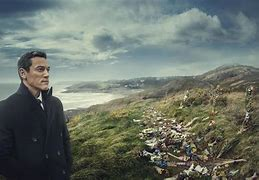
The Pembrokeshire Murders is well-made, and Luke Evans, playing Detective Superintendent Steve Wilkins, is a charismatic actor. The story is presented as a cold case mystery: Wilkins took a fresh look at three cases which he believes are linked. These are the murders of siblings Richard and Helen Thomas in 1985, the double murder of a couple, Peter and Gwen Dixon, on a coastal path (a very high profile mystery - I remember watching the original coverage on Crimewatch UK) and an attack on a group of young people, including rape and sexual assault at gunpoint.

There's no great mystery about whodunit. The prime suspect is John Cooper, a hardened criminal who at the time Wilkins' investigation begins, is serving time in prison for other offences. Cooper is played by Keith Allen, who invests a truly dreadful man with a few glimmerings of humanity that bring him to life: it's a very assured performance, and can't have been easy. But Allen is excellent.

The investigation is intriguing. One extraordinary stroke of luck is the discovery that Cooper appeared in a TV darts game show which enables the detectives to show that his appearance at that point resembled the portrait of the suspect. So far, we haven't heard much about the victims. This is always a dilemma for writers of such a programme. How far do you trespass on personal privacy, and to what extent do you risk glamourising a cold-hearted killer by focusing on him rather than on those he attacked? The makers have tried to surmount this challenge by giving us quite extensive coverage of Wilkins' personal life. So far, they have struck a reasonably good balance, even though the concept of the decent cop who doesn't give his family enough priority is a very, very well-worn theme, which isn't handled with any great originality here. Overall, though, this is one of the better dramas based on a real life crime in the UK.   

PS - I've now watched the third episode. Often, series of this kind fade after the first episode, but in this case, I thought the reverse was the case, and the story actually became stronger. The trial scenes were especially well done.


Monday, 11 January 2021

Which Wimsey? Carmichael versus Petherbridge


I keep trying to find upsides from the pandemic. One of them has been the chance to watch some TV shows and films I've missed, or not watched for a long time. I've now had a second look at two television series which aired in the 70s and 80s respectively. They are adaptations of Dorothy L. Sayers' Lord Peter Wimsey novels, with different actors playing Wimsey. All the books but Whose Body?, Unnatural Death and Busman's Honeymoon were screened. There has never been a TV or film version of the under-rated (but tricky to film) non-series novel, The Documents in the Case.

The first thing to say is that both series stand up to the test of time. Much better than I'd have expected, to be honest. This is perhaps especially true of the first series, starring Ian Carmichael as Wimsey. One tends to under-estimate Carmichael, and as he admitted himself, he was really too old for the part, but he throws himself into it with so much enthusiasm that one can't help but be swept along. He was a real fan of the stories, and that degree of commitment is evident. Wimsey isn't the easiest character to play, because of his (often deliberate) mannerisms, but Carmichael does a good job. The production values aren't brilliant, but the scripts are very capable.

I had warmer memories of the subsequent series, featuring Edward Petherbridge. The way in which he conducts his pursuit of Harriet Vane (splendidly played by Harriett Walter) is slightly more mannered than I recalled, but his performances are consistently good, as he rises to another testing challenge. Wimsey in the later books had become less of a Woosterish 'silly ass', and rather more of a romantic hero. There was some element of wish fulfilment in his portrayal, as Sayers herself admitted, and also in that of Vane, but I've always thought that it's rather patronising, as well as less than accurate, to say that Sayers 'fell in love with her hero'.

Sayers' ambition as a crime writer was admirable. Yes, there are flaws in all the books, but there are riches too. And by and large, the stories make excellent television. Five Red Herrings is a relatively plodding alibi mystery, but the TV version was, for me at least, definitely more enjoyable. The screenplay of Have His Carcase might perhaps have been better as three episodes rather than four, but reducing the chit-chat in Gaudy Night resulted in an entertaining version that captures some of the flavour of the original without the prolixity. I also loved Richard Morant's version of that estimable sidekick Bunter.    

So - Carmichael or Petherbridge? If you'd asked me a year ago, I would definitely have opted for Petherbridge's interpretation. But on reflection, I must say that both actors (supported by very good casts) do an excellent job. For escapist viewing, both Wimsey series are perfect for these troubled times,