Showing posts with label Broadchurch. Show all posts

Sunday, 27 March 2016

The Night Manager - spoiler-free reflections on a TV classic


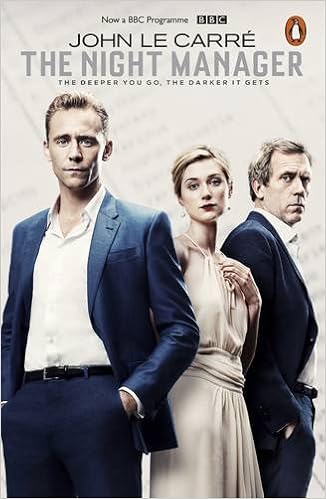
The Night Manager, the sixth and final episode of which aired on BBC 1 this evening, is one of the finest British television series I've seen in a long while. In recent years I can only think of Broadchurch (the first series, definitely not the second) and Happy Valley which were similarly compelling. In contrast to those two series, The Night Manager was based on a novel,. It was written by the legendary John Le Carre, and I haven't read it, although evidently the process of updating the story to the present and for the screen has resulted in many changes.

Why has the story hooked me, and millions of others? Well, first of all, it offers a gripping blend of plot and character. Jonathan Pine, the enigmatic hotel manager with a military past, becomes involved with a beautiful woman who falls foul of a fabulously wealthy villain called Roper. When she is murdered, Pine is jolted out of his apparently comfortable lifestyle,and is persuaded by a British secret agent, played by Olivia Colman, to infiltrate Roper's organisation and bring him down.

That' s the basic set-up, but the detail is full of complications that are so skilfully handled. Part of the fascination of the story for TV viewers like me is surely the glimpse into the lifestyles of absurdly rich people such as Roper and his circle. They move from one exotic spot to another, flunkies cater to their every whim. Sounds great, but there's a price to be paid. I was reminded vividly of an exceptionally rich person I once came across. He lived in a fantastic mansion, which I found fascinating to visit, and had a glamorous girlfriend and a private yacht and plane. But the mansion had a panic room where they could hide from kidnappers, and military guards at the gate...

Back to The Night Manager. The relationships, for example between Colman and her colleagues,and between Hiddleston and Roper's lover, are done in enough depth to make us care about the characters,and about what happens to them. I was glad that the final episode matched the quality of the preceding five. One brief but memorable scene did owe something to The Long Good Friday, but without in any way compromising the originality of the storyline.

A script so good deserved great acting, and that's exactly what was supplied by Tom Hiddleston, Tom Hollander, and Elizabeth Debicki. I wasn't quite sure at first about Hugh Laurie as Roper; was he credibly nasty enough to play the part? My misgivings proved needless Laurie presented a character with great superficial charm, a caring father who has people killed for profit; he was at his best in the final episode, when his true nature came to the surface. Hollander was brilliantly creepy as Corky, and Hiddleston has really made a name for himself with this show. I wasn't sure before I started watching The Night Manager whether I'd love it. But I did,- I really did.


Monday, 5 January 2015

Broadchurch - season 2, episode 1, ITV 1 review

Broadchurch is back. The stand-out television crime drama of 2013 returned this evening, the storyline of season 2 a secret that writer Chris Chibnall has maintained as a closely guarded secret. The first question, of course, is whether revisiting such a superb show, is a good idea. How can it live up to the standards already set? I suppose that, in this day and age (and probably in any day and age) the crucial factor was public demand. Just as fans wouldn't let Conan Doyle kill off Holmes, so people clamoured for more of Broadchurch.

Holmes was never, though , quite the same man after he returned from the Reichenbach Falls, and the need to do something fresh but equally gripping supplied Chibnall with a huge challenge. During the first few minutes of this episode, it crossed my mind that anyone who hadn't seen season 1 would probably be feeling dissatisfied. I recall watching seasoon 2 of The Killing and, to be honest, wondering what all the fuss was about. It was okay, but didn't seem to me to be remotely close to a masterpiece.I felt missing season 1 was a definite disadvantage.

Broadchurch, however, benefits from great writing, from exceptional acting, and a compelling locale. You can't go far wrong with David Tennant and Olivia Coleman, but now we have new characters thrown into the mix, most notably Charlotte Rampling, playing a senior barrister who just happens to have retired to Broadchurch. When the presumed killer from season 1 decides to plead not guilty to murder, will Charlotte agree to the parents' request for help? We can guess the answer...

There is also a new plot strand, reaching back to the last disastrous case of Tennant's character. This seems to me to be a clever development, a really good way of refreshing interest. There were moments of improbable melodrama at the end, with an exhumation attended, bizarrely, by almost all the main characters in the story. And the defence barristers' chambers seemed pretty unrealistic to me, too. But I loved the mysterious "bluebell" clue - reminscent of Francis Durbridge! All in all, the story buzzed along, and despite some reservations, I'll certainly be watching episode two.

Monday, 20 October 2014

Mayday (BBC, 2013) - DVD review

Mayday, screened on BBC One last year, is a five-part whodunit with pagan/mystical elements, and a curse plays a part in the story. It's tempting to think that the show itself was cursed, because it suffered an extraordinary misfortune. The first part of the script, by Ben Court and Caroline Ip, was written in 2006, and the programme was finally filmed in the very damp May of 2012, before being screened the following year. And what happened? it coincided with ITV's Broadchurch, regarded by me and by other more notable judges as the best crime drama of the year, that's what happened. Poor old Mayday suffered badly by comparison.

A friend who is a good judge had told me that Mayday was inferior, and it is true, I think, that Broadchurch is a more successful drama. However, I decided recently to see what it was like, and acquired the DVD version. What I found was that Mayday is intensely watchable, and although it suffers from a slightly unsatisfactory finale, I think it bears comparison with Broadchurch in terms of quality.

The coincidental overlap between Mayday and Broadchurch is, however, remarkable. Both are strong dramas that offer a whodunit mystery, but also the portrayal of a relatively upmarket south of England community that is torn asunder when a child goes missing. In both stories, a man suspected of being a paedophile is vilified by a local lynch mob. In each case, he commits suicide. In both stories, there is a strong female character, a police officer, whose husband is a suspect. And the coincidences don't end there.

Mayday does, however, offer an interesting, and rather ambitious, added element. This was the concept of "old England" paganism, with dark deeds taking place in the rural woodland. Some reviewers didn't like this aspect of the story, but I felt it added depth, although perhaps it wasn't developed as fully as it might have been; this contributed to the slightly uncertain mood of the story. I also felt more could have been made of the fact that the victim, and the girlfriend of the son of one of the suspects, were twins.

Finally, the cast of Broadchurch was superb. The acting in Mayday is also good, but I did think that the (very talented) actors cast as the teenagers were too old for their supposed characters. Peter Firth agonised credibly as a voyeuristic businessman, and Aidan Gillen was suitably sleazy as a widower with an eye for young girls. Lesley Manville was, arguably, miscast as the businessman's unfeeling wife, but Sophie Okonedo was brilliant as the cop who has given up work to devote herself to her family. Her performance was, for me, as good as Olivia Colman's in Broadchurch. Yesterday, I wrote in this blog about being appreciated. I really do hope that those who worked so hard on Mayday will have their efforts appreciated by people who, like me, watch the show on DVD. They were so unlucky that they were simply in the wrong place on the television schedules at the wrong time.

Thursday, 12 September 2013

The Guilty - ITV review

The Guilty started on ITV last week, and a few days late, and on the recommendation of a friend, I've caught up with the first episode. As other reviews have noted, there are distinct similarities to that other ITV crime series Broadchurch, which ended its eight-week run not so long ago. One of the differences is that The Guilty is divided into just three parts.

The setting is suburbia, rather than a coastal resort, and the rather less striking backdrop is a limitation compared to Broadchurch, which made such atmospheric use of the seaside locale. Overall, though, I was struck by the thought that we are right in the middle of a rich vein of TV crime series. Broadchurch was terrific, and What Remains is keeping me  really gripped, with its assortment of odd characters living cheek by jowl in a spooky shared house. The Guilty is not quite in the same league, but very watchable.

Again, the central storyline involves a missing child, and the effect his disappearance (and, it turns out, murder) has on his family and his community. We see events from five years ago, when the boy went missing, alongside events in the present day, when his body is discovered. He comes from a seemingly happy family, but it becomes increasingly evident that all is not quite as it appears at first sight.

Tamsin Greig is the likeable cop leading the investigation, and already a few potential suspects have emerged. Like What Remains, though (and this is another difference from Broadchurch) there isn't so much focus on motives. It would be good to think that there's something more on offer than a study of a paedophiel, but we'll see. I'll definitely be watching episode two this evening.

Sunday, 28 April 2013

Broadchurch: the final episode (no spoilers)

Broadchurch hooked me right from the early minutes of episode one, and as I've been away for a few days, I've only just caught up with the finale, which aired on Monday evening. Luckily, I've managed to avoid reviews of the final episode, so my enjoyment wasn't in any way spoiled. And I did enjoy the final episode, just as much as I've enjoyed all the others.

It's interesting to reflect on why this series has been such a huge success - and it has been so successful that it's scarcely an exaggeration to say that Broadchurch gripped the nation. The acting of David Tennant, Olivia Colman and the other key members of the cast was excellent, and Colman in particular was superb in the final episode. A hugely talented performer. The setting, on Dorset's Jurassic coast, was beautiful and atmospheric, and that certainly helped. But the greatest credit must go to Chris Chibnall, who devised and wrote the series. I would agree with those who have pointed out that there were some aspects of the story which tested one's suspension of disbelief. For me, the lack of forewarning about the culprit's fatal personality flaw was the most questionable part of the story. But never mind the quibbles. This was a superbly entertaining piece of television drama.

Some critics have felt that the marriage of a portrait of a community torn apart by grief and suspicion with a classic whodunit boasting a wide range of suspects whose secrets were gradually uncovered, was an uneasy one. I don't agree. The nature of crime fiction is that, however hard one strives for realism, there is bound to be a gap between the story and what actually happens in the real world. But despite this, it's perfectly reasonable to strive for realism, and Chibnall did a really fine job in capturing the devastating effect of murder on people's lives.

Broadchurch has shown that whodunits have an enduring appeal - provided, of course, that they are well done. We're told that "Broadchurch will return", but Chibnall will need to do remarkably well to top this series. It will be fun to see whether he can manage it. Waiting to find out will be almost as tense as waiting to find out who did kill Danny Latimer.


Sunday, 21 April 2013

Endeavour, Broadchurch, and does murder go on forever?

Endeavour continued this evening with another episode from the reliable Russell Lewis. A special feature of Fugue was the inclusion in the cast of Abigail Thaw in a small part as a journalist, a nice touch, given the many memorable performances of her father John in Inspector Morse Another enjoyable Oxford whodunit, the plot a serial killer story with a bundle of classic, and indeed classical music, ingredients. I gather that the first episode had very good ratings, and they were well deserved.

Then, tomorrow evening, comes the final episode of Broadchurch. I'm away, so it may be a few days before I catch up with whodunit. However, just before I set off, I'm scheduled to do an interview on Radio Cumbria's breakfast show, to discuss not only Broadchurch but also, more generally, the eternal appeal of the whodunit.

I touched on this very subject on this blog last week, and for all the changes in society and styles of writing, I see no end in sight for the whodunit. Millions of people still enjoy the form, and I'm tempted to say that it's as popular as it's ever been. This would not have surprised Agatha Christie, even though, as a modest woman, it's clear that she didn't expect her own books to last (why else would she, in some of them, have given away the solutions to earlier puzzles?)

I have in my collection a book that Christie signed for a friend of hers at the height of the Second World War. It must have been a very frightening time. Yet, as she said in her inscription, "Wars may come and wars may go, but murder goes on for ever!" It's true in real life, sadly, but much more happily, I think it's also true of fiction. The whodunit mystery has real staying power, and the number of TV whodunits I've reviewed since New Year's Day rather bears that out.

By the way, I'm still not quite sure about Arne Dahl. I watched the new story, Bad Blood, last night, but I rather feel the writers are struggling for effect, unlike Russell Lewis.

Finally, my trip has a detective fiction connection, of which more in a few days. Meanwhile, a review of Peter Lovesey's new book will appear while I'm away from home.


Wednesday, 17 April 2013

Endeavour: Girl - ITV review

If Broadchurch has, as I said in my last post, underlined the continuing appeal of the whodunit, then Endeavour does not only that but also highlights the seemingly endless potential of Inspector Morse spin-offs. I enjoyed the pilot episode when it was screened, and the first episode of the first full series, Girl, was a high quality murder mystery.

A great deal of credit has to go to Russell Lewis, the writer, who has taken the essence of the original series,and the character as played by John Thaw, and given us a very appealing prequel set in the sixties. The plot of Girl was clever and the revelation of the culprit's identity took me completely by surprise. Pleasurable surprise, I must add. As I said yesterday, it is good to be fooled fairly, and I thought Russell Lewis paced the plot twists perfectly. There was even a neat little code which provided a crucial clue to that person's name. Colin Dexter would have been well pleased, I think.

The acting, too, is very good. Shaun Evans catches the young Morse's bolshie but vulnerable personality, and Roger Allam, as DI Thursday, is humane and believable. Some comic relief is offered by Anton Lesser's prissy disdain for the young cop. Sophie Stuckey, playng a suspect with epilepsy whom Morse fancies, handled the tricky role of the girl of the title very well.

Setting counts for a great deal in so many TV crime shows,and of course the Morse franchise has the inestimable advantage of being set in one of the most photogenic of cities. I wonder sometimes if people who are less keen on Oxford than I am may get bored with the endless flow of cop shows set there, but all the signs are that demand for those shows is as strong as ever. Yes, the broadcasters are playing it safe, and that's why a less conventional series like Broadchurch is so welcome. But if subsequent screenplays are as sharp as this one was, there is a good chance that Endeavour will run and run.

Tuesday, 16 April 2013

Broadchurch and the lure of whodunit

Broadchurch had its seventh and penultimate episode, and the question of who killed Danny continues to spark a great deal of debate. I've really enjoyed this series, which has provided a terrific reminder of the appeal - I'm tempted to say, the eternal appeal - of a really good whodunit. I was impressed by the first episode, but I've been even more impressed by the way the momentum has been maintained.

Most of us like to try solving a puzzle. I'm struck by the fact that my murder mystery events, which are interactive, almost always attract much larger audiences than conventional talks, and I'm also struck by the fact that people who come along tell me that the fun of trying to solve the mystery is at least as enjoyable as actually getting it right. That's a view I share. When I was reading Agatha Christie for the first time, I enjoyed the books where she fooled me even more than those where she didn't. As long as the fooling was 'fair'.

But the best detective stories offer added value along with the puzzle, in my opinion, which is where I part company with strict traditionalists like the late great Jacques Barzun. And this explains why Broadchurch scores so highly. The acting and the production values are excellent, but there is also a convincing portrait of a community torn by grief but also contaminated by suspicion. Yes, there are some implausibilities, but show me the whodunit where that isn't the case. There aren't many that are 100% credible; it's almost unavoidable, to rely on coincidence and unlikely developments, given the nature of the form. (Though I think it would be possible to write a whodunit that was totally credible in all respects. I'd be interested in any opinions about books already published which fit that description.)

There seems to be quite a widespread and growing consensus on the internet about the surprise twist regarding the identity of the killer. I'm not sure I go along with it, but I'll be fascinated to find the answer, and like everyone else, I hope it lives up to the expectations generated by this excellent series. 


Sunday, 7 April 2013

Arne Dahl: The Blinded Man - TV review

The Blinded Man, a two-parter in the new Scandinavian crime series Arne Dahl, had its first episode last night on BBC Four. I thought I'd give it a go, even though I'm beginning to lose track of Nordic crime series, so commonplace have they become. I haven't read Misterioso, the book on which the show is based, and I must admit that I'm not familiar with the work of Arne Dahl, the Swedish author who gives the series its name. But evidently he's highly successful and the Dahl name is a pseudonym, for Jan Arnald.

In an eventful ninety-minute episode, a string of financiers were murdered rather spectacularly on successive days. Financiers have a long tradition as victims in detective stories - dating back at least to the book that launched the Golden Age a century ago, Trent's Last Case (incidentally, I've been surprised by the lack of discussion about E.C. Bentley's famous book at the time of its centenary, so I may say a bit about myself before long.)

The key premise is that a group of seemingly dysfunctional cops from different parts of Sweden are assembled to investigate the case. I suspect the book did a rather better job of explaining why this was such a good idea than the TV version. But the contrasting characters of the cops makes for good television, and this episode ended with one of them suffering a grisly fate at the hands of some very unpleasant gangsters.

In addition to the Swedish scenes, those in photogenic Tallinn were a welcome bonus; I enjoyed the show, without being overwhelmed with admiration. Some of this is to do with the fact that I have become rather bored with reading sub-titles. I'll watch Arne Dahl again, but like a number of other crime shows I've seen this year, it simply isn't in the same league as Broadchurch, which after five episodes I'm finding absolutely superb.

Thursday, 7 March 2013

Broadchurch - ITV review

Broadchurch, the new ITV drama in eight hour-long episodes starring David Tennant, aired earlier this week and I've just caught up with it. Initial verdict - very promising. The drawn-out structure suggests the influence of the success of The Killing, although I've heard that those involved say that the story has been under development for a while, and that the Scandinavian serial's success is really a coincidence. I can believe that, since it's not too uncommon for similar ideas simply to be "in the ether" at around the same time.

Broadchurch is a pleasant community on the south coast ripped apart by the murder of a boy, the son of a seemingly very likeable couple. He is found dead on a beach, and it soon becomes apparent that he is a murder victim, though the killer may have tried to make it look like an accident, a fall from a cliff. The locale photographs well, by no means as bleak as those Scandinavian settings for crime with which we've become familiar, but none the worse for that.

Tennant plays a newly appointed Detective Inspector, who has arrived in Broadchurch to get over a career disaster. This made me think immediately of Hannah Scarlett, whose calamitous involvement in the Rao case is the trigger for appointment to cold case work before the action of The Coffin Trail begins. But again, I'm sure there's no question of plagiarism. It's just a great idea for a senior police officer's backstory!

There are sure to be plenty of suspects, and so far we've only been introduced directly to a handful of them. The victim' s best friend also knows more than he is prepared to admit to his parents - silly boy! I hope it doesn't prove to be a fatal mistake. Quite simply, I found myself engaged from start to finish. The journalists covering the case are nicely portrayed, as are the various cops, while Jodie Whittaker was terrific as the bereaved mother, in a number of rather poignant scenes. The first episode had me hooked, and  I only hope that the rest of the series is of the same quality.