Showing posts with label Dymchurch. Show all posts

Friday, 27 May 2022

Forgotten Book - Doctor Syn


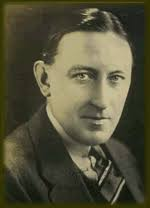
Seeing your first novel for the first time, holding the reality of it in your hand, is a special moment. So spare a thought for Russell Thorndike, back in 1915, when he received his copy of his debut, Doctor Syn. On the front cover, spine, and title page, his surname was spelled Thorndyke, as if he were connected to Austin Freeman's great detective. It must have been an excruciating experience, though I understand that the book was popular enough to earn an early reprint, and the error was then corrected. (Thorndike, pictured, was wounded in the Gallipoli campaign, so I wonder if some time passed before he laid his hands on his novel - if so, it probably didn't help his recovery to full health, but the good news is that he did live until the ripe old age of 87).

The sub-title is A Tale of the Romney Marsh. It's a historical story, set in the late 18th century, and to do with smugglers. Not my usual sort of thing, to be honest. However, I was attracted by the chance of seeing a first edition which featured an inscription to Charles B. Gilbert - 'here's to the feet that have walked the plank'. It turns out that this is a quote from a smugglers' drinking song which features more than once in the story.

My interest in the book was quickened by visits to Dymchurch and Romney Marsh after taking part in a couple of Rye Festivals. The Marsh is a fascinating part of Kent, previously unknown to me, flat (as you'd expect) yet certainly not lacking in character or atmosphere. I felt sufficiently intrigued to consider using it as a setting, either for a short story or perhaps scenes in a Rachel Savernake novel. Right now, the latter is quite a likely option.

What of the story? Well, it's a readable yarn, and the spookiness of the Marsh is well conveyed and places an important part in the story. Even though it's not the sort of book I'd usually read, I can understand why it became a success - so much so that it gave rise to three films a whole raft of prequels. Thorndike, who like his more famous sister Sybil had started out as an actor, focused increasingly on authorship and he was also involved with Six Against the Scotland Yard, perhaps his closest brush with conventional mystery fiction.  

Wednesday, 18 September 2019

The Rye Arts Festival Trip - part two


The Cryme Day that John Case organised for the Rye Arts Festival was designed around four crime novelists: Simon Brett, Lynne Truss, William Shaw, and myself. Guy Fraser-Sampson, another crime writer who lives nearby in Winchelsea, was tasked with interviewing William and Lynne, and at a late stage we agreed that he'd interview me. Even without time for prep, he did a very good job indeed, and it was a most enjoyable experience. I was fascinated to hear William talk about the Dungeness setting of some of his books, while Simon was (as always) highly entertaining. Lynne, whom I last met on the evening Ann Cleeves and I were initiated into membership of the Detection Club, when she was guest speaker and we walked back through the snow, was also very witty. John had organised a murder mystery lunch at the Mermaid Inn, which I enlivened inadvertently by squirting raspberry puree all over the tablecloth. I've always been inept, I'm afraid. At least it looked like blood spatter at a crime scene...


I met some lovely people during the day, and signed plenty of books, while John and his team did a great job. Afterwards, Simon and his wife Lucy, Lynne and Helena and I went out to dinner together at the Ship Inn and had a very convivial time. The Festival was a great success and Rye a marvellous location.

On Sunday, first stop was Lamb House in Rye. This was Henry James' home, and E.F. Benson was another occupant. I can't claim James as a crime writer, but Benson's The Blotting Book does feature in The Story of Classic Crime in 100 Books. The garden of the house is fabulous, and in the sunshine it was a truly lovely sight. After that, it was on to Winchelsea, a pleasing small town with plenty of interesting history (it was once a port but now lies inland), and then Winchelsea Beach, a long stretch of shingle.


William's discussion of Dungeness had fired my imagination, so that was the next destination. A wild and bleak place in poor weather, I'm sure, but benign enough in the sun. I resisted the temptation to go on the steam train to Dymchurch, travelling by car instead to a typical seaside resort. These coastal outposts lie on the edge of Romney Marsh, the setting for Russell Thorndike's Dr Syn novels. There is even a Dr Syn bedchamber in the Mermaid Inn. I have a first edition of the first Dr Syn book, and now I've experienced the landscape I hope shortly to read it.


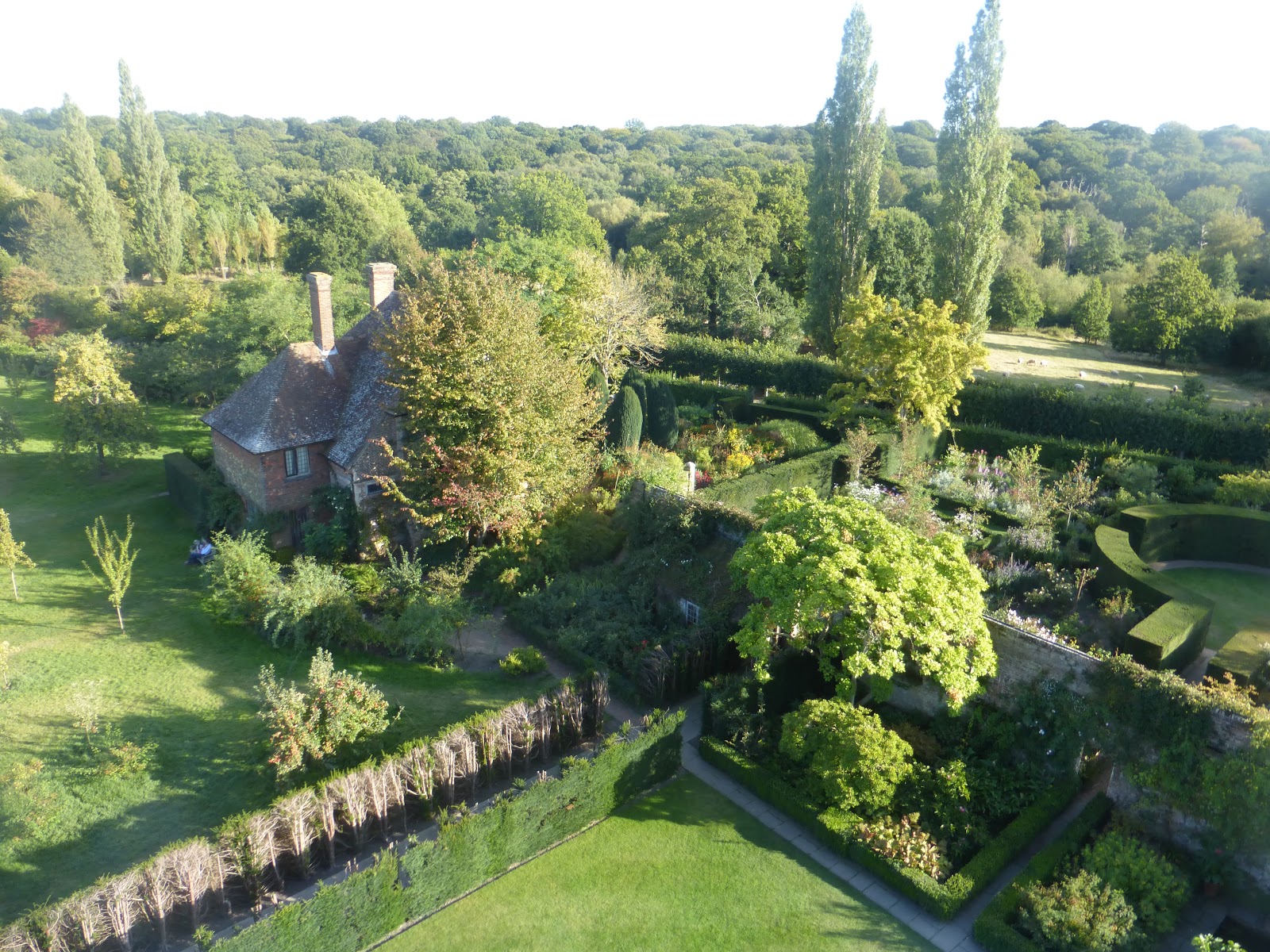
Then it was off to Sissinghurst, where Vita Sackville-West and her husband created one of Britain's most famous gardens. Again, the weather was perfect. The tower contains Vita's writing room, and this fascinated me. I yearn for a tower of my own now! Anyway, Sissinghurst is a place I've wanted to visit for a long time, and it certainly lived up to expectations.


We were staying the night at Salomons Country House near Tunbridge Wells. This is an amazing hotel, not like anything I've ever encountered before. I was greeted by owls (a local couple fly them around the grounds; it's like walking the dog as far as they are concerned) and was shown to a museum and science theatre. How many hotels have their own museum, I wonder? There was also another tower, which the late Sir David Salomon used as an observatory. As far as inspiring story ideas is concerned, this was the ideal place to stay.


The following morning was again sunny, and there was time to visit Scotney Castle, yet another National Trust property, with a romantic ruin in the middle of a lake as well as a massive country house designed by Salvin and a rather good second hand bookshop. Scotney is really impressive, and the memories of this marvellous trip kept me going as I struggled back home via one clogged motorway after another.