Showing posts with label Josh Pachter. Show all posts

Wednesday, 9 November 2022

'Darling Lorraine', Paranoia Blues, and The Adventures of the Puzzle Club


I first became aware of Josh Pachter back in the early 80s, when I came across his anthology Top Crime. I learned that, in addition to being a meticulous anthologist, he is a short story writer of considerable accomplishment. Many years later, I met Josh and his wife Laurie and discovered that they are terrific companions - one of the downsides of the pandemic is that I've not been able to meet up with them in person for several years.

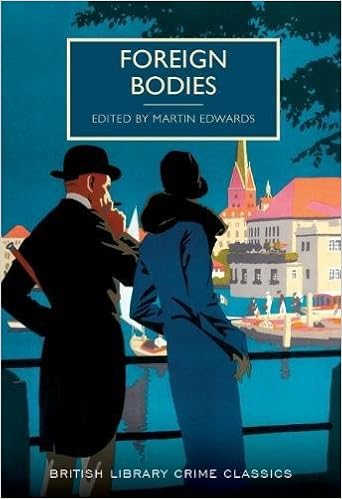
But we remain in regular contact. Josh was a great help when I was working on the anthology Foreign Bodies and some time ago I had the chance to contribute to a new anthology that Josh was putting together. The connecting theme was that each story would be inspired by a Paul Simon song, though only one song per album could be chosen. I've been a huge Paul Simon fan since my teens. He's a great performer, and a quite wonderful songwriter (and did you know that he once did demo records for Burt Bacharach? Timeless classics such as 'Gotta Get a Girl', later recorded by Frankie Avalon? Suffice to say that both Paul and Burt went on to do much better work!) 

To cut a long story short, I finished up writing a story called 'Darling Lorraine'. The inspiration came from a fascinating visit to the house of a crime writing friend. The building is unique and very appealing and the grounds and local setting are just as intriguing. I felt they would make a terrific setting for a story and the Paul Simon spark was all I needed to come up with a plot. 

And now the anthology has just been published. It's called Paranoia Blues and although I haven't received my copy yet, I'm really looking forward to seeing the other stories, penned by writers ranging from Edwin Hill and Gabriel Valjan to Tom Mead. And as if that were not enough, Josh has also got a new book out via Crippen & Landru. The Adventures of the Puzzle Club combines original snappy mysteries by Ellery Queen and new ones in the same manner by Josh himself. I've made a tiny contribution to the book, but the stories are the thing, and they are great fun.


Wednesday, 4 October 2017

Foreign Bodies - a new British Library anthology


Over the past twenty-plus years, I've had the pleasure of compiling and editing a great many anthologies of crime writing. This year sees the publication of no fewer than five of my anthologies - four from the British Library, and the CWA collection Mystery Tour, due later in the year. But of all the anthologies I've been associated with, Foreign Bodies is one of the most exciting. And after a great deal of work behind the scenes, it finally hits the shelves tomorrow.

Classic crime fiction is usually associated in the public mind with stories written in the English language. Christie, Sayers and company in Britain, of course, and their American counterparts, the likes of Ellery Queen and C. Daly King. Few people realise how many detective stories were written in other languages at much the same time. And not only those by Georges Simenon, either.

The appeal of the detective story is worldwide,and that has long been the case. Sherlock Holmes inspired a host of writers to flatter Conan Doyle by imitation. Maurice Leblanc's stories about Arsene Lupin (which feature "Holmlock Shears",among other characters!) are quite well-known, the tales by the German Paul Rosenhayn about an American sleuth in the Holmes mould are long-forgotten. And even writers in Asia and South America were taking note of what Doyle and his successors were doing in Britain, and seeking to follow their example.

There are a number of reasons why compiling Foreign Bodies has proved quite a challenge. For a start, it's far from easy to track down some of the stories in their original forms. Acquiring the rights has sometimes been far from easy - we missed out on one intriguing "impossible crime" story aa a result of rights problems, for example - and getting the translations sorted out with a satisfying period feel has been another hurdle. Thankfully, I and the British Library have benefited from a great deal of help, in particular from John Pugmire of Locked Room International and American short story writer and translator Josh Pachter. I hope that readers find the result of our labours as fascinating to read as I have found it to put together.

Monday, 17 April 2017

Foreign Bodies


There are some fascinating titles coming up in the British Library's Crime Classics series over the next twelve months. The programme for the second half of this year has recently been made public, and it includes a number of books I'm really pleased about. These include The Long Arm of the Law, a collection of police stories that I've edited, for which I've just finished writing the intros. Several rare stories make an appearance, as well as some by more familiar names.

I suppose, though, that if you forced me to say which of the various anthologies I'm editing this year is likely to excite the most interest, I'd be bound to say Foreign Bodies, which is due out in October. This book gathers together classic crime stories in translation. Some of the translations are brand new, and the friends and colleagues to whom I am especially indebted include John Pugmire and Josh Pachter.

It's often thought that classic crime fiction was the preserve of British and American authors. Georges Simenon is seen as an honourable exception. But the truth is more complicated, and more interesting. In reality, plenty of authors in Europe and elsewhere were writing crime stories, sometimes with a nod to Anglo-Saxon traditions and tropes, sometimes not. The trouble is, very few of these stories were translated at the time.

Foreign Bodies seeks to redress the balance, and tell an interesting story about foreign crime fiction. I'll say more about the detailed contents at a later date, but at this stage let me just add that of all the many anthologies I've edited since the mid-90s, I think this one might prove to be the most striking. We'll see.

Wednesday, 4 May 2016

Edgar, Agatha, Poirot - and good company


"And then he woke up, and he realised it had all been a dream."

I've arrived back home after a week in the United States that had an extremely dream-like quality about it. It's twenty-five years since my first novel was published, and I've had many great times since then (plus occasional setbacks) but this past week has been, by far, the best of my crime writing life.

In that time, I've received the Edgar award and the Agatha award, been named on the shortlist of a third award (the HRF Keating award), and heard it announced that I'm to receive the Poirot award at Malice Domestic next year. Add to that a proposed translation of The Golden Age of Murder into Japanese, and a series of highly enjoyable encounters with crime writing (and reading) friends old and new, and you can perhaps understand why I'm feeling extraordinarily happy- and grateful - right now.

I'd booked for Malice Domestic 28 long before The Golden Age of Murder was shortlisted for the Agathas, so when the book also turned up on the Edgars shortlist, it made sense to fit in my first trip to New York for almost twenty years. I flew into Washington DC to settle into the convention hotel and spend a little quality time with one or two good friends before taking a train to New York and checking into the Grand Hyatt -immediately bumping into Steve Steinbock, crime reviewer for Ellery Queen's Mystery Magazine. EQMM were holding a reception prior to the Edgars ceremony, and Steve and I went along there together, and chatted with the likes of Otto Penzler, of Mysterious Bookstore fame, and John Pugmire of Locked Room International.


Then it was back to the Grand Hyatt, and the very lavish and prestigious banquet (sharing a tale with that fantastic writer Sara Paretsky) and awards ceremony. I'm not a believer in writing acceptance speeches in advance of knowing whether one has anything to accept. My approach is simply to improvise if I get lucky, or to have a few more drinks if I don't. Anyway, this time, despite the quality of the other books on the shortlist, by Frederick Forsyth among others, my name came out of the envelope. It was for me an utterly memorable occasion, and  astonishingly, I even managed not to drop the Edgar statuette. (The photo at the top of this post was taken by Donna Andrews; the envelope is the one that Toni P. Kelner opened when making the announcement).


Next morning I headed back to DC, and just about managed to arrive in time for my first panel - I was moderating an appreciation of the life and work of Sarah Caudwell. Doug Greene of Crippen &  Landru, Barbara Peters of Poisoned Pen Press, and Katherine Hall Page (who received the convention's lifetime achievement award) were ideal panellists, fluent and knowledgeable. Barbara made the point that Sarah became inhibited after winning the Anthony Award, and never published another novel in her lifetime; something I didn't know (and probably didn't want to hear the day after winning an award myself!)

After the opening ceremonies, it was time for dinner with Doug and his wife, Steve, John, Pulitzer Prize winning journalist Michael Dirda, and two distinguished American academics and writers, Elaine and English Showalter (who also happen to be former owners of my son's flat!). The conversation was spellbinding, and I had a great night. This was swiftly followed by a 9 am Saturday morning panel at which I met two of my fellow nominees, one of whom was Kate White, former editor of Cosmopolitan. (The fact that my book was the only common factor in the Edgar and Agatha shortlists illustrates the vastly increased popularity and quality of writing about the genre over the past few years; there are a lot of good books in this category now.)

I also heard about the Keating shortlist just before meeting up with Paul Charles for lunch. I first met Paul at the Philadelphia Bouchercon many moons ago, but it was almost a decade since we'd last met in person - though he helped, in his capacity as a leading music agent, to persuade Ray Davies to let me quote some lines from his classic pop song in the most recent Harry Devlin novel, Waterloo Sunset. Among other things, we talked about the challenge of "hanging on in there" as a midlist writer, something we've both tried our utmost to do over the years, and we agreed that we'd been very fortunate to have a second income stream other than writing, which has at least enabled us to write what we believe works best, rather than simply to chase the market. I hope to feature Paul on this blog before long.

Then came a reception followed by the Agatha awards ceremony, and I had the pleasure of hosting a table featuring some of my favourite partners in crime, such as Kathryn Leigh Scott, Steve, John, Josh Pachter, Joni Langevoort, Shawn Reilly Simmons, and Charles and Caroline Todd. Lots of entertaining conversation before the announcement of the Agatha awards. After another acceptance speech (when I drew a spur of the moment comparison between Malice and that early-established social network, the Detection Club) I had the pleasure of hearing the announcement that next year the convention will mark my contribution to the genre with a Poirot Award. Suffice to say, it was another wonderful night.


Sunday morning brought brunch with a small group of us - including Art Taylor, a notable exponent of the short story who has now turned to writing novels with equal success, and has won Agathas in each of the last three years - hosted by Janet Hutchings, editor of EQMM, After spending ages working out how to ship my awards back to the UK, I interviewed another of the weekend's honorees, Doug Greene, about his long career, which includes a definitive biography of John Dickson Carr, among much else.

In the audience, incidentally, was Shelly Dickson Carr, grand-daughter of the master of the locked room mystery and herself an author of note. It was a real pleasure to meet her (and thanks to her for the photo with Doug and me, below). The "Agathas tea", as usual. concluded a truly fantastic convention. My admiration for the work done by Verena Rose and her colleagues on the Malice board increases the more I learn about what they do. To take just one example, they have over the years raised a total of over $200,000 for charitable causes. Wow.


That evening I had dinner and a few drinks with Doug and Sandi Greene, and we had the chance to reflect together on a wonderful few days. It's almost a cliche to say that the writer's life is a solitary one, and sometimes a lonely one, and to some extent there's truth in the old saying. But as I've tried many times to illustrate on this blog, a writer's life can be greatly enhanced by the social side of things - and in the world of crime writing, that social dimension is hugely enjoyable. Every writer experiences setbacks from time to time, and I know plenty of gifted authors who have lost heart; something that I find deeply regrettable. I spent a lot of time with some marvellous people during my few days in the States, and I returned home reflecting that the successes that have come my way of late owe a great deal to the generosity and support of others, especially when times have been challenging. The crime writing and reading community is highly cohesive, and it is one I'm truly proud to belong to.


.

Thursday, 8 May 2014

Writers at Malice

Whilst at Malice Domestic, I really enjoyed catching up with the Poirot Award winner, Tom Schantz of Rue Morgue Press (check out their excellent catalogue, which includes reprints of many otherwise hard-to-find mysteries of the past) and meeting his daughter Sarah, whose debut novel Fig has just been accepted by Simon & Schuster. It's a book I look forward to reading, and in the meantime her blog Magical Thinking gives an insight into her thoughts about life, storytelling - and daydreaming, which, as she says, is something that writers tend to do more than most.

Along with Tom, Steve Steinbock and Doug Greene (of Crippen & Landru publishers, and John Dickson Carr's biographer) form a trio of experts on Golden Age fiction whose knowledge is pretty much unrivalled. Steve organised a dinner last Friday evening which gave me the chance to catch up with actress turned writer Melodie Johnson Howe, whom I've mentioned before on this blog, and who among other things is one of EQMM's top short story writers. Our companions also included Doug, Charles and Caroline Todd (who won an Agatha the following evening, and who have contributed several short stories to anthologies I've edited), Nora McFarland and her mum, and another actress turned writer, Kathryn Leigh Scott.

Kathryn first earned fame appearing in a long running American TV show called Dark Shadows, which evidently retains a massive following, and her credits include films such as the 1974 version of The Great Gatsby. She is not only the first former Playboy bunny I've ever met, but also perhaps the only one who later set up her own successful and long-established publishing business. Like Melodie, Kathryn is great company, and I'm looking forward to reading one of her books. The photo shows me with Melodie, Steve and Kathryn.

Art Taylor is another leading contributor to EQMM, and his excellent story "The Care and Feeding of House Plants" won an Agatha - it's available online via the EQMM site and I urge you to read it. I met him for the first time at a meal organised by Janet Hutchings of EQMM, which also gave me a chance to meet Josh Pachter, whose newsletter about short stories I subscribed to back in the 80s, and whose anthology Top Crime I remember devouring about the same time. Josh is now doing a lot of translating, and it was great to talk to him, his wife Laurie, Janet and Art over the best brunch I've had in ages.

As ever with crime conventions, time passes all too quickly, and it's impossible to do everything. Ingrid Willis, who was there promoting this autumn's Bouchercon at Long Beach has really tempted me to sign up for that too. We'll see. Les Blatt, Jeanne M. Dams, Hank Philippi Ryan,Hannah Dennison, and fellow Brits Frances Brody and Helen Smith were among a good many attendees to whom I chatted all too briefly. All in all, a memorable few days. If you are a fan of traditional mysteries who has never attended Malice Domestic, I can recommend it unreservedly. The convention is brilliantly organised, and the atmosphere as friendly as anyone could wish. I hope tol be back there very soon.