Showing posts with label Lynne Truss. Show all posts

Monday, 11 October 2021

Alibis in the Archive 2021


This past weekend saw the first online version of Alibis in the Archive and what fun it was. Gladstone's Library was closed for eighteen months and only reopened at the start of September, but huge credit goes to the tireless Louisa Yates and Rhian Waller for managing the weekend so brilliantly. When I put the programme together, I was aiming for a combination of quality and variety and I'm enormously grateful to all the wonderful authors who took part.

Lynne Truss and Simon Brett got things off to a great start on Saturday morning with a very witty discussion which included Simon's memorable description of story structure as 'the Lego bit of the writing'. After that, David Brawn of HarperCollins interviewed me about Howdunit and other facets of my crime writing career; we also touched on The Life of Crime, the copy edit of which I'm currently working on.

Then came a wonderful contribution from two American writers whom I've long admired: Joseph Goodrich and Rupert Holmes. It was full of great moments and I particularly liked his story about his contribution to the soundtrack of Arthur (yes, Burt Bacharach wrote the soundtrack, but Rupert did play a part...) On Sunday morning, an American writer currently resident in London, Bonnie MacBird, talked to David Brawn about the enduring appeal of Sherlock Holmes.

Len Tyler led a discussion with Ruth Dudley Edwards, Michael Jecks and Antonia Hodgson about the timeless appeal of detective fiction. I was amused by Len's explanation of the appeal of Gladys Mitchell despite the fact that her books often fade after a bright start: 'she's worth reading for the first 50% of the book'. The weekend was rounded off with no fewer than four panellists joining us from the US to talk about American traditional detective fiction: Art Taylor, Shawn Reilly Simmons, Tonia Spratt-Williams, and Verena Rose. I loved every moment of the panels and feedback from the audience was just what we'd hoped for. Next year, Alibis will return as a live event over the weekend of 10-11 June, but with an online component as well. Can't wait...


Wednesday, 18 September 2019

The Rye Arts Festival Trip - part two


The Cryme Day that John Case organised for the Rye Arts Festival was designed around four crime novelists: Simon Brett, Lynne Truss, William Shaw, and myself. Guy Fraser-Sampson, another crime writer who lives nearby in Winchelsea, was tasked with interviewing William and Lynne, and at a late stage we agreed that he'd interview me. Even without time for prep, he did a very good job indeed, and it was a most enjoyable experience. I was fascinated to hear William talk about the Dungeness setting of some of his books, while Simon was (as always) highly entertaining. Lynne, whom I last met on the evening Ann Cleeves and I were initiated into membership of the Detection Club, when she was guest speaker and we walked back through the snow, was also very witty. John had organised a murder mystery lunch at the Mermaid Inn, which I enlivened inadvertently by squirting raspberry puree all over the tablecloth. I've always been inept, I'm afraid. At least it looked like blood spatter at a crime scene...


I met some lovely people during the day, and signed plenty of books, while John and his team did a great job. Afterwards, Simon and his wife Lucy, Lynne and Helena and I went out to dinner together at the Ship Inn and had a very convivial time. The Festival was a great success and Rye a marvellous location.

On Sunday, first stop was Lamb House in Rye. This was Henry James' home, and E.F. Benson was another occupant. I can't claim James as a crime writer, but Benson's The Blotting Book does feature in The Story of Classic Crime in 100 Books. The garden of the house is fabulous, and in the sunshine it was a truly lovely sight. After that, it was on to Winchelsea, a pleasing small town with plenty of interesting history (it was once a port but now lies inland), and then Winchelsea Beach, a long stretch of shingle.


William's discussion of Dungeness had fired my imagination, so that was the next destination. A wild and bleak place in poor weather, I'm sure, but benign enough in the sun. I resisted the temptation to go on the steam train to Dymchurch, travelling by car instead to a typical seaside resort. These coastal outposts lie on the edge of Romney Marsh, the setting for Russell Thorndike's Dr Syn novels. There is even a Dr Syn bedchamber in the Mermaid Inn. I have a first edition of the first Dr Syn book, and now I've experienced the landscape I hope shortly to read it.


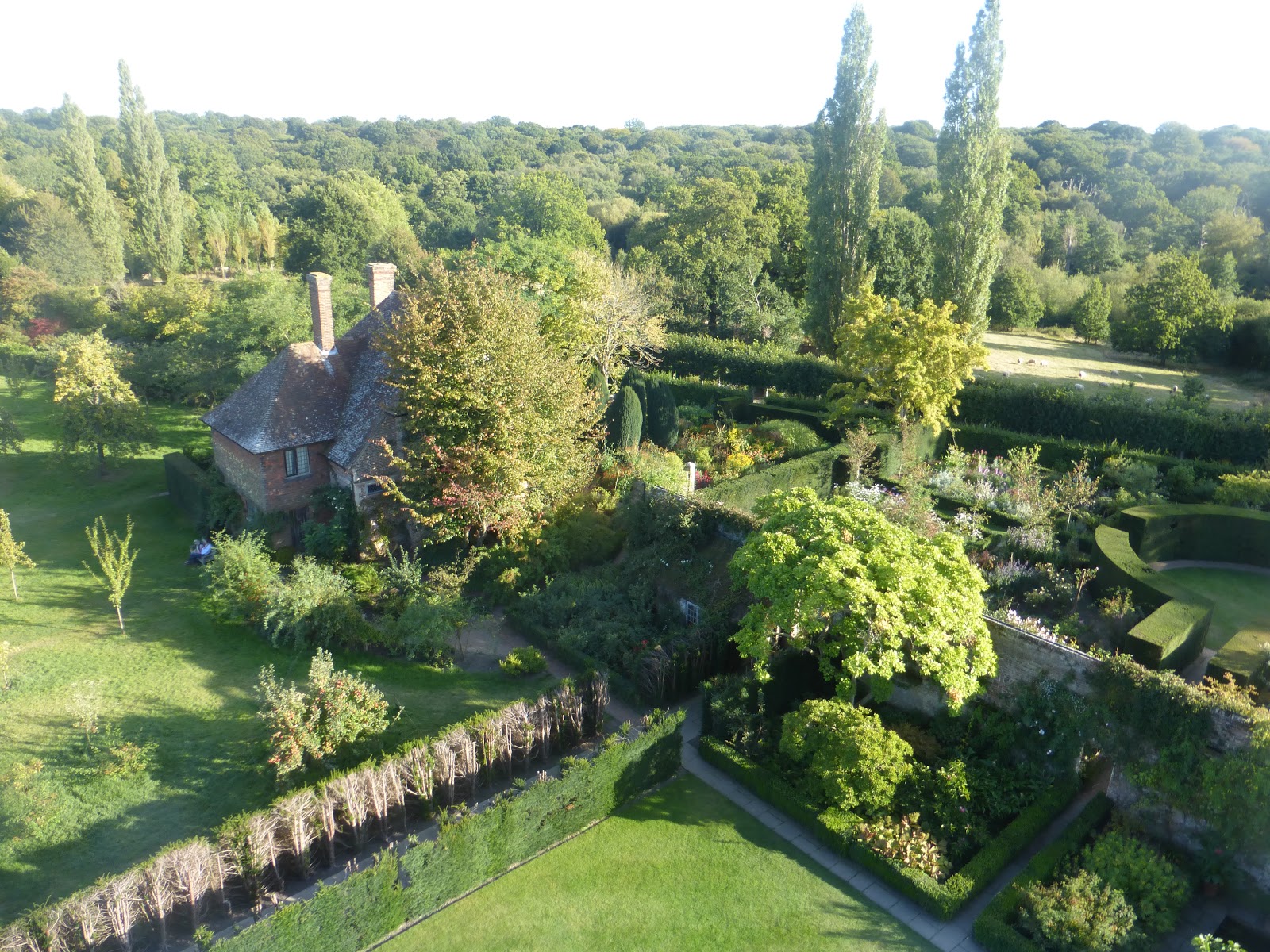
Then it was off to Sissinghurst, where Vita Sackville-West and her husband created one of Britain's most famous gardens. Again, the weather was perfect. The tower contains Vita's writing room, and this fascinated me. I yearn for a tower of my own now! Anyway, Sissinghurst is a place I've wanted to visit for a long time, and it certainly lived up to expectations.


We were staying the night at Salomons Country House near Tunbridge Wells. This is an amazing hotel, not like anything I've ever encountered before. I was greeted by owls (a local couple fly them around the grounds; it's like walking the dog as far as they are concerned) and was shown to a museum and science theatre. How many hotels have their own museum, I wonder? There was also another tower, which the late Sir David Salomon used as an observatory. As far as inspiring story ideas is concerned, this was the ideal place to stay.


The following morning was again sunny, and there was time to visit Scotney Castle, yet another National Trust property, with a romantic ruin in the middle of a lake as well as a massive country house designed by Salvin and a rather good second hand bookshop. Scotney is really impressive, and the memories of this marvellous trip kept me going as I struggled back home via one clogged motorway after another.