If there's one thing more difficult than writing a successful humorous crime novel, it's writing a successful series of humorous crime novels. Not too many people over the years have managed to achieve this. In Britain one thinks of Colin Watson, possibly George Bellairs, and more recently Simon Brett. Over the last decade, Len Tyler has joined the list (and, more than that, become a leading exponent of the form) with his series about the hapless crime writer Ethelred Tressider and his ravenous agent Elsie Thirkettle.
The latest entry in the series is The Maltese Herring, recently published by Allison & Busby. As you might guess from the title, Len has this time decided to doff his cap not to Agatha Christie but to Dashiell Hammett. Casper Gutman, Joel Cairo and company give way here to an assortment of Oxford dons who descend on Sussex in a hunt for a fabled golden statue.
As with Hammett (and Chandler, who is referenced several times), the discursive plot isn't the thing; it's the characters and the set-piece scenes that we remember. There is, for instance, a splendid opening at an Oxford college dinner (I hadn't actually realised, or else I'd forgotten, that Ethelred is, like his creator, an Oxford man), swiftly followed by a very funny encounter between Elsie and a fellow train passenger. And there are some great lines, several of which draw, as usual with this author, on experience of the crime writing life.
Thus we learn that Ethelred has recently joined the committee of the CWA (which Len himself chaired not long ago) and among the crime writing jokes and references there's mention of Ann Cleeves and a self-deprecating passage that alludes cleverly to one of Len Tyler's recent novels and captures his wry sense of humour perfectly:
"Well, that was a bit of an anticlimax. Not a Chandler or Christie plot, then. Who was good at anticlimax?
'L.C. Tyler,' I said to Ethelred, with a sudden flash of insight.
'Who?' he said.
'Don't worry, he's not that well known.'"
But of course he is well known, and deservedly so.
Showing posts with label Simon Brett. Show all posts
Showing posts with label Simon Brett. Show all posts
Monday, 6 January 2020

Wednesday, 18 September 2019
The Rye Arts Festival Trip - part two

The Cryme Day that John Case organised for the Rye Arts Festival was designed around four crime novelists: Simon Brett, Lynne Truss, William Shaw, and myself. Guy Fraser-Sampson, another crime writer who lives nearby in Winchelsea, was tasked with interviewing William and Lynne, and at a late stage we agreed that he'd interview me. Even without time for prep, he did a very good job indeed, and it was a most enjoyable experience. I was fascinated to hear William talk about the Dungeness setting of some of his books, while Simon was (as always) highly entertaining. Lynne, whom I last met on the evening Ann Cleeves and I were initiated into membership of the Detection Club, when she was guest speaker and we walked back through the snow, was also very witty. John had organised a murder mystery lunch at the Mermaid Inn, which I enlivened inadvertently by squirting raspberry puree all over the tablecloth. I've always been inept, I'm afraid. At least it looked like blood spatter at a crime scene...


I met some lovely people during the day, and signed plenty of books, while John and his team did a great job. Afterwards, Simon and his wife Lucy, Lynne and Helena and I went out to dinner together at the Ship Inn and had a very convivial time. The Festival was a great success and Rye a marvellous location.

On Sunday, first stop was Lamb House in Rye. This was Henry James' home, and E.F. Benson was another occupant. I can't claim James as a crime writer, but Benson's The Blotting Book does feature in The Story of Classic Crime in 100 Books. The garden of the house is fabulous, and in the sunshine it was a truly lovely sight. After that, it was on to Winchelsea, a pleasing small town with plenty of interesting history (it was once a port but now lies inland), and then Winchelsea Beach, a long stretch of shingle.

William's discussion of Dungeness had fired my imagination, so that was the next destination. A wild and bleak place in poor weather, I'm sure, but benign enough in the sun. I resisted the temptation to go on the steam train to Dymchurch, travelling by car instead to a typical seaside resort. These coastal outposts lie on the edge of Romney Marsh, the setting for Russell Thorndike's Dr Syn novels. There is even a Dr Syn bedchamber in the Mermaid Inn. I have a first edition of the first Dr Syn book, and now I've experienced the landscape I hope shortly to read it.

Then it was off to Sissinghurst, where Vita Sackville-West and her husband created one of Britain's most famous gardens. Again, the weather was perfect. The tower contains Vita's writing room, and this fascinated me. I yearn for a tower of my own now! Anyway, Sissinghurst is a place I've wanted to visit for a long time, and it certainly lived up to expectations.


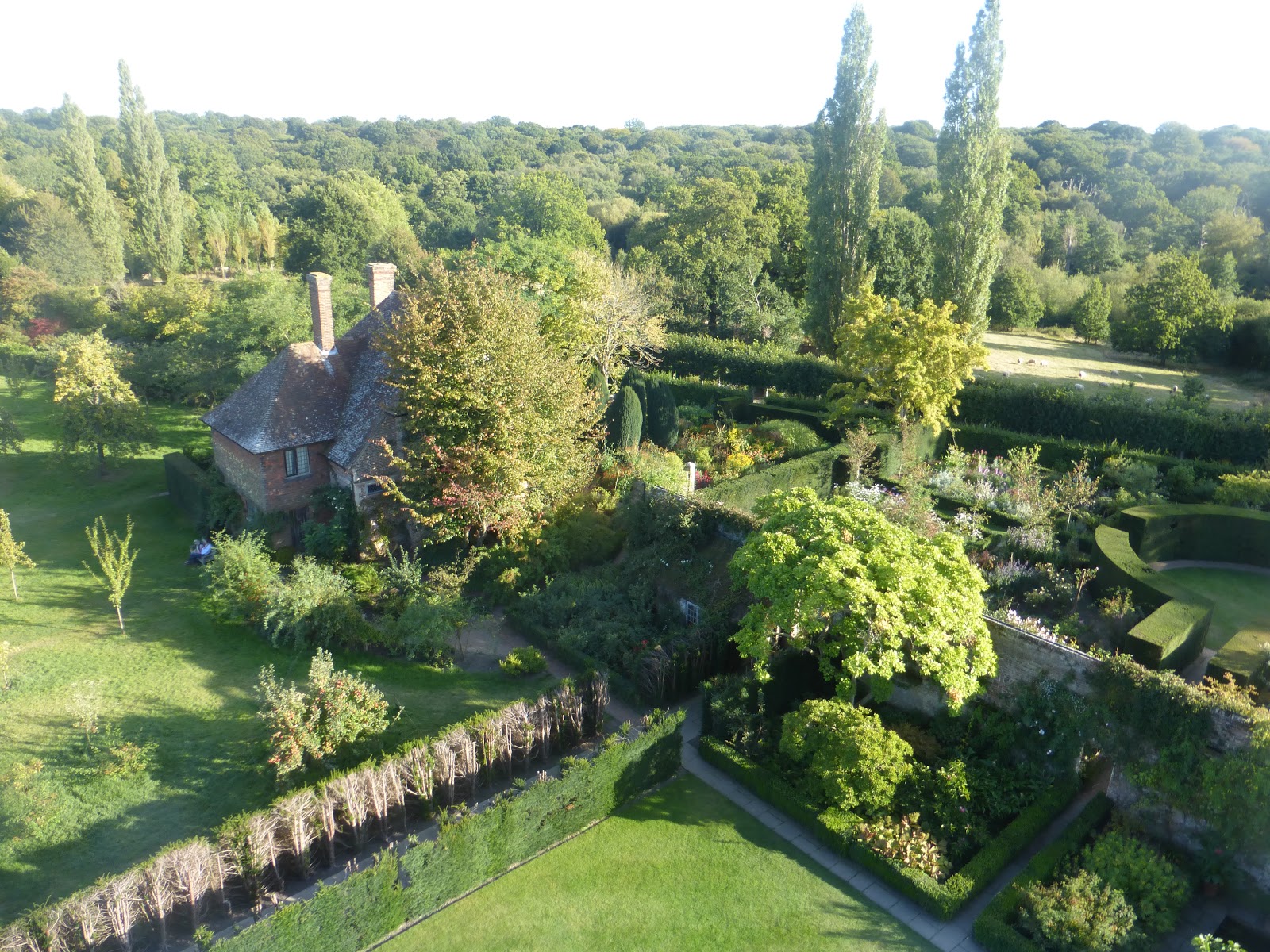


We were staying the night at Salomons Country House near Tunbridge Wells. This is an amazing hotel, not like anything I've ever encountered before. I was greeted by owls (a local couple fly them around the grounds; it's like walking the dog as far as they are concerned) and was shown to a museum and science theatre. How many hotels have their own museum, I wonder? There was also another tower, which the late Sir David Salomon used as an observatory. As far as inspiring story ideas is concerned, this was the ideal place to stay.


The following morning was again sunny, and there was time to visit Scotney Castle, yet another National Trust property, with a romantic ruin in the middle of a lake as well as a massive country house designed by Salvin and a rather good second hand bookshop. Scotney is really impressive, and the memories of this marvellous trip kept me going as I struggled back home via one clogged motorway after another.


Friday, 30 November 2018
Forgotten Book - Singled Out
Simon Brett is a multi-talented author, and the range of the 100-plus books that he's written is truly impressive. Not all his work is within the crime genre, but that's the specialism for which he's best known, perhaps above all for his long and very entertaining series featuring the actor Charles Paris. His dark novels of psychological suspense are interesting, but only the first of them, A Shock to the System, is well-known, thanks to the film version starring Michael Caine.
Singled Out was published in 1995. It's not an easy book to write about in detail, because the plot is so elaborate that it's almost impossible not to give spoilers. But let me have a try. The story begins in 1973, with attractive Laura Fisher, whose marriage has recently broken down, setting out to seduce a man so as to become pregnant. In this first section of the book, we learn about Laura's past - and of how she'd been deeply affected by a murder. Laura works in television, and Simon Brett's understanding of the TV world makes the background seem authentic, even if the events of the story are outlandish.
The story then moves on to 1993, and a sequence of events which forces Laura to confront the horrors of her personal background, and the fear that history may be about to repeat itself. The narrative is concerned not just with murder, but with child abuse and incest. Reading it now, a quarter of a century later, it seems to reflect the mores of the time, which are in some ways rather different from those of the present.
I see this book as forming part of a tradition of British psychological suspense, reaching back to Francis Iles' novels, and including several of the novels of Julian Symons, such as The Plot Against Roger Rider. Like Iles and Symons, Brett is an expert plotsmith, but for me, his greatest strength as a crime writer is his wit. Humour isn't much in evidence in such a bleak story as this, and I suspect that explains why he moved away from this type of writing. Singled Out isn't by any means his best book, but it's an interesting and laudably ambitious example of a fast-paced and very readable novel of suspense.
Singled Out was published in 1995. It's not an easy book to write about in detail, because the plot is so elaborate that it's almost impossible not to give spoilers. But let me have a try. The story begins in 1973, with attractive Laura Fisher, whose marriage has recently broken down, setting out to seduce a man so as to become pregnant. In this first section of the book, we learn about Laura's past - and of how she'd been deeply affected by a murder. Laura works in television, and Simon Brett's understanding of the TV world makes the background seem authentic, even if the events of the story are outlandish.
The story then moves on to 1993, and a sequence of events which forces Laura to confront the horrors of her personal background, and the fear that history may be about to repeat itself. The narrative is concerned not just with murder, but with child abuse and incest. Reading it now, a quarter of a century later, it seems to reflect the mores of the time, which are in some ways rather different from those of the present.
I see this book as forming part of a tradition of British psychological suspense, reaching back to Francis Iles' novels, and including several of the novels of Julian Symons, such as The Plot Against Roger Rider. Like Iles and Symons, Brett is an expert plotsmith, but for me, his greatest strength as a crime writer is his wit. Humour isn't much in evidence in such a bleak story as this, and I suspect that explains why he moved away from this type of writing. Singled Out isn't by any means his best book, but it's an interesting and laudably ambitious example of a fast-paced and very readable novel of suspense.
Monday, 11 June 2018
Alibis in the Archives 2018

I'm back from Alibis in the Archives at Gladstone's Library, the second week-end event celebrating the British Crime Writing Archives which are held there. As archivist of the CWA and of the Detection Club, I set up the BCW Archives, and as a result found myself organising Alibis, in conjunction with the Library's wonderful team, brilliantly led by Louisa Yates.
The week-end was, like last year, a sell-out. The plan is for Alibis to take place again next year, from 22-24 June, and I encourage you to make a note of those dates in your diary!
This year's programme kicked off on Friday evening with "Bannocks and Blood", a murder mystery written by Ann Cleeves which was good fun. Then on Saturday morning, Simon Brett got everyone in the right mood with his extremely witty Golden Age murder mystery - in verse. Andrew Taylor talked about three real life cases in which he has a personal interest and then interviewed me about collecting crime fiction. To illustrate some of my themes during the conversation, I brought along various books, correspondence, and ephemera from my own collection, and there was a chance for members of the audience to have a look at these before Sarah Ward talked about crime in Derbyshire.
After lunch, Ruth Dudley Edwards talked about subversive crime writing, and Mike Jecks about historical mysteries. Then there was a special treat - Professor James Grieve, the leading Scottish forensic pathologist, discussing some famous cases. The day's formal programme ended with a crime writers' panel - see the photo, taken from The Puzzle Doctor's blog about the weekend.
Yesterday began with Jessica Mann talking about female crime writing, and I discussed the BCW Archives with Peter Lovesey and Sheila Mitchell (widow of H.R.F. Keating) before Peter Lovesey closed the show with a very witty account of the calamitous crime writing of James Corbett. By the end of it all, I was just a little tired, but also exhilarated as a result of the enthusiasm of the delegates (and indeed my fellow speakers) which really did make all the work and the planning worthwhile.
Sunday, 6 May 2018
Writing and Wellbeing
From my early years, I've been fascinated by stories - hearing or reading them as well as telling them. Stories always seemed to me to represent a way of escaping from the real world and into my imagination, and growing up, I found that extremely appealing. I still do. Even when something from real life influences my fiction (for instance, the Crippen case which inspired Dancing for the Hangman), my main focus is on the imaginative aspects of the story. And stories also offer us ways of trying to understand the world (and the people in it) a little better. That's surely one of the key reasons why perfectly law-abiding people love stories about crime and criminals.
Writing and wellbeing seem to me to have clear and close connections, and these have interested me for a very long time. At Malice Domestic, Catriona McPherson made a telling point when she reminded us that, in many ways, writers' lives are privileged: she drew a comparison with the work of psychiatric nurses, for instance. Having once worked for six months as the world's most incompetent factory labourer, I know she's right; I'd much rather be a writer than anything else. Equally, it's the case that, for many writers, the privileges are offset by the downsides - emotional and financial insecurity and rejection being among them.
Writing can, apart from anything else, act as a very positive form of therapy, even for those who don't seek to publish what they write. I know that when I was at my lowest ebb, eight years ago, when everything that could go wrong in a hitherto blessed life seemed to be going wrong, writing was a lifeline. And this blog, and the kindness of its readers, played a valuable part in helping me to get through an extremely difficult time.
The Society of Authors recently took wellbeing as a theme for an issue of its quarterly magazine, and this prompted me to start an initiative on behalf of the Crime Writers' Association. I wanted to encourage the sharing of experiences so that members who were encountering setbacks would realise they are not alone, and that some of the taboos would start to break down. Simon Brett, a friend and a man I've long admired, has written movingly about his own struggles with depression, and at my suggestion he contributed an article to the CWA members' private newsletter, Red Herrings.
This has in turn prompted further articles and also thoughtful online discussion, just as I'd hoped. And only today, C.J. Sansom wrote a moving article in The Sunday Times about his own experience of depression, which stems back to his childhood and unhappy time at school. Each person's experience is different, but understanding more about what individuals have gone through (and, where they've been able to overcome difficulties, how they've gone about it) is important in so many ways.
Progress has been made in recent years in terms of reducing the stigmas that surround mental health problems, but fresh challenges for writers have emerged, and the public nature of social media (wonderful though it can be) exacerbates the problems. So I believe that talking about these things (which is very different from over-sharing), rather than hiding away from them, is a Good Thing, and I'm glad to find that others take the same view. None of us want to dwell too long on gloom and doom; there's enough of that in the world already. But recognising that life has its downs as well as its ups equips us better - in the long run - to value and make the most of those ups.
Writing and wellbeing seem to me to have clear and close connections, and these have interested me for a very long time. At Malice Domestic, Catriona McPherson made a telling point when she reminded us that, in many ways, writers' lives are privileged: she drew a comparison with the work of psychiatric nurses, for instance. Having once worked for six months as the world's most incompetent factory labourer, I know she's right; I'd much rather be a writer than anything else. Equally, it's the case that, for many writers, the privileges are offset by the downsides - emotional and financial insecurity and rejection being among them.
Writing can, apart from anything else, act as a very positive form of therapy, even for those who don't seek to publish what they write. I know that when I was at my lowest ebb, eight years ago, when everything that could go wrong in a hitherto blessed life seemed to be going wrong, writing was a lifeline. And this blog, and the kindness of its readers, played a valuable part in helping me to get through an extremely difficult time.
The Society of Authors recently took wellbeing as a theme for an issue of its quarterly magazine, and this prompted me to start an initiative on behalf of the Crime Writers' Association. I wanted to encourage the sharing of experiences so that members who were encountering setbacks would realise they are not alone, and that some of the taboos would start to break down. Simon Brett, a friend and a man I've long admired, has written movingly about his own struggles with depression, and at my suggestion he contributed an article to the CWA members' private newsletter, Red Herrings.
This has in turn prompted further articles and also thoughtful online discussion, just as I'd hoped. And only today, C.J. Sansom wrote a moving article in The Sunday Times about his own experience of depression, which stems back to his childhood and unhappy time at school. Each person's experience is different, but understanding more about what individuals have gone through (and, where they've been able to overcome difficulties, how they've gone about it) is important in so many ways.
Progress has been made in recent years in terms of reducing the stigmas that surround mental health problems, but fresh challenges for writers have emerged, and the public nature of social media (wonderful though it can be) exacerbates the problems. So I believe that talking about these things (which is very different from over-sharing), rather than hiding away from them, is a Good Thing, and I'm glad to find that others take the same view. None of us want to dwell too long on gloom and doom; there's enough of that in the world already. But recognising that life has its downs as well as its ups equips us better - in the long run - to value and make the most of those ups.
Sunday, 7 May 2017
Taking Detective Stories Seriously

The launch of the book marks the culmination of a long journey, so long that it's taken several years to get to this point. After becoming fascinated by Sayers' reviews in the Sunday Times in the mid-30s, I suggested to the Society that they deserved to be published. This was agreed, and in the end, I would up introducing the book (there is also a foreword by Simon Brett) and writing a lengthy commentary. Putting the whole enterprise together was quite a task, but thanks to Sarah McIntosh, who painstakingly transcribed the original reviews, Seona Ford, and a number of other people connected with the Society, it has finally come to fruition.
I'm excited about it, because I think the reviews are a wonderfully informative resource for mystery fiction fans. What's more, they read very well, despite the fact that Sayers put them together under great pressure of time. She was, arguably, at the peak of her powers when she wrote them, and even if you aren't a huge fan of Sayers, I think that if you like classic crime ficition, you'll find plenty here to fascinate you.
Reaction to the book has already been very positive - here's a lengthy review by Kate Jackson which I was delighted to see. Even if you can't make it to the launch, you may well find the lure of the book hard to resist. I hope so.
Wednesday, 15 June 2016
The Sinking Admiral

Tomorrow sees the official publication of the Detection Club's first collaborative novel for more than half a century. The Sinking Admiral was masterminded by Simon Brett, and is the work of fourteen members of the Club, including me. There's a launch, incidentally, this evening at Goldsboro Books in Cecil Court, London. Do come along if you are in the area; the launch is from 6 pm for an hour or so.

The book is, as its title implies, to some extent a homage to The Floating Admiral, the classic round robin mystery which the Club's founder members produced in 1931. But it's very much a contemporary mystery, with plenty of touches of humour (you'd expect nothing less from a gang of contributors that includes Simon, Ruth Dudley Edwards, and Len Tyler).

I contributed one chapter, and found it fun to write. Equally entertaining were the sessions we had - usually in pubs, it has to be said, when we were planning the storyline (you can see that some of the plot complications caused Janet Laurence momentary despair, but needless to say, she sorted them out).. However, we did reach a point, with a couple of chapters to go, where we still had not decided on the solution. Simon duly organised an unforgettable dinner at the Groucho Club where we worked it all out, and elected two brave souls to do the necessary writing.


Monday, 9 May 2016
Anthony, Ambler, and Words in the Square

A quick trip to London for two contrasting events began brilliantly, when I received an email telling me that The Golden Age of Murder has been shortlisted for an Anthony award, at the New Orleans Bouchercon this September. The shortlist includes, as well as Kate White's popular MWA cookbook, and two other highly informative and interesting books, Val McDermid's book on Forensics, which I rushed out to purchase shortly after its original publication.
So The Golden Age of Murder has won two awards and been shortlisted for two others; three of my novels have, over the years, been shortlisted for major awards (one of which, the Theakston's award for best crime novel of the year, for which The Coffin Trail was a contender, was actually won by Val) but I've never had an experience like this. It's a once in a lifetime thing, and to say I'm delighted is a massive under-statement.
On Friday evening, I was one of no fewer than eight speakers at the British Library, talking about Eric Ambler. Three of Ambler's post-war novels have just been reissued in the BL's Classic Thrillers series, and I wrote introductions for each of them. I'm an Ambler fan - my favourite is his masterpiece, The Mask of Dimitrios - and it was a pleasure to chat about his work. I particularly liked Stav Sherez' suggestion that Ambler's work has something in common with that of the noir writers. A thoughtful and persuasive observation, I think.
The next day, I headed for St James's Square (pictured above) for the London Library's celebration of its 175th anniversary, Words in the Square. There was a glittering cast of speakers, so I felt honoured to be included among the invitees. Last year, Golden Age expert and commentator Helen Szamuely took me on a guided tour of the Library, and I thought it a fantastic place, full of atmosphere and history.
The panellists whom I was moderating were James Runcie (son of the Archbishop, literary curator, documentary producer and author of the books on which the highly successful TV series Grantchester is based), Simon Brett, and Kate Summerscale, author of The Suspicions of Mr Whicher, one of the most successful books about real life crime in living memory. Simon told the story of the creation of The Sinking Admiral, which is due to be published next month - something that I hope all crime fans who like a bit of fun with their fiction will anticipate eagerly. With writers of such pedigree, moderating is an easy task, and the hour sped by. The audience seemed to enjoy it, and I certainly did.
Tuesday, 29 March 2016
The Folio Society and The Floating Admiral

And now the Folio Society have reissued The Floating Admiral by the Detection Club, in a beautiful new edition with lovely illustrations by Mark Thomas. I've picked out one of them to head this blog post. All in all, this edition strikes me as highly collectible.
The book also boasts a brand new intro from Simon Brett, which is characteristically witty and enjoyable. The enduring appeal of this "round robin" detective novel is clear. And members of the Detection Club are very much hoping that our latest collaborative novel, The Sinking Admiral - not a sequel to the original, but in some ways a homage to it - will also find an appreciative audience. It will be published in June. Can't wait!
Monday, 4 January 2016
Simon Brett

Simon Brett was awarded the OBE in the New Year's Honours for services to literature, the latest honour in a career that has been as busy as it has been distinguished. Only last year, he received the highest award in British crime writing, the CWA Diamond Dagger, recognising a career of sustained achievement.
Simon was educated at Dulwich College (as were such other writers as A.E.W. Mason, P.G. Wodehouse, and, improbably, Raymond Chandler) and Oxford, and after that he enjoyed success as a radio producer with the BBC and also as a writer for radio. His series After Henry transferred successfully to television. At its peak, the show attracted over 14 million viewers, a figure that would be beyond the dreams of TV writers today.
His first detective novel, the splendidly titled Cast in Order of Disappearance, was published as long ago as 1975 (he was very young when he wrote it!) and introduced Charles Paris, the actor and amateur sleuth who is perhaps his best loved character. He's now been responsible for no fewer than four distinct crime series. I'm also a fan of his stand-along novels, such as A Shock to the System, which was filmed with Michael Caine in the lead role, and Dead Romantic.
Simon is a witty and popular speaker. I first heard him speak at a writers' circle seminar in Southport in the late 80s, before I'd published a word of crime fiction, and I was too bashful to introduce myself. Little did I imagine that one day - it was last June - he and I would be chatting together on stage at the British Library, where he gave a terrific reading of "Agatha Christie's will", He's been an excellent President of the Detection Club for the past fourteen years - the toughest of acts to follow, it has to be said - and has masterminded the Club's round-robin novel The Sinking Admiral. His many friends and fans will be delighted by this latest recognition of his accomplishments.
Wednesday, 2 September 2015
The Whodunit Dinner and The Sinking Admiral

Right at the end of The Golden Age of Murder, I make passing mention of a new Detection Club project. This is a novel in the tradition of the Club's 1931 classic The Floating Admiral, a round-robin story written by "certain members of the Detection Club". The new book is to be called The Sinking Admiral, and again it is written by "certain members of the Detection Club" - including me.
This project has been masterminded by Simon Brett as President, and participating in it has been hugely enjoyable. I'm glad to say that the book has now been completed, and that it will be published next year by Harper Collins, who have already enjoyed great success in recent years with reissues of earlier Detection Club books, including Ask a Policeman and The Anatomy of Murder.
When Simon first mooted the project, a group of members volunteered to take part, and although one had to drop out for health reasons, unfortunately, someone else stepped in to take her place.The early stages of planning took a considerable time, but once we had the publishing contract signed, the deadline concentrated our minds, as it usually does with writers. We've had a number of meetings to discuss the project as it proceeded, and when the summer arrived, the book was in a pretty decent state.
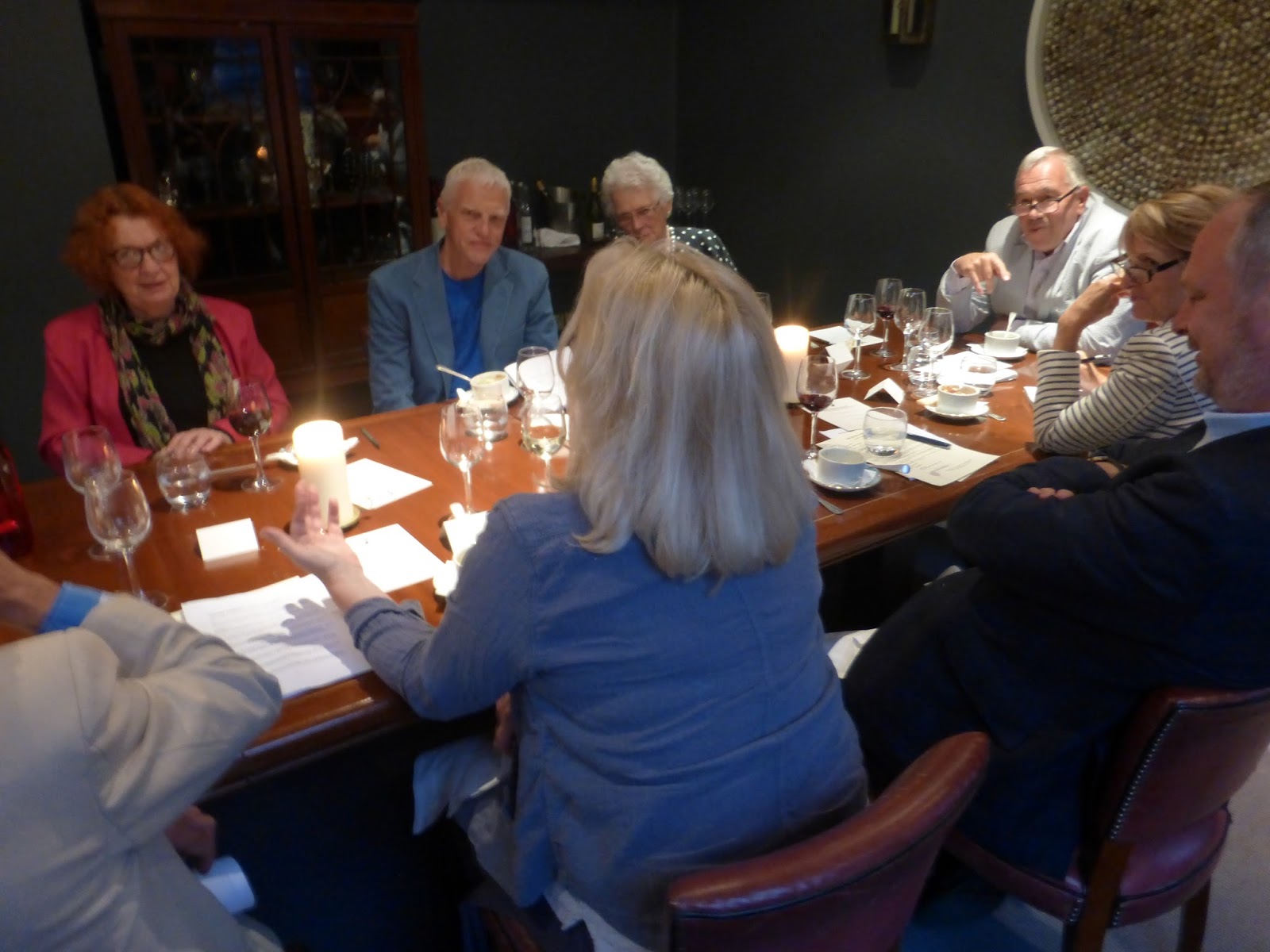
We did not, however, know whodunit! So Simon, who has put a great deal of energy and skill into the whole exercise, organised a wonderfully enjoyable Whodunit Dinner at the Groucho Club - not far away from the site of the Detection Club's original premises in Gerrard Street - and as well as having a highly convivial time, we worked out a solution, and who would write it. (The menu above is signed by the contributors who were present, although a few could not make it.) It must rank as one of the most memorable occasions of my writing career. Wild horses would not, of course, drag any more information out of me about the story at this stage, but it's fair to say that we are both relieved and happy about the way the project has turned out. It's been tremendous fun, and we are very much hoping that readers will find the book is a lot of fun, too.
Wednesday, 24 June 2015
Bodies from the Library
Not so long ago, to suggest that a group of volunteers could set up from scratch a conference about Golden Age fiction that would attract a large and near sell-out audience at one of the country's most prestigious venues would have seemed fanciful. Yet that is exactly what happened with the Bodies from the Library conference at the British Library on Saturday. And the first thing to say about the event is that Mike, John, Mark, Liz, Susan and company who worked so hard to make the dream a reality deserve the utmost praise. The event was a huge success.
I was glad to be heavily involved with the day's events. First, Jake Kerridge and I talked about what and when was the Golden Age, and later in the morning Simon Brett and I discussed the Detection Club, including its collaborative books. In the final session, all the participants talked about books they thought ripe for a reprint - I sneaked in several titles, though my ultimate choice was Raymond Postgate's Verdict of Twelve. Simon, witty as ever, suggested that I'd contrived the whole event as a grandiose launch for The Golden Age of Murder, and really it was wonderful to sign so many copies . But there was much else to celebrate.
Barry Pike, doyen of Golden Age experts, spoke about Sayers and Allingham, and it was also a great pleasure for me to meet for the first time John Cooper, another great expert, who co-authored with Barry two superb and lavishly illustrated books, Collecting Detective Fiction and Artists in Crime. Both strongly recommended. Other speakers included John Curran on Christie, Dolores Gordon-Smith on Crofts, Tony Medawar on locked room mysteries, and Len Tyler on modern day GA fiction. Along with America's Doug Greene and Marv Lachman, Barry, John and Tony have done so much for so many years to keep the flag flying for GA fiction, and the audience loved listening to them.
That wasn't all. Richard Reynolds discussed Oxbridge crime, and we also listened to a John Dickson Carr radio play. David Brawn of Harper Collins and Rob Davies of the BL discussed editing issues with GA fiction; I very much enjoy working with both David and Rob and they were the ideal choices for that particular panel.
The social side of these events is always important, and I was delighted to meet a number of people for the first time with whom I've corresponded in the past. In fact, the only snag was that there simply wasn't enough time to have much of a chat with the many interesting people who were there. One thing I can say for sure, though, is that the buzz in the Library was fantastic, and that everyone hopes the event can be held again next year.
I was glad to be heavily involved with the day's events. First, Jake Kerridge and I talked about what and when was the Golden Age, and later in the morning Simon Brett and I discussed the Detection Club, including its collaborative books. In the final session, all the participants talked about books they thought ripe for a reprint - I sneaked in several titles, though my ultimate choice was Raymond Postgate's Verdict of Twelve. Simon, witty as ever, suggested that I'd contrived the whole event as a grandiose launch for The Golden Age of Murder, and really it was wonderful to sign so many copies . But there was much else to celebrate.
Barry Pike, doyen of Golden Age experts, spoke about Sayers and Allingham, and it was also a great pleasure for me to meet for the first time John Cooper, another great expert, who co-authored with Barry two superb and lavishly illustrated books, Collecting Detective Fiction and Artists in Crime. Both strongly recommended. Other speakers included John Curran on Christie, Dolores Gordon-Smith on Crofts, Tony Medawar on locked room mysteries, and Len Tyler on modern day GA fiction. Along with America's Doug Greene and Marv Lachman, Barry, John and Tony have done so much for so many years to keep the flag flying for GA fiction, and the audience loved listening to them.
That wasn't all. Richard Reynolds discussed Oxbridge crime, and we also listened to a John Dickson Carr radio play. David Brawn of Harper Collins and Rob Davies of the BL discussed editing issues with GA fiction; I very much enjoy working with both David and Rob and they were the ideal choices for that particular panel.
The social side of these events is always important, and I was delighted to meet a number of people for the first time with whom I've corresponded in the past. In fact, the only snag was that there simply wasn't enough time to have much of a chat with the many interesting people who were there. One thing I can say for sure, though, is that the buzz in the Library was fantastic, and that everyone hopes the event can be held again next year.
Monday, 23 February 2015
The Detection Collection
The Detection Collection is the latest book produced under the aegis of the Detection Club to be reissued by Harper Collins. It's a splendid anthology of short stories that was first published in 2005, under the editorship of Simon Brett, President of the Detection Club. And the list of contributors reads like a roll call of leading British crime writers.
Although I've written a couple of intros for earlier books in the series, Ask a Policeman and The Anatomy of Murder, I didn't have any involvement with this one, and the first thing to say is that Simon did a terrific job. His intro updates the foreword he wrote when the book first appeared, in 2005, and he explains that the book was put together to mark the 75th anniversary of the Club's foundation. At the time he first wrote the intro, there was some debate as to whether the Club did indeed come into existence in 1930, but I'm sure it did, and that the anniversary date was correctly calculated.
Simon mentions that sadly, four of the contributors, Margaret Yorke, Reg Hill, Bob Barnard and Harry Keating are no longer with us, (and even more recently, the great P.D. James has also died) but as he says, "they do live on through the quality of their work." I count it as a real privilege to have dined with all of them at Detection Club meetings, as well as on a few other memorable occasions, and I can only add that they were all as companionable and gracious in person as they were gifted. Simon also contributes a concise history of the Club, which appears at the end of the book.
In addition to the luminaries I've already mentioned, Colin Dexter, Lindsey Davis and John Harvey are among the contributors. Three writers who do not very often write short stories, Robert Goddard, Michael Ridpath and Clare Francis, also feature. As you would expect with writers of such calibre, their work stands the test of time. Ten years on, the stories read very well. I'm a fan of short stories, and enjoy collections of them, in any event, but even if anthologies aren't your usual cup of tea, I think you will find plenty in this book to entertain you..
Although I've written a couple of intros for earlier books in the series, Ask a Policeman and The Anatomy of Murder, I didn't have any involvement with this one, and the first thing to say is that Simon did a terrific job. His intro updates the foreword he wrote when the book first appeared, in 2005, and he explains that the book was put together to mark the 75th anniversary of the Club's foundation. At the time he first wrote the intro, there was some debate as to whether the Club did indeed come into existence in 1930, but I'm sure it did, and that the anniversary date was correctly calculated.
Simon mentions that sadly, four of the contributors, Margaret Yorke, Reg Hill, Bob Barnard and Harry Keating are no longer with us, (and even more recently, the great P.D. James has also died) but as he says, "they do live on through the quality of their work." I count it as a real privilege to have dined with all of them at Detection Club meetings, as well as on a few other memorable occasions, and I can only add that they were all as companionable and gracious in person as they were gifted. Simon also contributes a concise history of the Club, which appears at the end of the book.
In addition to the luminaries I've already mentioned, Colin Dexter, Lindsey Davis and John Harvey are among the contributors. Three writers who do not very often write short stories, Robert Goddard, Michael Ridpath and Clare Francis, also feature. As you would expect with writers of such calibre, their work stands the test of time. Ten years on, the stories read very well. I'm a fan of short stories, and enjoy collections of them, in any event, but even if anthologies aren't your usual cup of tea, I think you will find plenty in this book to entertain you..
Wednesday, 1 February 2012
Herring on the Nile
Herring on the Nile is the fifth novel to be published by L.C. (Len) Tyler, and the fourth in the entertaining series featuring mid-list crime writer Ethelred Tressider and his not entirely loyal literary agent, Elsie Thirkettle. It was published a few months ago, and I've been deplorably slow in getting around to write a review. But the first thing to say is that the book is well up to standard, with plenty of excellent jokes.
As the title indicates, the setting is a trip on the Nile, taken by our doughty duo and an assortment of eccentrics, quite a few of whom have names familiar to any student of the crime genre. The echoes of Agatha Christie are unmistakable. But really, even if you are not a Christie buff, there is much here to enjoy.
In particular, there is a running gag in which Ethelred gives answers to set questions from various regional newspapers, and the result is a sequence of very funny lines. I should also declare an interest, in that in one of his answers, Ethelred gives a long list of present day writers whom he enjoys and who influences his work - and I happen to be one of them. This paragraph amused me much as no doubt it will amuse everyone else who is mentioned.
Writing comic crime fiction is very difficult indeed, and it's a sub-genre that isn't to every reader's taste. Over the years there have been plenty of dire efforts at this very demanding form, and only a select band of successes - examples who spring to mind include Colin Watson and Simon Brett. But Len Tyler is in the top division when it comes to writing funny mysteries. Long may Ethelred flourish!
As the title indicates, the setting is a trip on the Nile, taken by our doughty duo and an assortment of eccentrics, quite a few of whom have names familiar to any student of the crime genre. The echoes of Agatha Christie are unmistakable. But really, even if you are not a Christie buff, there is much here to enjoy.
In particular, there is a running gag in which Ethelred gives answers to set questions from various regional newspapers, and the result is a sequence of very funny lines. I should also declare an interest, in that in one of his answers, Ethelred gives a long list of present day writers whom he enjoys and who influences his work - and I happen to be one of them. This paragraph amused me much as no doubt it will amuse everyone else who is mentioned.
Writing comic crime fiction is very difficult indeed, and it's a sub-genre that isn't to every reader's taste. Over the years there have been plenty of dire efforts at this very demanding form, and only a select band of successes - examples who spring to mind include Colin Watson and Simon Brett. But Len Tyler is in the top division when it comes to writing funny mysteries. Long may Ethelred flourish!
Monday, 19 September 2011
Simon Brett

It must be 25 years or more since I first came across the crime fiction of Simon Brett. I enjoyed a number of his very witty novels about the actor and amateur detective Charles Paris before moving on to his second string sleuth, Mrs Pargeter. More recently, he has enjoyed good deal of success with his Fethering novels.
But this very prolific writer has, quite apart from his work for radio and television and some non-fiction, which includes an admirable anthology of parodies, also written successful stand-alone novels of psychological suspense. Not long ago, I posted a review of A Shock to the System, the film based on one of those books, and I can also recommend Dead Romantic, one of his strongest novels.
He is as witty and urbane in person as in print, and many years ago, I heard him give a highly entertaining talk at a writers' festival. I have to confess that I was too shy to introduce myself as a fan, but it did give me great pleasure to meet him at last some time later. More recently, I was quite thrilled to receive a letter from him, out of the blue, telling me I'd been elected to membership of the Detection Club, of which he is President.
A couple of times, I've had the happy experience of including Simon Brett stories in anthologies that I've edited - most recently, a new Charles Paris story for Original Sins. He is a first rate short story writer, and his collected crime stories, in a couple of volumes, are definitely worth seeking out. As the title of one of hose books, A Box of Tricks, implies, he is very good on plot and twists, but he is also keen to keep trying something new - he's even written crime fiction in verse. I saw Simon fleetingly at the recent Crimefest, and here's a photo of the two of us during the CWA Dagger shortlist event. My thanks, as ever, to Ali Karim, for allowing me to reproduce it.
Wednesday, 19 January 2011
A Shock to the System
A Shock to the System is a 1990 film starring Michael Caine based on Simon Brett’s stand-alone novel of the same novel. Before writing the book, Brett was associated, in the crime genre, with a string of witty whodunits featuring the actor Charles Paris, so this represented a considerable departure.
I read the book at the time, and enjoyed it. One of the interesting aspects of the book is that it can be seen as a modern spin on the idea of Malice Aforethought by Francis Iles – a put-upon chap resorts to murder to solve his problems, and various complications ensue.
A striking feature of the film is not just that the screenplay was written by Andrew Klavan, a notable thriller writer himself, but that the action was transplanted to the USA. Furthermore, the ending was completely changed. I don’t know why this was done, or what Simon Brett thought about it, but it means that really one has to judge the film quite separately from the book.
On the whole, taking the film by itself, and trying to put the book out of my mind, I thought Klavan just about got away with it. Caine dominates with his usual smooth efficiency, and in effect the result is a crisp piece of black comedy that makes for pretty reasonable entertainment. Worth a watch.
Sunday, 24 May 2009
In the Chair


As a postscript to Crimefest, a few people have asked me how it felt to compete in the Mastermind quiz, in that leather chair made famous by the TV programme, with lights dimmed, except for one very bright one, shone right into the contestant’s face. The short answer is that it is a bit like doing an exam, with the added frisson of making a fool of yourself in front of various friends and readers. The consolation was that Simon Brett, Meg Gardiner and David Stuart Davies were in the same boat, and very good-natured fellow sufferers they were.
The setting was certainly intimidating, as with the TV show. The Crimefest organisers did a good job of replicating the menacing atmosphere, and Maxim Jakubowski is a seasoned - and both authoritative and fair-minded - interrogator. In fact, the very first time I met him was as long ago as 1990, when he organised a similar event for the London Bouchercon, in which I participated (and thereby met some fascinating people, including Geoff Bradley, editor of that great fanzine CADS.) Maxim repeated the quiz at the 1995 Bouchercon in Nottingham, with panellists including the late Edward D. Hoch and US crime expert Marv Lachman, and me.
So I did have some past experience of what it feels like to expose my ignorance, as well as my fund of criminal trivia, to a crowd of curious onlookers. As one friend said to me: ‘How could you possibly have forgotten the first name of Marcus Didius Falco’s beloved? It’s the same as your wife’s….’
Sunday, 10 May 2009
Crimefest 2009
I’m looking forward to attending Crimefest in Bristol next week (blog posts will continue to appear while I’m away) and I hope to have the chance to chat to some of those who read this blog while I’m there. Please do come and say hello if you spot me wandering around the convention.
I’m involved in three events on the programme. At 4.30 pm on Thursday 14 May, I’m participating moderator in a panel reflecting on bygone authors. Panel members are: Mary Andrea Clarke, Barry Forshaw, Declan Hughes and Sarah Rayne.
At 11 am on the Sunday, I’m again participating moderator on a panel titled ‘Edge of Doom’. My colleagues will be Steven Hague, M.R.Hall, Brian McGillowray and Caro Ramsay.
And an hour later, I’ll be involved in the Mastermind quiz, presided over by Maxim Jakubowski. Also participating are Simon Brett, David Stuart Davies and Meg Gardiner.
It should all be very enjoyable and it will be good to meet old friends and make new ones – always the twin highlights of conventions such as this.
Thursday, 20 November 2008
Empire of Lies
Andrew Klavan is a first-rate thriller writer, whose work I have admired for a long time. Years ago, he wrote a number of fast-paced novels under the pen-name Keith Peterson and I remember enjoying one which was called The Scarred Man. As a screenwriter, he was responsible for adapting Simon Brett’s non-series psychological suspense novel A Shock to the System and more recently he’s produced a number of highly successful blockbusters, including True Crime. True Crime is a classic race-against-time story, which handles conventional material in an adroit and compelling way.
I therefore fell upon his latest book, Empire of Lies, with a great deal of enthusiasm. The main character is Jason Harrow, who has got over a wild past and become a Christian conservative leading a respectable and principled life. But he is dragged out of his comfort zone by a call from a former lover and soon finds himself plunged into a terrorist plot.
I relish the idea that Klavan is hostile to political correctness, and I like the idea that he rebels against the notion that literature is a no-go area for people who hold conservative views. He argues on his blog for conservatives to express their values with ‘courage, openness and honesty.’ Fair enough. But I must admit that I did not warm to Empire of Lies as much as I have to previous Klavans. The story-line did not grab me, and I felt that possibly he was allowing his personal views to intrude into the story to too great an extent. So, a bit of a let-down as far as I was concerned. But it’s only fair to add that various other people have responded very positively to this novel. And one thing is for sure. Klavan is an interesting and intelligent writer and I shall certainly read him again.
Subscribe to:
Comments (Atom)