Showing posts with label Ann Cleeves. Show all posts

Monday, 17 October 2022

The Rising Tide and Serpent's Point


Two friends of mine who also happen to be writers I admire have published new novels recently. It goes without saying that I recommend their work, but I thought that today I'd discuss how apparently very different approaches to writing can result in equally harmonious results. I've touched on this subject before, and I was reminded of it when conducting a recent online crime writing workshop in collaboration with another pair of interesting writers, Lucinda Hawksley and David Mark.

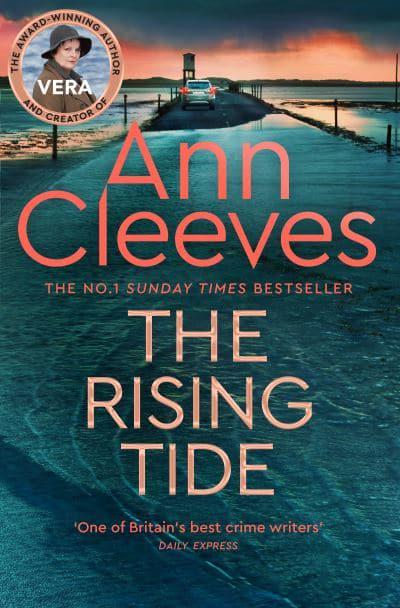
Ann Cleeves' The Rising Tide is the latest Vera Stanhope mystery. I had the pleasure - and it really was a pleasure - of discussing the book with Ann in conversation at a theatre in Carlisle a few weeks ago. Ann is a very consistent writer, but I think it's fair to say that this is probably my favourite among her recent books. It combines a wonderful setting (Lindisfarne) with a good mystery and interesting characterisation.

Ann has often said that she doesn't plot her books in advance. At Carlisle, she mentioned that she originally had a different starting point for the story. But her experience and skill enable her to weave various pieces of material into a pleasing pattern. We're introduced to the characters before murder strikes, and then after the investigation begins, another tragedy occurs. The closing pages, as ever, see at least one character in peril, and in this book the jeopardy is handled at least as effectively as in any of Ann's earlier bestsellers. The result is powerful.
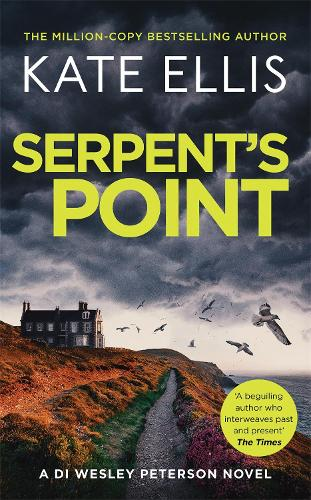

Kate Ellis's Serpent's Point is also an entry in a long series, this time featuring Wesley Peterson. Again the setting (in Devon) is a valuable ingredient. Kate does plot her books - very meticulously - but like Ann she manages to come up with a pattern of writing, in her case a blend of a historical mystery and a contemporary crime, which is harmonious and appealing to a large number of readers. I don't want to say too much about the detail of either story, but here I was especially taken with the premise of the victim, Susan, undertaking a do-it-yourself crime investigation. Brave or foolish of her? Well, you'll have to read the book to find out... 


Thursday, 8 September 2022

Exciting Times


When I wrote on 29 August that an exciting week lay ahead, I wasn't exaggerating. I have had the great good fortune to see The New York Times give The Life of Crime a fine review and then, just a few days later, to read a wonderful review of Blackstone Fell in The Times. These are the sort of things a writer dreams of. And then, among other things, there has been a fantastic in-depth appraisal of The Life of Crime by the film historian David Bordwell for which I'm truly grateful.

Events have come thick and fast, including a podcast with Lucinda Hawksley, the biographer and descendant of Charles Dickens, and an interview with Ann Cleeves in Carlisle. Over lunch, Ann and I had the pleasure of reading the reviews of our new books in The Times and reflecting that it wasn't always like this for either of us...


After Carlisle, I spent a lovely evening in Birnam with book dealer Scott Herbertson and his family. Next morning, it was off to Nairn, for a couple of events as part of the Nairn Book and Arts Festival. I also had a sandwich lunch watching the cricket on the sea front at Nairn in the sunshine - a lovely way to spend the time. In the evening, a very convivial dinner with Jennifer Henderson, biographer of Josephine Tey (our joint event together is pictured above) and her equally delightful mum Christine.


The trip to Nairn involved a much longer drive than I've had since my car accident two months ago. It's an 800 mile round trip, so I spent Sunday relaxing and sightseeing around places like Forres (site of the Nelson Tower, the photo at the top of this post, which put me in mind of Blackstone Tower!), Brodie Castle, Elgin, Hopeman, Lossiemouth and Findhorn. A chance to recharge the batteries and also to think about forthcoming writing projects - I have quite a few things lined up for when I have finished work on Sepulchre Street, Rachel Savernake's fourth case. 


Wednesday, 25 September 2019

The Long Call by Ann Cleeves


The Long Call

The Long Call, published by Pan Macmillan, is the new novel by Ann Cleeves, and it's a noteworthy book given that it launches a brand new series - the "Two Rivers" series, featuring a youngish cop called Matthew Venn. The setting is north Devon, and the rivers in question are the Taw and the Torridge. Ann is closely associated with Northumberland, where she lives, and Shetland, where she met her late husband Tim, and has evoked both areas wonderfully well in two series that have become huge television successes, but the move to north Devon is a very sound one. She has a very good sense of the area, not least because it's where she grew up, and as always she evokes the landscape and atmosphere very effectively.

When I was planning my own first novel, I was naturally interested to find out what other writers of a similar age who had managed to get published were doing, and that's how I first came across Ann's work, with her original series about George and Molly Palmer-Jones. I was impressed, and although it's undeniably true that Ann has developed enormously as a writer over the years (as all good writers do), there is real merit in those early books, even though she's always been self-deprecating about them. It's hard now to believe that one of the books in the series, Sea Fever, was even turned down for publication in the UK, though it was accepted by an American publisher, and much later it did come out in this country. I felt that all the signs were there, right from the outset, of a strong and thoughtful interest in character and landscape, elements that have made her books international best-sellers since TV came along, but the plots are sound, too. This is also true, by the way, of yet another of her series, the enjoyable books featuring Inspector  Ramsay.

The starting point for Matthew's investigation is the discovery on the beach of a male corpse. The deceased has an albatross tattooed on his neck. He has been stabbed. The case brings Matthew right back into the heart of a community he left long ago, and a sad story is told with Ann's characteristic compassion. The criminal motivation at the heart of the book, incidentally, is one that used to fascinate Dorothy L. Sayers, a rather different crime writer in many ways, but one who (at least in her later work) shared with Ann a determination to write about credible people and emotions and was not content merely to write a routine whodunit.

Matthew is gay, contentedly married to Jonathan, and religious intolerance plays a part in the storyline, but Ann has made the point in interviews that her objective is not to be politically correct but rather to challenge the ridiculous nature of prejudice of any kind. The series has already been optioned for television and the novel has made the  Sunday Times and New York Times bestseller lists. Not a bad start! I'm already looking forward to the next entry in the series. 


Monday, 25 March 2019

Murder Mystery Evenings and Murder Mystery Dinners


Murder mystery dinners and events are a highly enjoyable form of interactivity for whodunit fans. Over the years I've written several scripts for murder mysteries, and I've really enjoyed putting them on, in collaboration with some very enthusiastic performers and would-be Poirots and Marples. A particular highlight for me was the murder mystery dinner that I scripted for the Emirates Literature Festival a couple of years ago, which had notables such as Kathy Reichs taking part. It was a great night. Another great occasion was the British Library's staging of my "Murder at Magenta Manor", a Christmas competition for customers in the Library shop. To see the puzzle brought to life in a highly professional way was really very special.


The suggestion that I write my first murder mystery event came from Ann Cleeves, getting on for fifteen years ago. In those days, long before she became an award-winning superstar, Ann had a part-time role with the library service in West Yorkshire, and she wrote an excellent "Body in the Library" mystery script which I've seen performed several times. In more recent times she's written some other very good mystery events, including one based on a Vera Stanhope novel, and another set on Shetland. If you get the chance to go to one in a nearby library, you will find it is great fun.


Ann's advice was spot on, and I presented my own first murder mystery evening at Ellesmere Port library about twelve years ago. This was a Victorian mystery, based on a short story I'd published some years earlier (I've never come across anyone who admitted having read the story, which would definitely have helped them to solve the puzzle!) I was delighted by the response to "Who Killed George Hargrave?" and I've taken the event around the UK in the intervening years. What has intrigued me is the number of different ways in which the event can be presented, depending on venue. The murder mystery has been held in an art gallery, a stately home, a historic pottery works, and assorted other venues, as well as libraries public and private.


Venues that staged the Victorian mystery evening often asked me to write another script, and eventually I came up with a 1920s storyline, which has again been widely performed over the past few years. Then came the commission to write a festival-based mystery for a dinner audience, and so it has gone on. I've found the events have usually drawn sizeable audiences, often including people who aren't necessarily keen readers, but like the idea of solving a puzzle. Of course, these things are variable, just as novels are, and I've attended a few murder mystery events that weren't too gripping or impressive (usually because the organiser had bought some kind of pre-packaged script without researching the subject carefully) but happily, those occasions have been very much the exception rather than the rule. A well-done murder mystery event can be hugely entertaining and convivial. 


Monday, 8 October 2018

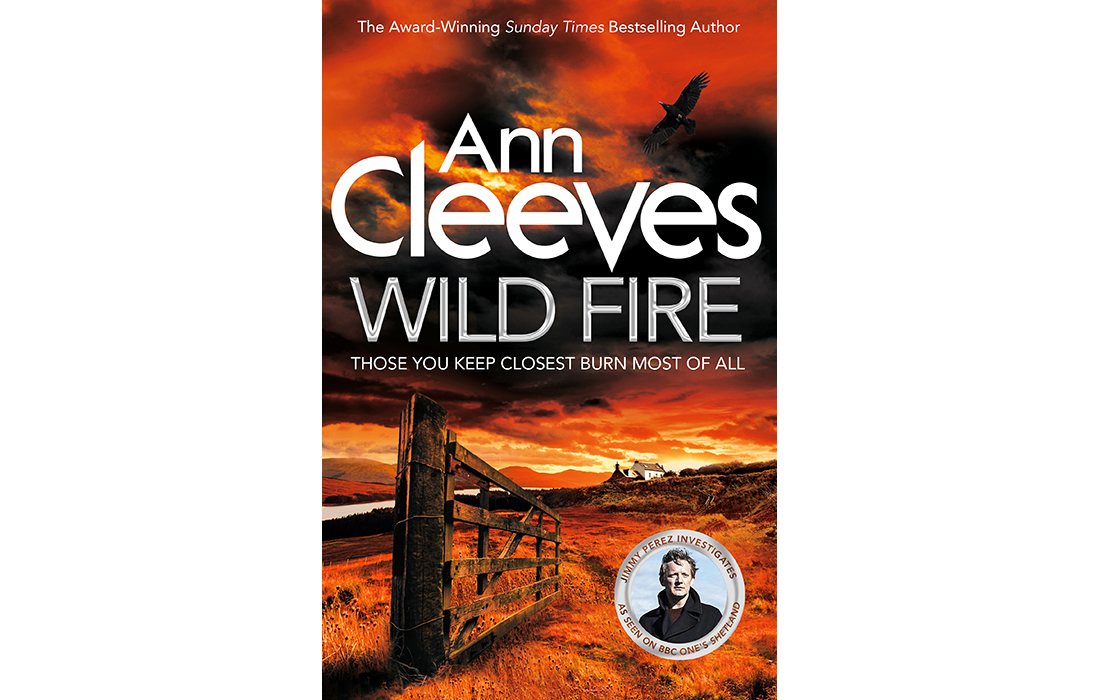
Wild Fire by Ann Cleeves


Image result for wild fire ann cleeves

The crime writing career of Ann Cleeves is an excellent example of the mercurial nature of this extraordinary profession. She was quietly producing very good books for many years before her first Shetland novel, Raven Black, won the CWA Gold Dagger, an achievement swiftly followed by two enormously popular TV series, Vera and Shetland. She's now one of the genre's superstars, but her feet remain firmly rooted on the ground, and she often mentions when giving talks how lucky she's been. Well, up to a point that's bound to be true, and luck is generally necessary in life, but it's also true that in certain respects one makes one's own luck. The fact is that her books have always been enjoyable reads, with a particular strength in the evocation of landscape. We became friends more years ago than either of us cares to remember, and I've found it both wonderful and extremely fascinating to follow her progress.

Which brings me to her new book, Wild Fire, announced as the last Shetland novel (that might, of course, not necessarily also mean the last Jimmy Perez novel, although the publisher's flyer implies that it is - we'll have to wait and see). Ann originally planned the Shetland books as a quartet, but their success meant that four more were commissioned. It's a shame to see such a good series come to an end, but I think it's a sensible decision. Sometimes, a popular series character outstays his or her welcome - I read a book by a fine author (now deceased) the other day; it was written towards the end of the author's career, and featured her regular detective, but I felt it just wasn't up to standard.

No danger of that with Wild Fire. I've been reading Ann's books since before we first met, and I feel this is one of her very best, showing her talents to best advantage. The blend of setting, characterisation, and plot is excellent. I also liked, incidentally, the endpaper map of Shetland; a nod to the classic tradition, yes, but also helpful to readers unfamiliar with the geography of the islands. The book is dedicated to Ann's late husband Tim, who died suddenly last year, a few short weeks after celebrating with the family the award to her of the CWA Diamond Dagger.

What of the mystery? An English family have moved to Shetland, hoping to give their son Christopher, who is on the autistic spectrum, a better life. Unfortunately they become embroiled in a murder case - the victim is a young woman hired by a doctor and his wife to look after their children. The story encompasses important social issues, not just autism but also domestic violence, yet - crucially - this isn't done in a preachy way or at the expense of the narrative momentum. This book is bound to be a bestseller, but so was the disappointing book by the other author I mentioned earlier. What matters much more is that Wild Fire is an excellent example of the traditional detective story, written by an author at the height of her powers.

Monday, 11 June 2018

Alibis in the Archives 2018


I'm back from Alibis in the Archives at Gladstone's Library, the second week-end event celebrating the British Crime Writing Archives which are held there. As archivist of the CWA and of the Detection Club, I set up the BCW Archives, and as a result found myself organising Alibis, in conjunction with the Library's wonderful team, brilliantly led by Louisa Yates.

The week-end was, like last year, a sell-out. The plan is for Alibis to take place again next year, from 22-24 June, and I encourage you to make a note of those dates in your diary!

This year's programme kicked off on Friday evening with "Bannocks and Blood", a murder mystery written by Ann Cleeves which was good fun. Then on Saturday morning, Simon Brett got everyone in the right mood with his extremely witty Golden Age murder mystery - in verse. Andrew Taylor talked about three real life cases in which he has a personal interest and then interviewed me about collecting crime fiction. To illustrate some of my themes during the conversation, I brought along various books, correspondence, and ephemera from my own collection, and there was a chance for members of the audience to have a look at these before Sarah Ward talked about crime in Derbyshire.

After lunch, Ruth Dudley Edwards talked about subversive crime writing, and Mike Jecks about historical mysteries. Then there was a special treat - Professor James Grieve, the leading Scottish forensic pathologist, discussing some famous cases. The day's formal programme ended with a crime writers' panel - see the photo, taken from The Puzzle Doctor's blog about the weekend.

Yesterday began with Jessica Mann talking about female crime writing, and I discussed the BCW Archives with Peter Lovesey and Sheila Mitchell (widow of H.R.F. Keating) before Peter Lovesey closed the show with a very witty account of the calamitous crime writing of James Corbett. By the end of it all, I was just a little tired, but also exhilarated as a result of the enthusiasm of the delegates (and indeed my fellow speakers) which really did make all the work and the planning worthwhile.


Monday, 18 December 2017

Marian, Mary, Tim - rest in peace

I'm sorry to report the deaths of three people, two of them friends of mine, during the course of the past few days. First, Marian Babson, whose real name was Ruth Stenstreem, and who was 88. American by birth, she'd lived in England for many years, and served as Secretary of the CWA for many years; she was a prolific writer of traditional detective novels from 1971 onwards. In addition, she was a worthy winner of the CWA Dagger in the Library, and a member of the Detection Club. On a number of occasions, she sent me copies of nice reviews of my books that she'd spotted in American magazines and newspapers, a kindness I much appreciated. She was a reserved, private person, and in recent years, she'd been in very poor health, but it's still sad that she's no longer with us.

Mary Kelly was someone I never met, because her relatively brief writing career ended long before mine began. She was, however, a writer of high calibre, and her 1961 novel, The Spoilt Kill, won the CWA Gold Dagger award. She too joined the Detection Club, and became its Secretary. There's a lovely anecdote about her in Peter Lovesey's recollections at the end of Motives for Murder, when she was hiding from an editor who wanted to know where her latest book was. She never produced it; writer's block seems to have been the culprit. She'd not been involved with either the Club or the CWA for many years, but her work deserves to be remembered. She was 90.
fullsizeoutput_1537.jpeg
Not a crime writer, but a stalwart of our community and a delightful and witty man, was Tim Cleeves, who died on Saturday. I first got to know him and his wife Ann at the end of the 80s, and I still vividly remember staying at their house in Whitley Bay with my family when Ann, Bob Barnard, Val McDermid, Chaz Brenchley, Reg Hill, and I were working on the first CWA northern chapter anthology. Tim and Helena took the children off to Newcastle while the writers talked crime. We've had plenty of times together since, but what I find particularly poignant is that Tim and I had a couple of convivial conversations only a few weeks ago at the Daggers dinner, when he and the girls were so proud to see Ann receive the CWA Diamond Dagger. The photo shows Tim alongside Brenda Blethyn, watching the presentation on a very happy night. His sudden death is a real tragedy, and the thoughts of crime writers and readers will be with Ann, Sarah, and Ruth at this sad time.

Monday, 30 October 2017

The CWA Dagger Awards 2017


The CWA Dagger Awards Gala Dinner is one of the major occasions, perhaps the major occasion, in the crime writing world, in Britain at least. I've attended quite a number of Dagger award ceremonies (for a while they were lunches rather than dinners) over the past twenty years, but last Thursday's Gala Dinner at the Grange City Hotel in London was a very different experience, because in my capacity of Chair of the CWA, I was hosting the event. To say that this took me way outside my comfort zone would be an under-statement, but as things turned out, it was a marvellous evening, and Hayley and the organising team deserve huge credit for making sure that everything went so well. Thanks also to Gary Stratmann, our photographer for the evening.


Huge credit also goes to our Master of Ceremonies, the inimitable Barry Forshaw, whom I presented with a CWA Red Herring award. Barry, the consummate professional,  made sure that the ceremony went with a swing. And our guest speaker was absolutely excellent. He was Robert Thorogood, creator and writer of Death in Paradise, who proved to be both witty and charming. We had a very enjoyable chat about Golden Age fiction, of which (as those who have watched the show can guess) he is a huge fan. Robert had a tough act to follow, because last year James Runcie was a splendid guest speaker, but we were lucky to have someone equally impressive this time around.


I've attended quite a lot of awards ceremonies over the years, in the legal world as well as in the writing world, and the one thing I've learned is that, if you aren't careful, they can drag on, and the audience becomes bored. I vividly remember legal dinners where sweepstakes were run to guess the length of the seemingly interminable speeches. We were determined to make sure this didn't happen on Thursday.. Whilst it's obviously essential not to rush through awards in such a way that they make no real impression, the pace of the evening's events was an important element in creating the feelgood factor that prevailed from start to finish. An added bonus for me was that a story from a book I'd edited, Motives for Murder, won the CWA Short Story Dagger., though I hasten to emphasise that the judging process is completely independent!


It was a glittering occasion, and the audience of 250 people included such stars as Peter Capaldi and Brenda Blethyn. I talked briefly about the progress the CWA has made this year, and had the great pleasure of presenting Ann Cleeves with the CWA Diamond Dagger. All in all, a memorable occasion, a career highlight, and one that (now it's over!) I shall look back on with enormous and lasting pleasure. 


Monday, 12 June 2017

Alibis in the Archive


I'm back from an exhilarating week-end at one of my favourite places, Gladstone's Library in Hawarden. We had the Alibis in the Archive weekend event to celebrate the official launch of the British Crime Writing Archives - that is, the archives of both the Crime Writers' Association and the Detection Club.

We organised a packed programme, and the aim was to give delegates plenty of value for money Even so, we were delighted when the week-end sold out back in March -  only a few weeks after being announced. Capacity is limited, and delegates who couldn't be accommodated in the lovely rooms at the Library were able to stay at a nearby hotel.

After dinner on Friday, the first event was an interactive murder mystery evening hosted by Ann Cleeves. This proved enormously popular. On Saturday, we kicked off with David Stuart Davies (who had acted in the murder mystery) giving a rousing talk about Sherlock Holmes. David Brawn of Harper Collins then talked about working with Agatha Christie's estate. I talked about the CWA and the Detection Club, and also their archives. And then Ann talked about Vera and Shetland. TV scripts that she has donated will in due course form part of the archives.

On Saturday afternoon, Rob Davies talked about the British Library, Linda Stratmann about poison, Kate Charles about clerical crime, and Kate Ellis about digging up the past. After dinner we had - yes! - a second murder mystery evening, this time hosted by Kate Ellis. Then on Sunday, Stella Duffy talked about Ngaio Marsh, Rob and I about the British Library's Crime Classics, and there was a panel discussion about Golden Age detective fiction.
We were delighted with the convivial atmosphere, and the enthusiasm of the delegates. A new group of people previously unfamiliar with Gladstone's Library fell in love with it. I had the pleasure of meeting many nice people - including John Bude's daughter, Jennifer.- and also of seeing a project that I've been involved with for a long time finally achieve a very significant milestone. The Archives will develop in the years to come, and I am optimistic that they will become an increasingly important resource for people who are interested in the heritage of crime fiction. The photos illustrating this post were taken by CWA Secretary Dea Parkin, to whom many thanks.

Wednesday, 7 June 2017

Murder Squad

Back in the year 2000, I received a phone call one day from my friend and fellow crime writer Margaret Murphy. She was experiencing a feeling that many, many writers will identify with. She was writing good books, and earning good reviews. But she hadn't broken through. Her profile was, she felt, relatively low. And she wanted to do something about it, by teaming up with a group of fellow writers in a similar position. Was I interested? You bet I was. Margaret's a very efficient person, and she soon recruited six colleagues - the result was that we formed Murder Squad.

We started doing events together - often just two or three of us, occasionally more. We travelled around the country to promote our books and each other, and great friendships were formed. We have produced three short story anthologies and even a CD. We even featured on TV's Inside Out programme, and the producer's idea of filming me wandering around underneath Runcorn Bridge even gave me the idea for a key scene in Waterloo Sunset. It's been a lot of fun.

Seventeen years on, Murder Squad is still going strong. So it's lasted much longer than the Beatles! There have been personnel changes, but not many. Sadly, our friend Stuart Pawson died, while Chaz Brenchley and John Baker no longer write crime fiction. But we have been joined by Chris Simms and Kate Ellis. Occasionally all six of us get together - the above photo was taken at Carlisle Crime Festival last year.

Now we're having a bit of a relaunch,and as part of that, we've revamped our website. Do take a look at it, and if you don't know them already, do take a look at the excellent books written by my fellow squaddies. I suspect many of you will already know Ann Cleeves' books, but you'll also enjoy the work of Cath, Kate, Chris, and Margaret (or should I call her A.D. Garrett? Or indeed Ashley Dyer!) You'll be glad you did, just as I'm very glad that Margaret called me all those years ago. .

Monday, 23 January 2017

The CWA Diamond Dagger and Ann Cleeves


Image result for ann cleeves
Today the Crime Writers' Association has announced that the winner of this year's CWA Diamond Dagger is Ann Cleeves. This news gives me special pleasure for two reasons. First, now that I'm the Chair of the CWA, I shall be the person to present Ann with the Dagger at the CWA Daggers awards dinner in London in late October. Second, she just happens to be (and it is a coincidence, I can assure you) one of my oldest friends in the crime writing world.

I first came across Ann's work before I met her. It was when I was battling away with my own first novel. I was interested to read her first book, not only because I'm a lifelong fan of detective stories, but also because it seemed to me to be a good idea to study the market, and what new writers of a roughly similar age to me were up to. In the same spirit, I was reading the first Peter Robinson novel at around that time. I enjoyed their books, and reviewed them. I even wrote an article discussing their evocation of rural landscape, with the title "Up the Garden Path". But the magazine I sent it to turned it down...

Later I met Ann in person - via the CWA - and we became friends. We both joined up with Murder Squad when Margaret Murphy founded it, and this led to many shared events. The first photo below, taken by Zoe Sharp, shows the original Squad line-up, including the late Stuart Pawson. The second, taken in her back garden at Whitley Bay, shows her with her husband Tim and CWA Northern Chapter doyens Peter and Margaret Lewis. I read and reviewed The Crow Trap, then apparently a stand-alone novel, and I like to think I was one of the very first to spot the potential of Vera Stanhope as a character.
After many years of working quietly away, in recent times, Ann has found fame and fortune thanks to the televising of her series about Vera and about Shetland's Jimmy Perez. Her story is a happy one. Her career (because she was writing good books many years before she became widely-read; I vividly recall us discussing how modest an income one could manage to live on as a writer) is a good example of why one should never lose faith. Yet she's always remained a good friend to readers, writers and libraries. Part of the point of the CWA Diamond Dagger, in the view of the CWA committee, is that it recognises not only the sustained excellence of a person's body of work but also their overall contribution to the genre. Nobody can be in any doubt that Ann is a very worth winner indeed.

Monday, 9 January 2017

Alibis in the Archives

I'm delighted to announce an event that I think will be of great interest to crime fans, whether their tastes lie in classic or contemporary crime writing. Even better if you enjoy both! The event is called Alibis in the Archives, and it will be held at Gladstone's Library from 9-11 June. The library is in Hawarden, Flintshire, but for anyone unfamiliar with that corner of North Wales, it's only a short distance - a bus-ride of twenty minutes - from Chester and it's close to the motorway network.

The event will celebrate the launching of the Crime Writing Archive at Gladstone's Library. This takes the form of two separate but distinct archives, for the Crime Writers' Association and for the Detection Club respectively. The former archive is much more substantial than the latter at present, but I do see this as a landmark moment in the history of crime fiction heritage. Donations of relevant materials to the archive are, of course, warmly welcomed, and the process of developing the archives and cataloguing them is ongoing.

The venue is, to my mind, ideal. Regular readers of this blog will know that I've enthused about Gladstone's Library several times over the years. It has a great history, as well as a terrific collection of books and other materials, and it also has a wonderfully atmospheric ambience. A unique feature is that it's residential - so you can stay there, in one of the pleasant rooms, and also enjoy the very good food. (Though I should add that accommodation is inevitably limited - a good local hotel will also be utilised for this weekend.)

So what will be happening over the weekend? Plans are afoot to make it not only be interesting but also a bit different. So there will be at least one interactive murder mystery evening, plus talks from a range of writers, including Ann Cleeves, who will be discussing Vera and Shetland among other topics. I'm really looking forward to it, and if you would like to book, the Library's expertise in event management is such that I'm confident you won't be disappointed.

Monday, 21 November 2016

Cold Earth by Ann Cleeves

A couple of weeks ago, I spent an enjoyable evening at the British Library. Mark Lawson was interviewing Ann Cleeves and me on the topic of "the return of the Golden Age of crime fiction". Ann is a contemporary writer working in the vein of the traditional mystery, and very successfully too. She talked about her take on Golden Age writers - though she's not such a fan of Agatha Christie as I am, for instance - and about how, on occasion, there are GA elements in her work. An example is The Glass Room, a very good book featuring Vera Stanhope.

The event came, for her, at the end of a hectic tour promoting her new book, part of the Jimmy Perez series this time, Cold Earth, which is published by Pan Macmillan. This is her 30th novel, and Maura, her publicist, arranged as a surprise a video with contributions from a wide range of writers, including Ian Rankin, Val McDermid and her colleagues in Murder Squad, congratulating her on the milestone. A nice touch. When recording my snippet, I took the opportunity to take a look again at her very first novel, which was certainly in the GA tradition, and it was pleasant to reflect on the progress she's made since those early days.

In Cold Earth, excellent thematic use is made both at the start and the end of the story of earth as a powerful elemental force. The book opens vividly with a landslide on Shetland which coincides with the funeral of a character encountered previously in the series, and which causes considerable havoc. When rescue operations get under way, a body is discovered. But, surprise, surprise, the deceased did not die of natural causes. The corpse belongs to a woman, and there is some mystery about her true identity.

A key feature of the book is the development of the relationship between Perez and his boss Willow Reeve. In this story, we get a fuller picture than before of Willow s personality, and it is an appealing one. There is some debate - especially among people who like Golden Age fiction - about whether modern writers spend too much time on exploring the personal lives of our detectives. Some people prefer us simply to get on with the story.

I agree that one can over-do the tormented personal lives of one's detectives, but, like Ann, I find that the development of the detectives' lives is an integral part of a crime series. There is no reason in principle why this should prevent us from getting on with the story. Admittedly Poirot and Miss Marple never changed during their long careers, but look at the emphasis Dorothy L. Sayers laid on the evolving relationship between Harriet Vane and Lord Peter: she set the pattern that we follow today, I reckon. The key to success is to balance character, plot, and setting. This is easier said than done, but in Cold Earth, Ann does just that with her customary skill.;


Wednesday, 12 October 2016

Ann Cleeves - Too Good to be True

Ann Cleeves' Too Good to be True is an entry in the Quick Reads series. I read a couple of titles in the series when it was first established, but I've not seen the books - which are much shorter than conventional novels and also cheaply priced - around so much in recent times; perhaps I've not been looking in the right places. But this one was definitely worth tracking down, not least because it's an addition to the Jimmy Perez series. And it only costs a pound.

The driver behind Quick Reads is a sobering fact. One in six adults finds reading difficult, and many never pick up a book. This is a tragedy. When I, and I'm sure all readers of this blog, reflect on how much our lives gain from reading, the thought that many people feel deterred from sharing this pleasure is truly depressing. In this positive initiative, leading writers are commissioned to write stories that are, in effect, novellas, told without the use of vocabulary that might seem intimidating.

Apparently, in the last ten years, 4.5 million Quick Reads books have been distributed. An impressive figure by any standards. The books are available from libraries as well as retailers, and over three million library loans have been registered. This is a reminder of the value of our library system, and why closing libraries is a Bad Thing (I talked recently about the campaign to save Lymm Library - this is being pursued with vigour, though the outcome is impossible to foresee with any confidence).

Back to Ann's book. Intriguingly, she has Jimmy leave his Shetland base to respond to a cry for help from his ex-wife, who is now married to someone else. A local woman has committed suicide - but Jimmy soon becomes dissatisfied with the official view of the case, although his personal link with his ex complicates his investigation. Ann's crisp and concise style is very well suited to the Quick Reads concept, and I'm sure that this is the kind of story that will indeed encourage people who aren't natural readers to get into this most enjoyable of habits.

Monday, 22 August 2016

St Hilda's Crime and Mystery Week-end


I've just returned from Oxford after taking part in the St Hilda's Crime and Mystery Week-end -the 23rd year this conference has taken place under the admirable stewardship of Eileen Roberts and Kate Charles. The company of fellow readers and writers was very convivial, as always, and the weather was kinder than the forecast had threatened. Talks were chaired by Natasha Cooper with her customary excellence, and although other commitments meant she had to leave early, Andrew Taylor was the perfect substitute to bring on from the bench.

There was a varied group of speakers, including Andrew (who discussed historical crime fiction), Marcia Talley (very good on "cozy crime") and Sarah Weinman, whose topic was domestic suspense. The international guest of honour was Lee Child, and the Friday night dinner speaker was Ted Childs, the ITV guru responsible for Inspector Morse. Val McDermid was the after dinner speaker on Saturday. I learned something from all of them.


My talk was "Trending - Why is Golden Age fiction fashionable again?" I shared a platform with Carol Westron, who talked about "rules" during the Golden Age. And here let me tell a perfectly true story. I was first asked to speak at St Hilda's a long time ago; my topic was Balliol's crime writers and I was very nervous. I felt the content was okay, but (although people said nice things about the talk) I felt my delivery of the material was flawed by anxiety.. The truth is that, although I've done a lot of public speaking and advocacy in my twin careers as solicitor and writer, it's not something that has ever come naturally to me. Perhaps it's odd, but I find reading from a prepared text harder than talking without notes on a favourite topic, and making it up as I go along.  But I've spoken at St Hilda's several times now, and I'm glad to say that it's become progressively easier for me. This year I worried less in advance about my presentation than I have done previously. So I've gained confidence - but it has taken a long time, perhaps longer than most members of the audience would guess.

As ever, the social side of the week-end was hugely enjoyable.. Before the conference began, I was glad to have the chance of dinner with my old friend Ann Cleeves, and on the Saturday night, those at my table included two superstars of the genre, Lee Child and Val McDermid, along with Andrew, who is one of the contemporary crime writers whom I most admire.. It was really rather memorable, and for me it was - quite genuinely - an honour to be part of it all.. .

Wednesday, 20 July 2016

Motives for Murder - a new Detection Club book


I'm delighted to announce that the Detection Club will publish in November a brand new collection of short stories, Motives for Murder. The idea is to celebrate the 80th birthday this year of one of the Club's most distinguished members, Peter Lovesey. The book will be published in Britain as a paperback original by Little, Brown, Peter's publishers, and in the US (with a limited hardback edition as well) by Crippen & Landru, a small press run by Peter's good friend Doug Greene.

Setting the wheels in motion for this book was my first act as President of the Detection Club. I wanted to honour Peter, who has given so much to the Club over many years (and has, incidentally, been a great source of information about its past) and I also wanted to showcase the short story writing talents of our wonderful members. The Club's membership is relatively small, and the deadline was exceptionally tight, but more than a third of those members offered to contribute to the book, which delighted me. The result is a very substantial anthology indeed;.

The book benefits from a foreword by the legendary Len Deighton. Len has published very little over the past twenty years, so I was thrilled when he agreed to get things rolling, and there is also a fascinating afterword by Peter himself, which includes many stories about his early days in the Detection Club back in the 70s.

Each of the twenty stories (well, nineteen stories and one sonnet!) was written specially for the book, and each is prefaced by a few words from the author about Peter's contribution to the genre. There are some wonderful things in this book, written by leading crime writers such as Ann Cleeves, Andrew Taylor, Len Tyler, Michael Ridpath, Liza Cody and...well, the list goes on. I'm thrlled that we've put together such a special book in  a very short space of time and hope that crime fans everywhere will find something in it to delight and entertain

Tuesday, 15 March 2016

The Golden Age...and feminism


Ann Cleeves has been a guest of honour at a literary festival in Dubai (sponsored by Emirates Airways, who no doubt find it a less stressful form of marketing than backing Arsenal!) and I was delighted to see that she's been talking about the implications of the renaissance in Golden Age fiction and the mega-success of the British Library Crime Classics in particular. The Sunday Telegraph picked up on her comments in a very intriguing article.

We can debate endlessly whether the renewed popularity of Golden Age mysteries strikes a blow for feminism. Obviously it can be said that many of the social attitudes evinced in the books are wholly out of date, and as inappropriate today as some of our attitudes would have been back then. And it's certainly true that not all Golden Age books are masterpieces. Ann is, as she says, by no means a total fan of them, although she has also pointed out that there are GA influences in some of her books, not least The Glass Room, a very good Vera Stanhope novel.

What is, to me, most striking,is the fact that the renewed interest in Golden Age fiction is giving rise to debate, not just in the UK and US but further afield. It's reasonable for views about the merits of the books to diverge. One (very generous) review of The Golden Age of Murder which said I'd never read a GA book I didn't like was, to be honest, well wide of the mark in that respect. It never bothers me if people tell me they don't like Christie or Sayers, or both of them, even though I'm a big fan. I do, though, wince when critics who have never, or rarely, read the books dismiss them and their authors out of hand.

Ann's suggestion that enthusiasm for GA books is in part a reaction to gory serial killer novels is especially thought-provoking. I think there's something in it,even though I'm one of those people who likes all kinds of crime fiction, ranging from fairly cosy (I draw the line at cats as detectives, I'm afraid) to noir; grisly novels certainly aren't always exploitative, even if some are. What is really gratifying is that those readers who do want to escape into the Golden Age now have a very wide range of titles to choose from. And I can promise that there are some quite excellent Crime Classics in the pipeline....

Sunday, 21 February 2016

Television Writing: Shetland, Dickensian, and War and Peace

I've been following a number of well-crafted TV series lately, including War and Peace and the soap opera-like Dickensian, which finally comes to an end this evening, though I gather a second series may be planned. War and Peace was quite brilliantly adapted by Andrew Davies. His scripts seem to me to offer a masterclass in economical writing; you could say that he's the TV writing equivalent of a Len Deighton or an Elmore Leonard. I have also continued to watch Shetland, which - as I mentioned here a while ago - got off to a very good start.

I hadn't realised that this series of Shetland was to involve a single story stretched over six episodes, and this structure has cons as well as pros. However, the added length has given the writers the chance to address a number of issues, above all the effect of the rape of one of the central characters. Ann Cleeves has written an eloquent article about this aspect of the story in The Guardian which I think raises some important questions about the portrayal of violence in crime fiction, and deserves a wide readership.

Quite apart from this, the series has made clear to me what a fine actor Douglas Henshall is. He has the knack of conveying a considerable range of emotions with great economy, (you'll have gathered that I'm an admirer of economy!) and I've been increasingly impressed by his performance. Originally, he didn't fit my idea of Jimmy Perez, but he's definitely won me over.

Shetland has held my attention from the first episode, and credit must go to the main writer, Gaby Chiappe. The story is more like a thriller rather than a detective story, complete with a somewhat stereotypical gangland villain, and it has seemed rather meandering at times. It could be argued that, sensitively as the rape sub-plot is handled, the rape itself was largely superfluous to the plot, though whether that is so or not won't be clear until we've seen the final episode.

Possibly six episodes was one or two too many; the same issue arises even more acutely with Dickensian.,which has occasionally dragged. Overall, though, like Dickensian, it makes very good television, and if you haven't watched the shows this time around, it's definitely worth looking out for the repeats or the DVDs. As for War and Peace, until recently I've never felt a burning desire to read Tolstoy. But Davies' wonderful writing has made me realise that I've been missing out..

Wednesday, 29 July 2015

Harrogate - and a question

Other commitments have meant that I'm reporting on the Theakstons Old Peculier Crime Writing Festival at Harrogate ten days after it came to an end. But it was a really enjoyable week-end, and it's prompted me to ask readers of this blog a question.

The programming chair for the Festival was Ann Cleeves, and she is such an efficient person that it was predictable that the whole week-end would be very well organised. And it was. Ann would be the first to give much credit to the very professional team that handles all the arrangements. It all seemed to me to run like clockwork. As usual, there was much socialising in the bar and elsewhere, and I took the opportunity to have a number of meetings, not least with my agent, with whom I was discussing my future writing plans. The good news is that he is happy with them!

I enjoyed the hospitality of Harper Collins at a dinner on the Friday evening, and met a number of fascinating people, including a new author, Ben McPherson; I sense that his debut novel will be well worth looking out for. Later on, Ann introduced me to Brenda Blethyn, the extremely pleasant star of Vera, and I finished up having a long chat with an old friend, that very fine writer Peter Robinson. The following night, I hosted a table at the Sicilian-themed murder mystery dinner masterminded by Kate Ellis. Great fun.

On Sunday, I took part in a panel celebrating the life and work of Patricia Highsmith. The moderator was Andrew Taylor and my colleagues were Peter James, Perer Swanson, and Sarah Hilary. Sarah had just won the Theakstons Prize for best crime novel of the year, and this gave me special pleasure as some years ago I included an early short story of hers in one of my anthologies for the CWA. She is a real star.

One questioner in the audience raised the issue of the relative significance of the author's life and the author's work. And this is my question to you - how interested, if at all, are you in the biography of a writer? Do you think it's relevant to their books?

My own views on this have shifted over the years. I used to think that the books were overwhelmingly more important than the life. Now, I take much more interest in the biographical material. In fact, I now think that you can't fully appreciate Highsmith (who, admittedly, had an extraordinary life) without knowing something of her life. But I'm sure that plenty of readers would take a different view. So - do let me know your opinion, and why you hold it.. 

Wednesday, 1 July 2015

In Bitter Chill by Sarah Ward - review

In Bitter Chill is a first novel by Sarah Ward, best known hitherto for her excellent blog Crime Pieces. The book is published by Faber, which is in itself a hallmark of quality, and I must say that I think it's a very satisfying book, judged by any standards, let alone those applicable to a debut. I should also say that Sarah is someone I've known and liked for several years, but I would not enthuse about this novel in the way that I do unless I genuinely found it to my taste.

The story is set in a fictional Derbyshire town, Bampton. Derbyshire is a wonderful county, one I know and love (I've also had the mixed blessing of supporting the county's cricket team since I was young; this has at least proved character-building, given the team's propensity for snatching defeat from the jaws of victory...) Until now, Stephen Booth, a very capable author indeed, has been the leading writer of Derbyshire crime, but Sarah's writing is in the same league. They both produce well-crafted traditional mysteries with credible police officers and good descriptions of landscape..

I'm conscious that one has to be wary of comparing one writer with another, but the other comparison that did cross my mind when reading this book was with Ann Cleeves. Ann has a gift for combing her well-plotted mysteries with sound evocation of character and place, a gift that amazingly was long under-estimated before the massive success of Vera and Shetland caused her to receive her well-deserved international acclaim.I don't expect Sarah to have to wait as long for widespread recognition. She is, like Ann, someone whose work demonstrates an understanding of human frailty, but also a good deal of compassion, a combination that is very appealing to many readers.

The plot involves a "cold case" in a cold climate. Back in 1978, two girls went missing, and only one returned. A death in the present day causes the local police to start reconsidering what happened. The kidnapping of the girls might seem reminiscent of Brady and Hindley at work, but the storyline is very different from the tragedy of the Moors Murders, though it is certainly not without bleakness. A really good read.