Showing posts with label Soji Shimada. Show all posts

Monday, 18 April 2022

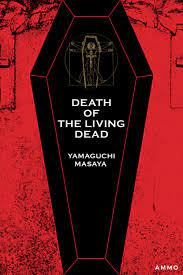
Death of the Living Dead by Masaya Yamaguchi


In the last few years, I've become increasingly fascinated by the inventiveness of Asian crime fiction. Even before my trip to Shanghai in 2019, I'd been reading a range of mysteries from the Far East which, although often very different from familiar western detective fiction, and sometimes quite outlandish, are often very appealing. Meeting Soji Shimada served to strengthen my interest in Japanese detective fiction, as did conversations with the critic and writer Steve Steinbock, who speaks Japanese and is a great fan of the country's crime writing. Their enthusiasm is infectious. Coincidentally, I've begun to have books of mine translated into languages such as Chinese, Japanese, and Korean, which I find exciting.

I was, therefore, pleased, when I was contacted a few weeks ago by Masaya Yamaguchi, whom I've never met in person, but with whom I've been in touch for a while. He invited me to take a look at the newly published English translation - by Ho-Ling Wong - of his celebrated debut novel, Death of the Living Dead. and originally published back in 1989. This is a long book, unusual in structure and quite unlike any detective story I've read before.

As other commentators have already pointed out, this is a hard book to review, because of its extraordinary nature. But I can understand why a number of bloggers have enthused about it: see, for instance, the laudatory review on that excellent blog, The Grandest Game in the World. And as someone who has spent most of his life in Cheshire, it amused me that one of the key characters is called...Cheshire.

As the title suggests, this is a story about zombies, and that may put off some readers, who insist on rationality in their detection. But I think it's true to say that, within his own surreal universe, Masaya Yamaguchi plays fair with his readers in a truly mind-spinning mystery. At times, the pace is not fast, but the book is packed with intriguing cultural references - the chapter epigraphs come from John Lennon, Freud, King Crimson, Poe, Arthur Schnitzler, Neil Young, Robert Louis Stevenson and many more. There's a cast of characters, a map of a cemetery, a floor plan (of a 'west wing'), locked room mystification, and flashes of wit as well as a good deal of delving into the macabre - and a number of touches I wish I'd thought of. Yes, this is quite a book.

Monday, 16 March 2020

Seishi Yokomizo and The Honjin Murders

In recent times I've become increasingly interested in crime fiction from the Far East, countries like Japan, China, and Korea. (And that reminds me, I have some nice news to share. The Story of Classic Crime in 100 Books has just been acquired by a Korean publisher - the first time a book of mine has been published in that country.) Pushkin Vertigo have done crime fans a service by publishing translations of two novels by Japan's Soji Shimada, whom I enjoyed spending time with in Shanghai last November. And now they've gone back in time by publishing two books by Seishi Yokomizo.

Yokomizo lived from 1902-81. He was born in Kobe and his first story was published as early as 1921. He introduced his series detective Kosuke Kindaichi in The Honjin Murders, which won the first Mystery Writers of Japan award in 1948 but the book has never been translated until now, by Louise Heal Kawai (who, I think, has done a good job.) Pushkin Vertigo have also published The Inugami Curse, which I hope to read shortly.

In the meantime, I must say that I enjoyed The Honjin Murders, which is firmly in the "impossible crime" tradition. There's a list of characters and a plan of the crime scene, coupled with extensive discussion about locked room mysteries. As early as page two, John Dickson Carr gets a mention, along with Leroux, Leblanc, Van Dine, and an author I haven't read, Roger Scarlett, author of Murder Among the Angells. Scarlett, by the way, was a pen-name for two American women, Dorothy Blair and Evelyn Page. Their five books were reprinted not long ago and I must take a look at one or two of them.

Yokomizo sets his story in 1937, a decade or so before it was written, and I was interested that it illustrates Dorothy L. Sayers' belief that 'respectability' and its preservation were key ingredients in Golden Age mysteries. In fact, I've just written a short Golden Age style story for My Weekly called "Respect and Respectability" which deals with the same theme. Anyway, Yokomizo got there a long way ahead of me. His book is short and entertaining, with an ingenious if unlikely plot. I'm delighted that it's finally been translated into English.


Sunday, 24 November 2019

Shanghai and Mystery Games


I'm back from an utterly unforgettable trip to Shanghai, where I was guest of honour at the first International Mystery Game Expo last weekend. My first trip to China proved to be a brilliant and at times surreal experience. Surreal? Well, for one thing, I never imagined that I'd ever be interviewed on stage by a Chinese magician wearing a Spiderman mask who happens to be a vlogger with a million-plus subscribers. Or that I'd witness two eminent locked room mystery novelists, one Japanese, one French, crooning Beatles songs ("Michelle" and "Yesterday") to a Chinese audience in English. But these were among the memorable moments of a short but action-packed visit.


What was it all about? I was pleasantly baffled when the original invitation came to attend. I was told that offline murder mystery games are massively popular with millions of young Chinese people. And these games are heavily influenced by the classic detective novels of the likes of Ellery Queen and John Dickson Carr. Locked room mysteries are very popular in China (as they are in Japan) and at least twenty Carr books are now in print in China. The expo involved a large number of game-sellers exhibiting their wares to fans. The organisers were keen to strengthen the connection between mystery game enthusiasts and present day exponents of the classic mystery.


So they invited a number of guests, French board game designer Guillaume Montagi, Japanese author Soji Shimada (author of the Tokyo Zodiac Mystery) and Paul Halter, French author of about forty locked room mystery novels, as well as myself. Janet Hutchings, editor of Ellery Queen's Mystery Magazine, sent a video message, and copies of EQMM were available to attendees. I must admit that I had some anxieties in advance of my trip. It felt very much like a venture a long way outside my comfort zone in more ways than one. But my hosts looked after me royally. I was flown out business class, taken on sight-seeing trips and also had the pleasure of visiting the home of Elliot Han, whose collection of signed and inscribed classic crime is quite breathtakingly impressive. A number of rare inscribed classics by the likes of Christie, Carr, Queen, Stout, and E.C. Bentley (Trent's Last Case, a first edition inscribed to John Arlott of all people) were on display at the expo.


The expo was attended by thousands of people (up to 5000, I was told, on the Saturday alone) and what struck me very, very forcibly was their youth. I hardly met a single Chinese person under the age of 35, and believe me, I met a lot of people in the course of a short trip. Their enthusiasm for mystery fiction and the classic examples of the form is palpable. It's really quite exciting. As for the mystery games, Paul, Soji, and I each took part in one of these games. They can last for up to seven hours, but ours were restricted to two hours. It was very much an interactive experience - this is clearly part of the appeal: the games have a social side. I played with a group of four women and one man (the games are equally popular with men and women) and they were good companions - that's us, below, with the game's designer. Suffice to say that the game was highly convoluted, and I struggled to keep up...

Image may contain: 7 people, including Martin Edwards, people smiling, people standing

As well as my appearances on stage with Paul, Guillaume, and Soji, I was asked to give a short talk on British mystery games at the Guoman Hotel, where I was staying, and a lecture on classic UK fiction and the Detection Club. The latter was held in the historic Sinan Mansions, and I was startled to be greeted by a packed, standing-room-only crowd. Watching people queue up before the doors open from our vantage point in a coffee shop across the road was quite an experience. Thankfully, I had a very capable and charming young translator.


My hosts were delightful. Special thanks to Fei Wu, who went to great lengths to make sure I had a great time - and that the meals suited my rather narrow tastes perfectly. Fei Wu is himself a crime writer to watch. He was the first from China to contribute a story to EQMM and he has just produced his first novel, The Lost Winner, which is a highly innovative book. I hope to host a guest post from him in due course to tell you more about it. I was, of course, pleased to meet Paul and his wife Martine and Soji and to ask them to sign my copies of their books. The group who worked hard to look after us included Daisy Suo, Zheng Liu, Fan, Mr Weird the magician and vlogger, and Elliot, and I met a good many pleasant crime fans. All these young people made a great impression on me, and I feel that the detective story in China is not only safe in their hands but also promises to have an exciting future.


Friday, 23 November 2018

Forgotten Book - The Tokyo Zodiac Murders

Today's Forgotten Book, The Tokyo Zodiac Murders by Soji Shimada, dates back to 1981, but more than thirty years elapsed before the novel was published in English by those splendid publishers Pushkin Vertigo. The translation was undertaken by the equally splendid John Pugmire, whose own imprint, Locked Room International, has been responsible for bringing to to English language readers some truly fascinating locked room mysteries.

Shimada's book caused quite a sensation in Japan on its original release, in that it represented a striking move away from a focus on gritty realism. The story has many elements (such as floor plans and footprints in the snow) that are pure Golden Age, and Shimada is a long-time admirer of classic detective fiction from Britain and America, but it is also modern, dealing with some subjects in a degree of gruesome detail that you would never find in, say, the work of John Dickson Carr or Anthony Wynne.

The story deals with a sequence of murders (and dismemberments) that took place in 1936, and their reinvestigation in 1979. The new inquiry is undertaken by a sort of Holmes-Watson duo, the brilliant young astrologer Kyoshi Mitarai and his friend, the narrator (of most but not all of the book), an illustrator called Takeshi Yoshiki. So it's a cold case mystery, and a very complicated one too. But there are some nice touches of humour, as in Kyoshi's witty debunking of some of the most famous Sherlock Holmes stories - rather as Holmes affected to disdain Gaboriau's stories about Lecoq.

I've never visited Japan, but in recent years I've become increasingly interested in the country's detective fiction, and it was a great thrill for me when The Golden Age of Murder was bought by a Japanese publisher. The Tokyo Zodiac Murders paved the way for a new generation of writers such as Alice Arisugawa who have made intriguing use of classic tropes in their fiction, combining elements familiar from Carr and company with a Japanese sensibility that I find intriguing. I gather that Pushkin Vertigo are planning to publish more crime fiction from Japan, and I look forward to reading it.

Monday, 5 September 2016

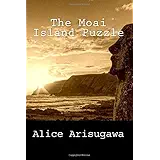
The Moai Island Puzzle


Product Details


The Moai Island Puzzle by Alice Arisugawa is a Japanese mystery in the classic Golden Age vein which has recently been translated by Ho-Ling Wong into English and published by John Pugmire's excellent imprint Locked Room International. This edition benefits from an extremely interesting foreword by a leading exponent of the classic Japanese mystery, Soji Shimada.

The story is told by Alice Arisugawa, who is a university student and detective fiction enthusiast. He (yep, Alice is male) is a member of a small Mystery Club - and Ellery Queen and The Nine Tailors are referenced on the second page of the prologue, making it clear that the reader who is a Golden Age fan is in for a treat - a homage to the twisty murder mystery of days gone by.

The set-up is itself classical. Alice and his friend Maria make up a small party who travel to a tiny island off the coast of Japan in search of hidden treasure. The island is fictitious, but as the book's title makes clear, it is populated by a large number of moai, whose construction was influenced by the moai of Easter Island. And soon the moai themselves become clues to the puzzle.

Death has occurred on the island in the recent past, and soon crime returns. We are presented with a dizzying confection of cipher, locked room puzzle, and dying message clues as Alice and Maria try to work out what is going on. It's a well-constructed story with a satisfying pay-off, and there's even a mini-lecture on Dying Message Clues (in the tradition of Dr Fell's Locked Room Lecture). Great fun.

.