It is safe to describe Cecil Freeman Gregg (1898-1960) as a forgotten author. He was, in fact, one of the genre's few accountants (Richard Hull was another) and he enjoyed a long career. The Murdered Manservant, his first book, appeared in 1928 and his last, Professional Jealousy, in the year of his death. It seems that he may have only had two publishers in that time, Hutchinson and Methuen, and I'd have thought they both rank as a cut above some of the competition. So Gregg is not an insignificant figure.
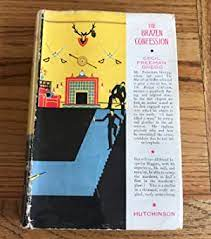
I was tempted by a lovely inscribed copy of one of his earliest books, The Brazen Confession. He was barely past 30 when he wrote it and the story brims with a young man's energy. It also features one of his main series characters, the formidable Inspector Higgins. But what appealed to me a good deal was the opening premise.
This begins as an inverted mystery. An author is writing a confession to murder. His name is Scott and he exults in his success at having committed the crime and got away with it. Hence the title of the book. It's clear that Gregg was trying to do something fresh here. This wasn't the first crime novel to be written from the killer's point of view, although it did appear a year before Francis Iles' highly influential Malice Aforethought. But writing in the first person was a bold move and after about sixty pages we move to a more conventional third person narrative.
The book is, I discovered, much more a thriller than a study of criminal motivation. The gusto of the writing carries the story along, but I don't think the potential of the premise was maximised. Gregg wanted to write one kind of book and I was hoping for something different. So, not his fault but not a masterpiece, either. However, I'd say this is an interesting example of a young writer flexing his literary muscles and I'll certainly be glad to take a look at some of his other work.
