Friday, 29 December 2017
2017 - Publications
This has been an eventful year for me on many fronts, and I have an over-riding feeling of gratitude for twelve months of good health and good fortune. I became Chair of the CWA at the start of 2017, and it was always clear that this would take up much more time than does being President of the Detection Club, which is a much smaller and less complicated organisation. I'm the first person to have held both offices at the same time (which could suggest a certain naivete on my part) but despite the time pressures, fortunately I've managed, so far at least, to combine these roles with a reasonable amount of productivity as a writer.
The British Library's publication of The Story of Classic Crime in 100 Books in the summer was a highlight. I wanted this book not to seem like an anti-climax after the unexpected success of The Golden Age of Murder,which in some respect is a once in a lifetime kind of book, and which appeared in paperback in the UK this February. As things turned out, the reviews were great, and sales have been excellent (the two often do not go hand in hand, believe me). Less high profile, perhaps, but very rewarding, was the long-awaited publication of Taking Detective Stories Seriously, the collected reviews of Dorothy L. Sayers, to which I provided an intro and lengthy commentary. I'm so pleased that the Dorothy L. Sayers Society has made these wonderful reviews widely available - for the first time in more than 80 years.
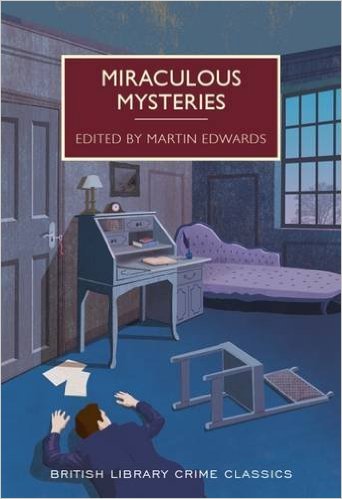
For the British Library, I've also compiled four anthologies of classic crime stories: Miraculous Mysteries, Continental Crimes, The Long Arm of the Law, and Foreign Bodies. I enjoyed putting these books together, and it's also been a pleasure to write a series of intros to new titles in the Crime Classics series, along with a special essay on Christmas crime fiction for the hardback edition of Anne Meredith's Portrait of a Murderer. I also wrote intros for books from other publishers, including an essay on locked rooms for the Folio Society's box set of three classic novels, Trent's Own Case in the Detective Story Club series, and Agents and Spies, published by Flame Tree. And last but certainly not least was an intro for Locked Room International's reprint of Death in the Dark by Stacey Bishop, an extraordinary book.
For good measure, I edited the CWA's latest anthology, Mystery Tour, to which I contributed a story, "The Repentance Wood" inspired by a trip to Dubai and Sharjah in March. And in case you're wondering what inspired that particular idea, here's the original Repentance Wood itself...
I published a number of other short stories during the course of the year, including "The Corpse Candle" in Mystery Most Historical and "Bad Friday" in Busted!, an anthology of law enforcement stories. "Bad Friday" had its origins in a train trip from Euston which I and other passengers spent listening reluctantly to the rather offensive rantings of someone on her mobile phone. It wasn't an enjoyable experience, but for a writer, nothing is wasted! And "Farewell Cruise" recently appeared in Ellery Queen's Mystery Magazine - a story inspired, you guessed it, by trips on cruise ships...
Friday, 11 August 2017
Forgotten Book - Trent's Own Case
Unlike many authors associated with Golden Age detective fiction, Edmund Clerihew Bentley was far from prolific. Yet his impact on the genre was immense. Trent's Last Case is seen by many people (including me) as the effective catalyst for the development of the classic whodunit after the First World War, and when Bentley's old friend G.K. Chesterton died, Bentley was a popular choice to succeed him, and to become the second President of the Detection Club. This more or less coincided with the publication of Trent's Own Case, which records Philip Trent's long-awaited return to the fray of detection.
Bentley's short stories about Trent were also collected in a volume entitled Trent Intervenes. But although Trent's Last Case has been relatively easy to find over the years, the other two Trent books have been less widely available. Now Harper Collins have reissued all three books together as part of their Detective Story Club imprint.
I feel confident that crime fans will be delighted by this initiative, though I should declare my own involvement - I have written a new introduction to Trent's Own Case. This commission caused me to re-read the book recently, and in so doing I found I revised my original opinion of it somewhat. I read it first as a teenager, expecting something similar to the first Trent book. It's much better, though, to judge the book on its own merits,not least because it was actually a collaboration - Bentley co-wrote the novel with his friend H. Warner Allen, and the storyline features Warner Allen's own detective character, the wine merchant Mr Clerihew (who was named in Bentley's honour). It's a well-made story, and still very readable.
In The Golden Age of Murder, I discuss the "Trent Dinner" held in 1936 to celebrate the book's publication, and one of my most precious possessions is a copy of the first edition signed by those who attended the dinner. I also talk about this in a little more detail in the "Collecting Crime" section on my website.. The addition of this book, and the two other Trent titles, to the Detective Story Club list, is very welcome.
Friday, 29 April 2011
Forgotten Book - Those Days
Edmund Clerihew Bentley remains known today as the inventor of the clerihew, a light verse form, and above all as the author of that classic novel of detection, Trent's Last Case. My choice for today's Forgotten Book is his memoir, published in 1940, Those Days.
One of the facts about Bentley's life that struck me as extraordinary was that he went to the same school as G.K. Chesterton, whom he met at the age of twelve, and with whom he formed a lifelong friendship. He admired Chesterton greatly, and it is interesting to read a contemporary's insights into the extraordinary personality of the creator of Father Brown. It is also intriguing to bear in mind that Bentley succeeded Chesterton as President of the Detection Club.
Bentley gives a detailed account of how he came to write Trent's Last Case, although I think it is true to say that he gave slightly different accounts on different occasions. However, unfortunately, he has more or less nothing else to say about his other crime fiction, giving Trent's Own Case no more than a passing mention (some people might unkindly say that is about all that particular book deserves!)
Bentley has a good deal to say about politics (he was a staunch Liberal) and quite a bit about journalism (his day job for many years) but to my regret he does not talk about the detective fiction genre in general, nor about the Detection Club. All in all, Those Days is quite interesting from a historical perspective, and that to my mind means that it certainly doesn't deserve to be forgotten. But those seeking information about the Golden Age of detective fiction won't find too much new material here.
Monday, 11 April 2011
Trent's Last Case
Trent’s Last Case, by E.C. Bentley, is properly regarded as one of the landmark books in the history of crime fiction. The first two film versions left Bentley unimpressed, but the third, shot in 1952, was better and I’ve just watched a DVD of the movie that I received as a welcome Christmas present.
The stars were Michael Wilding (one of Elizabeth Taylor’s many husbands), Margaret Lockwood (whose many other films include that classic The Lady Vanishes), Orson Welles, no less, as Sigsbee Manderson, and Miles Malleson, who had a rather more important role than usual in his prolific career.
I thought it was a decent film. Famously, whodunits are tricky to film; you can understand why Hitchcock generally favoured suspense rather than a heavily plotted mystery. But this one remains perfectly watchable.
The book was greatly admired by Sayers and Christie, among others, and it was a formative influence on their writing careers. Sayers later became a good friend of ‘Jack’ Bentley, so much so that she even rhapsodised over the belated follow-up, Trent’s Own Case, though in truth it was a relatively minor work. Bentley never came close to surpassing his debut novel.
Friday, 22 October 2010
Forgotten Book - Trent Intervenes
Trent’s Last Case by E.C. Bentley, is certainly not a forgotten book, even nearly a century after its first appearance. It is a real landmark n the history of detective fiction, much admired by Christie, Sayers and the critics, and it paved the way for the Golden Age. But Trent Intervenes qualifies for inclusion in Patti Abbott’s series. It is a collection of stories that was published in 1938, although I think the stories were actually written over quite a lengthy period before that date.
Bentley had published Trent’s Own Case, co-authored with H.Warner Allen, a writer of fairly nondescript mysteries, but this was a far less memorable book than his brilliant debut. But several of the stories in Trent Intervenes are pretty good, and quite a number have been anthologised over the years, sometimes a number of times.
My favourites include ‘The Genuine Tabard’, ‘The Inoffensive Captain’ and ‘The Clever Cockatoo’. Philip Trent is an amiable character, an artist, journalist and urbane man about town – where are his modern equivalents?! He investigates rather languidly at times, but Bentley was a capable writer, and even the slighter tales are perfectly readable.
Trent didn’t appear again in a book of his own, but Bentley did turn out a ‘thriller’ some years later. It was called Elephant’s Work, and it was a story featuring amnesia. Which was fitting, really, as it probably does deserve to be forgotten!


