Showing posts with label William Younger. Show all posts

Monday, 21 February 2022

M: Maxwell Knight, MI5's Greatest Spymaster


A couple of weeks ago I had the interesting experience of sharing an online stage with the renowned expert on espionage Nigel West (who also published a couple of crime novels drawing on his experience as an MP under his real name, Rupert Allason). Listening to Nigel prompted me to delve into a book published five years ago by Henry Hemming, a biography of the legendary spymaster Maxwell Knight.

I knew a bit about Knight from my researches into the life and work of John Bingham, who was one of his agents - as was John le Carre. Another of his agents was Bill Younger, whose The Hammersmith Maggot I discussed on Friday. Yet another was Jimmy Dickson, who wrote as Grierson Dickson (confusion in the past caused some people to think that John Dickson Carr was one of the spies, but the person in question was Jimmy Dickson, an author of much less renown). One of the many interesting points that Hemming makes is that Knight seems to have liked to recruit authors as spies. He also had a prejudice in favour of female spies, since he prized their observational skills.

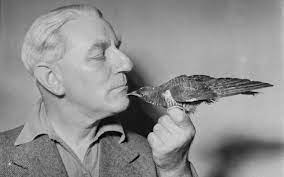
M: Maxwell Knight, MI5's Greatest Spymaster is a book I enjoyed reading. He was an extraordinary character, with an obsession about pets that made him famous in later life. I have a copy of his book Talking Birds, which was amusingly illustrated by David Cornwell - alias John le Carre. He also wrote two thrillers in the 1930s, Crime Cargo and Gunman's Holiday, the first of which was dedicated to Dennis Wheatley. I've never come across them, but Hemming doesn't think much of the first and doesn't even mention the title of the second.

Knight's private life was unorthodox. He married three times but seems to have had little or no interest in sex - unlike quite a few of his agents. His first wife took her own life. He flirted with fascism as a young man - one of his pals was William Joyce - but was responsible for its defeat in Britain in the early stages of the Second World War. Hemming gives a good, rounded portrait of this mysterious fellow and does so in a very readable manner.


Friday, 18 February 2022

Forgotten Book - The Hammersmith Maggot aka Shadow of a Killer


I can vividly recall where and when I first read William Mole's 1955 novel The Hammersmith Maggot. It was more than thirty years ago. I took the green Penguin edition with me when I stayed in a hotel in Hull one wintry night. I was due to conduct a tribunal case the following day, acting for a client who had been sacked simply for being pregnant because the employers thought they could exploit a loophole in the Sex Discrimination Act. It was a test case and after I'd spent a long time preparing for the morning, I relaxed by whizzing through the novel. 

I'd heard one or two good things about it, but I was disappointed by the low-key nature of the storytelling and by the absence of a dramatic plot twist. With hindsight, I'd have been better taking a very different book with me. However, I came across a nicely inscribed first edition and decided to give it another try. Lo and behold! I liked it much better this time, partly because I had a clearer understanding of what the author was trying to do.

The author's real name was William Younger, and by profession he was a spy. He worked for the legendary Maxwell Knight and John Bingham was a colleague and friend. He wrote two or three thrillers, but this was the first of three novels to feature a wealthy wine merchant called Alistair Casson Duker. In this book he hunts down a conscience-less blackmailer (the 'maggot' of the British title of the book; the American title is much less memorable). The bad guy's identity is revealed at a relatively early stage, as is his motivation, but this time my attention was held.

The story is certainly out of the ordinary, and Francis Iles admired it, as did the often acerbic Barzun and Taylor. In more recent times, John Norris heaped praise on the book. Interestingly, a female blogger, Karyn Reeves, took a very different view. After two readings, I find myself rather in the middle. Mole (also a poet) could write well but there are traces of amateurishness in his sudden shifts of viewpoint. I don't think he thought deeply enough about how to present the character of the blackmailer or how to structure the story. But it's an interesting and unusual piece of work. As for that tribunal case, justice was done - and when the bad guys appealed, they got their come-uppance!