Monday, 21 August 2023

Still Writing Under My Own Name - marking the 3 million milestone


A while ago, I've only just discovered, this blog passed 3 million pageviews and is now at around 3.2 million. So it's only right that I should express my gratitude to everyone who has taken the trouble to read these posts, with particular thanks to those many people who have got in touch with me over the years as a result of the blog, and who - I'm delighted to say - continue to do so.

The blog sprang into life on Saturday 13 October 2007 - nearly sixteen year ago, yikes! - only a few weeks after the above photo was taken at the 20th anniversary celebrations of the northern chapter of the CWA. I said back then that my aim was 'to share my enthusiasm for crime fiction and the craft of writing'. More than 3,500 posts later (blimey...) that certainly remains the case and you can rest assured that even if my hair is greyer now, my enthusiasm remains absolutely undimmed.

When I started the blog, I'd been a published novelist for sixteen years, and had just completed the eighth Harry Devlin novel, Waterloo Sunset. But although I'd mustered a couple of nominations, I hadn't won a single award. I was still a full-time partner in a law firm, and I was a member of the CWA but with no ambitions to join the committee, never mind become its Chair. I hadn't been elected to the Detection Club let alone to its Presidency. 

To say that a lot has happened since 2007 is an under-statement. Lots of books, translations into numerous languages, even more short stories and anthologies, an audio drama (more news about that soon), and writing-related trips around the world, as well as three series of lectures on the Queen Mary. Sixteen awards and membership of the CWA's Hall of Fame. And I've met so many truly wonderful people in that time. To confess that I find it almost impossible to believe is no less than the truth. If you'd told me back in October 2007 that all this would happen, I would probably have fainted with shock. Of course, there have been some tough times as well, because that's life, but I do feel very happy with the way my writing career has gone, and this blog has definitely played a very positive part in it.   


Friday, 18 August 2023

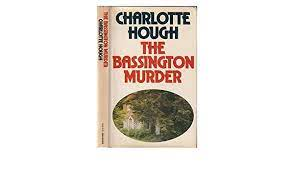
Forgotten Book - The Bassington Murder


Charlotte Hough's The Bassington Murder, published in Britain and the US in 1980, is a curiosity. It's the only crime novel of an author (1924-2008) who had previously achieved success as an illustrator and author of children's books. There are a number of reasons why authors desert crime writing after a solitary effort, as Christine Poulson and I discussed at Bodies from the Library in June. Charlotte Hough was perhaps unique in that her literary career was killed off by the fact that she served a term in prison for attempted murder.

I first heard of Charlotte Hough from Eileen Dewhurst, who met her the first time she attended a CWA conference in 1980, and was greatly charmed by her. This was at the time shortly after Charlotte's marriage had ended and when The Bassington Murder was just about to be published. Charlotte was evidently a funny and endearingly eccentric woman, who was a great friend of that fine writer Celia Fremlin. The three women became good friends and Eileen visited Celia and Charlotte in London from time to time. 

Like Celia, Charlotte believed in allowing people to die with dignity, but in 1984, she was arrested for assisting another woman to take her own life. Eileen noted in her diary that Charlotte was 'without a grain of self-pity', but she served six months in jail, a terrible ordeal. Charlotte remarried in 1997, but by that time she seems to have left the literary world far behind her. Although I met Celia, I never came across Charolotte. She never wrote about her experience in prison, and one of her children, that fine writer Deborah Moggach, has when interviewed expressed regret about this. 

There are some good ingredients in The Bassington Murder. It opens on Harriet Charles' 60th birthday. She is beginning a new life after a career as a head teacher, moving to a cottage in the village of Bassington. Eileen speculated that Harriet was based on Charlotte's friend, and fellow children's writer Winifred Lear. 

The story begins enjoyably, but is overcrowded with characters and there's a lack of focus which means it's not as easy to care about them as it should be. It's hard to disagree with the stern verdict of Kirkus Reviews, that after murder is done, the story 'collapses into silliness'. A shame, because there are some nice touches. Would Charlotte Hough have developed into a significant crime writer, had personal traumas not got in the way? To be honest, I doubt it, but it's clear that she was an extraordinary woman who does not deserve to be remembered solely because of the crime of which she was convicted.


Wednesday, 16 August 2023

Let Him Go - 2020 film review


Let Him Go is an uneven but very watchable film starring Kevin Costner and Diane Lane as grandparents desperate to restore contact with their grandson. This has the makings of a weepie or perhaps a socially conscious drama but the film, based on a novel by Larry Watson, is rather more ambitious. There are some langourous moments but there's plenty of action in the later stages, some of it quite shocking.

At first, the Blackledges seem to lead an idyllic life. George (a low-key but impressive Costner) is a retired sheriff, happily married to the forceful Margaret (Lane). Their son James is married to Lorna (Kayli Carter) and they have a small child, Jimmy. But then James dies in a tragic riding accident. Lorna remarries but her new husband Donnie Weboys is cut from different cloth and it's soon apparent that he's violent towards both his wife and step-son.

One day, Lorna and her new family vanish. Margaret is determined to get her grandson back. At this point, you might wonder whether her behaviour and sense of entitlement is over the top. Grandparents' rights tend to be under-valued by society, but George's anxiety about her plans is understandable - and it's reinforced when he discovers that she has brought a gun with her....

To say to much about what follows would be unfair. Suffice to say that Lesley Manville gives a truly memorable, if perhaps over-the-top, performance as a matriarch you really don't want to mess with. There are flaws in this film, but the quality of the acting is a major asset, as is the evocative rural camera work.     

Friday, 11 August 2023

Forgotten Book - Frequent Hearses


Next week sees the publication of a attractively presented new edition of Edmund Crispin's Frequent Hearses. The publishers are HarperCollins, who have now acquired the rights to Crispin's detective stories and are including an introduction by Val McDermid. It's the same intro in each book, I believe, but as you would expect, Val offers plenty of insight and her essay is a worthwhile bonus. As far as I know, Crispin's novels have seldom if ever been out of print in this country and I'm hopeful that the new editions will attract a new generation of readers who like their mysteries to be well-written and amusing.  

This particular book also bears, on the front cover, an encomium from me: 'Stylish, witty and entertaining in the finest traditions of the Golden Age'. As is often the case with book endorsements nowadays, this comment of mine wasn't made specifically in relation to that specific book, but not to worry - it's a fair description of an enjoyable story featuring the likeable Gervase Fen. I read it quickly on holiday last week and it made for ideal summertime reading, as did The Long Divorce, which is quite excellent. I'll cover that one here before long.

The story is set in the film world, of which Crispin had an insider's view, since he was a prolific composer of movie soundtracks. His satiric view of the excesses of the movie business is one of the particular pleasures of the book. He was a light-hearted writer, but there is a touch of darkness about the plot, which begins with the inexplicable suicide of a young actress named Gloria Scott.

For much of the book, I thought that her name was a clue of some kind, linked to the Sherlock Holmes story about a ship called the Gloria Scott. This proved not to be the case, although I'm sure Crispin must have chosen her name deliberately. This isn't such a strong story as The Long Divorce, partly because the murderer is such a thinly characterised individual, and Fen flits in and out of the story in a slightly unsatisfactory way. There is, however, ample compensation in a very pleasing riff on the 'murderer's confession' at the end of the novel. If you're looking for humorous mystery-making, Crispin is your man.  


Wednesday, 9 August 2023

Back from Croatia


I'm back home after a highly enjoyable trip to sunny Croatia. This was my third trip to the country - although my very first visit to Dubrovnik was in the long-ago days when it formed part of Yugoslavia and, because of the restrictions imposed by the Communist regime, tourism there was rather different from what it has become. This trip was a new experience, because it was a boat trip around the islands, which also took in Dubrovnik and Split.


During the course of what has been a great year, I've had a number of exciting trips, all of which have been crime-writing-related in one way or another. This was a pure holiday, a chance to recharge the batteries, and very welcome. Mind you, for me, recharging the batteries usually encompasses reading mysteries and thinking up fresh story ideas. On both counts, the trip was a big success. And given how much I ate whilst I was away, it's astonishing that I didn't put on much weight. Perhaps walking around in the heat burned off the calories - it was definitely about as warm as I can manage, and I was relieved to miss the recent heatwave.


On Friday, I'll discuss the first of the two Edmund Crispins that I read whilst away. I also intend to discuss Jeffery Deaver's The October List. Like Rellik, which featured on this blog the other day, it's a reverse-chronology mystery, and reading it helped me to conjure up an idea for a reverse-chronology short story. It remains to be seen how this will work out, but I'm quite excited by the concept.


We had good company on the boat. Kate Ellis and her husband Roger came along and we had some other very pleasant companions whom it was nice to meet for the first time. The boat, the Corona, was smaller than any other that I've cruised on, but that made it an especially interesting experience. Dubrovnik is a wonderful city and Split comes alive in the evening, but this time I was particularly delighted with places I'd never visited before, including a Benedictine monastery on a tiny island in a lake within a bigger island, Hvar (with fantastic views from the fortress) and the gorgeous little town of Korcula, where we had a memorable meal in an amazing setting on the waterfront. There was evening stargazing, for good measure. I've returned to England in high spirits and raring to get stuck into a number of writing projects.


Monday, 7 August 2023

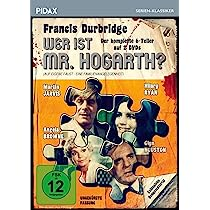
Francis Durbridge Presents: Breakaway


Francis Durbridge has always been popular in Germany and I've recently enjoyed a DVD entitled Wer ist Mr Hogarth? which thankfully, given that my A-Level German is now extremely rusty, has an English language option. The show in question was the first of two Breakaway stories and stars Martin Jarvis as a detective called Harvey who has just quit his job in order to pursue a career as a children's writer. But his plans get a severe jolt when his parents are murdered.

What follows is classic Durbridge. His parents were supposed to be heading off on a flight to Australia - so why were they in a van bearing the name Marius of Rye, a company that seems not to exist? And why did someone in a helicopter shoot them? Jill Foster, the young woman whom Harvey had heard addressing his father at the airport as 'Mr Hogarth' before correcting herself, must know more than she admits...

The plot thickens nicely as a strange married couple, the Randells, who were his parents' neighbours and had a key to their house, come into Harvey's life. The couple seem to dislike each other intensely, but again it's clear they know more than they are willing to reveal. Cliffhanger follows cliffhanger until the truth emerges...

This is a fun story. You don't watch Durbridge for in-depth characterisation or emotional resonance, you enjoy him for the plot twists. There's an excellent feature on the DVD, with a very knowledgeable German interviewing Durbridge's son Nicholas, who discusses his father's life and work and also shows some memorabilia of interest. After watching one or two harrowing TV dramas lately, I found Breakaway relaxing and pleasant light relief.

Friday, 4 August 2023

Forgotten Book - The Massingham Affair


I've talked before about my admiration for the crime writing of Edward Grierson. He only published a handful of novels in the genre, but each is distinctive and well-written. I'm sure that if he'd written more books, more consistently, he would have become better-known, but he did achieve a considerable success despite following his instincts rather than the crowd.

The Massingham Affair, first published in 1962, is unlike his other crime fiction in several respects. First, it's a historical novel, set at the end of the nineteenth century. Second, it's obviously based on a real life case, the Edlingham Burglary. Third, it's set in the north east of England, scene of the crime that provided the source material. But the book, like some of Grierson's other work, displays his legal expertise and also his acute sense of irony. It was adapted for television in 1964 with a very good cast, but alas, I've not been able to trace the shows.

The story revolves around a burglary at a lonely rectory on the Northumberland moors. Two men are identified by the rector and his daughter as the culprits. The police, led by wily Superintendent Blair, are evidently determined to secure a conviction, but the evidence is tenuous. Young Justin Derry assists Gilmore, the defence barrister, but the two men are sent to prison.

Eight years later, Derry finds out something that makes him wonder if there has been a miscarriage of justice. He and a local vicar called Lumley join forces but soon Derry finds that his own life is in jeopardy. The suspense mounts and there are plenty of subtle plot developments. Grierson captures the period atmosphere impressively. I really enjoyed this book - first-rate.

Wednesday, 2 August 2023

Rellik - Britbox review


Rellik was first screened back in 2017 but I've only just caught up with it, thanks to Britbox. This is a six-part series written by a talented pair of brothers, Jack and Harry Williams (their father Nigel is also a notable writer: I remember his enjoyable private eye series Charlie, starring David Warner, from back in 1984). Rellik is 'Killer' spelt backwards and the USP of the series is that the story is told in reverse chronology. 

I've become increasingly interested in reverse chronology, though I've yet to attempt to tell a story that way (and to be honest, I may never do so!). It's a very difficult trick to pull off successfully and to sustain it over six episodes is ambitious in the extreme. Partly because of this, the final episode deviates from the approach and - of necessity - moves forward to wrap up the highly convoluted storyline. But I wouldn't criticise the writing as gimmicky. To me, it's rather clever.

Be warned. If you're looking for cosy crime, this isn't for you. It's a very dark story, involving a serial killer who uses acid and there are physically and emotionally damaged characters aplenty. There's also a shortage of likeable people. Even the protagonists, DCI Gabriel Markham (Richard Dormer) and DI Elaine Shepherd (Jodi Balfour), are deeply flawed.

But I have to say that I was impressed, so much so that I'd be glad to watch the series all over again to see how the writers managed to overcome the challenges they faced. I think that they, and the production team, displayed great skill in contriving such a suspenseful story. The tension didn't sag, as so often happens in shows of this length, and in the final episode I did feel a degree of emotional involvement that I didn't necessarily expect.

Monday, 31 July 2023

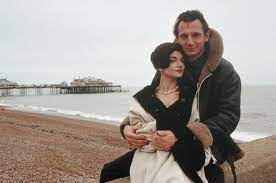
Under Suspicion - 1991 film review


There's more than one film called Under Suspicion, and the 1991 movie was unknown to me before it cropped up on Talking Pictures TV. The cast looked promising, so I decided to give it a go, even though a quick glance on the internet indicated that some reviewers really didn't like the movie. I'm glad I watched it, since although the script tests our suspension of disbelief to the limits, the overall style of the film is engaging.

The setting is Brighton at the end of the 1950s. Liam Neeson is Tony Aaron, an ex-cop who is struggling to earn a crust as a seedy private eye. His main source of income is divorce work. He persuades clients who want a divorce to go to a hotel room with his attractive wife (Maggie O'Neill) and then bursts into the room and photographs them in bed together. One day, things go terribly wrong. The client and his wife have been murdered.

The client turns out to have been a painter called Stasio. He'd left his wife (Alphonsia Emmanuel) for a model called Angeline (Laura San Giacomo) and his lawyer (the always reliable Stephen Moore, who sadly died a couple of years back) reveals that he'd changed his will on the day of his death, disinheriting his wife in favour of Angeline. But some evidence points to Tony as the guilty party. Can he establish his innocence? Even his closest pal (Kenneth Cranham, playing a less menacing character than usual) has his doubts.

The locations in Brighton are atmospherically portrayed and it was great to see the Portmeirion Hotel masquerading as Stasio's posh mansion. There are some unlikely developments in the plot, but the pace and acting (a prosecution barrister is played by Alex Norton, better known as Burke in Taggart) are both good. It's a sort of British version of a Chandleresque mystery, and despite its limitations, it's decent entertainment.  

Friday, 28 July 2023

Forgotten Book - A Shot in the Arm


I met John Sherwood just once, as far as I can recall, at a CWA conference about thirty years ago. He must have been about eighty then, give or take a year or two, and I don't remember the details of our conversation; my impression was of an amiable, quiet chap. At around that time, I read one or two of his novels, without being blown away by them. But I came across an inscribed copy of his 1982 stand-alone A Shot in the Arm and decided to give his work another try.

I'm glad I did. This is a crime novel packed with interesting ingredients. I must say that I don't think John Sherwood made quite as much of some of them as he might have done, but the story still makes for an interesting read. It's set in post-Abdication London and much of the action revolves around the BBC. The author worked there himself for many years, and his insider's view of life within the Corporation is enjoyable, even if he gallops through a lot of the details.

He certainly gallops through the plot. There's no shortage of action. A slightly improbable matrimonial argument is followed by a BBC man called Tony Chatham apparently being shot through the arm by his deranged wife Angela. It's an odd incident, one of a number in the early part of the story which keep the reader guessing. A BBC secretary is then murdered and it seems that the victim may have been killed by mistake. Was the killer out to finish Chatham off?

The second half of the book begins with a major plot twist, foreshadowed by the dust jacket blurb. The story is just as complex as the publishers claim, but I felt that the hectic storytelling lessened the impact of the mystery. The book feels as though it was written in a hurry, with viewpoints changing so rapidly that the effect is occasionally confusing. The climax too is regrettably rushed. A pity, because there are some clever ideas here. Coupled with the interesting background, this might have been a quite superb history-mystery. Despite its shortcomings, it's definitely worth a look.