Wednesday, 22 November 2023
The Ones Below - 2015 film review
Monday, 20 November 2023
Red Herrings - guest post by Matthew Booth
Matthew Booth is a writer and editor with a special expertise in Sherlock Holmes. His latest novel is The House of Skulls, just published by Pegasus, Elliot, McKenzie. He was also a very popular speaker at Alibis in the Archive in June of this year. He succeeded his friend and colleague David Stuart Davies as editor of Red Herrings, early copies of which are kept at the British Crime Writing Archives at Gladstone's Library. Those old newsletters are absolutely fascinating - I was reading through the 1966 issues at the Library a few days ago and came across an obit for the guy who wrote the novel that was filmed as Dr Strangelove. It turns out he was a CWA member (the author, I mean, not Dr Strangelove). Red Herrings continues to be a must-read for CWA members (see the above cover image) and I asked Matthew to talk about it:
'Red Herrings is the Crime Writers’ Association’s monthly magazine and I have been its editor for the last four years or so. I follow in a long line of esteemed writers who have held the post before me – not only big shoes to fill, but a list of names to which I am proud to be added.
Editing any magazine brings with it the constant worry that you will have no content to fill it. Fortunately, I have been lucky enough to have had a steady stream of articles, thoughts, and opinions, so that the challenge becomes which articles to use and when. I am always grateful to those CWA members who contribute, often without any prompting or press-ganging from me. Red Herrings is a magazine for the members and by the members. It can only ever be as good as its content and that content can only ever come from the members. Knowing that the members want to write for it and provide a diverse selection of articles is not only rewarding, but proves that the members enjoy the magazine and hold it in high esteem.
Putting together an issue is hard, but gratifying work. Each issue requires a decision about what articles to use and in what order. The magazine boasts a broad spectrum of content. Red Herrings covers crime writing of all types, fact and fiction. We have had articles which examine the impact of the Yorkshire Ripper killings, investigations into historical murders, such as the slaying of Thomas Arden, a crime which was later immortalized in a play by Thomas Kyd, as well as discussions and insights into how we, as authors, work and create. Red Herrings also has its own visual style. Every issue has a different cover, all related to crime writing, and each article is given relevant images to accompany it. These flourishes help to keep the magazine vibrant and exciting, and the design of the Red Herrings gets regular praise from members.
In CWA terms, Red Herrings is an institution and long may it continue to be, whether in my hands or in those of my successor. For now, I’ll continue to try to maintain the high standards of the magazine, and hope that those articles still come flooding in…'
Thanks, Matthew, and very best of luck with The House of Skulls!
Friday, 17 November 2023
Forgotten Book - Mediterranean Murder
Anne Hocking (1889-1966) was a prolific crime writer who came from a talented literary family. Her father Joseph wrote many Cornish novels, while her uncle Silas (now there's a literary name with echoes of Le Fanu...) was best-known for Her Benny, a book about Liverpudlian waifs which was later successfully republished through a small press by a crime writing friend of mine, Jim Parkinson. Her sisters Joan Shill and Elizabeth Nisot were also published novelists who dabbled in crime.
I've never got round to reading Hocking until now, partly because her books don't seem easy to find. But I came across a copy of Mediterranean Murder on a pub shelf full of old books and a donation to charity was enough to make it mine, thanks to the landlord's kindness. The copy in poor condition, with a ripped spine and no jacket, but apparently it's a scarce book, so I was glad to lay my hands on it.
I'm sure that this is one of those detective novels where the author has been inspired by a trip to foreign parts to write a story with a 'different' setting. In the austere years that followed the Second World War, there was a vogue for Euro-mysteries, which John Bude among others took full advantage of. Much of the story is set either in Spain or on ship bound for Britain, so the title is slightly misleading, but no matter. It's another case for Hocking's usual sleuth, DCI William Austen - a Scotland Yard man with his own manservant!
Austen is persuaded by his mate Crosby to go on a restorative trip abroad, but when they encounter a family called the Benthams, mysterious events begin to occur. Wealthy Mary Bentham has a suspicious accident, and then a fatal fall downstairs, and her hypochondriac son Donald suspects foul play. What follows is a conventional story, but it's written competently. Hocking was a second-tier crime writer, but I'd be happy to read more of her books.
Wednesday, 15 November 2023
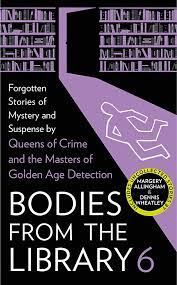
Bodies from the Library 6, edited by Tony Medawar
Monday, 13 November 2023
The last live events of 2023
Friday, 10 November 2023
Forgotten Book - Greenshards
I don't think there's much doubt that Greenshards (published in the US under the title Anima) is a forgotten book. It dates back just over half a century, to 1972, but in many ways I think it remains a fresh read, and a gripping one. The author was Marie Buchanan, but she later became much better known as Clare Curzon, a name she adopted in 1979 when A Leaven of Malice, one of her most notable books, was published by Collins Crime Club. She later wrote a long series about the cop Mike Yeadings.
As I mentioned in a blog post after I learned of her death, thirteen years ago, Clare (as I knew her) was a very pleasant woman. She was also a very interesting and versatile writer. One of the comments on that blog post mentioned (and praised) Greenshards, which I came across much later, thanks to acquiring a copy inscribed to another Eileen, my friend and fellow writer Eileen Dewhurst. It's taken me ages to get round to reading it, but I'm very glad I did.
The Gollancz first edition jacket describes the book as 'one of the strangest first novels ever to arrive on its publisher's desk'. In fact, she'd already published novels under another name, Rhona Petrie, but there's no denying that it's a strange and unusual book. Daphne du Maurier admired it, and apparently it even drew comparisons with The Exorcist (although the mood is very, very different). There is a strong supernatural element in the story, but it never overwhelms the story, which definitely counts as a mystery, albeit of an unorthodox type.
I don't want to say anything that will spoil the story (the Gollancz jacket tells far too much of it, and I'm glad I didn't read it until after I'd finished the book) but suffice to say that Greenshards is an old house with a melancholy history and that the connections between two families, the Mintons and the Blanchards, are at the heart of a twisting storyline that ensures you can never be sure what is coming next. This is a sophisticated, superior novel which I'm glad to recommend.
Wednesday, 8 November 2023
Don't Worry Darling - 2022 film review
Don't Worry Darling is a high-profile recent movie directed by Olivia Wilde, who also has a significant role as an actor. It's a glossy film, good to look at, and stars Florence Pugh as Alice Chambers, a 1950s housewife who leads an apparently idyllic life in a Californian town called Victory while her charming husband Jack (Harry Styles, of all people; he's come a long way since his youth in Holmes Chapel...) and his male neighbours go out to work at Victory HQ in the desert. The wives aren't encouraged to ask about their husbands' jobs....
From the outset, it's obvious that in Victory, all is not as it seems. When Alice sees a plane crash in the desert, she allows curiosity to get the better of her (an oddity of the script, by Katie Silberman, is that the plane crash isn't clearly explained) and before long cracks start to appear in the smooth surface of life in Victory.
Florence Pugh is a gifted actor and her performance as Alice is first-rate, as we've come to expect. There are some interesting ideas floating around in this film, and it's enjoyed huge commercial success, but there are good reasons why most critics haven't been enthused. Harry Styles is an easy target for criticism, because he doesn't have the experience to give real depth to the part of Jack, but he doesn't do a bad job.
The real problem, I fear, is with the script. The shadows of The Stepford Wives and The Prisoner, both of which are classics, loom large over Don't Worry Darling. However, there is no reason why this kind of story can't work very well indeed, if the themes and ideas from films and TV shows of the past are reworked in a fresh and engaging way. The trouble is that the story is told in a clunky and sometimes incoherent manner with numerous loose ends dangling, but not in a good way. I didn't expect a film as good as the original The Stepford Wives, but even so I found this one frustrating and disappointing. A missed opportunity.
Monday, 6 November 2023
'We Know You're Busy Writing': The Collected Short Stories of Edmund Crispin
Edmund Crispin (in real life Bruce Montgomery) is one of the few writers of traditional mysteries who has remained consistently in print since his first novels appeared in the early 1940s. Quite an achievement, and certainly a testament to the entertainment value of his fiction. Recently, HarperCollins have reprinted his novels in new paperback editions so attractive that I've even looked on The Glimpses of the Moon, his last novel, much more benignly than I had done previously. Now, as the icing on the cake comes the publication of his collected short fiction.
This handsome book takes its title from my favourite Crispin short story, 'We Know You're Busy Writing,' which I included in the British Library anthology Murder by the Book a year or two back. Among my other favourites is 'Who Killed Baker?', which Crispin co-wrote with his pal and fellow musician Geoffrey Bush.
Two Crispin collections, Beware of the Trains and Fen Country, have been available for many years, but here the stories about Gervase Fen are helpfully separated from the 'stand-alone' stories. What's more, this volume also includes four stories not in those two books, which have in recent years been brought to our attention by Tony Medawar in his collections of little-known traditional mysteries. Of these, 'The Hours of Darkness' is especially compelling.
I was delighted to see a very good set of sources at the back of the book, most useful for researchers. All in all, this is a terrific book. If you haven't read Crispin before, and in particular if you're a fan of short stories, you're in for a treat.
Friday, 3 November 2023
Forgotten Book - The Party at No. 5 aka The Cellar at No. 5
I've often written about my enthusiasm for the novels of Shelley Smith. She was an ambitious writer, who was always keen to do something different, and that approach (while not necessarily conducive to great commercial success) and the flair with which she pursued it meant that she was one of the most impressive British crime writers of the 1950s. I regret the fact that her books aren't more widely known.
The Party at No.5, which dates from 1954, offers a good example of her skill and economical and effective literary style. It's essentially a novel about character, about the vagaries of human nature. It's also a book which is about women and the relationships they have with each other. The male characters (including a solicitor whose grasp of the law struck me as very shaky) only have minor parts, although they are depicted with Smith's customary cool insight and wit.
Mrs Rampage is an elderly woman with a rambling old house in London. Actually, by modern standards I don't think she is really ancient, but attitudes to older people were different then, in a rather depressing way. She is persuaded to take in as a sort of companion-helper a woman called Mrs Roach. Mrs Roach is, on the surface, a very pleasant and caring individual who has an unrequited longing for a younger woman, Eleanor, who is stuck at home with her aged father. But the two women don't hit it off and although Mrs Rampage becomes increasingly dependent on Mrs Roach, her unpleasantness towards the other woman is a catalyst for crime.
This isn't a whodunit, but I found it a highly suspenseful read. Smith's prose is clear and engaging and her depiction of the way that relatively minor character flaws can lead to very damaging consequences is compelling. It's a tribute to her gifts that although I didn't much like either of the two lead characters, I became intrigued by them and wanted to know what their fate would be.
Wednesday, 1 November 2023
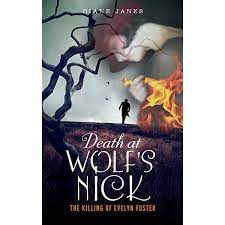
Death at Wolf's Nick by Diane Janes
When I was up in Berwick recently, Lindsay Allason-Jones kindly gave me a copy of Death at Wolf's Nick by Diane Janes. I've not seen Diane for ages, but we've been on panels together in the past, and she is one of those writers who has achieved success both with fiction and non-fiction. I've mentioned her several times on this blog, for instance in relation to her book about the Chevis murder case. This book is another of her in-depth true crime studies, and it deals with a case that remains unsolved to this day, that of Evelyn Foster.
I was already familiar with the case, because many years ago I read Julian Symons' discussion of the case in an essay in Beyond Reasonable Doubt, which is an interesting book, though one of his less well-known publications. Diane doesn't mention it in her book, so I'm unsure what she made of it, or whether she's aware of it. But she does deal at some length with a previous study of the case, by Jonathan Goodman, who was a noted criminologist. Suffice to say that she doesn't think much of his research.
The death of Evelyn Foster was strange, sad, and deeply disturbing. She was a youngish taxi driver based in Otterburn, Northumberland, a lovely place, but also a rather lonely part of the world on a wintry night. One night, she took a passenger in rather odd circumstances, and was later found, badly burned, as was her car. The story she told about what happened was not, however, believed by the police (who come in for a lot of criticism in this book).
Diane's research is impressive, with reams of important detail about timings and local geography. Her theory about what happened seems plausible, if not proven. It's an extraordinary case. I'd have liked to get a fuller understanding of Evelyn's personality, and those of one or two of the other key players in the story, and also what happened to them in later years, but perhaps Diane felt restricted by the material that was available and verifiable. An interesting book, well worth reading if you're keen on true crime.