Wednesday, 14 August 2024
The Innocent - 1993 film review
Monday, 12 August 2024
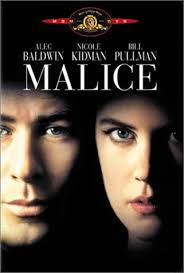
Malice - 1993 film review
Friday, 9 August 2024
Forgotten Book - A Perfect Match
Wednesday, 7 August 2024
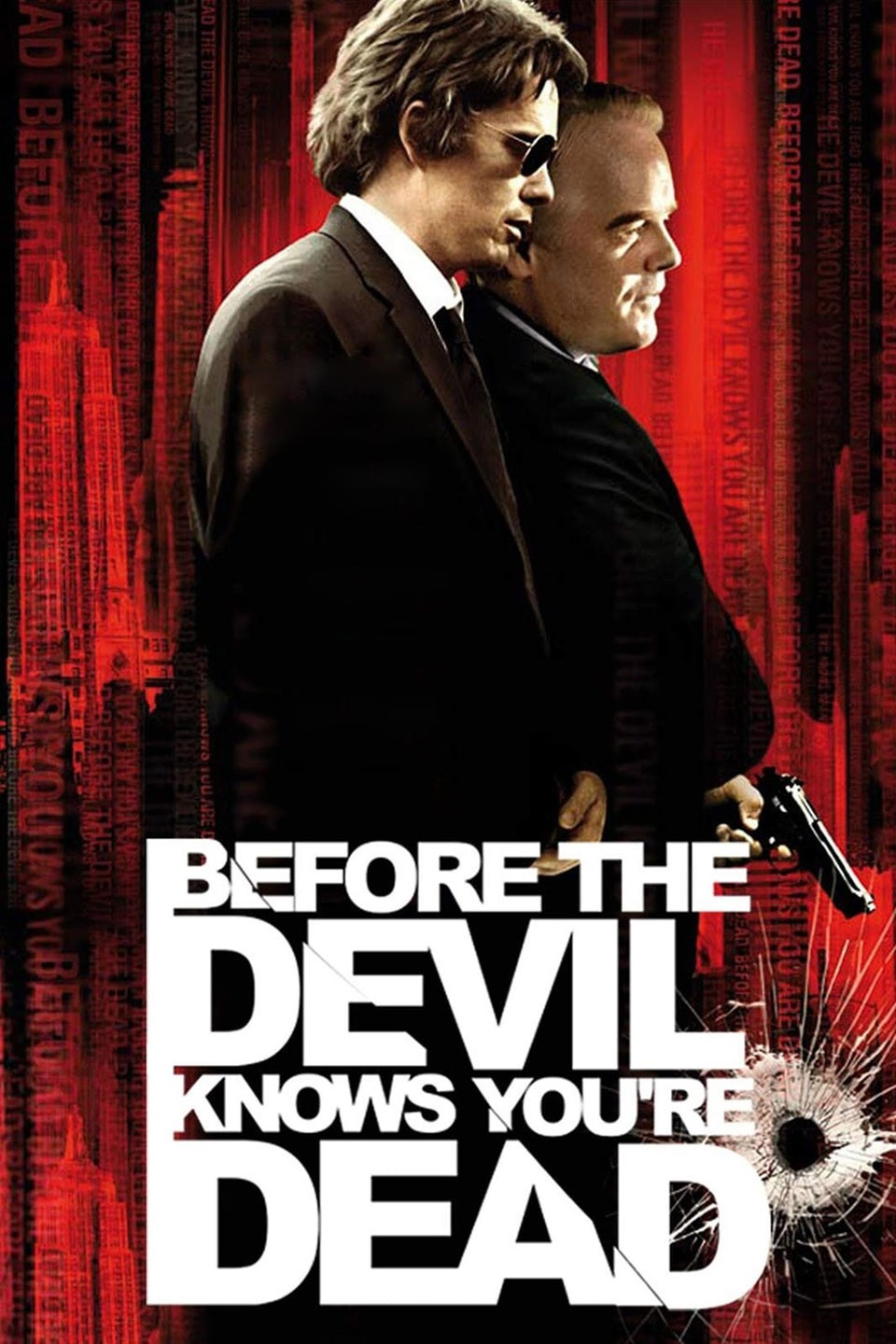
Before the Devil Knows You're Dead - 2007 film review
Before the Devil Knows You're Dead was the last film directed by Sidney Lumet, but there's absolutely no sense of lack of energy about a movie that's unpredictable and gripping from start to finish. It's a thriller about a robbery, but that description does the film scant justice. This is at heart a character-driven movie, benefiting from fine acting and a tricky storytelling structure that works very well indeed.
I'm cautious about saying too much about the story, because of the risk of spoilers - especially since information is doled out in pieces, as events are recounted in a non-chronological way, and from more than one viewpoint. But the heart of the story is that two brothers, Andy and Frank Hanson, are in serious financial trouble. Andy is the dominant sibling and he persuades Frank to embark on what he optimistically describes as a 'victimless crime' - in fact, this is a story with all too many victims.
Andy is played by Philip Seymour Hoffman, who gives what must surely have been one of his finest performances. Andy (whose wife is played, again very well, by Marisa Tomei) is a monster, yet because of Hoffman's sensitivity to nuances of character, we can't help feeling at least a touch of pity, if not perhaps empathy. We also gain some understanding of why he behaves the way he does. There's a genuine sadness about Andy's drug habit, because Hoffman himself died far too young as a result of an overdose of drugs.
Frank is played by Ethan Hawke, another terrific actor, and we do have more sympathy for him - despite his gullibility and selfishness, his weaknesses are more forgivable than Andy's. And then there is Albert Finney, who gives a very strong performance as their father. Again, I don't want to say too much about the part he plays in the story, but in the second half of the film it is crucial. Strange to think that decades earlier he was Hercule Poirot in a certain train-based film directed by....Sidney Lumet. The two roles could hardly be more different. But Finney was more than equal to the challenge. This is a terrific movie.
Monday, 5 August 2024
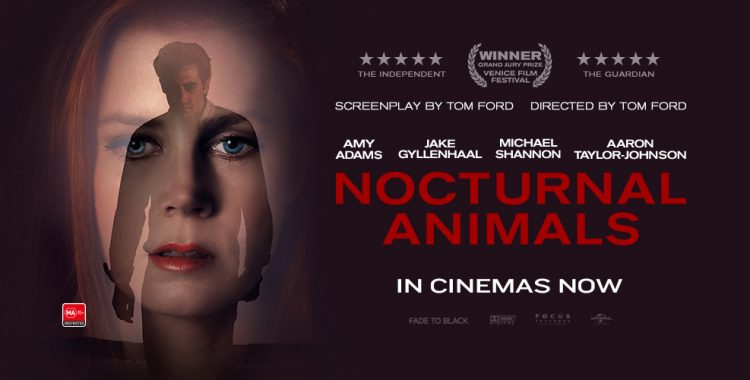
Nocturnal Animals - 2016 film review
Nocturnal Animals is a film written, produced, and directed by Tom Ford and it boasts a fine cast. I was drawn to it because it's a 'story within a story' movie and that's a form of considerable interest to me at present. The script is based on a novel from 1993, Tony and Susan, by Austin Wright. I must admit I'd never heard of book or author but apparently it became a big success after publishers initially expressed reservations, although Wright died before the film version was made.
This is sad, because even though I gather the screenplay differs greatly from the book, it's well-written, with consistent pace - not something that's easy to achieve with this kind of material. And in some ways the sophistication of the storytelling obscures the fact that the central story is pretty straightforward - and I don't say that as a criticism.
From the weird (very weird) opening images to the low-key, and some might think anti-climactic, final scene, this was a film that held my attention. The lead character is Susan Morrow (played by Amy Adams, who is good as usual). She's very rich but very shallow and the same is true of her husband (Arnie Hammer). Soon it becomes clear that, despite the surface glitter, all is not well in their lives.
Susan receives a manuscript called Nocturnal Animals from her ex-husband Edward (Jake Gyllenhaal, who is at his best in this film) and she begins to read it. We learn that their marriage failed because he was a romantic, creative individual and she was highly materialistic - like her mother (played by Laura Linney, who makes a big impact in a single scene) who had no time for Edward.
Edward's story is about a couple who are driving with their young daughter in Texas one night when their car is rammed by a car driven by three wild and aggressive men. As things begin to turn very nasty, it dawns on Susan that Edward is really writing about himself - the husband is again played by Jake Gyllenhaal. But what exactly is going on? There's a brilliant performance by Michael Shannon, playing a detective with lung cancer, and the supporting cast includes such stars as Andrea Riseborough, Michael Sheen and Aaron Taylor-Johnson. This is a sometimes deeply uncomfortable film, but I thought it was powerful and compelling.
Friday, 2 August 2024
Forgotten Book - Brink of Disaster
Wednesday, 31 July 2024
The Leading Man - 1997 film review
The Leading Man is a fairly obscure film from the late 90s that benefits from a very good cast and an unusual screenplay by Victoria Duigan, sister of the director John Duigan. It's set in the world of the theatre, with a charismatic and egotistical American actor called Robin Grange (played by Jon Bon Jovi, who is pretty good in the part) cast as leading man. The play is written by Felix Webb (Lambert Wilson) who is having an affair with young Hilary Rule (Thandiwe Newton), whom he manages to get cast in a key part.
Felix's wife Elena (Anna Galiena) is aware of the relationship - which certainly isn't as well-kept a secret as Felix believes - and at first it seems like her menacing response (she cuts Felix's hair while he is sleeping) is going to be the focus of the plot. But things take a different turn when Robin offers to do Felix a favour by seducing Elena. One oddity of the storyline is the way that Elena's personality seems to chance once Robin takes an interest in her. I'm not sure this is psychologically convincing, but who knows?
Some of the pleasure of the film comes from the performances of the actors in the play. They include such stalwarts as David Warner, Harriet Walter, Patricia Hodge, and Diana Quick. There's even a blink-and-you-miss-it cameo from Nicole Kidman. I was intrigued by the set-up of the story and couldn't guess how the tangle of relationships would work out - though it was pretty clear that a gun, featured as prominently as Chekhov's, would be relevant to what happened.
Unfortunately, the climax of the film is its weakest part. Possibly Victoria Duigan herself couldn't quite decide how to end the story. The finale that she chose has a low-key irony, but I felt it was a little disappointing. Overall, however, there are enough good moments and enough good actors in this film to make it worth watching.
Monday, 29 July 2024
Never Say Never Again - 1983 film review
Friday, 26 July 2024
Forgotten Book - Advisory Service
A hugely pleasurable dividend of posting on this blog is the fascinating correspondence I receive from readers. Recently I've been delighted to correspond with - and chat on the phone with - Betty Telford, who first got in touch with me some years ago, when commenting on a blog post about Martin Russell. Betty knew Martin, a fellow journalist, well, and I've learned more about him from her than from anyone. I am very grateful to all of you who comment and get in touch and I hope you will feel encouraged to continue to do so. Speaking to Betty has further increased my interest in Martin Russell's writing and I've just read one of his early novels of psychological suspense, Advisory Service, which dates from 1971.
Like a number of Russell's books, this one gains immediacy in part because the story is told in the first person and in part because he was good at writing snappy dialogue which moved the story along at a good pace. A middle-class couple, Eddie and Pearl Mills, who live in Hampstead with their nine year old daughter Lorna seem to have a very pleasant life. But beneath the surface, all is not well.
They receive some concerning anonymous telephone calls (the details of the landline calls are one of the things that differentiates this storyline from anything that could be written today, in the age of the smartphone). Then the pressure on them escalates as they receive anonymous letters from a so-called 'Advisory Service'. And then the unthinkable happens...
This is, as usual with Russell, a tense story and an easy, pacy read. I must say, however, that there were various elements of the story that tested my ability to suspend disbelief. To say more than that would be a spoiler, but (despite an unusual, cliff-hanger ending) I wasn't really convinced. Yet even though it's not one of his stronger books, in my opinion, I was still keen to keep turning the pages, and that was Martin Russell's great strength and the reason why he enjoyed quite a successful career for the best part of thirty years.
Wednesday, 24 July 2024
An E.C.R. Lorac Exhibition
How times change. Not so long ago, the name of E.C.R. Lorac was little-known to crime readers. Almost all her seventy-odd novels had been out of print since the late 1950s, some of them long before that. And now she is the current best-selling writer among all those published in the British Library Crime Classics series. Quite a transformation. I'm sure my parents, who extolled the virtues of Lorac (especially Still Waters) to me when I was young - and at a time when her books were impossible to find - would be amazed and delighted.
I was thrilled to be invited yesterday to, of all things, an E.C.R. Lorac exhibition at Halton Library in Lancashire. Halton isn't far from where Lorac (in real life, Carol Rivett) lived in Aughton (pronounced Afton) for the last decade and a half of her life. And Halton is now the home village of Lena Whiteley, who lived next door to the author when she was young. Her mother was Lorac's housekeeper and Lena helped in the house and garden from being very young.
The exhibition, which has previously been on display at Bolton-le-Sands library, is splendid and includes several items that are in Lena's possession. She and her son David gave a talk about the author to an appreciative audience and mentioned that the fact that Lorac's Lunesdale books, which are among her very best, give such an evocative picture of the local area means that it's great fun to try to figure out the thinly disguised locations in the stories. A couple of years ago, Lena and David took me on a tour of the setting of Crook O'Lune, which was as interesting as it was helpful when I came to write the book.
When I was in my twenties, I started picking up Lorac novels whenever I could find them in second hand shops and giving them to my parents, who devoured them. Now all those books are in my possession, but there are still quite a few of her novels (including many of the books she wrote as Carol Carnac) that I haven't read. Treats in store.
I mentioned Lorac briefly in my first Northern Blood anthology, more than thirty years ago, but it was only when I became involved with the Crime Classics that I was able to encourage the British Library to republish Lorac. It took years to trace the estate and copyright holders, but the work and the wait were worthwhile. Lorac (and Carnac) are being enjoyed all over again, by a new readership, and she's getting fantastic sales and reviews. In writing my intros, I've benefited enormously from my friendship with Lena, David and his sister Helen; the help they've given me has been invaluable.
And the good news is, there's another Lorac reissue on the way. Murder in Vienna is due out in November.