Showing posts with label Herbert Lom. Show all posts

Monday, 11 September 2023

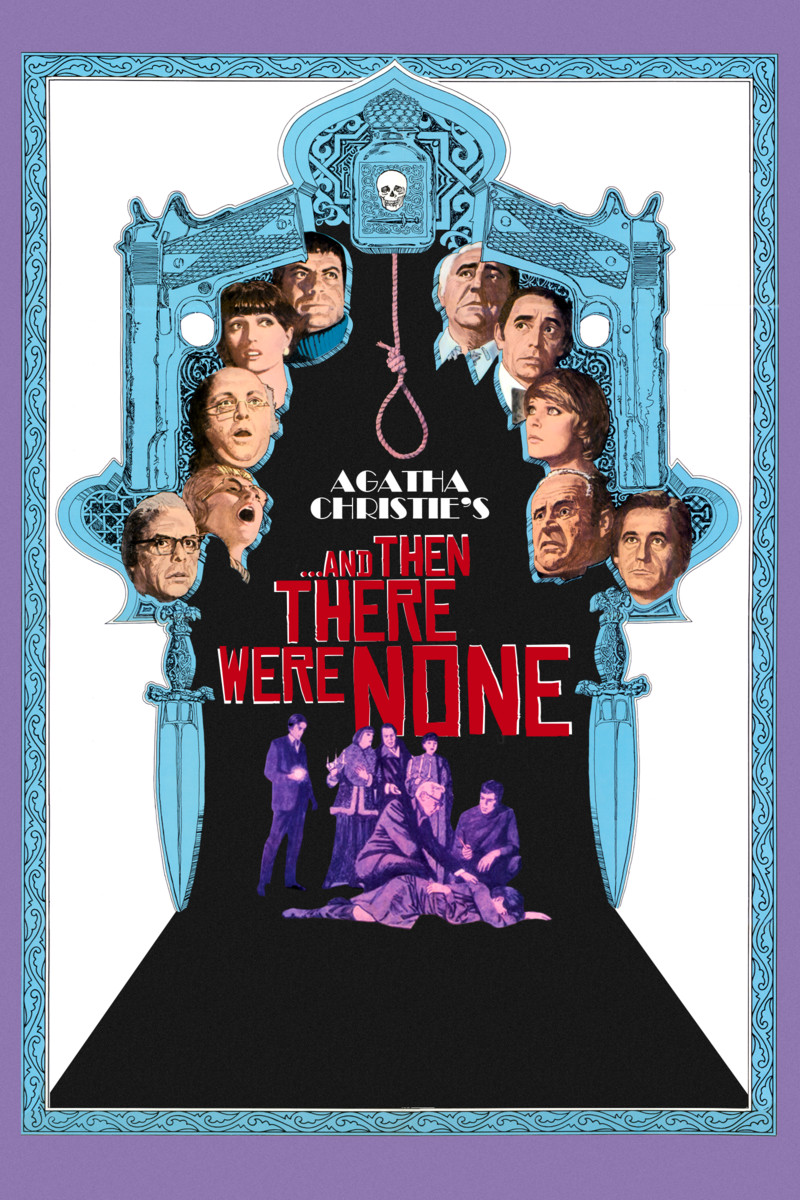
And Then There Were None - 1974 film review


I enjoy many Golden Age detective novels, but if you press me for it (as happened on one of the panels at San Diego a few days ago), my absolute favourite has to be And Then There Were None by Agatha Christie, not only an enduring global bestseller and hugely influential on crime writers to this day (how many homages to this book have been published in the last decade? I've lost count). The story is a superb combination of whodunit and psychological suspense. No surprise, then, that there have been plenty of screen versions.

One that has escaped me until now is the 1974 film directed by Peter Collinson. This movie has an indifferent reputation, but I decided I ought to check it out for myself. Collinson was capable of excellent work - he directed the original version of The Italian Job, a great piece of entertainment - and the cast is impressive. The producer was Harry Alan Towers, whose own reputation has not worn well at all, and he also wrote the script, under the pen-name of Peter Welbeck. He makes several changes to the Christie original, and although some are interesting, overall I don't think they work well.

The setting is weird - an abandoned luxury hotel in the middle of the desert in the Iran. So, effectively it's as cut-off as the island in the original story. There are some visual pleasures to be had from this change of scene, but too much is left unexplained. The climax isn't badly done, but the build-up lacks the necessary tension.

This lack of suspense is partly due to the fact that even the notable actors in the cast seem to be affected by a languor, possibly induced by the indifferent quality of the screenplay. Elke Sommer is beautiful and does her best with her part, but Oliver Reed seems to sleep-walk through his. Even Richard Attenborough and Herbert Lom are below their considerable best. The two ex-Bond villains, Gert Frobe and Adolfo Celi, make little impression, and why Orson Welles did the mysterious recorded message from U.N. Owen remained unclear to me. It's not a complete disaster as a film, but overall a waste of talent and of fantastic source material.     

Tuesday, 23 August 2022

Dual Alibi - 1947 film review


If I'd watched Dual Alibi a year or two earlier, I'd probably have given it a mention in The Life of Crime. This 1947 British film fits, thematically, into the chapter where I discuss the work of William Lindsay Gresham, Fredric Brown, and others. I'd say it's one of the best examples of film noir to have emerged from the UK in the Forties. And it provides a rare starring role for that interesting actor Herbert Lom, today better remembered as the crazed cop in the Pink Panther movies.

Most of the story is told in flashback after circus owner Vincent Barney (played by Ronald Frankau, whose brother, the writer Gilbert, dabbled in crime fiction) recognises a sandwich board man. I'm not sure the flashback method was the best way of telling the story, but it works moderately well, and the ending is downbeat and poignant.

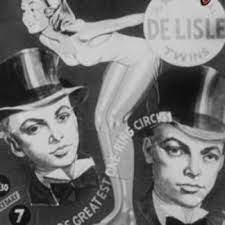
The main story concerns two French identical twins, both played by Lom. They are the de Lisle brothers, a fearless pair of trapeze artists. Barney hires them and brings them over to Blackpool as a star turn in his circus. He hires the services of a rascally publicist, Mike Bergen (Terence de Marney) who has a glamorous girlfriend, Penny, played by Phyllis Dixey, whose real life story was interesting and rather sad.

It's a low budget film, but surprisingly effective in its moodiness and sense of things spiralling downwards and out of control. Very noir, in other words. Herbert Lom is excellent, and the supporting cast are also good. Recommended.

Tuesday, 30 April 2019

Mr Denning Drives North - 1951 film review

It's a long time since I read Alec Coppel's novel Mr Denning Drives North, but I remembered it as a decent suspense story, and this prompted me to watch the film version, made in 1951, a couple of years after the book appeared. Coppel was a capable writer, with a particular gift for dialogue and building tension. He was one of the writers of Vertigo, one of the finest of all crime films - some would say the finest.

The protagonist is played by John Mills, who as ever is a thoroughly decent Englishman. He's well off, happily married, and has an attractive daughter. But at the start of the film, he's plagued by nightmares, and it appears that he has a guilty conscience. It's soon clear that he's implicated in a murder case, and before long he confesses the truth to his wife, played by Phyllis Calvert.

His daughter had fallen for a loathsome chap, played by Herbert Lom, and Denning wanted to buy off the blackguard. He persuades him to write a letter breaking off the relationship, on payment of £500, but when he feels that his daughter's honour is insulted, he hits the chap, who falls on the hearth and dies. Manslaughter rather than murder, I'd have thought, but our hero makes the first of several extremely foolish decisions when he decides to cover up the crime.

He doesn't actually drive all that far north to dispose of the corpse; the southern reaches of the Home Counties, by the look of things. But the plot thickens when the body disappears. Denning continues to behave so foolishly that I found it rather difficult to root for him, but I did admire the way in which Coppel piled on the complications. It's a crafty story, and the film benefits from a good cast, with Wilfred Hyde White especially entertaining as a mortuary attendant. Bernard Lee plays a good natured cop, and Sam Wanamaker is a young American patents lawyer who falls for Denning's daughter and unwittingly does his utmost to bring Denning's crime to the attention of the authorities. It's pretty good entertainment.

Wednesday, 10 January 2018

The Frightened City - 1961 film review

Even before he became James Bond, Sean Connery was an actor whose performances packed a punch, and in The Frightened City, released in 1961, he gives a notable, and indeed nuanced, performance as a gangster called Paddy Damion. Damion can be brutal, and treats his girlfriend Sadie badly, but he is a good friend, even if he chooses his friends from people he's shared a prison cell with, notably an aged gangster called Alfie, and a former burglar (played by Kenneth Griffiths) who is now disabled..

Damion only comes into the story after an intriguing scenario has been established. Herbert Lom plays Waldo, a sinister accountant, who talks protection racketeer Foulcher (Alfred Marks) into joining forces with other gang leaders to create a reign of terror in London The police, with John Gregson to the fore, are struggling to cope with the menace.

But Waldo and Foulcher become greedy, while Damion's wandering eye leads him into trouble when he falls for Waldo's lady friend Anya, played by Yvonne Romain. Romain is convincing as a sultry foreign seductress, so it came as something of a surprise to me to earn that her real name is Yvonne Warren, and she was born in London. She's been married to prolific songwriter Leslie Bricusse from almost sixty years, but the background music in the film is provided by Norrie Paramor and The Shadows.

This is a realistic, and occasionally subtle film which is at least a couple of notches above the ordinary in terms of both screenplay (by Leigh Vance) and performances. The focus is more on the villains than the cops (who are not above breaking the law themselves to try to do justice as they see it), and that works pretty well. And the climactic scene in Waldo's exotically furnished home is nicely done.


Thursday, 28 January 2010

Chase a Crooked Shadow: review


I posted recently on the similarities between the Osborn-Sinclair screenplay for the 1958 film Chase a Crooked Shadow, and Robert Thomas’s play Trap for a Lonely Man. The film, which is in black and white, is a minor classic of psychological suspense. Even if you know the essentials of the plot (which in its various guises is pretty familiar these days) there is a good deal of pleasure to be had from watching events unfold.

A diamond heiress called Kimberley Prescott (played by Anne Baxter) is spending time at a villa on the coast near Barcelona. An apparently doting elderly uncle lives nearby. But one day, an enigmatic stranger (Richard Todd, who died just before Christmas) turns up on her doorstep, claiming to be her brother Ward, a racing driver. The snag is that Ward died a year back in a car accident, and Kimberley identified the body.

She calls the police (in the form of the eternally sinister Herbert Lom) but the intruder’s ID is in order, and the cop departs, thinking that the girl is neurotic. ‘Ward’ brings in a female associate (Faith Brook, whom I have always thought an under-estimated performer) and even a new butler, and Kimberley’s terror mounts as it becomes clear that the newcomers are playing their mysterious game for very high stakes.

There are some great twists in the story, the acting is competent, and Julian Bream’s guitar music adds to the atmosphere created by Michael Anderson’s direction. This is a very entertaining thriller, and at less than five quid from Amazon, it was also a real bargain.

Footnote one – Faith Brook’s father Clive was also an actor, and one of his final roles was in the film of that Philip Macdonald classic, The List of Adrian Messenger. Much earlier, he was in a 1920 version of Trent’s Last Case, and he also played Sherlock Holmes in three films.

Footnote two – Herbert Lom was born in Prague, and his real name was Herbert Charles Angelo Kuchacevich ze Schluderpacheru. Bet you didn’t know that!