Showing posts with label The Saint Zita Society. Show all posts

Wednesday, 30 January 2019

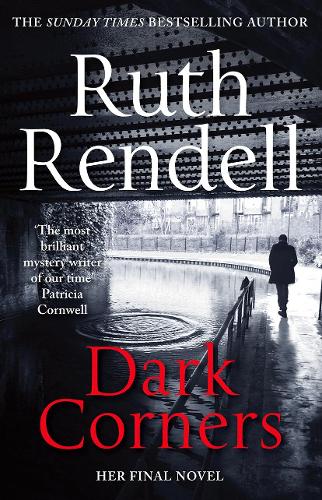
Dark Corners by Ruth Rendell


Image result for ruth rendell dark corners

Ruth Rendell was, in crime writing terms, a genius. For decades, her remarkable books set a new standard in excellence. I discovered her work in my early twenties, and promptly devoured every story of hers that I could lay my hands on. In the books she published from the late 1990s onwards, however, I sensed a touch of repetition and perhaps even fatigue creeping in, as regards character types, settings, and plot developments. Given how prolific she was, that was hardly surprising, and her books continued to be highly readable. Unfortunately, I found myself struggling to finish The Saint Zita Society, and I felt it better to take a break from her books. More recently, though, I've wanted to give her later books a go, and see how I felt about them.

Dark Corners was her final novel, published posthumously in 2015 following her death earlier that year. The last words of the books are truly poignant. They are: "'now it's all over'". And so it was. In the story, this phrase refers to an act of redemption which concludes a typically involved narrative with several plot strands.

The lead character is Carl, who unwisely gives some pills to a female friend and accepts money for them. The friend dies, and Carl is distraught. He feels guilty, although actually he has committed no crime. When he is blackmailed by someone who is aware of what happened, he submits meekly until eventually he can tolerate things no longer.

Carl is in some ways typical of Rendell's young male protagonists, but I found his behaviour less than convincing. Part of her genius (and the same is true of Patricia Highsmith at her best) lay in making extraordinary courses of conduct seem almost inevitable. For me, though, Carl didn't really work as  a lead character. Similarly, there is a truly Rendellesque sub-plot, but it's rather half-hearted and unsatisfactory. On the plus side, the story is very readable. I raced through it, and thought it much more gripping than The Saint Zita Society (I'll have to battle to the end of that one eventually and see if I've judged it too harshly). Dark Corners certainly is infinitely superior to Agatha Christie's sad finale, Postern of Fate. It's not, however, in the same league as her twentieth century stand-alones. 

Wednesday, 6 May 2015

Ruth Rendell R.I.P.

I learned of the sad news of the death of Ruth Rendell a few minutes before joining Katherine Hall Page for our "Malice Remembers" conversation about Patricia Moyes. We both felt that it was right to pay a brief tribute to Rendell before turning to Moyes, though breaking the news to audience members who were unaware of the loss of this great writer was bound to be a shock.

I've been a huge admirer of Ruth Rendell for many years, and I've often referred to her as my favourite living crime writer. I recall meeting Sophie Hannah for the first time when we were on a panel together in Runcorn, and an audience member asked me to name my favourite crime writers. I named Agatha Christie among those who were dead, and Rendell from among the living. Sophie - who had just published her first novel - exclaimed: "I was going to say that!" A shared enthusiasm is a good way to bond with a fellow author..

I'm sure that Rendell, along with her friend P.D. James, will be ranked as one of the great writers of popular fiction of the second half of the twentieth century. I enjoyed her Wexford novels, such as A Sleeping Life, but I enjoyed the non-Wexfords even more. A Judgement in Stone is a masterpiece, a crime genre cornerstone, and books like A Demon in My View and The Lake of Darkness almost equally brilliant. As if this wasn't enough, she proceeded to write stunning novels as Barbara Vine. My favourite is A Fatal Inversion, but the quality was invariably high. She wrote of particular,worlds - much bleaker and more restricted than, for instance, those of the great Reg Hill, who once gently teased her at an event I attended; Her books, unlike Reg's, seldom attempted humour, but she explored her favoured landscapes in utterly compelling fashion.

That wasn't all. She was an equally gifted short story writer, and when she tried her hand at a novella, the result, Heartstones, was characteristically excellent. For decades, she maintained an astonishingly high standard, despite being very productive. I cannot think of any prolific crime writer, with the possible exception of Reg himself, who has kept writing at anything like such a consistently high level for so long. Inevitably, as the twenty-first century dawned, she found it more difficult to avoid repeating herself and books such as The Saint Zita Society seemed to me to fall well short of her earlier, stellar achievements. Nevertheless, few crime novelists of the past fifty years have left such a wonderful legacy.

In my own writing, I like to pay occasional tributes to writers and other people whom I admire - Conan Doyle, Christie and so on. When I was planning The Arsenic Labyrinth, I conceived my version of a "Ruth Rendell type of sociopath" in the character of Guy. I loved writing about Guy, and I may return to that type of character one day. But of course, nobody could match Rendell..

One more thing. I never chatted to Ruth Rendell in person, but I corresponded with her, and on several occasions I invited her to contribute short stories to CWA anthologies that I was editing. Each and every time, she agreed readily, and authorised her agent to accept exactly the same - extremely modest - fee offered to other contributors. She did not attend CWA events, as far as I know, but she remained a member right to the end. I found her willingness to help truly admirable. and it's yet another reason why I respected her so much.


Monday, 15 July 2013

How many characters in a novel?

When starting a new book, a vital question is: how many main characters will take part in the story? This is closely linked with the question of how many murder suspects to include, although the two issues are not quite identical. I often give this a lot of thought, because it is vital that readers care about the characters, even if they don't like some of them. My latest reflections on this topic have coincided with reading a book by Ruth Rendell which highlights the dilemmas that an author can face.

I mentioned the other day that I pay attention to and try to learn from critical, as well as positive, comments in reviews, as long as they seem sensible, and supportively meant. In relation to a couple of books I've written in the past, a question has arisen about whether the early part of the book was challenging because of the introduction of a significant number of people and plot strands. (On this topic, Kate Ellis and I agreed at Blackpool last week that our tendency in this direction had been influenced by those wonderful early series of Taggart by Glenn Chandler.)

In The Frozen Shroud, I tried to address this by reducing the number of potential suspects. This made me worry that the solution to the mystery might be too obvious, but I'm reassured by the reviews that are in to date. With my new book, though, I'm going to tackle the issue in a different way.

Ruth Rendell's The Saint Zita Society boasts an unusual way of helping the reader disentangle what was going on. Rather than have a 'cast of characters' in the manner familiar from some trarditional mysteries (those fine writers Ngaio Marsh and Christianna Brand were keen on this device), the publisher included a diagram of Hexam Place on the endpapers of the book. This showed the houses and listed their occupants. A neat concept though I have to say that, even so, I  found myself overwhelmed with the number of people who cropped up in the first fifty pages, not something I've ever experienced when reading with this gifted writer. Clearly, she too is continuing to experiment with her approach, and that is what keeps authors fresh..