Showing posts with label Crafting Crime. Show all posts

Saturday, 1 January 2022

A New Year - Time to Look Ahead


As a year draws to a close, it's good to look back and I enjoyed compiling my retrospective of 2021 the other day. But now it's a new year, and time to look forward. Many things remain uncertain, but I'm full of hope and optimism. All being well, it promises to be a bumper year. And for those making new year resolutions about writing that first crime novel, Dea of Fiction Feedback and I hope that they will be tempted by the Crafting Crime online course!

My new Rachel Savernake novel comes out in September. This latest example of Golden Age Gothic is called Blackstone Fell, and I'll talk more about it in due course. But I guess the main event so far as some readers are concerned will be the publication in May by HarperCollins of The Life of Crime, my history of the mystery genre. Suffice to say that it's a very substantial book, and it ranges far and wide. So there's quite a lot about Golden Age writing (of course) but also a good deal about such diverse subjects as Japanese mystery fiction, Vidocq and his followers, William Lindsay Gresham, and Ian Fleming. I've no idea how the book will be received, but I'm excited about the prospect of seeing it in print at last, because I've been thinking about the material for many a long year and actively writing it for the past five or six.

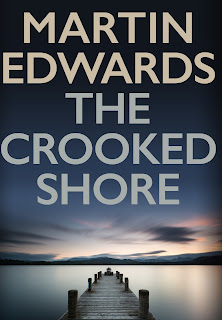
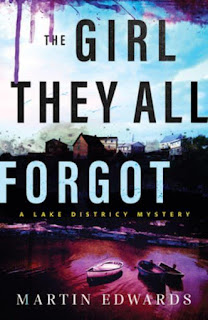
There will be overseas editions of several of my books in a number of countries, including China, Italy, and (this one has been delayed for a while, but may finally emerge in 2022) Bulgaria. One to mention specifically, because it involves an unexpected title change, is the US edition of The Crooked Shore. This will appear in the summer as The Girl They All Forgot. I'm very pleased that Poisoned Pen and Sourcebooks, the publishers, are treating this as a potential breakthrough title for me in the States - hence the very different style of cover artwork.
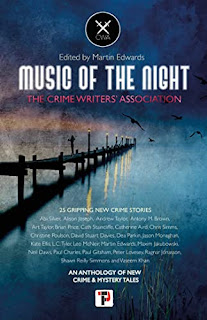

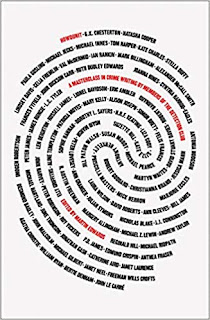
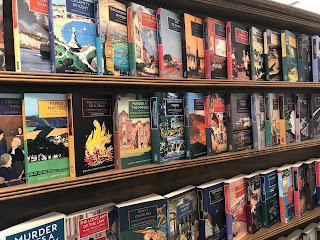
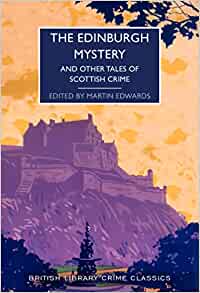
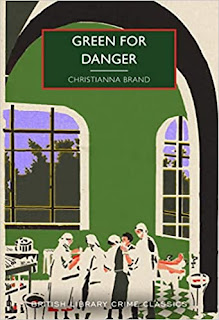
My first anthology of the year will be Music of the Night, a collection of brand new stories by members of the CWA; my own contribution is a piece called 'The Crazy Cries of Love'. In the spring, the British Library are publishing an anthology of classic Scottish crime stories, The Edinburgh Mystery, and the paperback edition of Howdunit will appear in the summer. There might be one more anthology later in the year, but that is uncertain. As regards the BL Crime Classics, I've already penned intros to quite a number of the titles for 2022, including books by Christianna Brand, Anthony Berkeley, ECR Lorac, and John Dickson Carr. There will be a few more intros of other books, mainly resulting from approaches by authors whose work I enjoy or their publishers.

Short stories of mine will appear in various other publications. My Cornell Woolrich tribute story, 'The Woman Who Never Was', is slated to appear in an antho edited by Maxim Jakubowski, a book that should be of great interest to fellow Woolrich fans. 'No Peace for the Wicked' is due to feature in Ellery Queen's Mystery Magazine. I've written another couple of stories for American anthologies that are yet to be publicly announced, including a Golden Age homage, 'The Outsider', which was a lot of fun to write and has a Christie-esque setting.
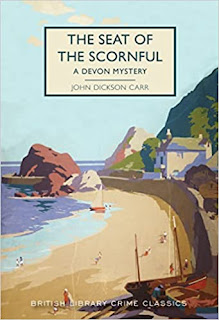

Now for something almost completely different - a Golden Age Mystery Map of Britain! I signed a contract recently to produce the text for this venture and I was working on it in December - another fun thing to do. More details soon. At present I'm thinking about an even more unlikely project (definitely ambitious) as well; whether anything will come of it, however, remains to be seen. Suffice to say it involves both Golden Age detective fiction and sci-fi...
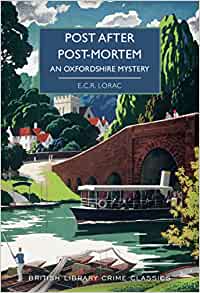

At present, I'm booked to appear at numerous festivals, in England, in Wales, and in Scotland and I'm really looking forward to getting around a bit more. I'm also very much hoping to make it to Bouchercon, although right now, it's hard to look too far into the future. As for the blog, I expect it to keep rolling on as before; I've found your comments and messages a continuing source of great encouragement. I hope to have opportunities to meet more of my readers in Britain and elsewhere during 2022, but in the meantime may I simply wish you all a very happy new year. 


Wednesday, 29 December 2021

Looking Back at 2021


Thanks so much to you, the readers of my blog, for following my posts during the past twelve months. 2021 has been a strange year for almost all of us. On Christmas Eve, I was taking my daily walk (something I've done ritualistically for the past two years, even before the pandemic struck) ruminating on an irritating email when I bumped into a couple I've known for around 25 years. The husband, who is about my age, told me he's suffering from a brain tumour. The courage he's showing made me feel remorseful about my grumpy reaction to that email. A reminder that it's so important to concentrate on appreciating the good things in life while one can. And despite being unable, again, to see many friends in person, there have at least been plenty of those good things over the past year.


This year saw the UK publication of The Crooked Shore, the eighth Lake District Mystery, but the first for six years. The break seems to have done me good - the reviews in The Times and elsewhere have been terrific, which is especially rewarding given that this book is rather different in some ways from its predecessors. I hope this augurs well for the book's US publication next summer, under a different title.


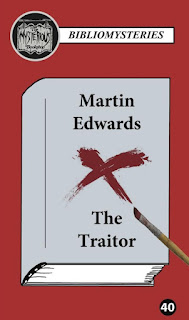
This time last year, I never anticipated being commissioned by Otto Penzler of The Mysterious Bookshop to write a Bibliomystery for him. The result was The Traitor, a novella which was great fun to write (while visits to Llandudno and Shropshire in the first half of the year provided me with some of the settings). It introduces a 'book detective', Benny Morgan, who may return in the future. I don't have any specific ideas for Benny just yet, but he's a character with, I feel, plenty of potential. And I just heard from Otto this week that the story is shortly to be released on audio.


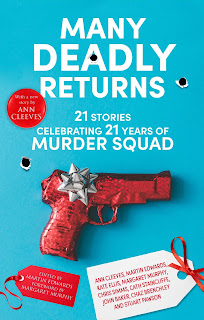
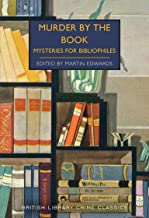
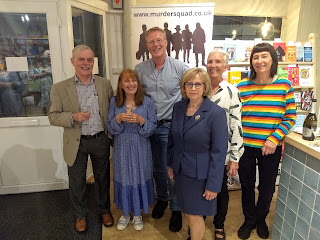
In terms of anthologies, I edited Many Deadly Return, celebrating Murder Squad's 21st anniversary, and including three stories of mine. The book's launch in Whitley Bay (see the photo above) was memorable, as well as providing a good reason for a few days in the north east. There were also two British Library collections, Guilty Creatures and Murder by the Book. Lee Child picked 'The Locked Cabin' for inclusion in The Best Mystery Stories of the Year 2021, while 'The Bookbinder's Apprentice' featured in Daggers Drawn. 


Howdunit
won one crime writing award (the CrimeFest HRF Keating Award) and was nominated for five others, four of them in the US. This was a source of huge pride, both personally and on behalf of the Detection Club members who contributed to the book, even though the pandemic meant that I didn't attend a single awards ceremony in person. Over the year I published getting on for twenty introductions to various books and numerous articles, including 'Death by Chocolate', commissioned by Slightly Foxed, who also invited me to speak at their Readers' Day, where I had the pleasure of sharing a bill with Michael Palin. Other subjects I wrote about included Josephine Tey (CrimeReads) and Mary Kelly and CHB Kitchin (CADS) as well as aspects of crime writing craft and my own work. 


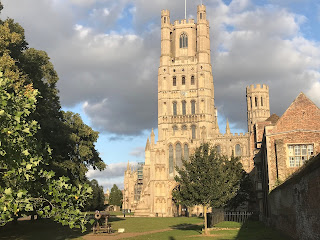
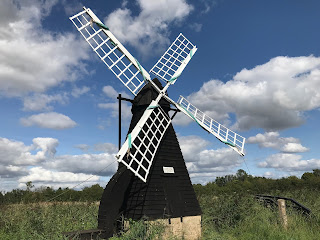
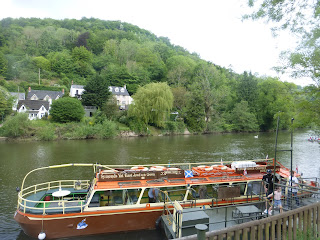
No overseas travel again this year. Not to worry: I took the decision after the very first lockdown to take any opportunities that were presented for travel within Britain and I found these trips extremely thereapeutic and rewarding in all sorts of ways. Quite apart from the trip to Northumberland and its environs, I spent time in North Wales, the Wye Valley, Harrogate, Ely and the Fens, the Lake District and Derbyshire. There were lovely boat trips in Ely, at Symonds Yat, and around the Farne Islands, plus a steam railway journey through eastern Kent.


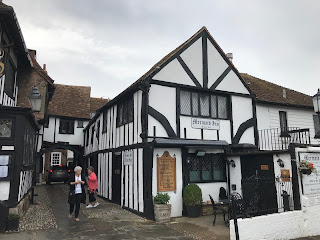
This year, unlike last, I also managed to take part in live festivals - at Buxton, Rye (see the photo below with Elly Griffiths, Andrew Wilson, Nicola Upson and John Case), and Torquay - as well as a good many that were online only. The podcasts and online events were many and varied, including Alibis in the Archive (with the brilliant musician and writer Rupert Holmes among the guest speakers) and an interview by Lucinda Hawksley, as well as a writers' workshop for Wirral Libraries.


My interest in workshops was one of the catalysts for Crafting Crime, the online course I've set up with Dea Parkin and her editorial consultancy Fiction Feedback, which recently went live. We've been really pleased by the initial take-up of and reaction to the course and we'll be promoting it more extensively in the coming months. 


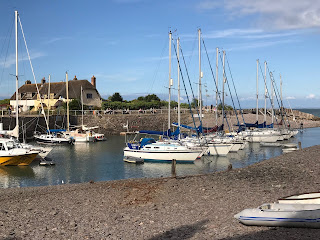
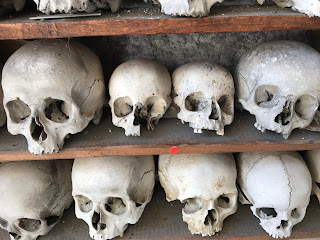
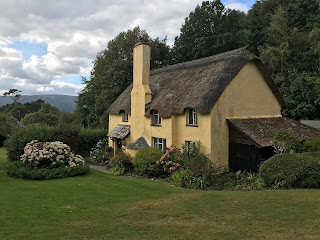
The longest holiday of the year was spent in the south, with trips to places as different as the ossuary at Hythe and the shoreline at Porlock Weir, enjoyed in lovely weather. A fantastic trip, even if I did under-estimate how long it would take to drive from Rye to Torquay... 


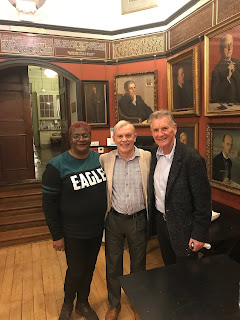
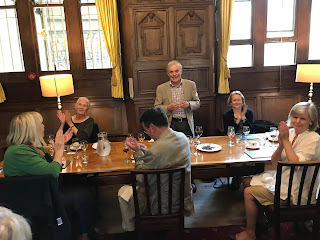
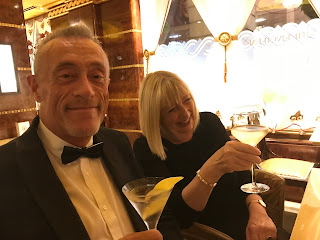
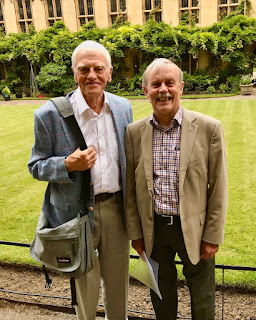
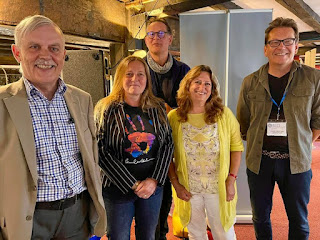
It also proved possible to host a couple of meals for the Detection Club. We broke with tradition by having a marvellous lunch at Balliol College, Oxford (see the photo close to the top and the pic with Peter Lovesey below), whose Master, Dame Helen Ghosh joined us and gave an impromptu speech. Dinner at the Ritz in October was great fun, as was spending time in the bar with lovely new members Lynne Truss and Chris Fowler (photo above). The dinner also gave me a chance to meet in person Simon Dinsdale, Kevin Durjan, and Giles Ramsey, with whom I've done several weeks of online lecturing on 'the Art of the Whodunit' during the pandemic.  

Plenty to celebrate, then, and plenty to remember fondly - many reasons to feel thankful. And I am. 


Monday, 13 December 2021

Crafting Crime is here!


I'm truly delighted to announce the launch of Crafting Crime, an online course for crime writers which I've put together in conjunction with the editorial consultancy Fiction Feedback, run by Dea Parkin, and Competitive Edge Advertising and Marketing. We have a website which gives lots of information about the course. If you're interested in writing a crime novel (or hoping to identify a special gift for someone!), do take a look at the introductory video on the home page, which gives an idea of how the course works. You can sign up at https://craftingcrime.com/

I've been working on the course materials for much of this year. The main inspiration sprang from the writing workshops I've been conducting up and down the country for several years now, most recently at Torquay during the International Agatha Christie Festival. I've really enjoyed the connection with aspiring writers. Even when I did an online workshop earlier this year for Wirral Libraries/Comma Press, inevitably with less of an immediate connection to the participants, I still found it motivating. And just as motivation is important for inexperienced writers, so it's important for anyone seeking to pass on a range of tips and ideas, as well as practical information about the writing life.

Another source of inspiration came from working on Howdunit with so many wonderful writers - a great experience. A well-established training organisation approached me to write a crime writing course for them, and although our thinking was different, when I talked to Dea about creating a course, it was plain that her approach was very much in tune with mine. Her skills and experience is also complementary, especially in the crucial field of critiquing manuscripts. 

We wanted to fill a gap in the market, getting away from the constraints of the classroom and presenting material in a flexible way, with downloadable materials and podcasts, which participants can access whenever they want over a six-month period. And the aim is not only to help with creativity, story structure and writing techniques, but also to give people a realistic and practical understanding of the writer's life, trying to help equip them for the ups and the downs. 

A great many wonderful crime writers from around the world - along with literary agents and British and American publishers - have been generous enough to share their thoughts for the benefit of course participants. There are all sorts of supplementary materials - research notes, sample outlines, editorial tips, and so on, to accompany the main course modules, which themselves run to a total of over 60,000 words. Rhian Waller of Gladstone's Library kindly recorded our podcasts. So there's plenty to get your teeth into. 

Every single person who signs up for the course will be able to submit the start of their novel and a synopsis within six months and receive a professional critique from Fiction Feedback (full details on the website). That critique covers the first part of the manuscript (up to 8000 words) plus a synopsis of up to 1000 words, and this is a major feature of the course. With luck, a number of those who take part will go on to enjoy illustrious careers as crime writers. And if that happens, Dea and I will be absolutely thrilled.