Showing posts with label Dea Parkin. Show all posts

Monday, 13 December 2021

Crafting Crime is here!


I'm truly delighted to announce the launch of Crafting Crime, an online course for crime writers which I've put together in conjunction with the editorial consultancy Fiction Feedback, run by Dea Parkin, and Competitive Edge Advertising and Marketing. We have a website which gives lots of information about the course. If you're interested in writing a crime novel (or hoping to identify a special gift for someone!), do take a look at the introductory video on the home page, which gives an idea of how the course works. You can sign up at https://craftingcrime.com/

I've been working on the course materials for much of this year. The main inspiration sprang from the writing workshops I've been conducting up and down the country for several years now, most recently at Torquay during the International Agatha Christie Festival. I've really enjoyed the connection with aspiring writers. Even when I did an online workshop earlier this year for Wirral Libraries/Comma Press, inevitably with less of an immediate connection to the participants, I still found it motivating. And just as motivation is important for inexperienced writers, so it's important for anyone seeking to pass on a range of tips and ideas, as well as practical information about the writing life.

Another source of inspiration came from working on Howdunit with so many wonderful writers - a great experience. A well-established training organisation approached me to write a crime writing course for them, and although our thinking was different, when I talked to Dea about creating a course, it was plain that her approach was very much in tune with mine. Her skills and experience is also complementary, especially in the crucial field of critiquing manuscripts. 

We wanted to fill a gap in the market, getting away from the constraints of the classroom and presenting material in a flexible way, with downloadable materials and podcasts, which participants can access whenever they want over a six-month period. And the aim is not only to help with creativity, story structure and writing techniques, but also to give people a realistic and practical understanding of the writer's life, trying to help equip them for the ups and the downs. 

A great many wonderful crime writers from around the world - along with literary agents and British and American publishers - have been generous enough to share their thoughts for the benefit of course participants. There are all sorts of supplementary materials - research notes, sample outlines, editorial tips, and so on, to accompany the main course modules, which themselves run to a total of over 60,000 words. Rhian Waller of Gladstone's Library kindly recorded our podcasts. So there's plenty to get your teeth into. 

Every single person who signs up for the course will be able to submit the start of their novel and a synopsis within six months and receive a professional critique from Fiction Feedback (full details on the website). That critique covers the first part of the manuscript (up to 8000 words) plus a synopsis of up to 1000 words, and this is a major feature of the course. With luck, a number of those who take part will go on to enjoy illustrious careers as crime writers. And if that happens, Dea and I will be absolutely thrilled. 


Wednesday, 24 April 2019

The End of an Era


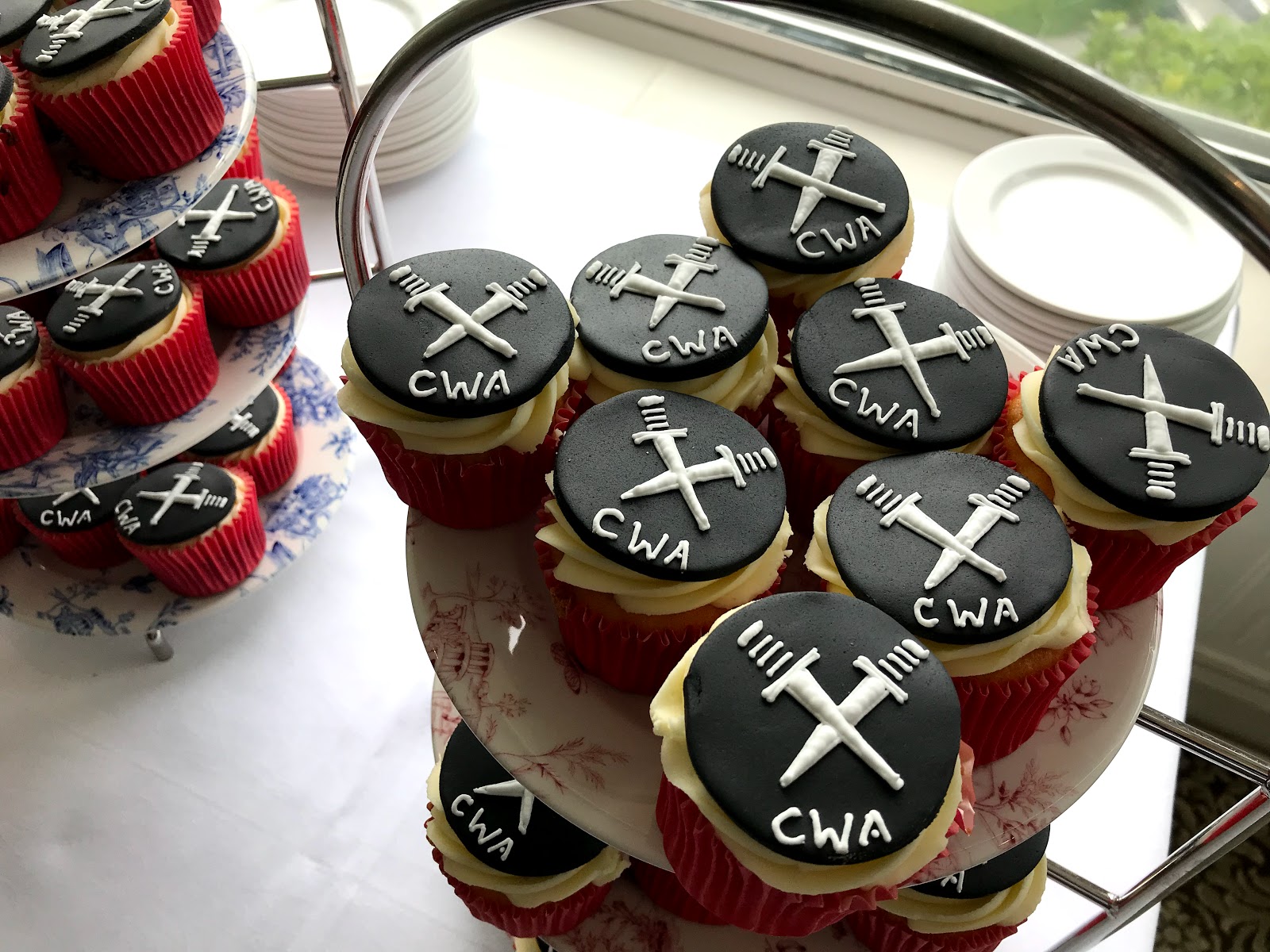
My spell as Chair of the Crime Writers' Association was one I found fascinating and enjoyable, though inevitably it did take up a lot of time. But it gave me deeper insight into the workings of the crime writing world and also the issues facing crime writers at a time of much change in the publishing industry. I've been a member of the CWA for more than 30 years, and I've gained a great deal from my membership. So trying to build on the work of my predecessors also afforded an opportunity to give something back. As well as the chance of consuming the occasional CWA cupcake...


I'm not a natural "committee" person, and I've always been aware that committees are not always effective; in my working life I've also come across many disputes in voluntary and not-for-profit bodies. However, I did find that my apprenticeship as a member of the CWA committee, or board of directors, to be more accurate, under the chairmanship of Peter James, Alison Joseph, and Len Tyler, was very helpful in enabling me to get a clearer understanding of the way the organisation works, and of its potential.

My over-riding aim was to build on the fact that the membership of the CWA has been growing impressively for a number of years, and help to refashion the infrastructure of the organisation. A lot of this sort of thing is unglamorous - sorting out the finances, updating the legal constitution, managing the paid agencies who carry out various projects- but essential. My message to members was that we had to be business-like, because that was the only way to ensure that a large and growing organisation could serve its members effectively. Avoiding increases in member subscriptions while developing an ever wider range of member benefits seemed to me to be crucial. And also, one has to get across the message about those benefits, and to communicate effectively with people who read, or might want to read, members' books.


So rather than having numerous lengthy board meetings (my experience of partners' meetings in a law firm has irrevocably turned me off the idea of long meetings and endless going round in circles) I tried to develop a way of working in which a wide and expanding range of individuals undertook specific projects, with sound admin and financial management in the background. So the CWA now has, among other things, three Libraries Champions, two Festival Liaison Officers, a Booksellers' Champion, a Publishers' Liaison Officer, and a number of other people doing invaluable work of various kinds - I'm especially proud of the work we've started on supporting writers who face mental health challenges.

The Board members, and the admirable Secretary Dea Parkin, proved wonderfully supportive, and the way they dealt with the occasional tricky issue which arose was a model of sensible and constructive conduct. I was also delighted by the way the membership as a whole reacted, understanding the need to make changes while retaining the ethos that has made the CWA so cohesive over the past 65 years.

Of course, there are some things which I'd like to have done which I never quite managed, not least visiting each of the regional CWA chapters (though I did get to several of them), but I'm delighted that my elected successor is Linda Stratmann, someone who will bring her own ideas and energy to benefit an organisation which does seem to me to be going from strength to strength. I've handed over to her, as is the custom, the Creasey Bell (see top photo) which has resided in my house since early 2017, and I wish her all the very best.

As it turns out, I'm the only person who has served as CWA Chair and Detection Club President at the same time, and I also became the longest-serving Chair of the CWA since our founder, John Creasey, back in the 1950s. So it's definitely time to step aside and get some more writing done. But I'm going to continue to be involved with the CWA, not least as anthologist and archivist. And I'm very glad to belong to such a thriving and forward-looking organisation.


Monday, 16 April 2018

Shrewsbury and the CWA conference

I've just returned from Shrewsbury after an exhilarating weekend. It was the CWA's annual conference, an event I've rarely missed over the past thirty years. The setting was lovely - the ancient town is crammed with history and interest, and the Lion Hotel, whose previous guests have included Darwin, de Quincey and Paganini, was a splendidly historic venue.

The speakers included the legendary investigative psychologist David Canter, author of the Gold Dagger-winning Criminal Shadows, who shared many insights about the pros and cons of offender profiling. A psychiatrist explored the way that her discipline can contribute to cutting edge fiction. A forensic expert cleverly updated us on latest forensic techniques, and how they might be used in solving The Murder of Roger Ackroyd. There were talks about Ellis Peters, and about marketing books in the modern age. A leading scientific advisor to government was the after dinner speaker. And there was much more besides...

Quite a bit of alcohol was quaffed, and we also had a visit to Tanners' ancient wine cellars, again fascinating and historic. A ghost tour around the town was followed by a trip to the castle and the amazing public library, where an extremely old building which once housed Shrewsbury School has been cleverly integrated into a modern facility. I've never seen a library like it. There was also a book-signing at Waterstones.

It was great fun to catch up with old friends and also to meet many of the CWA's newer members, such as playwright Derek Webb, novelists Stephen Norman and Jo Summers, and human rights campaigner Stephen Jakobi. Great credit goes to Cilla Masters for organising things with such verve, and to Dea Parkin for all her support work. As for the CWA's AGM, it was a well-attended forum for lively debate and some very good exchanges of ideas for the future. And the upshot is that I've been re-elected as Chair of the CWA for a further (and definitely, definitely final) twelve-month term. It's a great honour to lead such a thriving and fun organisation. 

Wednesday, 13 April 2016

East Anglia, the Norfolk Broads, and the CWA Conference


East Anglia is a lovely part of the world that has featured in plenty of detective stories over the years. Among them is C.P. Snow's debut novel, Death Under Sail, a murder mystery set on the Norfolk Broads. In recent years, as my enthusiasm for travel on the water has grown, I've become keen on the idea of a cruise on the Broads,and finally on Monday morning - gloriously sunny, luckily - I realised that ambition, sailing from Wroxham. It made a wonderful finale to a great trip.


My reason for venturing so far afield (and there's no quick way to Norfolk from Cheshire, or from most places, come to that) was that the  CWA's annual conference was held in Norwich. I decided to turn the journey from a chore into pleasure by stopping off at various places and making a five day break of it. So the trip began with various halts at places like Stamford in Lincolnshire (a lovely and historic town, quite unfamiliar to me) and King's Lynn, which I'd visited only once before - when I was in the early stages of planning my first Harry Devlin novel.

Then it was on to Norwich, but via a series of resorts, mostly quite small, on the north coast of Norfolk. Again the weather was kind, so it was possible to see places like Hunstanton, Wells and Sheringham at their best. I also went on a pilgrimage to the church at Stiffkey (pronounced Stookey), famous for the controversial Rector Harold Davidson, who was eventually eaten by a lion (I promise I'm not making this up...)The resort which gave its name to Francis Beeding's classic Death Walks in Eastrepps doesn't exist, but I did drive through Northrepps, on the outskirts of Cromer,before reaching The Maid's Head Hotel, venue for the conference, and said to be the oldest hotel in the country. It is located in a road called...Tombland.


One of the joys of these conferences is meeting old friends, in some cases for the first time in ages. Kathryn Skoyles, who helped Dea Parkin make it a really convivial event, is someone I've known for more than twenty years; we first met at the Shots on the Page convention which used to be held in Nottingham. It was great to catch up with her, and on Sunday afternoon she proved an expert guide to the amazing Old Vicarage gardens at East Runton, where she volunteers; they are justifiably said to be one of the finest private gardens in Britain.


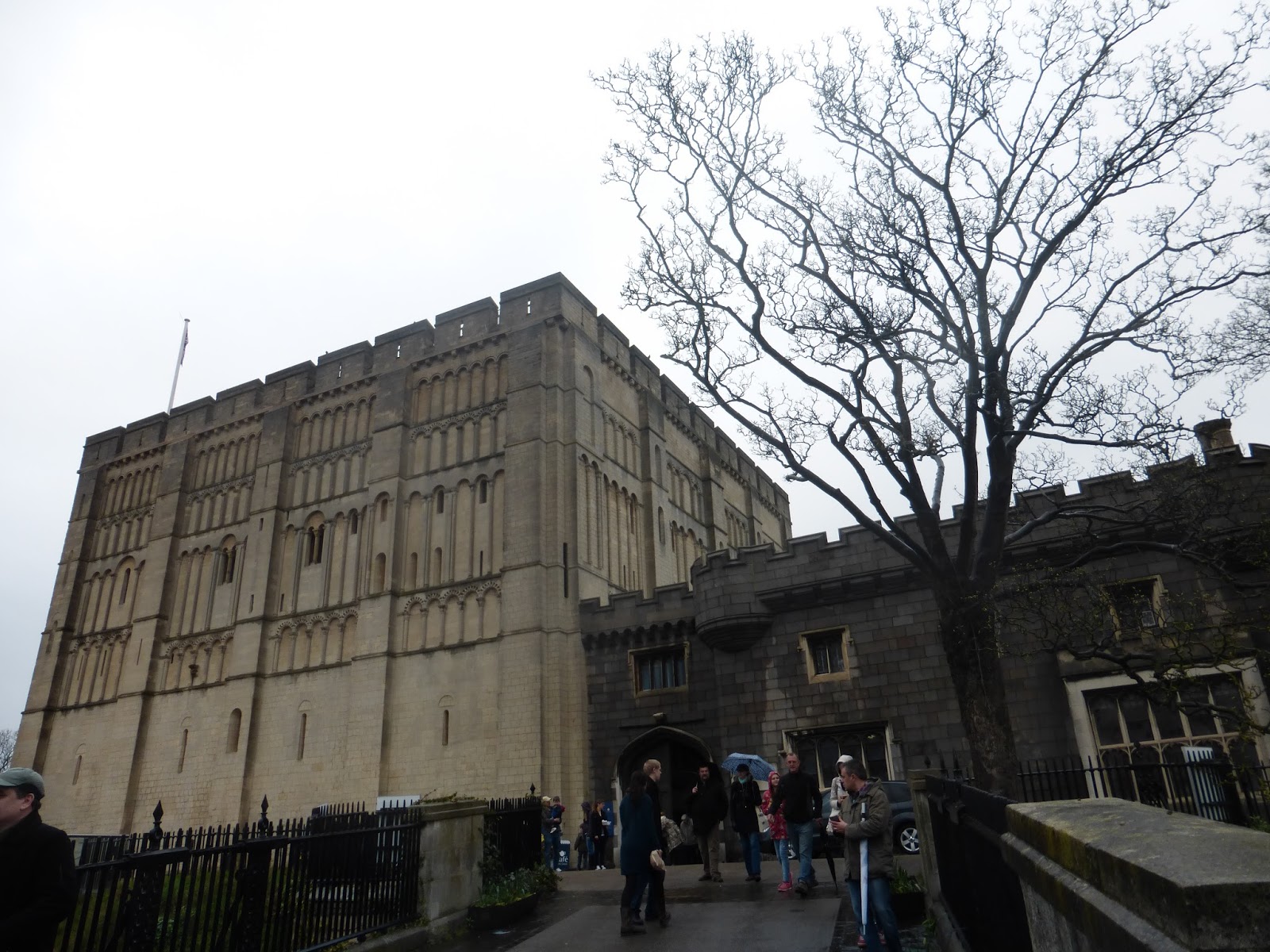
As always, there were lots of good things happening during the conference. A guided walk through the city on Friday, followed by a buffet meal in a crypt. Talks on forensics, counter-terrorism, business opportunities for writers, and new ideas about the Lord Lucan case - something for everyone. Among the optional trips was a visit to the prison museum in the old Norwich Castle Keep - fascinating. Plus a really good dinner, with a witty speaker who is a retired coroner. I do strongly recommend CWA members who haven't attended a conference in the past to give it a try in future. It's a different sort of experience from, say, Crimefest or St Hilda's, but packed with interest - and excellent company.