Showing posts with label Eileen Dewhurst. Show all posts

Friday, 11 January 2019

Forgotten Book - Cul De Sac


Image result for john wainwright cul de sac

It's safe to say that John Wainwright is a forgotten author, even though he died not much more than twenty years ago, and was publishing until near the end. In fact, he published more than 80 novels, almost all of which benefited in some way from his years of experience as a police officer in Yorkshire prior to become a busy full-time novelist.

I once met John Wainwright in the late 1980s. This was at a Liverpool library event. I was asked to take part on the basis of my work as a reviewer - I hadn't published a novel at that time. The other authors involved were Eileen Dewhurst, who became (and still is) a very dear friend of mine, and the late Roger Ormerod.

I was pleased to meet Wainwright, whose books I'd read and admired, but I found him taciturn in the extreme, as if keen to play up to the stereotype of the cantankerous Yorkshireman. He didn't seem interested in either the event or the questions asked by the audience, but this may well have been due to shyness. Roger Ormerod, also rather reserved by nature, I think, was much more gracious. Having read his memoirs recently, I don't doubt that Wainwright was a nice chap if you really got to know him, I just think he was utterly out of his comfort zone, as someone who seldom attended author events. The contrast with the exceptionally pleasant Peter N. Walker, also a former Yorkshire cop, and a highly convivial man, was striking.

Wainwright's books use to crowd the library shelves, but after his death, his reputation faded. He wrote too quickly, as so many authors do, and the quality of his work was variable, but I think that at his best he was a fascinating writer. Cul De Sac, published in 1984, earned high praise from Georges Simenon, no less. I found it an intriguing study of character and of police work.

It begins with a diary extract - shades of Gone Girl! In some ways, Wainwright was ahead of his time. The diary-maker's wife meets an untimely end, falling over a cliff. Accident, suicide, or murder? An obsessive detective, Harry Harker, sets  out to find the truth. It's a highly readable story. My only quibble is that the excellent final twists did not seem to me to be adequately foreshadowed, a flaw that could easily have been remedied. It's a book of its time. But I liked it a lot.


Tuesday, 29 April 2014

Guernsey and the CWA conference


The CWA conference in Guernsey over the week-end was, quite simply, one of the best conferences I've ever attended. The event was superbly organised by Jason Monaghan, with assistance from Judith Rhodes, and as I am a fan of the Channel Islands, I managed to expand the trip into a short holiday that also included some literary research. I'd visited Guernsey on day trips previously, but I'd never stayed on the island before. It's a great place, and the weather was generally kind, making it possible to enjoy fantastic scenery as well as a host of interesting events.


Before the conference began, I'd visited history-packed Castle Cornet, and had lunch at the beach cafe in lovely Fermain Bay, as well as exploring the cliff path walks complete with a dazzling bluebell wood. Jason is both a crime writer and director of the Guernsey Museum, and the Museum was the setting for a pre-conference panel featuring Keith Miles, Kate Ellis and me. The Museum is both modern and very good, and is situated in Candie Gardens, the setting for Eileen Dewhurst's excellent novel Death in Candie Gardens, which I hope to cover in this blog before long. Close at hand is the Victoria Tower, and if you borrow the key from the Museum, a climb up inside is rewarded by views across the island.


I fitted in other trips before and after the conference began - to Fort Grey, with a shipwreck museum, Cobo Bay with another beach cafe, and a fantastic sculpture park in sub-tropical gardens at Sausmarez Manor. All these were destinations I can recommend to anyone who fancies a trip to Guernsey.


The conference began with a reception at the Royal Court, and a chance to mingle with the Bailiff of Guernsey and senior law officers (including a judge who used to work with that great writer Frances Fyfield, formerly a prosecutor herself). Saturday supplied talks by a retired senior police officer, and Dr Gilly Carr,who has done a great deal of research into war-time resistance when Guernsey was occupied by Hitler's army. One of the heroes she talked about was Frank Falla, and by an amazing coincidence we later took a taxi ride to the airport - and Falla's daughter was the driver. Outside the Museum is a statue of Victor Hugo, who was exiled to Guernsey and completed Les Miserables there, and one of the highlights of the afternoon was a trip to his house in St Peter Port, notable both for its ornate decoration, master-minded by Hugo, and stunning views. At the Museum itself, we were given the chance to handle and learn more about a whole arsenal of historic weapons - an ideal topic for crime writers...


Sunday's talks came from a retired expert on insurance scams, and from Lilo Picornell, a leading light in the field of forensic linguistics - a subject that will, I'm sure, soon feature in a good many crime novels. As she made clear, forensic linguistic evidence isn't enough in itself to convict someone, but it could have an important role in terms of corroboration. After that, Jason had organised a trip to more notable Guernsey sights - the Little Chapel, the eerie German underground hospital tunnels, and a museum focused on the Occupation. Reading the German propaganda in the war-time newspapers was very thought-provoking indeed. The suffering inflicted on the islanders was quite dreadful. They must have been terrified about what the future would hold.


I know that some people wonder if there is still a role for the annual CWA conference, now that we have a variety of terrific crime conventions, including Crimefest, Harrogate and St Hilda's. I'm very firmly of the view that a members' organisation such as the CWA not only needs and deserves a first rate conference of its own, but that it fulfils a very different function from the fan-oriented conventions. The social side is an important aspect, common to all these events, but the CWA conference offers a great deal in addition to members - not just a few jaunts, enjoyable though these are, but expert information of real professional value and a chance to make new contacts. Thanks to Jason and Judith, the members who went to Guernsey were treated to a conference they will long remember, and value.

Monday, 6 February 2012

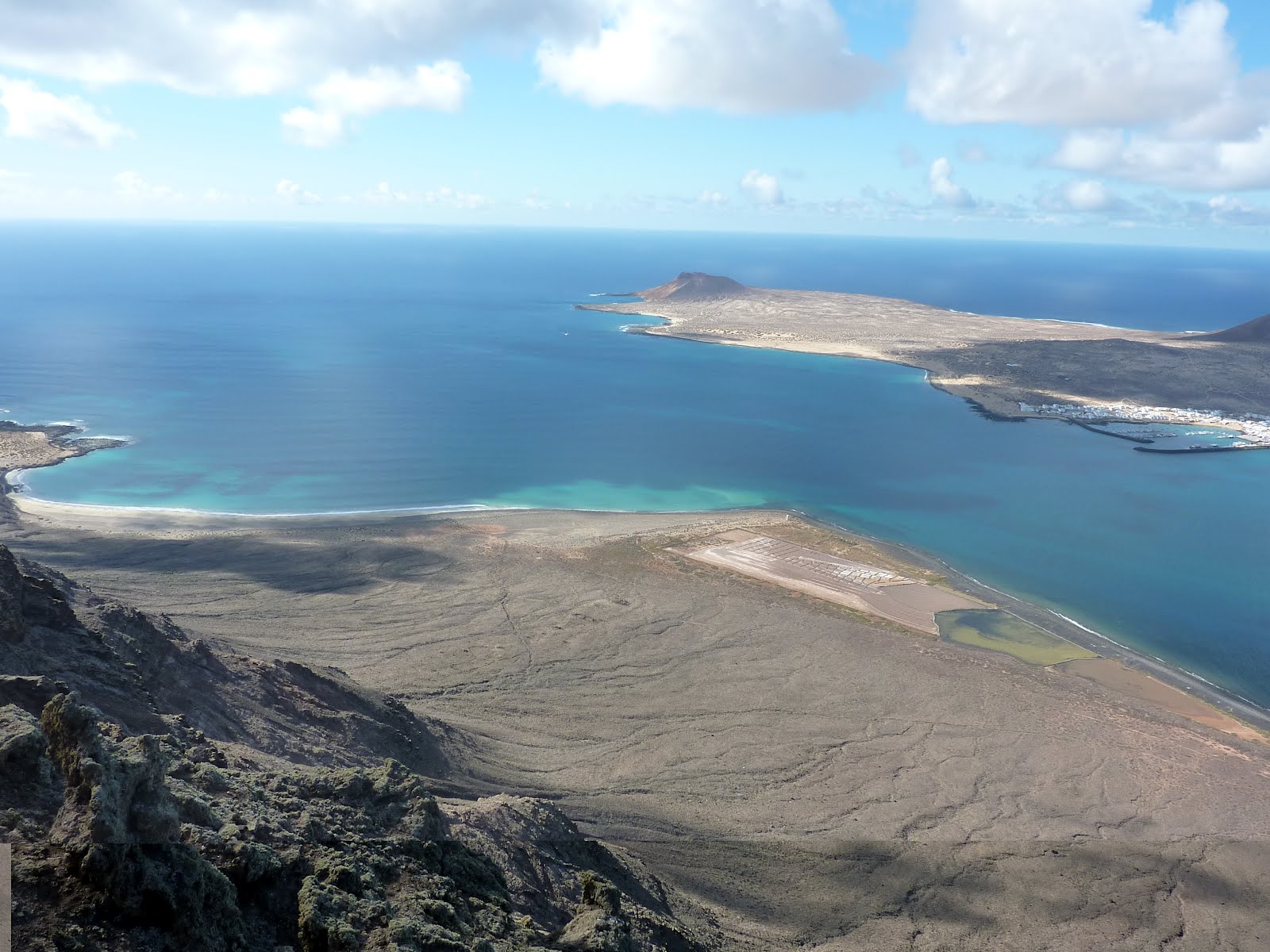
Coming home from the Canaries


Many thanks for your comments whilst I was away - apologies again for the delaying in publishing them. I'm now back in Britain, and as I look out of the window, there is fog, ice and traces of yesterday's snowfall. All a far cry from life last week, when I was on a cruise around the Canaries and it was about 25 degrees warmer.

Islands fascinate me, but I've never visited the Canaries before, and I can't recall coming across a book set there. There must be one, surely? Or more, given that Tenerife and Lanzarote are such popular destinations? If you know of any mysteries set in the Canaries, please do let me know.

I'd also be interested to know recommendations generally of good mysteries set on islands. My own list would be topped by And Then There Were None. It's a long time since I read The Skull Beneath the Skin by P.D. James, but I did find it less satisfying than her best books. Panic Party by Anthony Berkeley has its merits, and of course Ann Cleeves, with her Shetland Quartet, has captured the fascinating yet sometimes claustrophobic nature of island life very effectively. A very clever and little known book by Eileen Dewhurst, Death in Candie Gardens, has a splendid setting in Guernsey, where Eileen used to stay with the widow of the late thriller writer Desmond Bagley. And Chris Ewan is soon to publish a new book set on the Isle of Man, which I will feature here before long.

Other ports of call included Agadir, in Morocco, a place I found interesting but less so than Marrakech. Of the Canaries, I think my favourite was Lanzarote, with a trip to some fascinating places designed by Cesar Manrique, including the amazing grotto (second picture from the top; others feature Lanzarote, Tenerife, Gran Canaria, the lovely La Palma and Agadir.) But the stand-out destination was one I'll mention in a separate post tomorrow.

Saturday, 9 October 2010

Writers at Work


I am always fascinated to see the places where other writers live and work. When – twenty years ago, I can hardly believe it! - I first visited Greenaway, where Agatha Christie lived, I was greatly intrigued, and I mentioned a while back my pleasure at visiting Margaret Yorke in her delightful cottage, with a study crammed with books. And Eileen Dewhurst, now retired but a Wirral based writer of note, has a great set-up in her flat in Birkenhead.

Closer to home in Cheshire, Kate Ellis has for many years worked out in the garden in a specially designed garden room. But now she’s moved her study and workplace indoors. She is a gifted plotter, and it’s fascinating to see how she maps out her intricate mysteries in a very visual way. This is something I don’t do, but it’s a method that has a good deal to commend it, I think. And the success of Kate’s ingenious puzzles shows that it works very well in accomplished hands.

What Kate and I do have in common as writers is that we both know the solution to the main mystery from the outset. My own starting point is almost invariably an interesting motive for murder. And that is why I am not one of those crime writers who does not know where the story is going to wind up when they begin writing. But all methods are valid – they are simply a means to an end. What really matters is the quality of the end product.

Thursday, 10 December 2009

Desmond Bagley


One of my must-read blogs is Petrona’s, and a typically interesting post a while back reminded me of a thriller writer who was a huge star in the 1970s, and who is not remembered often enough today. As a teenager, I was a fan for years of Alistair MacLean, until his later books began to seem very samey, and then I read a few by Desmond Bagley, before concentrating my attention on whodunits.

Bagley was, arguably, second only to MacLean among British thriller writers of the time. My late father was very keen on Bagley’s books, and encouraged me to read him. I agreed with his verdict that Running Blind was an excellent story, benefiting from a well-realised setting in Iceland. (Dad also tried to persuade me to take an interest in Wilbur Smith, but his books never appealed to me in the way that Bagley’s did.)

Bagley died at the age of 59, and a highly successful career came to a sad and premature end. Some time after that, I met his widow Joan at a CWA conference in Tunbridge Wells. Joan was a very pleasant woman, and she was a close friend of a friend of mine, Eileen Dewhurst. Eileen stayed with Joan several times at her home in Guernsey, and one of these trips inspired her to write an excellent Guernsey-based novel, Death in Candie Gardens.

I was rather baffled at one point in the conversation, when Joan started talking about someone called Simon. It turned out that this was Desmond Bagley’s real name. But I never asked why he adopted a pseudonym. Sadly, Joan died about a decade ago, but I have discovered that there is a very good website about her husband’s books which pays proper tribute to them both: http://www.desmondbagley.com/