Showing posts with label Melvyn Barnes. Show all posts

Tuesday, 19 April 2022

Francis Durbridge - La Boutique and The Scarf


In a guest post on this blog last month, Melvyn Barnes explained the work he'd been doing with the estate of Francis Durbridge and that enterprising small press Williams and Whiting to bring to print a good many of Durbridge's stories for TV and radio. I'm a Durbridge fan and I think this is a very worthwhile project indeed. 

I was especially interested to read La Boutique, a radio serial in five parts which hadn't previously registered on my radar. The book contains the original scripts, which were especially commissioned by the European Broadcasting Union. As Melvyn points out in his intro, the story was written in 1967 and Durbridge was the first author to be invited by the EBU to write a radio serial for multi-lingual broadcasting. It shows how popular he was across the continent at that time.

La Boutique is a classic Durbridge mystery, with many of the tropes we know and love in evidence. The starting point is a meeting between Robert Bristol, a cop, and his songwriter brother Lewis. Lewis tells (with the aid of flashback scenes) the story of how he became infatuated with Virginia, whom he met in the US - only for her to disappear in highly mysterious circumstances. There's also a puzzle about a missing belt from a dress shop, La Boutique, owned by Lewis's ex-wife Eve. The plot thickens when a corpse is found - with the missing belt . A classic Durbridge cliffhanger to end episode one. I very much enjoyed this story.

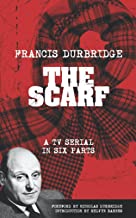
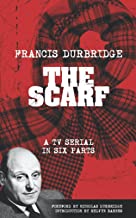
The Scarf was a TV serial which was hugely popular back in 1959: it was shown on BBC TV in six thirty-minute episodes, with Donald Pleasence playing Inspector Yates and a cast which boasted the likes of Patrick Troughton and Anthony Valentine. A young woman called Fay Collins is found strangled on a farm tractor trailer and suspicion falls on a publisher called Clifton Morris. It's another story in the vintage Durbridge mould - the eponymous scarf adds to the puzzle, rather like the belt and a photograph of the shop in La Boutique, like the doll in The Doll, and so on...TV scripts aren't as easy to read as radio scripts in my opinion, because of the visual component, but this is an interesting story that is sure to entertain Durbridge fans.

Wednesday, 16 March 2022

Rediscovering Durbridge


I've mentioned Melvyn Barnes on this blog previously, in connection with the good work he's done in relation to Francis Durbridge. He's currently collaborating with an enterprising small press, Williams & Whiting, to bring more of Durbridge's work, a worthy endeavour. I invited Melvyn to tell my readers more about this project:

'My fascination with Durbridge goes back to adolescence (of blessed memory) when I was glued to the radio and later to television in my determination not to miss the next instalment of the latest Durbridge serial.  But Durbridge did not figure in the many years that I spent in writing books and articles about crime fiction, until the turning point of retirement from the day job provided more time to spend on research.  So perhaps inevitably Durbridge once again took centre stage, particularly as this multi-media craftsman had been largely neglected by the historians of popular culture.  And far worse than that, on the Internet he was misrepresented by inaccurate information that will doubtless remain in the ether forever.

Durbridge thus became my principal subject of research, the result being a self-published book Francis Durbridge: A Centenary Appreciation (2015).  That was just the beginning, however, as it had become increasingly clear that Durbridge left innumerable unanswered questions about his works, the way in which he recycled plots, things written but never produced, and other aspects that needed to be investigated and if possible clarified.  Indeed this presented a renewed challenge, requiring another lengthy period of research that led to the publication of a much larger book Francis Durbridge: The Complete Guide (Williams & Whiting, 2018).

So was this Case Closed?  On the contrary, Francis Durbridge is never that straightforward and some bombshell revelations soon began to emerge.  These arose from the fact that although he died in 1998 his widow lived for very many years afterwards, and understandably their two sons had long deferred sorting their father’s papers.  But now they discovered that numerous original typescripts had survived, some of them never available as novelisations or recordings nor even produced in their intended form - be it radio, television or cinema film.  Trumpet fan-fair - step forward the publisher Williams & Whiting, now contracted to transcribe and publish all of these typescripts as e-books and print-on-demand paperbacks.

My own role has involved validating, proof-reading and in particular writing Introductions for each book.  So far I have written thirty-four Introductions, with increasing excitement because these scripts will gradually become an impressive set of uniform volumes.  At the time of writing, those already published or imminent are – The Scarf (1959 television serial); Paul Temple and the Curzon Case (1948 radio serial); La Boutique (1967 radio serial); The Broken Horseshoe (1952 television serial); Three Plays for Radio Volume 1 (1945-46 Over My Dead Body, Mr Lucas and The Caspary Affair); Send for Paul Temple (the original 1938 radio serial); A Time of Day (1957 television serial); Death Comes to the Hibiscus (c.1942, an unproduced stage play) and The Essential Heart (1943 radio play), both written under the pseudonym Nicholas Vane; Send for Paul Temple (1943 stage play); The Teckman Biography (1953 television serial); Paul Temple and Steve (1947 radio serial); and Twenty Minutes from Rome (c.1954, an unproduced television play).

As indicated above there are many more to come, and for me it has been a labour of love.  But I gather that Durbridge’s son Nicholas is now laboriously transcribing his father’s handwritten diaries – so who knows what new information might emerge?'

Thanks, Melvyn. I'll be posting more about these interesting books in due course.


Monday, 7 March 2022

CADS 87


One of the beauties of Geoff Bradley's magazine (or fanzine) CADS is that you never quite know what each new issue will bring. There are contributors who feature regularly, such as Marv Lachman, Liz Gilbey, Mike Ripley,  Philip Scowcroft, Barry Pike, and Jamie Sturgeon, as well as others who cover an extraordinarily wide range of subjects. As a result, I always come away from reading each new issue with something else to look out for.

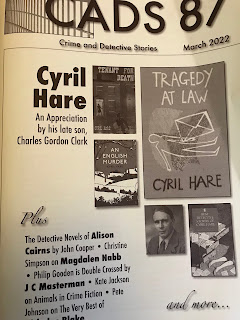
This is certainly true of the latest issue, CADS 87. For instance, I was unaware of the two detective novels of Alison Cairns, which John Cooper (a sound judge) writes about with considerable enthusiasm. I was familiar with Philip Levene, the radio and TV writer whom Melvyn Barnes discusses in a fascinating piece, but I wasn't aware of the full extent of his work. As a result, I've had a chance, thanks to YouTube, to listen to a couple of his entertaining radio plays. And this in turn has led me to other radio discoveries.

One piece I was glad to see again was a long appreciation of Cyril Hare by his son Charles. Many years ago, Charles sent it to me, along with the initial pages of his father's final novel, which he wondered if I might be interested in completing. Unfortunately there wasn't enough material to build on, but it was fascinating to read. Charles died a few years ago, but his article is full of interesting observations.

My own contribution covered some material which I wasn't able to accommodate in The Life of Crime - a piece dealing with correspondence from Fergus Hume, the American writer Elizabeth Fenwick, and W.J. Burley. But there's much more to enjoy in CADS 87, including a piece by Philip Gooden on J.C. Masterman and an article by Pete Johnson about Nicholas Blake's best books. For fans of crime fiction of any vintage, CADS is a great read and a wonderful resource - strongly recommended.  

Wednesday, 1 August 2018

Francis Durbridge: the Complete Guide

One of the pleasures for me of June's Bodies from the Library event was the chance to meet Melvyn Barnes. I first came across his work when I read his Best Detective Fiction, and then its subsequent incarnation, Murder in Print. We've corresponded for some years, but this was our first meeting in person. He was at the British Library to speak about Francis Durbridge, an author on whom he is our leading authority, and about whom he's written a book.

This is Francis Durbridge: the Complete Guide. In fact, it's an updated and significantly expanded version of his Francis Durbridge: a Centenary Appreciation. That book was self-published; this one appears under the imprint of a worthy independent press, Williams and Whiting. I enjoyed the earlier book, but the new version does offer much more, and is definitely worth buying even if you invested in  its predecessor.

A brief biographical chapter is followed by a lengthy survey of Durbridge's career. Then come sections on his novels, his work for radio (there was a lot of it), his work for television (which is how I first came across his name in my youth), his stage plays, films of his stories, and (yes!) the Paul Temple comic strip.

One of the valuable features of the book is that it disentangles the numerous overlapping strands of Durbridge's output. He was prolific, sure, but he also re-used the same plots on many occasions. This can be confusing and indeed irritating, so it's helpful to be able to find out, for instance, that Design for Murder is actually a novelisation of the radio serial Paul Temple and the Gregory Affair, while Paul Temple and the Alex Affair is actually a revision of the earlier Send for Paul Temple Again. This is a book I shall refer to time and again, and it's a must for any serious Durbridge fan; a bonus is an intro by Nicholas Durbridge. I should declare that I'm mentioned in the acknowledgements, but that's immaterial - I'd recommend this book anyway.

Saturday, 21 February 2015

Francis Durbridge: A Centenary Appreciation

My enthusiasm for Francis Durbridge dates back to my school days - I was just eleven when I saw Bat Out of Hell on TV, and loved it. That serial starred John Thaw, long before he became Inspector Morse. Later, I enjoyed reading books about the genre written by Melvyn Barnes, and although he and I have never met, I've been delighted to get to know him via cyberspace, and recently to learn about a very worthwhile project of his, Francis Durbridge: A CentenaryAppreciation. So I invited Melvyn to write a guest blog to share the news - and here it is:

"I have never been a full-time writer, having spent my entire career as a chartered librarian until retiring in 2002 after eighteen years as Director of Libraries and Art Galleries for the City of London.  But crime fiction has been a lifetime interest, which led to part-time writing and the publication of my books Best Detective Fiction, Dick Francis, and Murder in Print, together with numerous contributions to magazines and reference books such as Twentieth Century Crime and Mystery Writers, The Oxford Companion to Crime and Mystery Writers and Scribner’s Mystery and Suspense Writers.

As a youngster during the “wireless” years I was captivated by the Francis Durbridge serials featuring Paul Temple, and later by his television serials that in their day attracted record viewing figures.  So much so, that well into retirement I decided it was time to take up the pen again and fill a gap by producing a unique account of Durbridge’s work.

It proved to be an unexpectedly complex and lengthy process, requiring several years’ research including many sessions at the British Library, the (late lamented) Newspaper Library in Colindale and the BBC Written Archives Centre at Caversham.  This provided countless details about Durbridge’s twenty-eight Paul Temple radio serials and plays from 1938 to 1968, his seventeen television serials from 1952 to 1980, his thirty-five novels from 1938 to 1988 and his nine stage plays from 1971 onwards.  Truly surprising, however, was the extent of his other works – nine cinema films were made from his radio and television serials, he wrote three novels as newspaper serials that were never published in book form, two plays long before he was recognised as a stage dramatist, and a Paul Temple comic strip for the London Evening News which ran for over twenty years.  Most surprising of all was the revelation of his prolific output for the radio, which not only included many non-criminous scripts but also non-Temple plays and serials featuring other detectives, using his own name and three pseudonyms.

This long period of slogging research frequently led me from one reference to another, with the final clinching of answers to previously unresolved questions.  It not only informed my introductory survey of Durbridge’s work, but it resulted in a comprehensive annotated listing of his novels and all his other works – including the first full listing of his Paul Temple comic strips.  It also enabled me to provide summaries of his plots (without spoilers, of course), with production and cast details of his radio, television, stage and cinema works.  Another important achievement was to show the links between them, to identify which were original and which were re-writes.  My ultimate satisfaction, however, came from the unearthing of so much new information, and not least in debunking the numerous errors that perpetuate on the Internet.

Francis Durbridge died in 1998, but today he retains a substantial fan base and attracts many new enthusiasts.  His serials are regularly repeated on Radio 4 Extra, re-creations of his “lost” serials have been produced on Radio 4, his novels continue to be reprinted, and there is a thriving trade in audiobooks, e-books and DVDs.

Although my earlier books were commissioned by commercial publishers, this time I decided to go it alone.  A commercial publisher would have required something more elaborate, probably with extensive biographical material and the addition of illustrations (acquired at my own expense), whereas I felt confident that I had already achieved all I set out to do.


So to order a signed copy of this 140 page paperback, post/packing included (UK only), send a cheque for £10.99 (payable to Melvyn Barnes) to 7 Netherhall Close, Old Newton, Stowmarket, Suffolk IP14 4RP.  And for overseas orders, information can be obtained by emailing melvyn.barnes@oldnewton.com "

I can only add that my copy arrived today and I'm enjoying reading it already.