Showing posts with label Steve Steinbock. Show all posts

Monday, 18 April 2022

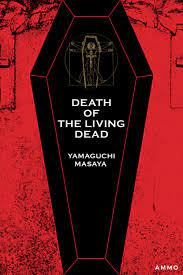
Death of the Living Dead by Masaya Yamaguchi


In the last few years, I've become increasingly fascinated by the inventiveness of Asian crime fiction. Even before my trip to Shanghai in 2019, I'd been reading a range of mysteries from the Far East which, although often very different from familiar western detective fiction, and sometimes quite outlandish, are often very appealing. Meeting Soji Shimada served to strengthen my interest in Japanese detective fiction, as did conversations with the critic and writer Steve Steinbock, who speaks Japanese and is a great fan of the country's crime writing. Their enthusiasm is infectious. Coincidentally, I've begun to have books of mine translated into languages such as Chinese, Japanese, and Korean, which I find exciting.

I was, therefore, pleased, when I was contacted a few weeks ago by Masaya Yamaguchi, whom I've never met in person, but with whom I've been in touch for a while. He invited me to take a look at the newly published English translation - by Ho-Ling Wong - of his celebrated debut novel, Death of the Living Dead. and originally published back in 1989. This is a long book, unusual in structure and quite unlike any detective story I've read before.

As other commentators have already pointed out, this is a hard book to review, because of its extraordinary nature. But I can understand why a number of bloggers have enthused about it: see, for instance, the laudatory review on that excellent blog, The Grandest Game in the World. And as someone who has spent most of his life in Cheshire, it amused me that one of the key characters is called...Cheshire.

As the title suggests, this is a story about zombies, and that may put off some readers, who insist on rationality in their detection. But I think it's true to say that, within his own surreal universe, Masaya Yamaguchi plays fair with his readers in a truly mind-spinning mystery. At times, the pace is not fast, but the book is packed with intriguing cultural references - the chapter epigraphs come from John Lennon, Freud, King Crimson, Poe, Arthur Schnitzler, Neil Young, Robert Louis Stevenson and many more. There's a cast of characters, a map of a cemetery, a floor plan (of a 'west wing'), locked room mystification, and flashes of wit as well as a good deal of delving into the macabre - and a number of touches I wish I'd thought of. Yes, this is quite a book.

Monday, 3 April 2017

Honolulu Havoc Left Coast Crime in Hawaii

Right now, I am adjusting (rather slowly) to British Summer Time after a trip which took me to the other side of the world. The jetlag was definitely worth it - I had an amazing time, and feel fortunate to have spent just over a fortnight globe-trotting after my previous travels in recent weeks. The reason for this jaunt was that the Left Coast Crime convention, which I've attended once before, in Seattle, was being held in Hawaii this year. I felt that Honolulu Havoc presented a once-in-a-lifetime chance, so I grabbed it.
The convention was fun. I moderated one panel, on the theme of criminal justice, with four American panellists whom I hadn't met before but, who to my delight, proved to have plenty of great stories to tell. And I took part in a Golden Age panel, very well moderated, with colleagues including Ragnar Jonasson and Steve Steinbock. This was tremendous fun, with a very good crowd. It seems almost incredible, but in the last six months I've talked about Golden Age mysteries in New Orleans, Madrid, Dubai, and Hawaii.
There was also the chance to catch up with a range of old friends, including my delightful American publishers, Rob Rosenwald and Barbara Peters, who were in grand form. As I've said before, the social side is what makes conventions, in my opinion, so well worth the time, effort, and cost. As friendships grow, and mutual understanding develops, opportunities for worthwhile writing and other projects can sometimes emerge, and this is often very exciting. I enjoyed meals with my publishers, with Laurie R. King, Bill and Toby Gottfried, uber-Sherlockian Les Klinger, among others. I was also glad to have a chat with Jonathan and Faye Kellerman, whom I hadn't met before, and another guest of honour, Colin Cotterill. Steve and his wife had agreed with us that we'd share each other's company on three Hawaiian islands, and this worked out wonderfully well. One of our dinners even took place in a restaurant named in tribute to Charlie Chan.


Honolulu is on Oahu, and it's a busy place, overflowing with tourists, but beyond the skyscrapers and the beaches there is also a lot of history. I learned much more about the tragic events at Pearl Harbour, and also went on a trip round the south part of the island, After four days, I was sorry to leave. So will I be writing a story set in Oahu? I doubt it. But Kauai, our next destination, was a different story...  

,

Wednesday, 4 May 2016

Edgar, Agatha, Poirot - and good company


"And then he woke up, and he realised it had all been a dream."

I've arrived back home after a week in the United States that had an extremely dream-like quality about it. It's twenty-five years since my first novel was published, and I've had many great times since then (plus occasional setbacks) but this past week has been, by far, the best of my crime writing life.

In that time, I've received the Edgar award and the Agatha award, been named on the shortlist of a third award (the HRF Keating award), and heard it announced that I'm to receive the Poirot award at Malice Domestic next year. Add to that a proposed translation of The Golden Age of Murder into Japanese, and a series of highly enjoyable encounters with crime writing (and reading) friends old and new, and you can perhaps understand why I'm feeling extraordinarily happy- and grateful - right now.

I'd booked for Malice Domestic 28 long before The Golden Age of Murder was shortlisted for the Agathas, so when the book also turned up on the Edgars shortlist, it made sense to fit in my first trip to New York for almost twenty years. I flew into Washington DC to settle into the convention hotel and spend a little quality time with one or two good friends before taking a train to New York and checking into the Grand Hyatt -immediately bumping into Steve Steinbock, crime reviewer for Ellery Queen's Mystery Magazine. EQMM were holding a reception prior to the Edgars ceremony, and Steve and I went along there together, and chatted with the likes of Otto Penzler, of Mysterious Bookstore fame, and John Pugmire of Locked Room International.


Then it was back to the Grand Hyatt, and the very lavish and prestigious banquet (sharing a tale with that fantastic writer Sara Paretsky) and awards ceremony. I'm not a believer in writing acceptance speeches in advance of knowing whether one has anything to accept. My approach is simply to improvise if I get lucky, or to have a few more drinks if I don't. Anyway, this time, despite the quality of the other books on the shortlist, by Frederick Forsyth among others, my name came out of the envelope. It was for me an utterly memorable occasion, and  astonishingly, I even managed not to drop the Edgar statuette. (The photo at the top of this post was taken by Donna Andrews; the envelope is the one that Toni P. Kelner opened when making the announcement).


Next morning I headed back to DC, and just about managed to arrive in time for my first panel - I was moderating an appreciation of the life and work of Sarah Caudwell. Doug Greene of Crippen &  Landru, Barbara Peters of Poisoned Pen Press, and Katherine Hall Page (who received the convention's lifetime achievement award) were ideal panellists, fluent and knowledgeable. Barbara made the point that Sarah became inhibited after winning the Anthony Award, and never published another novel in her lifetime; something I didn't know (and probably didn't want to hear the day after winning an award myself!)

After the opening ceremonies, it was time for dinner with Doug and his wife, Steve, John, Pulitzer Prize winning journalist Michael Dirda, and two distinguished American academics and writers, Elaine and English Showalter (who also happen to be former owners of my son's flat!). The conversation was spellbinding, and I had a great night. This was swiftly followed by a 9 am Saturday morning panel at which I met two of my fellow nominees, one of whom was Kate White, former editor of Cosmopolitan. (The fact that my book was the only common factor in the Edgar and Agatha shortlists illustrates the vastly increased popularity and quality of writing about the genre over the past few years; there are a lot of good books in this category now.)

I also heard about the Keating shortlist just before meeting up with Paul Charles for lunch. I first met Paul at the Philadelphia Bouchercon many moons ago, but it was almost a decade since we'd last met in person - though he helped, in his capacity as a leading music agent, to persuade Ray Davies to let me quote some lines from his classic pop song in the most recent Harry Devlin novel, Waterloo Sunset. Among other things, we talked about the challenge of "hanging on in there" as a midlist writer, something we've both tried our utmost to do over the years, and we agreed that we'd been very fortunate to have a second income stream other than writing, which has at least enabled us to write what we believe works best, rather than simply to chase the market. I hope to feature Paul on this blog before long.

Then came a reception followed by the Agatha awards ceremony, and I had the pleasure of hosting a table featuring some of my favourite partners in crime, such as Kathryn Leigh Scott, Steve, John, Josh Pachter, Joni Langevoort, Shawn Reilly Simmons, and Charles and Caroline Todd. Lots of entertaining conversation before the announcement of the Agatha awards. After another acceptance speech (when I drew a spur of the moment comparison between Malice and that early-established social network, the Detection Club) I had the pleasure of hearing the announcement that next year the convention will mark my contribution to the genre with a Poirot Award. Suffice to say, it was another wonderful night.


Sunday morning brought brunch with a small group of us - including Art Taylor, a notable exponent of the short story who has now turned to writing novels with equal success, and has won Agathas in each of the last three years - hosted by Janet Hutchings, editor of EQMM, After spending ages working out how to ship my awards back to the UK, I interviewed another of the weekend's honorees, Doug Greene, about his long career, which includes a definitive biography of John Dickson Carr, among much else.

In the audience, incidentally, was Shelly Dickson Carr, grand-daughter of the master of the locked room mystery and herself an author of note. It was a real pleasure to meet her (and thanks to her for the photo with Doug and me, below). The "Agathas tea", as usual. concluded a truly fantastic convention. My admiration for the work done by Verena Rose and her colleagues on the Malice board increases the more I learn about what they do. To take just one example, they have over the years raised a total of over $200,000 for charitable causes. Wow.


That evening I had dinner and a few drinks with Doug and Sandi Greene, and we had the chance to reflect together on a wonderful few days. It's almost a cliche to say that the writer's life is a solitary one, and sometimes a lonely one, and to some extent there's truth in the old saying. But as I've tried many times to illustrate on this blog, a writer's life can be greatly enhanced by the social side of things - and in the world of crime writing, that social dimension is hugely enjoyable. Every writer experiences setbacks from time to time, and I know plenty of gifted authors who have lost heart; something that I find deeply regrettable. I spent a lot of time with some marvellous people during my few days in the States, and I returned home reflecting that the successes that have come my way of late owe a great deal to the generosity and support of others, especially when times have been challenging. The crime writing and reading community is highly cohesive, and it is one I'm truly proud to belong to.


.
Wednesday, 13 August 2014

Mysteries Unlocked

This year, I've been pleased to contribute essays to three widely diverging books, and each of them was a different writing and publishing experience. The first essay was a study of the short fiction of Arthur Conan Doyle, for Morphologies. Another is a discussion of Gilbert Adair and detective fiction for a forthcoming Adair festschrift. And the third is also a contribution to a festschrift, this time Mysteries Unlocked, which is sub-titled Essays in Honour of Douglas G. Greene.

Regular readers of this blog will know that Doug and I go back quite a long way. So long, in fact, that I can't quite recall when and where we first met. I've been a long-time subscriber to the wonderful books he publishes under the Crippen & Landru imprint, and edited one of them, a collection of Ellis Peters' "lost classics." He has helped me a great deal with my researches into the Golden Age, with that generosity that seems to me to typify the overwhelming majority of people in the crime fiction community. He is the author of a wonderful biography of John Dickson Carr, which I strongly recommend, as well as editor of a number of extremely interesting short story collections. In person he's very good company, and we've dined together a couple of times this year, most recently at Malice Domestic. So I'm very glad that Curtis Evans proposed celebrating Doug's 70th birthday with a book that includes essays, almost all of them brand new, about different aspects of crime fiction. The book is introduced by Steve Steinbock, who was at that same rather memorable dinner in Bethesda last May. Yep, it's a small world.

My contribution discusses Anthony Berkeley's short stories, and I'm currently enjoying reading the others, ranging from a lovely piece by Peter Lovesey about Eric the Skull of the Detection Club to a fascinating article by Mauro Boncampagni about the Q. Patrick/Jonathan Stagge/Patrick Quentin writing collective. I've never met Mauro, but I have the pleasure of corresponding with him, and I'm indebted not just to him but also to his wife, who has been translating The Coffin Trail into Italian - as a result, Mondadori will be publishing the first Lake District Mystery later this year, I'm thrilled to say.

Barry Pike and Julia Jones, leading lights of the Margery Allingham Society, are the authors of a pair of excellent studies. Barry's deals with Allingham's commercial fiction and Julia's tackles The China Governess. Julia's article is both interesting and wise; she explains how her view of the book has changed over the years, and I think this typifies the best scholarship. I admire critics who are willing to revisit their opinions, Both Dorothy L. Sayers and Julian Symons were admirable in this regard; it seems to me to be a sign of strength. Julia casts fascinating new light on the novel. To find out how she does this, you'll have to read the book!

John Curran, supremely knowledgeable about Agatha Christie, tackles her attempts at "locked room mysteries" with his customary authority. Mike Ashley (whom I've never met, but for whose anthologies I've written numerous stories) discusses Max Rittenberg. I'd never heard of Rittenberg, but Mike makes me want to read him. Roger Ellis writes interestingly about J.S. Fletcher, and Steve Steinbock about one of Carr's rivals in the impossible crime field, the under-rated Hake Talbot.

And there is more, much more. A wealth of other material of high quality, in fact, contributed by commentators including Jon L. Breen and Marv Lachman (against whom I once competed in a game of Mastermind, at the Nottingham Bouchercon) who combine to make this a truly wide-ranging reference book. I love devouring essay collections about the genre, and this is one of the best to have appeared in years. Editor Evans, himself the author of two of the essays, is to be congratulated on having come up with a great idea, and then on having done the spadework of turning it into a reality.

Wednesday, 7 May 2014

Malice Domestic


I'm just back from Washington DC after a truly memorable trip to Malice Domestic 26. I've been to a good many conventions over the years, but very few have matched this one for sheer enjoyability. Yet the trip came out of the blue, after I was contacted by the organisers, and asked to write an essay for the convention brochure about Reginald Hill, whose memory was being honoured this time. Each year, Malice honours, n addition to a range of present day notables, a deceased writer who achieved great success in the field of the traditional mystery (personally, I prefer to dodge the word 'cozy', and I'm quite sure Reg would have felt the same.) Shortly after this, the Malice Board asked me if I would be willing to attend in order to talk about Reg. I didn't need to think twice before accepting.

Because Malice has now been running for more than a quarter of a century, and is always based in Washington DC (or, strictly speaking nowadays, the Hyatt Regency Hotel in Bethesda, Maryland) it is very slickly organised indeed. Although the Board prides itself on the character and quirkiness of the convention, you don't arrange an event for about 600 people, and make sure it runs without a hitch, without undertaking a huge amount of work, and I must say that Verena Rose and her team managed to combine supreme efficiency with unfailing good humour and generosity. Verena and Rita Owens have compiled Not Everyone's Cup of Tea, a very entertaining history of the convention, which deservedly earned a shortlisting for an Agatha Award - the Awards banquet being one of the highlights of the week-end.

My itinerary was packed, although before the convention opened, I was able to get in a little sight-seeing in the sun-soaked city. I've attended Malice once before - I'm amazed to realise it was nine years ago - when Harry Keating was international guest of honour - and I joined forces with Ann Cleeves for a bus tour around the sights. That trip too was full of pleasures, and it's a sign of how Ann's career has flourished since then that she will be the international guest of honour at Malice in 2015.

After an initial dinner with the Malice Board, and a chance to meet other guests such as Margaret Maron, I was interviewed by Steve Steinbock about Reg Hill and had a chance to recount some of my favourite stories about him, as well as talking about his books. Then followed a panel with other guests, including Dorothy Cannell, whom I first met when we were in the same quiz team at Crimefest last year. The following day, Leslie Budewitz moderated a panel about legal mysteries - and a few hours later, Leslie was among the Agatha winners herself. On Sunday, I met up with Janet Hutchings, editor of Ellery Queen's Mystery Magazine, and recorded a podcast of my story "No Flowers", which should be available on the EQMM website before long. EQMM continues to flourish, and has embraced the digital age with great success, something that I find truly gratifying,because it is a terrific magazine. This is my first involvement with a podcast and I was interested that Janet chose "No Flowers" for the recording, as it is a story which took my writing in a fresh direction.

As ever with crime conventions, there was a chance to catch up with old friends, such as Janet and Steve, and to meet some fascinating people for the first time. Tomorrow, I hope to say more about some of the splendid writers who made the convention such a huge success.


Monday, 9 March 2009

Open Book etc.


Barry Forshaw rang to tip me off that he’d talked about my work on the BBC Radio 4 programme ‘Open Book’ yesterday, while warning me that there was always the chance that any mention of my name might be edited out of the final interview! The theme of that part of the programme was lawyers who write crime fiction and the starting point was Mariella Frostrup’s interview of P.D.James about Cyril Hare. I’ve talked about my admiration for Hare on this blog, and James is clearly a huge fan, especially of Tragedy at Law.

Barry was then interviewed by Mariella (lucky chap) about lawyers who write crime and gave me a name check, along with Frances Fyfield, when talking about British lawyer-writers. The Americans, he mentioned were Scott Turow, John Grisham and Mark Gimenez, so I felt I was in very select company.

By coincidence, Steve Steinbock has just blogged about my very first novel, All the Lonely People, which introduced the Liverpool lawyer Harry Devlin, on Criminal Brief. Steve recently gave my latest novel with a legal background, Waterloo Sunset, a terrific review in The Strand Magazine, and this time I am quite unable to resist linking to his generous remarks.


Finally, three more entries on the blogroll: Bookwitch, Paul Brazill, and Deighton Dossier. Do also check out Rob Mallows’ impressive website about Len Deighton.

Saturday, 24 January 2009

Blogs and Inspiration

One of the blogs I study most closely is Kerrie’s Mysteries in Paradise, and I was flattered a few days ago when Kerrie mentioned this blog as one of seven that she’s found inspiring. She asked that I name seven blogs which I regarded as inspirational. Since then, I’ve kept on deliberating (once a lawyer, always a lawyer?)

A tricky aspect of these memes is that selectivity is challenging. How can I confine myself to picking just seven blogs? Amnesia afflicts me regularly, and I’m bound to forget to highlight at least one that I really enjoy, probably half a dozen or more. (When I wrote up my 16 allegedly interesting things about myself, I clean forgot that I’d once been involved with a feature film – a story for another day, perhaps.)

Yet I didn’t want this post simply to be a list. I’m sure that readers will find plenty of interest in all the blogs listed in the blogroll - please don't overlook the ones I haven't mentioned specifically in this post. I thought that, as well as mentioning some blogs by name, I’d also make one or two brief general observations.

There are different types of inspiration, as well as different sources. For instance, Kerrie’s blog contains a number of adventurous technical features that one day I’d like to emulate (lack of time, as well as a massive techy expertise, is the snag here.) Then there are blogs which contain a good deal of useful info – examples include Karen Meek’s Eurocrime blog, It’s a Crime, Detectives Beyond Borders, Petrona (Maxine Clarke is an advocate of Friendfeed, something else I regret not having got round to investigating in sufficient detail yet), Murderati, Criminal Brief (Steve Steinbock’s Friday column is a definite must-read), Gerald So’s blog, and The Rap Sheet.

Several American writers have terrific blogs – Ed Gorman and the witty Bill Crider are among the names that spring instantly to mind. Patti Abbott’s series of Friday’s Forgotten Books is fascinating, and I am really pleased to be involved with it.

Then there are the blogs of readers and fans, sometimes focusing heavily on crime, like Ali Karim’ The Existentialist Man (with an emphasis on the contemporary), and Xavier Lechard’s At the Villa Rose (with an emphasis on the traditional detective sotry), sometimes ranging:far and wide (beyond books, let alone mysteries) for example, Letters from a Hill Farm, Books Please, Confessions of a Book and Opera Lover, Harriet Devine's blog, and the blogs of Roberta Rood and Lourdes Fernandes, two Americans I met when they were visiting England, and before I started blogging. In fact, I’ve met a number of fellow bloggers for the first time in the past twelve months, although often all too briefly, and this too has been a tremendous plus.


And then there are blogs which, at least at first sight, don’t have much to do with my fields of interest. One is Juliet Doyle’s Musings from a Muddy Island; yet her interest in letterpress has influenced me in developing one of the characters in my current work in progress. Another is a blog which links to Jane Gallagher’s writing blog – also by Jane, it’s called Work that Wardrobe. Now, nobody who has ever met me would ever confuse me with a dedicated follower of fashion. Yet as a novelist, I’m bound to be interested in most things – including what my female characters wear. But it’s a subject on which I’m pretty ignorant. And it occurred to me not long ago that I could pick up some good ideas for their appearance from Jane’s blog.

All this means that blogs can inspire me in a whole variety of ways. To guide me to interesting books I haven’t read before (old as well as new), to introduce me to delightful people and to help me, in one way or another, with my own writing. One thing is for sure. When I started off on this blogging lark, I had absolutely no idea how much fun it would give me. It’s been a revelation - and it’s become an addiction, but a very pleasurable one.


Monday, 22 December 2008

Reviews

How important are reviews? It’s a question that can divide opinion, but I’m with those who think that they do matter a lot. It’s sad that newspapers seem to be cutting back on the space afforded to book reviews, and I was also sorry to learn of the death the other day of The Sunday Telegraph’s highly regarded crime fiction critic Susanna Yager. I never met her, and I don’t really know much about her, but for many years her reviews were always thoughtful and perceptive. And once or twice she gave books of mine the thumbs-up, which I greatly appreciated.

In fact, the appreciation of reviewers who care about crime fiction is something that I care about a lot. A poor review here and there is all very well, but a series of negative comments would be troubling. Thankfully, 2008 has been a good year for me on the review front, and I was delighted to read Steve Steinbock’s enthusiasm for Waterloo Sunset in the latest issue of The Strand Magazine.

Fellow author Keith Miles (whose railway detective series is itself highly enjoyable) has also been generous in his piece about Dancing for the Hangman in Crime Time. You can read it here: Crime Time review