Skin for Skin by Winifred Duke was published by Gollancz in 1935, and it earned a rave review from another Gollancz author, no less an authority than Dorothy L. Sayers. Duke was an expert in true crime who also wrote fiction, and this novel is based very, very closely on the Wallace case. The names have been changed - Wallace becomes Bruce, Liverpool becomes Salchester, and so on - but Duke didn't deny that she was fictionalising very recent events. Wallace was convicted of murdering his wife in 1931, but the conviction was quashed on appeal. He did not, however, enjoy his freedom for long.
In this story, it is made clear from the outset that Bruce deliberately set about planning to murder his wife. Duke was at pains to emphasise that she was not suggesting that this meant she thought Wallace guilty (and thus "lucky to get away with it"), although it's hard to believe she'd have written this book in this way if she believed he was innocent. Her argument, in effect, was that she was trying to imagine what would have motivated him if he had indeed been guilty. This argument does raise ethical questions, although I think it's a legitimate piece of work. Indeed, as the title (taken from the Book of Job) suggests, this is a book with a moral.
The writing is plain, but very readable, and I raced through the story. Even though I'm very familiar with the Wallace case, I found myself gripped by Bruce's story. I have some reservations about the book, but I can see why Sayers admired it. It's a very lucid piece of work. Faction, you might call it.
My greatest reservations concern not Duke's writing, but her fictional premise. I struggle to believe that Wallace was guilty. This is a case which I've had the pleasure of discussing with two considerable authorities, P.D. James (who thought he was guilty, though previously she'd thought him innocent) and Roger Wilkes (who wrote an important book seeking to establish his innocence). Sayers also wrote about the case in detail, and I share her view that Wallace's psychological profile was not that of a murderer. Duke does a good job, in creative fiction terms, of trying to explain his motivation, on the premise that he did decide to kill his wife. But even though I enjoyed reading the book, and can recommend it, I'm still not convinced. I think Wallace was a wretchedly unlucky man, who suffered a terrible injustice.
Showing posts with label P.D. James. Show all posts
Showing posts with label P.D. James. Show all posts
Friday, 1 November 2019

Monday, 11 February 2019
The Murder Room - P.D. James on TV
The Murder Room is novel that P.D. James published in 2003, and it was brought to the television screens a couple of years later. Unaccountably, I neither read the novel (though a copy is to be found in my tottering TBR pile) nor saw the television show; I suppose the reason is that I was very preoccupied with my day job as well as my own writing at the time.
I was kindly given a DVD set at Christmas which contained the TV version (as well as that of Death in Holy Orders) and I've just caught up with it. Both shows feature Martin Shaw as Adam Dalgleish, rather than Roy Marsden, who made the role his own. But I felt that Shaw gave an excellent performance. He is an actor who made his name in tough guy roles, but he's very expressive, and a single glance counts for a thousand words.
I was equally impressed with the show as a whole. The script, by Robert Jones, was sharp, with some excellent lines (I'm not sure how many of them come from the book, which I'm now very keen to read). And the acting generally was of a high standard, with Samantha Bond, Janie Lee, Anita Carey, and Jack Shepherd exceptional.
I loved the storyline, which focused on a museum with the eponymous murder room devoted to classic real life cases of the Golden Age - Wallace, A. A. Rouse, and so on. This is a subject I'm exploring at present in my work-in-progress, and I was fascinated to see what was made of it in the context of a twenty-first century whodunit. First-class viewing for mystery fans.
I was kindly given a DVD set at Christmas which contained the TV version (as well as that of Death in Holy Orders) and I've just caught up with it. Both shows feature Martin Shaw as Adam Dalgleish, rather than Roy Marsden, who made the role his own. But I felt that Shaw gave an excellent performance. He is an actor who made his name in tough guy roles, but he's very expressive, and a single glance counts for a thousand words.
I was equally impressed with the show as a whole. The script, by Robert Jones, was sharp, with some excellent lines (I'm not sure how many of them come from the book, which I'm now very keen to read). And the acting generally was of a high standard, with Samantha Bond, Janie Lee, Anita Carey, and Jack Shepherd exceptional.
I loved the storyline, which focused on a museum with the eponymous murder room devoted to classic real life cases of the Golden Age - Wallace, A. A. Rouse, and so on. This is a subject I'm exploring at present in my work-in-progress, and I was fascinated to see what was made of it in the context of a twenty-first century whodunit. First-class viewing for mystery fans.
Friday, 16 January 2015
Forgotten No More? Deadlier than the Male
Something a little different today. Since the sad death of Bob Adey, author of the wonderful Locked Room Murders, I've been reflecting further on books about the genre, and those that I've enjoyed over the years, including some that are not often discussed nowadays. I'm tempted to write about several of them, and today I'm going to talk about one that has just been made available again to a new generation of readers
Deadlier than the Male was originally published in 1981. Its sub-title then was: "Why are respectable English women so good at murder?" which is a question that's been given various answers over the years, not least by P.D. James. The author was a friend of Phyllis James, and herself a crime novelist of distinction, Jessica Mann. Her books often have a feminist perspective, in a way that is persuasive and appealing, and this title is no exception.
Unfortunately, this particular book has been out of print for years, and it would, I think, be fair to describe it as a Forgotten Book. Happily, we live in an age when, with a bit of luck and enterprise, forgotten books need remain forgotten no longer. And Deadlier Than the Male is now available again, as an ebook, for the modest sum of £1.99. The sub-title now is "an investigation into feminine crime writing". As the blurb says, on its original appearance, the book was described by one critic as “obligatory reading for any reader of crime fiction”, while another wrote, "I cannot recall a better work of criticism devoted to the crime story."
I bought and devoured the book a good many years before I met Jessica, and I found the coverage of the "crime queens", especially those other than Agatha Christie (about whom I'd already read plenty) informative and enjoyable. It is fair to say that the range of books in this area has greatly improved over the past thirty years, and in some cases, more information has come to light about the lives of the authors. But that does not devalue the significance or merit of this consistently interesting book, and I'm delighted that it has returned to enjoy a new life and attract a new set of readers.
Deadlier than the Male was originally published in 1981. Its sub-title then was: "Why are respectable English women so good at murder?" which is a question that's been given various answers over the years, not least by P.D. James. The author was a friend of Phyllis James, and herself a crime novelist of distinction, Jessica Mann. Her books often have a feminist perspective, in a way that is persuasive and appealing, and this title is no exception.
Unfortunately, this particular book has been out of print for years, and it would, I think, be fair to describe it as a Forgotten Book. Happily, we live in an age when, with a bit of luck and enterprise, forgotten books need remain forgotten no longer. And Deadlier Than the Male is now available again, as an ebook, for the modest sum of £1.99. The sub-title now is "an investigation into feminine crime writing". As the blurb says, on its original appearance, the book was described by one critic as “obligatory reading for any reader of crime fiction”, while another wrote, "I cannot recall a better work of criticism devoted to the crime story."
I bought and devoured the book a good many years before I met Jessica, and I found the coverage of the "crime queens", especially those other than Agatha Christie (about whom I'd already read plenty) informative and enjoyable. It is fair to say that the range of books in this area has greatly improved over the past thirty years, and in some cases, more information has come to light about the lives of the authors. But that does not devalue the significance or merit of this consistently interesting book, and I'm delighted that it has returned to enjoy a new life and attract a new set of readers.
Friday, 28 November 2014
Not to be Forgotten Books
No Forgotten Book from me this Friday. Instead, as a tribute to P.D.James, I'd like to focus on one of her not to be forgotten books, and also on her versatility as a writer. The book in question is Devices and Desires,and it first appeared in 1989. This was just after I started reviewing crime fiction, and I remember rhapsodising over the book in a little magazine called The Criminologist, which usually focused on factual stuff about crime, but took me on for a number of years as its solitary reviewer of fiction.
Devices and Desires remains my favourite James. much as I admire books like Death of an Expert Witness, Innocent Blood, A Taste for Death and...well, many others. The plot is strong, but what has always stuck in my mind is the wonderfully atmospheric setting. Particular places inspired her fiction time and again, and here the headland on the Norfolk coast, with its nuclear power station, its ruined abbey, and its mysterious serial killer, is wonderfully well evoked. I treasure my signed copy.
Incidentally, the book I'm currently writing is not in any sense intended as a homage to James, and is very different from her work, but it too concerns a remote coastal setting, where dark deeds take place in the shadow of a nuclear power station...so perhaps there was just a smidgeon of subconscious influence at work.
One point that often is, but should never be, forgotten about James is that she was extremely versatile as a writer.She took great pains over her work, and that is why she was far from prolific in terms of the number of books that she wrote. But consider her range. Adam Dalgliesh is, of course, her most famous character, but she also created one of the best female private eyes - Cordelia Gray. An Unsuitable Job for a Woman is a brilliant title, and a good book. And what about her final novel? Death Comes to Pemeberley saw her moving into Jane Austen territory, and the result was another bestseller adapted for television.
She was fascinated by true crime, and co-wrote an excellent study of the Ratcliffe Highway murders, as well as investigating afresh the classic case of Julia Wallace. She wrote a book about crime fiction which is not, in my view, as in-depth as most of her work, but nevertheless highly readable. And when she ventured into science fiction, Children of Men was so successful that it was filmed. Her short stories were few and far between, but they are splendidly fashioned and well worth seeking out. All this combines to form a remarkable span of literary achievements. One more reason to salute this remarkable writer.
Devices and Desires remains my favourite James. much as I admire books like Death of an Expert Witness, Innocent Blood, A Taste for Death and...well, many others. The plot is strong, but what has always stuck in my mind is the wonderfully atmospheric setting. Particular places inspired her fiction time and again, and here the headland on the Norfolk coast, with its nuclear power station, its ruined abbey, and its mysterious serial killer, is wonderfully well evoked. I treasure my signed copy.
Incidentally, the book I'm currently writing is not in any sense intended as a homage to James, and is very different from her work, but it too concerns a remote coastal setting, where dark deeds take place in the shadow of a nuclear power station...so perhaps there was just a smidgeon of subconscious influence at work.
One point that often is, but should never be, forgotten about James is that she was extremely versatile as a writer.She took great pains over her work, and that is why she was far from prolific in terms of the number of books that she wrote. But consider her range. Adam Dalgliesh is, of course, her most famous character, but she also created one of the best female private eyes - Cordelia Gray. An Unsuitable Job for a Woman is a brilliant title, and a good book. And what about her final novel? Death Comes to Pemeberley saw her moving into Jane Austen territory, and the result was another bestseller adapted for television.
She was fascinated by true crime, and co-wrote an excellent study of the Ratcliffe Highway murders, as well as investigating afresh the classic case of Julia Wallace. She wrote a book about crime fiction which is not, in my view, as in-depth as most of her work, but nevertheless highly readable. And when she ventured into science fiction, Children of Men was so successful that it was filmed. Her short stories were few and far between, but they are splendidly fashioned and well worth seeking out. All this combines to form a remarkable span of literary achievements. One more reason to salute this remarkable writer.
Monday, 4 August 2014
Called to the Bar

"I hereby call you to the Bar and do publish you barrister."
I've often been called to the bar, but not in the legal sense. I've spent more years than I care to remember as a solicitor, and wrote eight books about a solicitor detective, but of late I've become more and more interested in the lives of barristers - those lawyers who really are Called to the Bar. I'm often asked, mainly but not only by friends from outside Britain, what the difference is between barristers and solicitors, and it's fair to say that the distinction is less significant than it used to be. But barristers do have certain monopolies - only they can appear as advocates in the higher courts, for instance.
Each barrister is a member of one of the four Inns of Court based in central London, and although some are employed, e.g. by the government, the majority are self-employed. They usually work in 'chambers' or 'sets' of barristers, with clerks acting as the link between them and their clients (who are usually, but nowadays not always, firms of solicitors, who instruct barristers to advise their clients, for instance on complex issues or in some court cases.) Barristers are much less numerous than solicitors, though the numbers of both have increased in recent years.Some, but not all, of the most eminent and senior barristers apply to "take silk",and the candidates who are chosen become Queen's Counsel, sometimes known as "leaders"..
I've featured barristers in minor roles in some of my Harry Devlin books - notably Suspicious Minds. But the best crime novels about barristers that spring to mind are Tragedy at Law by Cyril Hare, which introduced Francis Pettigrew, a barrister who became one of the most appealing amateur sleuths in a short run of books, A Certain Justice by P.D. James, which was marked by the author's characteristic in-depth research (though one barrister friend who admired the book told me she greatly over-estimated the attraction of being a head of chambers!) and the series by Sarah Caudwell which began with Thus Was Adonis Murdered. I really ought to re-read Sarah's books sometime soon - they are great fun. Significantly, both Hare and Sarah were barristers themselves. Theirs is quite a mysterious world, and it's easy to be baffled by it. You need inside knowledge to get barristers right, and even fine writers can find this a major challenge (the clueless defence barrister in Jimmy McGovern's otherwise powerful TV drama Joint Enterprise springs to mind)
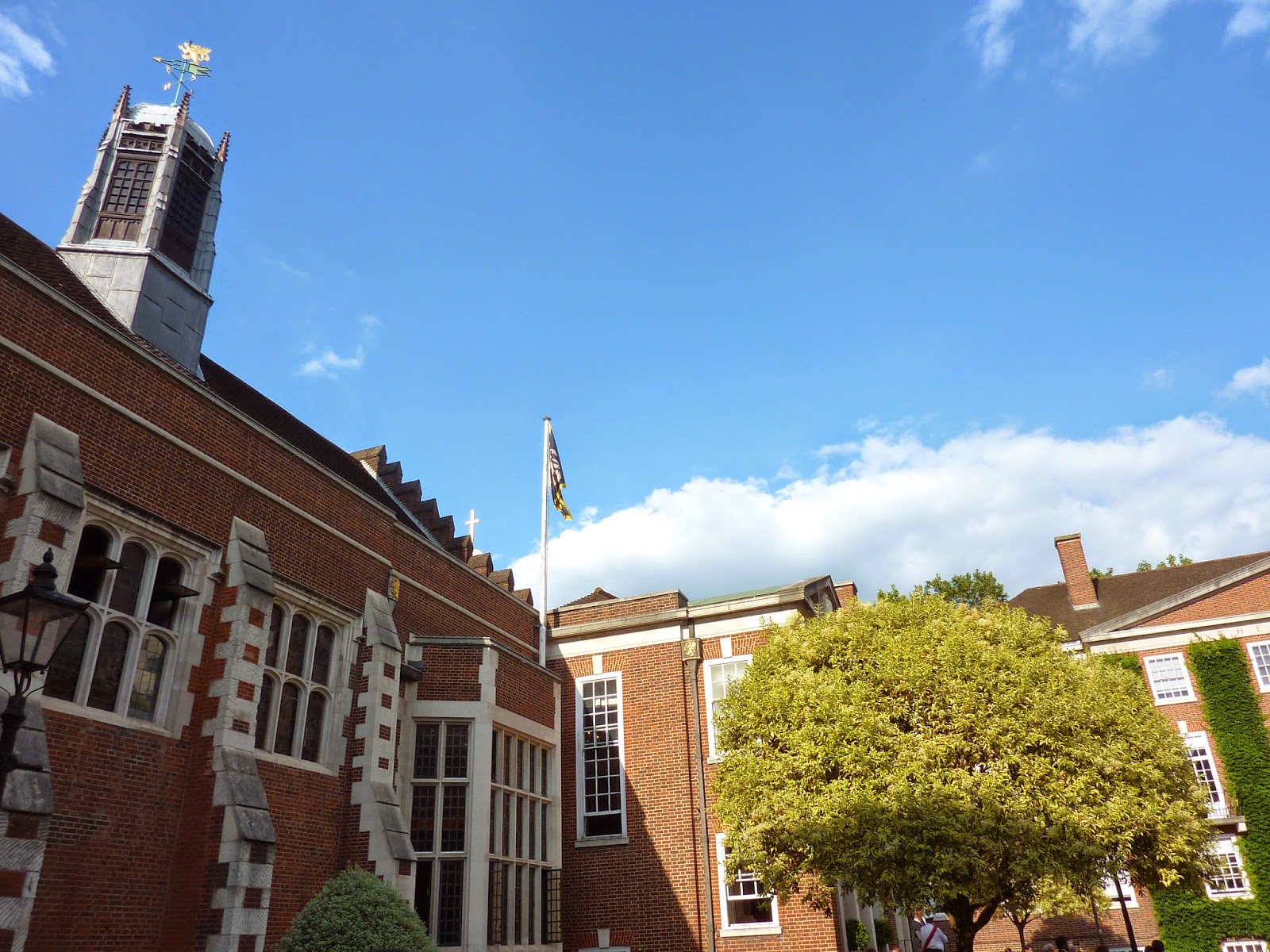
My webmaster's journey to becoming a barrister has, however, meant that I've become quite deeply interested in the world of the Bar, and last week I had the great pleasure and privilege of attending his call to the Bar ceremony in Gray's Inn, an ancient ritual which took place on a glorious day in delightful and very historic surroundings, and which was followed by a lavish reception. with... yes, a well-stocked bar.
In my younger days, I was never one for ceremonies, and I even skived out of my own admission as a solicitor ceremony, partly through lack of money, but also partly because it didn't mean a great deal to me. Suffice to say that my views on this, as on much else, have shifted over the years, and I was fascinated to gain first hand insight into a tradition that is just as fantastic and memorable as a graduation in the Sheldonian Theatre. Reflecting on my delighted reaction to the occasion, I suppose I've become more and more attracted by history, and by the chance of taking part in things, as the years have passed.
So am I tempted to write a story or two about barristers? How did you guess?


Monday, 19 August 2013
St Hilda's Crime and Mystery Week-end

St Hilda's Crime and Mystery Week-end is a crime conference with a distinctive and delightful personality which makes it very different from other crime-related events. The setting is St Hilda's College, Oxford, and I'm just back from the twentieth conference, which was, if anything, even more enjoyable than usual. The fact that this week-end is not advertised, has no promotional website, and yet has flourished for two decades, speaks for itself. When people do find out about it, and attend, they tend to love it, and go back year after year. There's no clearer sign of success than that.
The theme this year was "The Present and Future of Crime Fiction" and when I was asked to deliver a paper, I thought I would be very crafty and find a neat way to weave a talk about the Golden Age into the over-arching theme. What I hadn't anticipated was that some other writers would have the same idea - and my talk was on Saturday afternoon, while just before lunch P.D. James herself would be speaking about....the Golden Age.
P.D. James was aptly described by Natasha Cooper, the chair of the conference, as the true Queen of Crime and it was wonderful to see that her audience regarded it as a true privilege to be able to listen to her. And so it was. Fortunately for me, there was no overlap between her topics of mine, and one of the more daunting experiences of my public speaking career (yet a real honour) was to see Baroness James herself sitting in the front row to listen to my paper. I did feel a bit nervous, having foolishly said the previous evening that I feel more confident about speaking in public nowadays than I used to, but I managed to get through to the end without drying up completely. The papers are delivered in pairs, so P.D. James spoke along with Frances Fyfield, while I was paired with Peter Robinson - and it was very good to catch up with him again over the week-end.
The other speakers included Andrew Taylor (talking about C.S. Forester), and Val McDermid, while two after dinner speeches were given by Bernard Knight on the Friday, and Cilla Masters on the Saturday. There was also an extremely interesting panel chaired by Ayo Onatade on the future of crime publishing. The attendees included quite a number of notable writers who weren't actually speaking - a few examples include Frances Brody, Ann Granger, Marjorie Eccles, Kate Ellis, and AK Benedict - while I met several writers whose first books are due to appear shortly. As ever with these events, the combination of catching up with old friends and meeting new people was very pleasurable.
Much of the success of St Hilda's is down to continuity and the sterling efforts of the organisers, Kate Charles and Eileen Roberts, and Natasha Cooper, who chairs quite brilliantly in a calm, efficient and extremely generous style that few if any could match. This trio put a huge amount of work into the event, and their reward is simply that they give a lot of people a great time.If you've never attended St Hilda's, I do recommend it very strongly. The dates for next year are 15-17 August 2014.
Sunday, 23 June 2013
Harry Keating
The first book about crime fiction that I read was Bloody Murder, by Julian Symons. It remains a classic commentary on the genre. I also much enjoyed Symons novels, and before long I tried another novelist of distinction who doubled as a crime critic, H.R.F. Keating. I didn't know it at the time, but Symons and Keating were very good friends. And I certainly didn't know that eventually, I would meet both men, and find them as pleasant in person as they were incisive in print.
I got to know Harry Keating rather better than Julian Symons, and I also met Sheila Mitchell, an actor who was Harry's wife. Harry, Sheila and I spent some time together at Malice Domestic in Washington D.C. when Harry was guest of honour, and they were kind enough to invite me to join them at their table for the main banquet. Later we met from time to time at the Detection Club. Harry's death was a great loss to family and friends, to the Club, of which he was a former President, and to the genre as a whole..
Sheila, I'm glad to say, is remarkably fit and active and recently I had the privilege of staying at her home when in London to attend a Detection Club dinner. She showed me the early chapters of a biography of Harry which she has more or less completed, and which I very much hope will attract a major publisher. I learned a great deal from her about Harry's early career. Sitting in the study where Harry wrote so many notable books - two of the CWA Gold Daggers was a genuine thrill. So too was a taxi trip through the city that evening, in the company of Sheila and her friend P.D. James, with whom I had a fascinating conversation over dinner. Truly memorable.
I'm glad to say that most of Harry's books remain readily available, no mean feat given that he was prolific. It's a reminder of his enduring popularity. There is, by the way, a special deal on his novel A Long Walk to Wimbledon on Amazon tomorrow. An excellent chance for you to catch up with an intriguingly different book from one of the major figures of the genre in Britain during the past fifty years. And if you want to know a bit more about the man and his work, there's an essay I wrote about him on the articles page of my website.
I got to know Harry Keating rather better than Julian Symons, and I also met Sheila Mitchell, an actor who was Harry's wife. Harry, Sheila and I spent some time together at Malice Domestic in Washington D.C. when Harry was guest of honour, and they were kind enough to invite me to join them at their table for the main banquet. Later we met from time to time at the Detection Club. Harry's death was a great loss to family and friends, to the Club, of which he was a former President, and to the genre as a whole..
Sheila, I'm glad to say, is remarkably fit and active and recently I had the privilege of staying at her home when in London to attend a Detection Club dinner. She showed me the early chapters of a biography of Harry which she has more or less completed, and which I very much hope will attract a major publisher. I learned a great deal from her about Harry's early career. Sitting in the study where Harry wrote so many notable books - two of the CWA Gold Daggers was a genuine thrill. So too was a taxi trip through the city that evening, in the company of Sheila and her friend P.D. James, with whom I had a fascinating conversation over dinner. Truly memorable.
I'm glad to say that most of Harry's books remain readily available, no mean feat given that he was prolific. It's a reminder of his enduring popularity. There is, by the way, a special deal on his novel A Long Walk to Wimbledon on Amazon tomorrow. An excellent chance for you to catch up with an intriguingly different book from one of the major figures of the genre in Britain during the past fifty years. And if you want to know a bit more about the man and his work, there's an essay I wrote about him on the articles page of my website.
Thursday, 8 July 2010
Stone Circles


There is something fascinating about ancient stone circles. One has a sense of timelessness, of sharing with people long gone and forgotten. And yesterday I visited, for the first time in more than twenty years, a stone circle in a quite lovely setting. This was Castlerigg, on the outskirts of Keswick.
I decided to celebrate my birthday by having a day’s holiday from work – and where better to spend it than in the Lakes? After the recent fine weather, the day began with drizzle, but – untypically, it has to be said – the weather improved the closer we came to the Lake District. The first stop was Windermere, a town I’ve always liked, and the second was Castlerigg.
The stone circle at Castlerigg isn’t exactly Stonehenge, but it’s quite notable and well visited. It dates back 4,500 years, which is quite a thought. I find it impossible to resist imagining what it was like all that time ago, and what mysterious rites took place in the circle, and around the gathering of stones known as the Sanctuary. The landscape of the Lakes has no doubt changed a lot in the interim – human beings have had a massive impact on it, an impact that isn’t always obvious. But I’m sure it was gorgeous 4,500 years ago, as it is today.
I’m not sure if I’m going to feature Castlerigg in either my work in progress or a future novel. I’m conscious that Stephen Booth, in his Peak District series, had a novel that featured a stone circle, Dancing with the Virgins, and I think both he and I are keen to avoid utilising similar material, though of course so much depends on how that material is presented. P.D. James featured a stone circle, for instance, in The Private Patient. One thing is for sure, a stone circle makes for a very evocative setting, and does have the potential to provide a great scene in a mystery, as well as for a stop on a day trip.
Friday, 9 April 2010
Forgotten Book - Verdict of 13
The first Detection Club book that I ever read, about 30 years ago, was Verdict of 13, which appeared in a Penguin paperback edition not long after its initial publication in 1979. I was attracted very much by the distinguished list of authors, who all contributed new stories, but of course I had no idea at the time that I would ever have any personal connection with the Club.
The then President of the Club, Julian Symons, decided to put together a collection which, he said in his introduction, was meant to have ‘a distinctive approach. The contributors were asked to write a short story that should, in some way or another, concern a jury, although it was stressed that the jury need not be one sitting in a law court, nor need they number twelve. The might be a ‘jury’ of soldiers or policemen, suburban housewives or schoolboys, lawyers or old lags.’ The book as a whole, he said, ‘shows the crime story, like the Detection Club, offering talents as various as those of Cleopatra.’
A pretty good connecting theme, I think. Certainly, I enjoyed the book, and if I had to pick a favourite story, it might be the one by P.D. James. Here is a list of all the contributions:
Patricia Highsmith – Something the Cat Dragged In
H.R.F. Keating – Gup
Christianna Brand – Cloud Nine
Dick Francis – Twenty-One Good Men and True
Gwendoline Butler – The Rogue’s Twist
P.D. James – Great-Aunt Allie’s Fly-papers
Michael Innes – Pelly and Cullis
Celia Fremlin – Postgraduate Thesis
Michael Gilbert – Verdict of Three
Ngaio Marsh – Morepork
Michael Underwood – Murder at St Oswald’s
Peter Dickinson – Who Killed the Cat?
Julian Symons – Waiting for Mr McGregor
Saturday, 11 July 2009
Writing in an Age of Silence
Verso have just published a paperback edition of Sara Paretsky’s Writing in an Age of Silence, which first came out a couple of years back. Paretsky is, of course, the creator of that notable gumshoe V.I.Warshawski, who was brought to the screen by Kathleen Turner (I haven’t seen the movie, but some reports suggest it didn’t match the quality of the books.)
It is a short book, well summed up by P.D. James in ‘The Spectator’: ‘This poignant and compelling personal testimony explains both the influences that made her a writer and the kind of writer she became.’ James is by instinct a conservative, and Paretsky is a radical feminist, but despite their political differences, writing is clearly a bond which unites them. And so it should be.
This book was written before the election of Barack Obama and it may be that Paretsky’s view of American politics would be a little different if she were starting the book today. There may also be too much here about American politics to appeal to some British readers. But I like this sentence in particular:
‘Because my own great comfort comes from other writers’ words, my hope is that my stories may also bring readers some solace in the night, provide some lamplight on a darkened path.’
Most writers, whether of crime or any other form of fiction, would probably feel the same.
Monday, 9 March 2009
Open Book etc.
Barry Forshaw rang to tip me off that he’d talked about my work on the BBC Radio 4 programme ‘Open Book’ yesterday, while warning me that there was always the chance that any mention of my name might be edited out of the final interview! The theme of that part of the programme was lawyers who write crime fiction and the starting point was Mariella Frostrup’s interview of P.D.James about Cyril Hare. I’ve talked about my admiration for Hare on this blog, and James is clearly a huge fan, especially of Tragedy at Law.
Barry was then interviewed by Mariella (lucky chap) about lawyers who write crime and gave me a name check, along with Frances Fyfield, when talking about British lawyer-writers. The Americans, he mentioned were Scott Turow, John Grisham and Mark Gimenez, so I felt I was in very select company.
By coincidence, Steve Steinbock has just blogged about my very first novel, All the Lonely People, which introduced the Liverpool lawyer Harry Devlin, on Criminal Brief. Steve recently gave my latest novel with a legal background, Waterloo Sunset, a terrific review in The Strand Magazine, and this time I am quite unable to resist linking to his generous remarks.
Finally, three more entries on the blogroll: Bookwitch, Paul Brazill, and Deighton Dossier. Do also check out Rob Mallows’ impressive website about Len Deighton.
Thursday, 12 February 2009
The Lineup
Poetry and crime fiction may seem to be strange bedfellows, but there are plenty of poets who have written crime fiction (or crime writers who have tried their hand at poetry). More surprisingly, there are quite a few poems with a crime fiction theme.
Fellow blogger Gerald So recently sent me a pdf of The Lineup, a collection of poems about crime. He has put it together along with Patrick Shawn Bagley, R. Navaez and Anthony Rainone.
Gerald says in his introduction: ‘Before I ever thought to write poetry, I was a fan, editor and writer of crime fiction. I especially enjoy how every paragraph, every sentence, every word has purpose: to plant clues, reveal character, move towards resolution. I’ve come to appreciate the same purpose in poetry…’
Suffice to say there is some powerful material here from a range of contributors, including Gerald himself, and Sandra Seamans, whose blog I found (via David Cranmer’s excellent blog) a few days back, and which I’ve now added to the blogroll.
There is, of course, one famous detective who is also a poet – P.D.James’ Adam Dalgleish. I once heard James say in an interview that the late W.H.Auden (a fan of the classic detective story) had offered to write a poem for Dalgleish to be included in one of her novels; she thought she might have had much mischievous pleasure from people who criticised her poetic skills, only to find that the verse was the work of one of the greats. A lovely story, I think. A pity it never happened. We still await sight of Dalgleish’s work.
Tuesday, 30 December 2008
2008 in retrospect - 2


I’ve not done as much reading as I would have liked this past year, but I’ve still read some jolly good books. Great new novels came from the likes of Ann Cleeves, P.D. James, Peter Lovesey and the two Kates (Atkinson and Ellis.) That's Kate Ellis, in the photo third from the top, and Ann with Martyn Waites and me at Baltimore in the photo below.
Among the older books, I loved The Prisoner by Boileau and Narcejac, and everything I could lay my hands on by Henry Wade.
I didn’t watch that much tv, but I admired Wallander, and among several excellent films, Fracture, The Page Turner, Notes on a Scandal and Disturbia stand out in my memory.
On the music front, I enjoyed a wonderful concert by Dionne Warwick at the Lowry in Manchester, and had the pleasure of supper and conversation with the charismatic conductor of the Liverpool Philharmonic, as well as a first meeting with the city's cultural supremo Phil Redmond and an insight into the massively refurbished, and very impressive, Bluecoat Gallery.
There were pilgrimages to 221b Baker Street, and the graves of Wordsworth, Poe and Agatha Christie.
And of course there are plenty of other people and events, too many to mention, who helped make the past twelve months so good.
A final word for the city where I work. Liverpool’s year as European Capital of Culture was highly successful, defying the predictions of the city’s many critics. I’d been looking forward to Culture Year for a long time, and the rebuilding of the city provided the impetus for the return of Harry Devlin in Waterloo Sunset – and I am so pleased for the people of Liverpool that it all went so well. Let’s hope that the momentum is continued in 2009 and beyond, and that more and more people come to visit one of the most fascinating cities not just in the UK, but in the world.
Monday, 15 December 2008
The Private Patient
The Private Patient, the latest Adam Dalgleish mystery by P.D. James, has received mixed reviews, but I really enjoyed it and think it perhaps her best since the wonderful Devices and Desires (which is my favourite James novel, and features on my ‘personal best’ list.)
The set-up is compelling. Rhoda Gradwyn, a merciless investigative journalist, has suffered a facial disfigurement since her terrible childhood. She now has the money and, more importantly, the inclination, to undergo cosmetic surgery and she enrols as a patient of an eminent surgeon called Chandler-Powell, whose main clinic, Cheverell Manor, is in Dorset, close to an eerie gathering of ancient stones. But there are people at the Manor who have an assortment of motives for murder, and Rhoda is killed one night – the murder scene is one of the most powerful in a powerful book.
There are so many interesting characters in this novel that James sometimes seems unsure about upon whom to focus her main attention. The relationship between the surgeon and his mistress, for instance, is quite lightly sketched. Because there is so much in the story, one or two aspects of it seem superfluous – especially a tacked-on sub-plot about a brutal attack on a minor character called Annie. The ending seems a bit rushed and unsatisfactory – I had to re-read it to pick up all the nuances (though that might be due to my careless re-reading first time around.)
I mention these quibbles simply because James sets the bar high and is an author to be judged by demanding standards. But make no mistake - this is, overall, a highly impressive traditional mystery. Some might say it is a fine achievement for a detective novelist aged 88. I think a detective novelist of any age would be proud to have written it.
Sunday, 16 November 2008
The Private Patient
I was very pleased to be sent a review copy of the latest Adam Dalgleish mystery, The Private Patient, written by P.D.James. I’ve realised that I’ve barely mentioned James' work in almost a year of blog posts, and that is quite an omission, not only because she is undoubtedly one of the major British crime writers of the past half century, but also because I have a great deal of admiration for her and her work.
P.D. James is now 88, and she is certainly one of ‘the great and the good’ – her c.v. is deeply impressive, and she is a member of the House of Lords. As she points out in the dedication to this book, she has been published by Faber for ‘forty six unbroken years’ – a remarkable achievement by any standards. Her first book, Cover Her Face, was conventional detective fiction, but written nonetheless with a considerable assurance, and as her confidence grew, she established herself as a major figure in the genre. I’ve read almost all of her books, including an interesting non-fiction story about a real life case, The Maul and The Pear Tree, and my favourites are Death of an Expert Witness, Innocent Blood, A Certain Justice and, finest of all in my opinion, Devices and Desires.
James excels at ‘closed communities’. Dalgleish is her most popular character, and he was very well portrayed on television first by Roy Marsden and then by Martin Shaw, but I also liked Cordelia Gray from An Unsuitable Job for a Woman. (Cordelia’s reappearance, in The Skull Beneath the Skin, struck me as a rare misfire, and the television series featuring Cordelia didn’t do much for me either.) Of one thing I am certain - her best books will stand the test of time. She is one of the finest British detective novelists of this or any other generation.
Subscribe to:
Comments (Atom)