Showing posts with label Frances Fyfield. Show all posts

Monday, 11 April 2022

A Visit to Kent


I had a wonderful time last week on a short but very packed visit to Kent. I was hoping to combine pleasurable socialising with research into some aspects of British crime writing heritage, but I didn't know exactly what to expect. As things turned out, I met some truly delightful people as well as a couple of friends who happen to be crime writers for whom I've a huge amount of admiration.

In Deal - a resort I'd never visited before - I had the pleasure of spending time with Frances Fyfield, a fellow lawyer as well as one of the finest British crime novelists of the past thirty years. She's always great company and an added bonus was that she threw a party for a friend and neighbour which led to my meeting a host of interesting people, including Nick Dear, whose highly successful plays include Frankenstein and whose TV work includes half a dozen episodes of Poirot. Deal obviously has a very cohesive literary community as well as two castles, and I was definitely impressed.

I also had the chance to visit Catherine Aird, who lives just outside Canterbury. Another real pleasure. Catherine is, I'm glad to report, working hard on her latest novel and at the same time turning her mind to the next. The passing years have diminished neither her wit nor the fertility of her imagination - she outlined a plot idea that I felt was really appealing. I wish I'd thought of it...

In addition I had the good fortune to be able to meet friends and family of Julian Symons. This was fascinating and I learned more about a writer in whom I've long been very interested. It was great to see the British Library editions of his books lined up the shelves along with his first editions. And not to mention the Edgars - see below! 

Finally, there was the opportunity for a small amount of sightseeing and I wandered along the front at Walmer (where Symons used to live) and also around the lovely old town of Sandwich. And no, I didn't get to eat a sandwich there... 


Monday, 25 October 2021

Harry Devlin's 30th birthday


I find it hard - very hard - to believe, but this year marks the 30th anniversary of the publication of my first novel. Yes, Harry Devlin emerged way back in 1991, in All the Lonely People. In one sense, the appearance of that novel marked a culmination - I'd only ever had one career ambition, which was to publish a detective novel - but in many other respects it represented the start of something new, the beginning of my life as a published novelist. And it's a life I've enjoyed hugely ever since.

I'm absolutely thrilled that Acorn (also known as AUK Studios), the country's leading indie digital creator, is celebrating this anniversary by reissuing the seven Harry Devlin books I wrote in the 1990s with striking new cover artwork. The revamped books are available now, not only as ebooks but also in hardcover and paperback editions. They also include introductions from leading writers such as Val McDermid, Ann Cleeves, Andrew Taylor, Margaret Murphy, and Peter Lovesey.

All the Lonely People introduces Harry and he's soon in big trouble. His estranged wife Liz is murdered and he is the prime suspect. He wants to clear his name, and above all he wants to see justice done for Liz. My aim was to combine a gritty modern setting with a twisty plot in the Golden Age vein. Of course, it's no longer a modern story, but I hope it casts a little light on the way things were at the time.  

The book did well for me. It earned terrific reviews in The Times (Marcel Berlins) and The Guardian (Matthew Coady) and also from Frances Fyfield, whose review said: 'More than adequate plotting and tremendous atmospherics...all in all a grand debut, well worth supporting. Buy it.' In later years I got to know both Marcel and Matthew, while Frankie Fyfield became a good friend (she also kindly wrote an intro for the reissue of the novel!). In those early days, though, the writing life was all very new to me and the warm words of these well-established commentators was a tremendous boost to morale. 

So too was the news that the book had been nominated for the CWA's prize for the best first crime novel of the year, which has had various names over the years but which I tend to think of still as the CWA John Creasey Memorial Dagger. The winner was Walter Mosley and one of the great moments of my career came many years later in New York City, when I received an Edgar award on the same night that Walter was made a Grand Master of the MWA. Believe me, I never dreamed of that way back in 1991...

Wednesday, 8 April 2020

Reviewing and Being Reviewed


Do book reviews matter? As someone who has reviewed crime fiction since the late 80s (and legal books before that), I'd like to think the answer is yes. As an author myself, I'm pretty sure the answer is yes. This isn't to say that great reviews necessarily equate to great sales; the publishing world isn't as simple as that. But reviews affect a writer's morale, both positively and negatively. Perhaps most authors remember the poor reviews more than the good ones, but I think the key thing is to see what one can learn from reviews. As a reviewer, I try to make judgements based on my opinion about what the writer was trying to achieve. And as an author I find that the reviewers whose comments are most valuable are those who "get" what I was aiming to do.

I vividly remember the pleasure I had when Frances Fyfield gave a glowing review of an early Harry Devlin novel of mine. She "got" what I was trying to do with the characters, and that was highly satisfying. Years later, I met her in person and had the opportunity to thank her. The late Matthew Coady and Marcel Berlins were other critics who worked for the national press and showed an understanding of and empathy for my early books. That too was gratifying at a time when I was trying to establish some kind of niche.

The Puzzle Doctor has recently been generous enough to review three very different books of mine, two novels and The Golden Age of Murder, on his blog In Search of the Classic Mystery. Once again he's demonstrated the virtues and value of a thoughtful and insightful reviewer. His comments about The Dungeon House, which is probably my own favourite of my Lake District books, remind me that many fans of series hope for a significant focus in the storyline upon the recurring characters. This is something I'll bear in mind with my current work-in-progress, The Crooked Shore. It's shaping up to be a story that is at least as much about psychological suspense as the police investigation, but it's helpful to be reminded that readers do like to know what's going on in the lives of Hannah and Daniel. 

His comments about Mortmain Hall I found equally interesting. And it's enormously heartening (as well as a relief!) when a good reviewer enjoys a book so much. I'm particularly glad that he feels it's a book that keeps you thinking long after you've finished it. That's a reaction, like Frances', which delights me, because although my focus is definitely on entertaining my readers, I also like to include elements in all my books that provoke thought. Sometimes those elements are a long way under the surface (probably they were too far under the surface in Take My Breath Away, which I wrote nearly twenty years ago and hoped would be something of a breakthrough - but commercially it was about my least successful novel.)

I do understand why some fellow novelists prefer not to read reviews, but my own feeling is that it's well worth hardening oneself against the occasional brickbats, because there's so much to be gained from a well-crafted and constructive assessment of something one has written. The Puzzle Doctor's trio of reviews illustrates what I mean, and I'm grateful to him not just for his kind words but for taking the time and trouble to analyse what I set out to do with each book.


Monday, 24 June 2019

Alibis in the Archive 2019


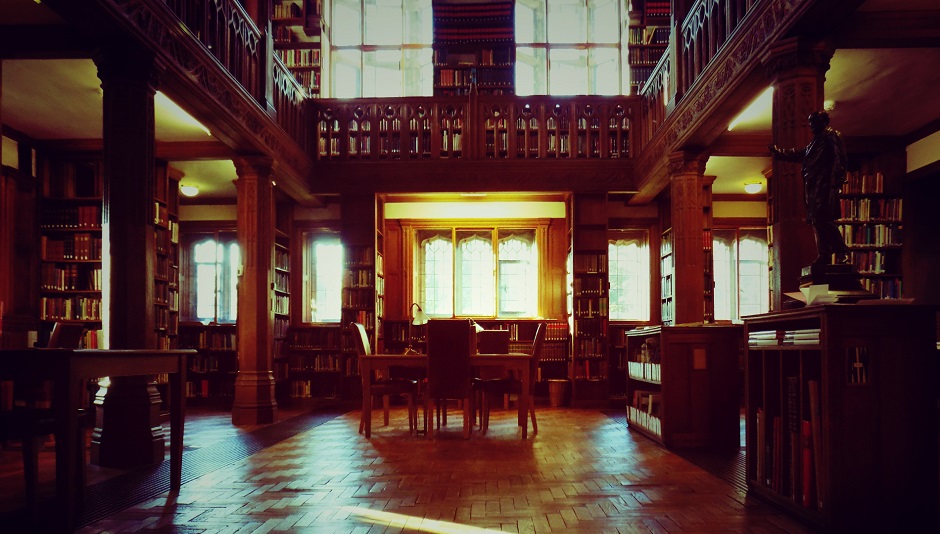
Over the past weekend, I've been at Gladstone's Library, hosting the third Alibis in the Archive conference. As before, this was a celebration of crime fiction, and its heritage, in a gorgeous setting made all the better by good weather. The Library is home to the British Crime Writing Archives, the collections of the Crime Writers' Association and the Detection Club, and the Library's head archivist had arranged a marvellous display of some of the items from the collection.


The programme began on Friday with dinner and a library-based version of a "pub quiz". I was question master, the first time I've done such a thing. It was a lot of fun, with book prizes generously donated by HarperCollins. And it was a good way for attendees to get to know the writers who had come along for the weekend. There's a lot of mingling at Gladstone's. It's such a friendly place and that's the ethos of the Alibis conference.


On Saturday morning, David Whittle kicked off the series of talks with a lovely discussion about Edmund Crispin, interspersed with recordings of some of the music Crispin wrote, under his real name Bruce Montgomery. Then Alison Joseph gave a thought-provoking talk about the books Agatha Christie wrote as Mary Westmacott.


Many people had come along specially to hear Peter Robinson, and he did not disappoint, with a frank and fascinating talk about his crime writing career and the experience of seeing his DCI Banks series televised. It was quite riveting, and so was Frances Fyfield's personal and moving account of a literary friendship, between her and P.D. James.

After lunch came Aline Templeton (whose husband Ian took some of these photos), with a wide-ranging survey of Scotland's contribution to the crime genre, from James Hogg onwards, and Michael Ridpath, talking about the settings of his books. I finished off the day's formal programme, with a talk about Julian Symons and Michael Gilbert, and brought along a collection of books by both men to illustrate it. Several people were intrigued by Julian's particularly modest way of inscribing his work.  The evening was also memorable - many of us sat outside, talking over a glass of wine or two, enjoying the long hours of daylight.


Sunday saw a talk by Janet Laurence about women and crime writing, a conversation between Peter and me, and then a panel discussion involving the whole group of writers to round things off. It was all over too soon, and feedback was extremely positive. And the good news is - Alibis will be back next June! It's a great event and I do hope you'll think about coming along. 


Monday, 4 February 2019

Alibis in the Archive 2019


I'm delighted to announce that this year's Alibis in the Archive will take place at Gladstone's Library from 21-23 June. Booking details are here. If you'd like to attend, you can choose between a residential place (either in the Library itself or a nearby guest house or hotel) or a non-residential place, making your own arrangements as regards accommodation or travelling in each day if you live in the area. There's plenty of accommodation in the vicinity and some excellent guest houses and hotels.

So what's it all about, Alibis? Well, it's a weekend devoted to crime writing and its heritage, given that Gladstone's Library, one of the most stunning libraries in Britain or indeed anywhere else, is home to the British Crime Writing Archives. These bring together in one place the archives of the Crime Writers' Association and the Detection Club.

We've assembled a great line-up of speakers and subject to one or two possible tweaks, the programme is already more or less complete. The speakers include Peter Robinson, author of the brilliant DCI Banks series, which has given rise to a highly successful TV series. Peter will talk about the series and his TV experiences, and will also be in conversation with me about other crime writing subjects. There will be a talk by another of our leading crime novelists, the fantastic Frances Fyfield. She'll be discussing P.D. James, and since she was a very good friend of Phyllis James, I am sure there will be some fascinating insights into the person as well as the books.
Other speakers include Aline Templeton, Janet Laurence, David Whittle, Alison Joseph, and subject to confirmation Ragnar Jonasson, a translator of Agatha Christie as well as a highly successful novelist of the new generation. And me. So it's a varied line-up, and I know that each of my colleagues on the programme is a highly accomplished and interesting speaker on the subject of crime writing.

So there you have it. A week-end not to be missed if you're a crime fan, and in particular of classic crime. Among other things, there will be a pub quiz (but not in a pub!). There will be a chance to see some rare Golden Age books which I've gathered together over the years. And there will also be a chance to look at selected items from the British Crime Writing Archives. Those archives are fast-growing, so much so that we're on the look-out for suitable additional places to house some of the material that is coming in. All suggestions welcome...

Monday, 19 August 2013

St Hilda's Crime and Mystery Week-end


St Hilda's Crime and Mystery Week-end is a crime conference with a distinctive and delightful personality which makes it very different from other crime-related events. The setting is St Hilda's College, Oxford, and I'm just back from the twentieth conference, which was, if anything, even more enjoyable than usual. The fact that this week-end is not advertised, has no promotional website, and yet has flourished for two decades, speaks for itself. When people do find out about it, and attend, they tend to love it, and go back year after year. There's no clearer sign of success than that.

The theme this year was "The Present and Future of Crime Fiction" and when I was asked to deliver a paper, I thought I would be very crafty and find a neat way to weave a talk about the Golden Age into the over-arching theme. What I hadn't anticipated was that some other writers would have the same idea - and my talk was on Saturday afternoon, while just before lunch P.D. James herself would be speaking about....the Golden Age.

P.D. James was aptly described by Natasha Cooper, the chair of the conference, as the true Queen of Crime and it was wonderful to see that her audience regarded it as a true privilege to be able to listen to her. And so it was. Fortunately for me, there was no overlap between her topics of mine, and one of the more daunting experiences of my public speaking career (yet a real honour) was to see Baroness James herself sitting in the front row to listen to my paper. I did feel a bit nervous, having foolishly said the previous evening that I feel more confident about speaking in public nowadays than I used to, but I managed to get through to the end without drying up completely. The papers are delivered in pairs, so P.D. James spoke along with Frances Fyfield, while I was paired with Peter Robinson - and it was very good to catch up with him again over the week-end.

The other speakers included Andrew Taylor (talking about C.S. Forester), and Val McDermid, while two after dinner speeches were given by Bernard Knight on the Friday, and Cilla Masters on the Saturday. There was also an extremely interesting panel chaired by Ayo Onatade on the future of crime publishing. The attendees included quite a number of notable writers who weren't actually speaking - a few examples include Frances Brody, Ann Granger, Marjorie Eccles, Kate Ellis, and AK Benedict - while I met several writers whose first books are due to appear shortly. As ever with these events, the combination of catching up with old friends and meeting new people was very pleasurable.

Much of the success of St Hilda's is down to continuity and the sterling efforts of the organisers, Kate Charles and Eileen Roberts, and Natasha Cooper, who chairs quite brilliantly in a calm, efficient and extremely generous style that few if any could match. This trio put a huge amount of work into the event, and their reward is simply that they give a lot of people a great time.If you've never attended St Hilda's, I do recommend it very strongly. The dates for next year are 15-17 August 2014.


Monday, 18 February 2013

St Hilda's

I've mentioned the St Hilda's Crime and Mystery Week-end a number of times in this blog. It's one of the most enjoyable crime fiction get-togethers imaginable, and 2013 sees it celebrate its 20th anniversary. The event takes place over a week-end at St Hilda's College,which has a lovely setting on the banks of the river in Oxford. Punting is just one of the side attractions!

This year, the week-end is scheduled for 16-18 August. Although this coincides with the holiday season, and I've been unable to make it a few times for that reason, I do encourage crime fans who might be free to come along, even if they've never been to this particular event before. It really is fun, and - especially if the weather is kind - it's a very good time of year to visit Oxford.

Each year, the week-end has a theme, and papers are presented on that theme. This time, it's "From Here to Eterrnity: the present and future of crime fiction." Plenty of scope there! I'm honoured to have been invited to be one of the speakers - and especially honoured because it's otherwise a pretty starry gathering - fellow speakers include P.D. James, Peter Robinson, Val McDermid, Andrew Taylor and Frances Fyfield. The chaiing is done by N.J. Cooper, and as anyone who has seen Natasha in action will agree, she is quite brilliant at it.

Here's a photo of American author Marcia Talley and other guests at the Friday welcome drinks party back at the 2011 week-end. It gives just an idea of the pleasant atmosphere. The joint masterminds behind the week-end are Kate Charles and Eileen Roberts. To receive a booking form, just email Eileen at  eileen.roberts@st-hildas.ox.ac.uk . If you like crime fiction, and the marvellous authors I've mentioned (and there will be others) you will, I am sure, find this not only enjoyable but memorable.

Monday, 16 July 2012

Harry Devlin is back!


I’m truly thrilled to say that my early Harry Devlin books, set in Liverpool, are now enjoying a new life. They are available as ebooks, in new editions with some very special features that I hope readers will find fascinating. For me, it’s all very exciting. And the books are also being made available again, for those who prefer hard copies, in paperback editions.

Andrews UK, who specialise in ebooks and print on demand editions, have now produced six of the eight titles in this way – the whole series, that is, with the exception at present of Eve of Destruction and the much more recent Waterloo Sunset.

The most notable of the special features is that each book benefits from a brand new introduction by a leading crime writer. I’ve been extraordinarily lucky here – this original material, only available in these editions, comes from some of the most gifted and renowned of modern British writers.

CWA Gold Dagger Winner Frances Fyfield introduces my debut novel, All the Lonely People. Frances reviewed my earliest work in legal magazines (she and I, like Harry, are solicitors) and I have long felt an enormous debt of gratitude to her for her encouragement.

The same is true of Val McDermid, the CWA Diamond Dagger winner who has written a new introduction to the second book in the series, Suspicious Minds. Val reviewed one or two of the early Devlins very favourably, and her generous remarks in this new edition made me glow with pride.

I Remember You, the third book in the series, has an introduction from Margaret Murphy – the current joint winner of the CWA Short Story Dagger. Margaret is not only an old friend, but someone who knows Harry Devlin’s Liverpool  better than most.

Yesterday’s Papers, perhaps my favourite Devlin book, has an introduction from another CWA Diamond Dagger winner, Peter Lovesey. Again, Peter is a superstar of the genre who has supported me generously for many years. He and I share an enthusiasm for classic, twisty plots, and it seemed to me appropriate that this particularly elaborate mystery should include an intro from such a master of the genre.

A third CWA Diamond Dagger winner, Andrew Taylor, kindly wrote the introduction to The Devil in Disguise. This was a book I really enjoyed writing, though I remember being mortified when my original publisher didn’t care for it. As a result, I moved to Hodder, with increased sales as a result. Andrew was a Hodder author too, and we launched this book, and one of his Lydmouth titles, at the same enjoyable event in the late lamented Mysterious Press bookshop in London.

Finally, there is First Cut is the Deepest, with an introduction from Kate Ellis, twice shortlisted for the CWA Short Story Dagger.  This was the last Devlin story I wrote before taking a ten-year break, and it is also the longest and perhaps the most complex entry in the series. Kate, like Margaret, is a Liverpudlian with a deep love for Harry’s home city.

For each book, I have written a detailed new “Making of” feature, along the lines that you find in DVDs. There is also a biographical note, and an appreciation of my work which has most generously been contributed by former CWA Chair, Michael Jecks.

Each book includes a “preview chapter” for the next book in the sequence, a device that I hope will encourage people who dip into the series for the first time to return to it.

As we all know, the world of publishing is changing rapidly. With all change, there are advantages and drawbacks. But I am very optimistic that for writers like myself, who do not have massive publicity teams or budgets at their disposal, that digital publishing will help to make the books available to a new and wider readership. We shall see. One thing is for sure: it’s enormously gratifying to see these early books given a fresh life.

I can’t close this post without expressing my profound gratitude to Frances, Val, Margaret, Peter, Andrew, Kate and Michael, all of whom offered their contributions without the slightest degree of arm-twisting! (The same is true of CWA Gold Dagger winner Ann Cleeves, whose introduction to Eve of Destruction is at present unfortunately unavailable because of the frustrating and unhelpful attitude of the rights owner.) Generous people, as well as terrific writers, and I am proud to call them friends.


Sunday, 24 July 2011

Harrogate and Legal Eagles


I got back home this afternoon after a truly exhilarating time at the Theakston's Old Peculier Crime Writing Festival at Harrogate. It was great to catch up with old friends and also to meet some nice people for the very first time.

This was the very first time I've been asked to be on a panel at Harrogate. The title was 'Legal Eagles' and it proved to be a real treat. This was due in no small measure to the fact that it was very well moderated by an eminent Yorkshire lawyer, Peter McCormick. I've known of him for many years, but we'd never met before.

My fellow panel members were a delightfully diverse group. The brilliant Frances Fyfield is someone I've been lucky enough to know for a long time, but M.R. Hall is a barrister turned novelist I've met more recently, having twice shared a platform with him at Crimefest. Helen Black, a solicitor whose work has been compared to Martina Cole's, is a friend of a friend whom I'd only met very fleetingly in the past.

It was a really enjoyable session, and the hour flew by. The feedback from audience members was great, and I felt thrilled to be speaking at the hotel most famous as the place where Agatha Christie hid during her disappearance in 1926. Quite a place, quite a weekend.

Thursday, 21 July 2011

Harrogate


Today I set off for the Theakston's Old Peculier Crime Writing Festival at Harrogate. For the first time I've been invited to be on a panel, 'Legal Eagles', on Saturday. My fellow panellists include the marvellous Frances Fyfield.

I've been involved with Harrogate in various ways over the years. Hosting a table at a murder mystery dinner, for instance, and giving a talk at the Creative Thursday workshop to would-be writers. It's always a very well organised weekend and for that Sharon Canavar, Erica James and their team take great credit.

One highlight was when The Coffin Trail was shortlisted for the best crime novel award, and I was up against Ian Rankin, Val McDermid (who won), Stephen Booth, and Susan Hill. It was certainly one of the highlights of my career, even though I do think I've written quite a few better books both before and since The Coffin Trail!

And another good occasion was the launch four years ago of the CWA anthology I.D. at an event at the Pump Rooms. Note the pints of Theakstons strategically displayed on the book table!

Tuesday, 8 June 2010

Neil White and Dead Silent


The United States appears to be full of attorneys who dash off bulky legal thrillers at will. In the UK, by contrast, there are relatively few lawyers – solicitors or barristers – who combine full-time professional life with writing crime fiction. There have been some great exceptions to the rule, of course – Cyril Hare, Michael Gilbert and more recently Frances Fyfield spring to mind. But some lawyers who appeared destined to make a mark a decade or more ago, the likes of Dexter Dias and the duo who wrote as Rankin Davis (not Ian Rankin and Lindsey Davis, I hasten to add!) seem to have moved away from the genre.

But one newish name to note is that of Neil White. Neil is a Yorkshireman by birth, who now works with the Crown Prosecution Service in Lancashire. I met him again at Crimefest recently, although my happiest memory of being in his company has to be that memorable night when I won the CWA Dagger for best short story a couple of years back.

Neil started his writing career with a little known book, Salem, which I’m happy to have a copy of, but he then moved into the big time with a contract for a series of paperback original thrillers, featuring his regular characters Jack Garrett and DCI Laura McGarrity.

The latest, Dead Silent, is just out. It is published by Harper Collins and the premise is this: ‘Twenty years ago Claude Gilbert buried his wife alive and then killed himself – or so everyone believes. But as Gilbert disappeared on the night of the murder, the mystery has remained unsolved. Until now….”