Showing posts with label Alison Joseph. Show all posts

Monday, 24 June 2019

Alibis in the Archive 2019


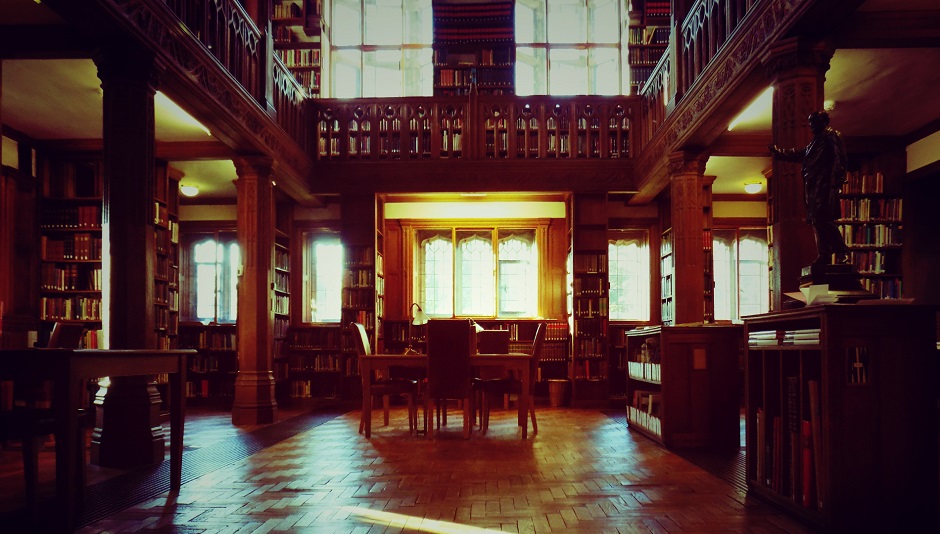
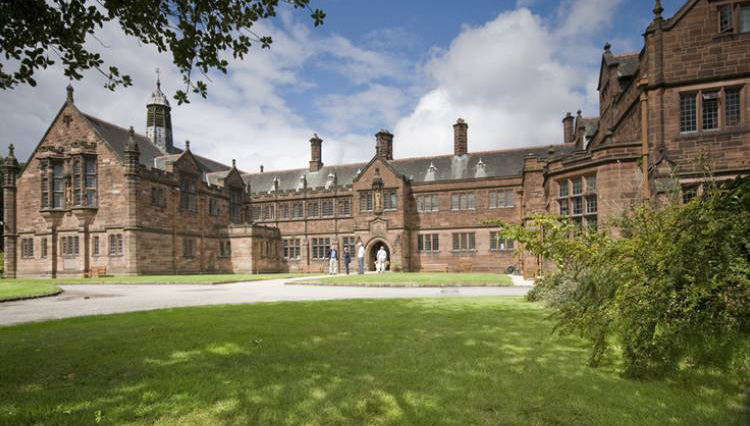
Over the past weekend, I've been at Gladstone's Library, hosting the third Alibis in the Archive conference. As before, this was a celebration of crime fiction, and its heritage, in a gorgeous setting made all the better by good weather. The Library is home to the British Crime Writing Archives, the collections of the Crime Writers' Association and the Detection Club, and the Library's head archivist had arranged a marvellous display of some of the items from the collection.


The programme began on Friday with dinner and a library-based version of a "pub quiz". I was question master, the first time I've done such a thing. It was a lot of fun, with book prizes generously donated by HarperCollins. And it was a good way for attendees to get to know the writers who had come along for the weekend. There's a lot of mingling at Gladstone's. It's such a friendly place and that's the ethos of the Alibis conference.


On Saturday morning, David Whittle kicked off the series of talks with a lovely discussion about Edmund Crispin, interspersed with recordings of some of the music Crispin wrote, under his real name Bruce Montgomery. Then Alison Joseph gave a thought-provoking talk about the books Agatha Christie wrote as Mary Westmacott.


Many people had come along specially to hear Peter Robinson, and he did not disappoint, with a frank and fascinating talk about his crime writing career and the experience of seeing his DCI Banks series televised. It was quite riveting, and so was Frances Fyfield's personal and moving account of a literary friendship, between her and P.D. James.

After lunch came Aline Templeton (whose husband Ian took some of these photos), with a wide-ranging survey of Scotland's contribution to the crime genre, from James Hogg onwards, and Michael Ridpath, talking about the settings of his books. I finished off the day's formal programme, with a talk about Julian Symons and Michael Gilbert, and brought along a collection of books by both men to illustrate it. Several people were intrigued by Julian's particularly modest way of inscribing his work.  The evening was also memorable - many of us sat outside, talking over a glass of wine or two, enjoying the long hours of daylight.


Sunday saw a talk by Janet Laurence about women and crime writing, a conversation between Peter and me, and then a panel discussion involving the whole group of writers to round things off. It was all over too soon, and feedback was extremely positive. And the good news is - Alibis will be back next June! It's a great event and I do hope you'll think about coming along. 


Monday, 4 February 2019

Alibis in the Archive 2019


I'm delighted to announce that this year's Alibis in the Archive will take place at Gladstone's Library from 21-23 June. Booking details are here. If you'd like to attend, you can choose between a residential place (either in the Library itself or a nearby guest house or hotel) or a non-residential place, making your own arrangements as regards accommodation or travelling in each day if you live in the area. There's plenty of accommodation in the vicinity and some excellent guest houses and hotels.

So what's it all about, Alibis? Well, it's a weekend devoted to crime writing and its heritage, given that Gladstone's Library, one of the most stunning libraries in Britain or indeed anywhere else, is home to the British Crime Writing Archives. These bring together in one place the archives of the Crime Writers' Association and the Detection Club.

We've assembled a great line-up of speakers and subject to one or two possible tweaks, the programme is already more or less complete. The speakers include Peter Robinson, author of the brilliant DCI Banks series, which has given rise to a highly successful TV series. Peter will talk about the series and his TV experiences, and will also be in conversation with me about other crime writing subjects. There will be a talk by another of our leading crime novelists, the fantastic Frances Fyfield. She'll be discussing P.D. James, and since she was a very good friend of Phyllis James, I am sure there will be some fascinating insights into the person as well as the books.
Other speakers include Aline Templeton, Janet Laurence, David Whittle, Alison Joseph, and subject to confirmation Ragnar Jonasson, a translator of Agatha Christie as well as a highly successful novelist of the new generation. And me. So it's a varied line-up, and I know that each of my colleagues on the programme is a highly accomplished and interesting speaker on the subject of crime writing.

So there you have it. A week-end not to be missed if you're a crime fan, and in particular of classic crime. Among other things, there will be a pub quiz (but not in a pub!). There will be a chance to see some rare Golden Age books which I've gathered together over the years. And there will also be a chance to look at selected items from the British Crime Writing Archives. Those archives are fast-growing, so much so that we're on the look-out for suitable additional places to house some of the material that is coming in. All suggestions welcome...

Monday, 25 July 2016

Festival Time


It's a sign of just how good a time I had at the Harrogate Crime Festival this past week-end that on Friday I completely forgot to post the Forgotten Book piece that I'd written in advance of my trip. Ooops. It will now appear this coming Friday instead! But I really did have a good time at Harrogate, which was looking at its best in the sun. It's a lovely setting for a festival.

I very much enjoyed catching up at length with James, my agent, and discussing with him a wide variety of projects that are in the pipeline for the next twelve months. We also had the chance to reflect on all that has happened in my writing career over the past year - it's been the most exciting time of my writing life. I was also able to give him an update on my latest novel-in-progress. My fiction writing has inevitably taken a back seat lately, but I'm totally committed to it, and although the new novel won't be ready for publication in 2017, it is at least moving forward. Next year will, though, see the publication of The Story of Classic Crime in 100 Books and several anthologies that I've edited.

I had the pleasure of meeting Karen Robinson of the Sunday Times Crime Club for the first time, and of attending parties held by Harper Collins and Bonnier. For the annual quiz masterminded by Val McDermid and Mark Billingham, I was invited to join the Little, Brown team, which also included Stav Sherez, and we came second - not quite top of the pile, but still a good result and a very enjoyable evening.

There was also the chance to have dinner with the likes of Barry Forshaw and David Stuart Davies, as well as catching up with a whole host of old friends, such as Ali Karim Alison Joseph and Leigh Russell, all of whom are pictured above outside the Old Swan Hotel, Ricki Thomas, Felix Francis, and many more. The fact the hotel was the place to which Agatha Christie retreated during her notorious disappearance does give the festival an added piquancy. Harrogate's a different sort of event from those wonderful week-ends Crimefest and St Hilda's (I'm very much looking forward to the latter, in mid-August) but has a distinctive atmosphere.  And the fantastic weather was a bonus..

Monday, 30 September 2013

The Crime Writers' Association - Diamond Jubilee

I've been a member of the Crime Writers' Association since the late 80s, and over the years my involvement with the CWA, initially through the Northern Chapter founded by Peter N. Walker, has introduced me to a great many people whom I would probably never otherwise have met. It's a great social organisation - even for those, like me, who don't regard themselves as naturally very gregarious. And the CWA also takes increasingly active steps to help members to promote their work, which is a tremendous benefit at a time when it is not only hard to get published, but a challenge to remain published.

This year sees the CWA celebrate its Diamond Jubilee - on Guy Fawkes Night to be precise. This special anniversary has seen a number of notable events, including a glittering Awards Dinner, and the publication of Deadly Pleasures, which includes stories by a number of the great and the good of crime writing (along with me - editor's perk!)

I joined the CWA committee towards the end of last year, something that pressure of the day job had never previously allowed, and I do feel that under Alison Joseph's chairmanship the organisation is going from strength to strength, despite the challenges faced by publishers and authors the world over. Membership has increased very significantly, and as a result the CWA needs to operate in a very businesslike way. The role of its hard-working director, Lucy Santos, is extremely important in this respect and in a relatively short time Lucy has made a great impression.

Like any organisation, the CWA needs to look to the future, whilst at the same time remaining true to its core values and not forgetting or under-estimating the importance of its roots. I've had on my website for quite some time a modest page about the CWA, and to mark the Diamond Jubilee, I've just written an article about the origins of the CWA. As CWA archivist, I'll also be making an announcement shortly about our plans for the Archives. There's plenty of work to be done, but also a great many good things to look forward to.


Sunday, 19 May 2013

The Mousetrap

Call myself an Agatha Christie fan? It's a dreadful confession, but until a short time ago, I'd never even got around to watching The Mousetrap. Yes, the longest-running play of all time, by a country mile, and I'd not seen it. Thanks to an initiative of the Crime Writers' Association, and in particular of its new chair, Alison Joseph, I've finally remedied this shocking omission.

The Mousetrap is, of course, a classic Golden Age whodunit. It began life as a radio play, Three Blind Mice, but Christie, who was very keen on the theatre, adapted it for the stage. She had a mixed record as a playwright. Some of her stage plays were not particularly successful - I recall being a bit disappointed by Fiddlers Five, when I saw it on its early run in Manchester, as a birthday treat in my teens. In fact, Christie obviously realised that something was amiss, since a revised version appeared before long, called Fiddlers Three! As far as I know, it has never been published, so I have not had a chance to check on my original judgment..

Things were very different when it comes to The Mousetrap, which is now in its sixtieth year. It's become a real British institution, a must-see for tourists as well as fans of detective stories. I really did enjoy the play. It is good, unpretentious light entertainment, and the cast did a very good job with the material. Yes, it's a period piece, but that accounts for a great deal of its charm.

Alison Joseph had arranged with the management of St Martin's Theatre, a small but appealing theatre with lots of "Mousetrap memorabilia" on show in the bar, that we would have a backstage tour after the play. This was great fun. So now I know how the effects of the wind, and of the falling snow,are produced. As with the solution to the central mystery in the play, however, my lips must remain sealed...