Showing posts with label Anthony Berkeley. Show all posts

Wednesday, 23 February 2022

A Medawar Medley


I first met Tony Medawar way back in 1990 when we both attended the London Bouchercon and both took part in a Mastermind quiz. We've been friends ever since. Tony was particularly busy last year and this post seeks to round up some of his achievements. In addition to being Director of the International Agatha  Christie Festival in Torquay - a very enjoyable event which I was delighted to participate in, and well worth keeping in mind for this September - he continued his researches into Golden Age fiction, while a number of books published by HarperCollins featured his introductions.

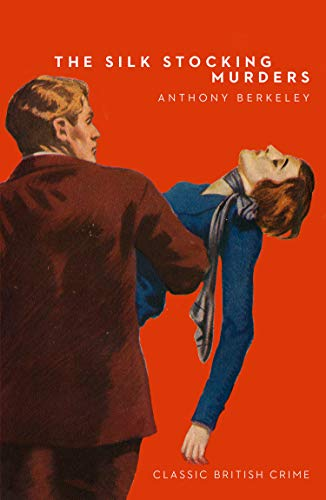
Like Tony, I am a long-time Anthony Berkeley fan, so I was glad to see the reappearance of The Wychford Poisoning Case and The Silk Stocking Murders, two novels from the 1920s which feature Roger Sheringham. Tony has also superintended the publication of The Wintringham Mystery, which was the original title of the story later published under the pen-name A.Monmouth Platts as Cicely Disappears. This is an exceptionally rare book. I was loaned a pristine, dust-jacketed copy by a member of the author's family (and looked after it very carefully, believe me, before sending it back) and reviewed it on this blog a few years ago. It's fair to say that I don't rank it anything like as highly as the Sheringham novels. But now there is an affordable paperback edition, fans can judge for themselves.

Tony has also edited the fourth anthology of stories in his Bodies from the Library series. Bodies from the Library 4 may not have an unexpected title, but it contains some genuine rarities that will make the mouths of many a Golden Age fan water. There are, for instance, stories by both Edmund Crispin and Ngaio Marsh that have never been published before.

The other ingredients form quite a mix. There are a couple of radio plays and a sequence of six short mysteries by authors including Peter Cheyney which first appeared in the Sunday Dispatch. The highlight, and one which I think will make this book a must-buy for some traditional mystery lovers is a novella by Christianna Brand, 'Shadowed Sunlight', which has again not been available until now. My own favourite is Crispin's 'Child's Play', a dark and uncharacteristic but memorable story. It doesn't feature Gervase Fen, and maybe that was why it never saw the light of day in Crispin's lifetime, but I'm extremely surprised he seems not to have managed to get it published. 


Friday, 17 December 2021

Forgotten Book - The Second Shot

Anthony Berkeley's The Second Shot is rare if not unique among detective novels for being more renowned for its preface than for the substance of its story. In what is really an extended dedication to his literary agent, the legendary A.D. Peters (whose former wife Berkeley married not long afterwards), he argued that 'the detective story is already in process of developing into the novel with a detective or crime interest, holding its reader less by mathematical than psychological ties.' This opinion was quoted with approval by Julian Symons in Bloody Murder and I agree that Berkeley was spot on.

Symons pointed out that in fact this particular novel did much less to demonstrate the point Berkeley was making than did his first Francis Iles book, Malice Aforethought. Again, I agree. Nevertheless, it's a distinctive effort, a Roger Sheringham mystery narrated by Cyril Pinkerton, although Pinkerton certainly isn't a Watson-character. In fact, he's the prime suspect for the murder of loathsome Eric Scott-Davies.

Berkeley's ideas about crime, punishment, and justice were invariably as interesting and often as controversial as his opinions (and he was never short of opinions) about the crime genre. This novel was, along with Gladys Mitchell's Speedy Death, one of the first Golden Age puzzle to tackle head-on - explicitly, rather than by implication - the notion of the 'altruistic crime',  which I explored in The Golden Age of Murder. If you can think of an earlier example, do let me know. Christie, Carr, and others tackled the 'altruistic crime' during the Thirties, but Berkeley led the way.

Apart from Sheringham, the writer Morton Harrogate Bradley, who had appeared in The Poisoned Chocolates Case, pops up in the story, albeit without contributing much. There's also passing mention of Alice Dammers, from the same novel. This novel reflects his habit of fictionalising real life places and people. There's a wonderful map on the endpapers of the crime scene, Minton Deeps, which was based on Berkeley's own Devon home, Linton Hills. I suspect that Paul de Revel and his glamorous wife were based on people in Berkeley's circle (E.M. Delafield and her husband Paul, perhaps?). The same may also be true of Armorel Scott-Davies, who plays a central role in the story. 

The main problem with the novel is that, after a sprightly start, the pace drags. Berkeley's prose is never less than readable, but there is endless discussion about who was where and when. There are compensations in the way Berkeley juggles multiple false solutions, while the final revelation of the culprit is highly characteristic of his ironic approach to crime writing: he gives a fresh twist to a narrative technique that had been around for a few years. This novel was published in 1930, a year that in many ways marked a turning point in the genre. Berkeley was one of those who showed the way ahead, and his influence continues to be felt.   

Monday, 10 October 2016

The Poisoned Chocolates are back!


Today sees the publication of the latest title in the British Library's series of Crime Classics, and for me personally, it's the most pleasurable moment so far of my association with the series as consultant. The book is Anthony Berkeley's Golden Age classic The Poisoned Chocolates Case. And this special edition includes not only an introduction in which I set the context of the book, but two special extras.

As many Golden Age fans already know, the novel is famous for the six different solutions to the mystery of who killed Joan Bendix that are proposed by members of the Crimes Circle, presided over by Roger Sheringham. One of those solutions, put forward by Sheringham himself, is the same as that in Berkeley's short story "The Avenging Chance", which features essentially the same plot. In the novel, however, things turn out very differently indeed...

In the 70s, Berkeley's friend Christianna Brand, herself a noted plot-weaver, wrote a seventh solution which featured in an American reprint of the book. That edition only had a relatively limited circulation, however, and most British fans of the genre haven't read it. The British Library edition does, however, include the Brand solution.

And what's more, it includes a completely new solution - written by me. I found writing this new "epilogue" to the story hugely enjoyable - a challenge, yes, to write in Berkeley's style and to find a fresh way of twisting the mystery, but one I loved undertaking. I know that it's high risk to write in the style of the masters of days gone by, but I've enjoyed writing new Sherlock Holmes stories, and this project was great fun. What others will make of it, time will tell..

Friday, 15 July 2016

Forgotten Book - The Colour of Murder


Julian Symons' The Colour of Murder won the CWA's "Crossed Red Herring" award in 1957; in other words, what is now known as the CWA Gold  Dagger for the best crime novel of the year. Quite an accolade, and you might think that, especially given Symons' stature in the crime world, the book would hardly qualify as "forgotten". But it's seldom been discussed, and I must admit that although I read it in my youth, even I'd allowed the story to slip from my memory.

When I picked up a copy on my birthday last week, I wondered how well it would stand up to scrutiny, almost six decades after publication. Rather casually, I started reading, and I soon found myself hooked. I have an awful lot of good books on my TBR pile, but The Colour of Murder demanded to be read, even though in one or two respects it resembles certain of Symons' other books (a real favourite of mine, The Man Whose Dreams Came True, springs to mind, though I should add that there are also many differences between the novels).

John Wilkins is an unhappily married man who suffers occasional blackouts. The first part of the book amounts to a statement that he gives to a psychiatrist, so it is fairly clear that he has been charged with murder. But of whom? His awful wife May is an obvious candidate, not least because Wilkins fancies a librarian called Sheila. The suspense builds relentlessly as Wilkins chronicles his own downfall.

The second part of the story details what happens after murder is committed. There's a lengthy trial scene - Symons was very good at those - and a nice twist at the end. There's really a great deal to enjoy in this story, especially Symons' sceptical view of the nature of justice. He was in many ways the heir to Anthony Berkeley in the way he exposed the fallibility of our legal system, and managed to make readers interested in the plight of people who are very far from perfect, such as Wilkins. An added bonus is the crisp portrayal of Fifties Britain, with its snobberies and its taboos vividly displayed. A first rate novel, which I enjoyed more on this second reading than I did the first time around, which was in the days when I was more interested in ingenious whodunits than novels of character and society. As I say, this book does have a neat plot, but it offers a good deal more than that...

Friday, 12 February 2016

Forgotten Books - Death's Darkest Face

My Forgotten Book for today is a novel I received for review no less than 25 years ago. It was written by one of my favourite crime novelists at that time,and I very much enjoyed it. A couple of years later, I had the pleasure of meeting the author a couple of times, and he duly inscribed the book to me. Re-reading it recently, having forgotten pretty much all the detail of the mystery, I was struck once again by the intelligence and unfussy elegance of the writing. Yet it's a book that has seldom been discussed, and really does seem to be forgotten. The title is Death's Darkest Face, and the author Julian  Symons.

The structure of the story is unusual, and Symons takes the very bold step of introducing himself into the story, at the start and at the end. He explains how he came into the possession of a manuscript written by an actor whom he knew called Geoffrey Elder. What follows is an ingenious narrative with an unorthodox structure. Symons is writing in the present, i.e. the end of the Eighties, while Geoffrey is writing in the Sixties about events that mostly took place in the Thirties, and which he followed up  three decades later.

Geoffrey is prompted to become an amateur detective by the intrusion into his life of a would-be biographer of a Thirties poet called Hugo Headley. Headley disappeared mysteriously, and it was never clear whether he had died or faked his own death and fled to escape his creditors. Could it be that, rather than committing suicide, he was murdered? Geoffrey has a personal reason to find out more.

Some of the elements of the story are quite melodramatic,but the telling of the story is very considered, which for some readers may be a drawback. It's not breathless, action-packed tale, and the large cast of characters also means that you have to pay attention from start to finish. But it's worth the effort. This really is an under-estimated novel, and in a very clever finale, we are offered a fresh way of looking at things which reminds me strongly of the books of Anthony Berkeley, whom Symons (like me) greatly admired, and who was an expert in offering multiple solutions to a mystery.  

Friday, 18 December 2015

Forgotten Book - Something Like a Love Affair

Something Like a Love Affair was published in 1992, and not long after it came out, I seized the chance to ask its author, Julian Symons, to inscribe my copy. Under the inscription, in his tiny, immaculate handwriting, he wrote "A good title?" and then, under that, "A good book??" The title is not, I think, anything special, but the book is certainly a good one. It does, however, qualify for the description "forgotten". I've seen very little discussion of it anywhere.

In fact, I enjoyed re-reading Something Like a Love Affair even more than I enjoyed the story the first time around. One of the reasons is that now I can see more clearly than I saw then what he was aiming for, a fresh spin on a device introduced (unless there's an earlier example of which I'm unaware) by an author whom Julian and I both admired - Anthony Berkeley. It's a form of "whowasdunin" story. There are a few poorish reviews of this book online, but I take a different view: it offers a nice example of storytelling technique from a very talented novelist.

We know from the outset that the police have discovered a body, but we don't know whose body it is. The action then goes back a short distance in time, and we are introduced to Judith Lassiter. On the surface she has a lot to be thankful for: she is attractive, well-off,and has a doting husband. But she isn't happy, and as the story unfolds, we begin to understand why.

As in a number of his books, Symons combines a portrayal of mental disintegration with a cunningly plotted mystery. Nowadays, his fiction is much less renowned than that of his friend Patricia Highsmith, but I see quite a few similarities between what they were trying to do with the post-war crime novel. Highsmith was the superior literary stylist, but Symons' plots were cleverer. I've always thought it a paradox that it was she and not he who wrote a book about plotting suspense fiction. But much as I relished Something Like a Love Affair, I was struck by a passage which quotes from the day's newspaper headlines: trouble in the Middle East and global warming were major concerns then, just as they are today. As for the question marks.after "A good book", they indicate the modesty of the man. He judged his own work by exacting standards, but I think he was pleased with this one and I'd be pleased to have written it too.  

Friday, 6 November 2015

Forgotten Book - The Man Whose Dreams Came True

The Man Whose Dreams Came True is a novel published by Julian Symons in 1968, and although it is a Forgotten Book, it should not be. I borrowed a copy from the local library not long after it came out, having recently discovered Symons,and I thought it was terrific. I still do. Symons' cynical wit is much in evidence, and the plot is wonderfully twisty and ironic. As with its immediate predecessor, The Man Who Killed Himself, Symons was working very much in the tradition of Anthony Berkeley/Francis Iles, while producing a novel that was distinctive and thoroughly entertaining.

Tony Jones is a good-looking but feckless young man who has plenty of ambitions, but neither the money nor the character - it seems - to realise them. When we are introduced to him, he is working for a crusty old general as his secretary, and indulging in a variety of petty fiddles as well as an affair with a local girl who is - like several characters in the book - not all that she seems.

Things don't work out for Tony in this job, and he soon drifts into an affair with an older woman, before a new job, working for the wealthy husband of a sexy woman, seems to offer him that long-awaited chance to make his dreams come true. There are numerous excellent plot complications, and plenty of surprises before Tony finds his destiny.

This is a very readable story, which stands up well nearly fifty years after it was written. Yes, the price of a flight to Venezuela has changed, and so have some of the other specifics in the storyline, but Symons describes human folly with cool insight as well as humour. Returning to this book so long after I first read it, I definitely was not disappointed, and if you track it down, I don't think you will be, either.

Friday, 14 August 2015

Forgotten Book - The Documents in the Case

The Documents in the Case, first published in 1930, is in many ways an unusual book. It's the only novel that Dorothy L. Sayers wrote in collaboration - with Robert Eustace. It's her only novel which does not feature Lord Peter Wimsey. And it's a novel that offers not only an interesting and unorthodox "howdunit" mystery, but also a fictionalised version of the Thompson-Bywaters case that fascinated a good many Golden Age novelists, not least Anthony Berkeley and E. M. Delafield.

Sayers is not by any stretch of the imagination a forgotten writer, but this is the one novel of hers that seems to me to have been generally under-valued. Perhaps it's the absence of Wimsey that accounts for the generally lukewarm critical reaction over the years (though I should add that a number of good judges have also praised the book.) Each time I read it, I find my appreciation of Sayers' skill increasing, even though, in the immediate aftermath of completing the book, she felt that she had failed to do justice to the clever idea at its heart.

In telling the story, she borrowed from Wilkie Collins' The Moonstone. Collins was a writer she greatly admired, and she was at the time she wrote the novel working on a biography of him that she never managed to complete. The events are seen from the point of view of characters in the story, and told in the form of letters. It's a very good device, when used well, and Sayers captures the different voices of the characters splendidly.

It's in the later part of the story, where the scientific material central to the plot is debated, that the narrative flags somewhat. Eustace contributed the scientific ingenuity here, as he did to stories by other writers such as L.T. Meade and Edgar Jepson, but Sayers did the writing. The method she chooses for conveying this material results in a rather abrupt ending, The problem with this section of the book is one of story structure, and I sense that she rushed those final pages, when with a slightly different approach she might have produced a book that would have been more widely acclaimed as an innovative masterpiece. Nevertheless, it's a novel of considerable interest and distinction, and if you aren't familiar with it, then it's definitely worth a read. There's a fascinating chapter about how the book was written, incidentally, in the late Barbara Reynolds' excellent biography of Sayers.

Friday, 27 March 2015

Pablo Neruda's Forgotten Books


Whilst I'm still in post-holiday mood, something rather different for today, but still (sort of) on the theme of Forgotten Books. My trip kicked off in Valparaiso, a city that reminded me slightly of Liverpool - it's a port, with tremendous character. But unlike Liverpool, it's surrounded by mountains, and a host of funicular railways (not all of them working, unfortunately) make it easier to get up and down the steep slopes. There was something cheekily Liverpudlian, I thought, about the restaurant where I had a good meal and which called itself after Emile Dubois, a murderer who somehow became a local folk hero.


One of Valparaiso's more creditable claims to fame is as the site of one of the homes of Pablo Neruda, the Nobel Prize winning poet and political activist. It's called La Sebastiana, and it's a gorgeous house, which takes full advantage of a great vantage point overlooking the Pacific from the slopes, and which boasts some fabulous architecture. Today it's one of the must-see sights in Valparaiso, and I really enjoyed my visit.


Neruda's judgment wasn't always sharp - he continued to admire Stalin long after even the likes of Victor Gollancz had come to regret their devotion to the Soviet mass-murderer. But, like a remarkable number of Communists of his generation, he was a passionate fan of detective fiction (it's a reminder, too, of the links between poetry and the classic whodunit.) Some people have even suggested that he took his pen-name, Neruda, from the surname of a famous violinist mentioned in A Study in Scarlet.


Mention of Neruda's love of "police stories" is just a throwaway line in the audio commentary about the house, but when I reached his library at the top of the building, I decided to investigate. And there I found a collection of detective fiction paperbacks written in English. They even included two of my personal favourites, Trial and Error, by Anthony Berkeley, and The Grindle Nightmare, by Q. Patrick; his editions were identical to mine. Michael Innes was one of the other Golden Age writers represented, along with such diverse names as George Baxt and Elizabeth Fenwick. In all, there weren't many books in this famous writer's home (he was one of those Communists who owned several luxurious homes, so perhaps he kept the bulk of his library elsewhere) but it was fascinating to have this glimpse of his taste in popular fiction, as well as to learn more about one of the stellar names of twentieth century literature.


Friday, 20 February 2015

Forgotten Book - Heir to Lucifer

I've mentioned John Rhode (whose real name was Cecil John Street) several times in this blog. He was a prolific writer, and in addition to countless Rhode books, he wrote a long series under the name Miles Burton. Over the years I've picked up numerous Burtons, but only in recent times have I got round to reading some of them. One of them is Heir to Lucifer, first published in 1947, and it's my Forgotten Book for today.

Although it is a post-war book, it seems on the surface to be a classic country house mystery. Desmond Merrion, late of Naval Intelligence, is Burton's regular amateur sleuth, who made his debut in a much earlier book, The Secret of High Eldersham, that I read a few weeks back and will probably cover one Friday soon. The book opens with Merrion and his wife Mavis setting off for the small resort of Croylehaven, because Mavis has been under the weather. It's not an ideal choice, since mystery and mayhem promptly ensue - yet with each violent death, Mavis seems to perk up a bit more...

Croylehaven is dominated by Castle Croyle, home to the eponymous Lucifer, a rich old man surrounded by relatives who are financially dependent on him. Usually, this set-up means that the old chap will soon be a goner,but this is an unusual book. Lucifer survives, although a small boy is killed, an attempt is made on Lucifer's life, and a murder victim's corpse is discovered at an ice-house. By this time, the Merrions have become honoured guests at the Castle, forever popping in and out - the way you do when violent deaths keep occurring.

This is an odd book and its resolution is strange, untypical and rather disturbing. Yet I found it readable and interesting. Rhode/Burton does a pretty good job of making sure that you never know what to expect, and he certainly confounded my theory about the crime. There's a touch of darkness and irony about the ending that would, I suspect, have appealed to Rhode's Detection Club colleague Anthony Berkeley. Definitely worth a look, and by no means as conventional as the basic ingredients might suggest..

Tuesday, 4 November 2014

The Gilbert Adair Festschrift

Writing this blog has led to many interesting and enjoyable experiences and encounters, plenty of them wholly unexpected. One example was an invitation earlier this year to contribute to a festschrift celebrating the work of the late Gilbert Adair, whom I'd never met, but about whose detective pastiches I've written on this blog. And now the Verbivoracious Press (try saying that name after a couple of drinks!) has published the festschrift.

My essay is called "Gilbert's Games and the Golden Age of Murder", and it discusses Adair's last three novels, which feature Evadne Mount, in the context of Golden Age game-playing. I rather think Anthony Berkeley, for instance, might have appreciated Adair's ironic and ingenious attempts to play around with the idea of the whodunit.

I haven't as yet read all the other contributions, but I was pleased to see that one essay is written by Sergio Angelini, whose blog, Tipping My Fedora, is chock-full of interest. There's some overlap, not surprisingly, between his essay and mine, but we tackle our subjects from different angles, and Sergio also covers two earlier books by Adair, one of which I haven't read. The other is A Closed Book, which I read not long after it came out. Sergio is an expert on film as well as fiction, and I learned from his essay that A Closed Book was turned into a film four years ago, and with a very good cast. It seems to have sunk without trace in box office terms, but there is a DVD, and I will be sure to seek it out, though Sergio warns that the film is very different from the book.


This essay is the third I've published this year, in very different books. Morphologies, quite a high profile book edited by Ra Page, included my thoughts on Conan Doyle as a short story writer, while Mysteries Unlocked, a festschrift honouring Doug Greene and edited by Curtis Evans, is a splendid resource for those interested in reading essays about the genre; my piece focused on Anthony Berkeley's short stories. There's always a danger that invitations to write essays can distract one from the current novel, and sometimes I'm guilty of digressing when I should be focusing. But the occasional digression is, I'm sure, good for a writer, and helps to keep one's writing fresh.

Saturday, 1 November 2014

Blood Swept Lands and Seas of Red


The centenary of the start of the First World War has prompted countless people to reflect on war, and the part it has played in our history, and the lives of people we know. I'm among them. I still have vivid memories of an uncle of mine, a popular and likeable man, and (like many members of my family) a passionate fan of our local football club, whose life was forever blighted when, having run off to join the army while under age, he was gassed while in the trenches.

When I was researching for my paper at the St Hilda's crime conference, which this year took war as its theme, I was struck by the way in which war had impacted on Golden Age fiction. So far as the First World War was concerned, few detective novelists were left unscathed by it. Anthony Berkeley was gassed, and like my uncle, suffered life-long consequences. Henry Wade was haunted by the war, and you can see that in many of his excellent and under-rated mysteries. Agatha Christie was affected in a different way; the war caused her to rush into her unfortunate first marriage to Archie Christie, while he was serving in France, and it also had disatrous effects on her brother Monty. Dorothy L. Sayers' husband Mac Fleming was also profoundly damaged by his war-time experiences. And you can see in The Unpleasantness at the Bellona Club in particular that Sayers was all too well aware of the horror of war.


Against that background, I thought I would join the millions who have made a pilgrimage to the Tower of London to see the extraordinary display of ceramic poppies known as Blood Swept Lands and Seas of Red. I went there yesterday - which happened to be the warmest Hallowe'en in Britain since records began. The good weather perhaps contributed to the huge crowds, and at one point the nearest Tube station had tobe closed for safety reasons. Later, I heard that people were being encouraged to come another day, such were the queues and crowds.


I went on my own, and spent a while there, struggling eventually through to the barrier to get a good view of a dramatic scene. What struck me in particular was not just the magnificence of the spectacle, but the engagement of the spectators. Young and old, and of many different races and nationalities. And, I would imagine, from a very wide spectrum of society - in terms of prosperity, religion, politics and so on. The sense of communal bonding, and the collective sense of awe, was extremely powerful and also poignant. I've never experienced anything quite like it.


Friday, 15 August 2014

Forgotten Book - Corpse in Cold Storage

Before I get stuck into today's Golden Oldie, may I say how gratified I am by the reaction to news of the forthcoming publication of The Golden Age of Murder? I'm sure those who have read my articles and blog posts about the Golden Age will realise that writing the book has been a labour of love. Even late last night, I was tinkering with some of the notes and the bibliography (to be honest, 'tinkering' is a euphemism for 'expanding'...). One of the beauties of today's world of global communication is that people have made me aware that the book is already being marketed via Amazon here and in the US, and there have even been some pre-orders. Wow, talk about quick off the mark!

One of the reasons why I was keen for the news to come out now, even though the official publication date for both the UK edition and the US edition is next May is that this week-end, I'm giving a talk about the Golden Age and the Shadows of War at the St Hilda's Crime and Mystery Conference, and I really didn't feel I could resist keeping the news to myself any longer. There's a strong contingent of Golden Age fans at St Hilda's, and I've been looking forward to this event for months.

Now, back to today's Forgotten Book. Corpse in Cold Storage, written by Milward Kennedy, and published in 1934, is my choice. It's certainly forgotten - I can't recall reading any discussion of it anywhere. It's probably fair to say that Kennedy's fan club is a pretty small and exclusive group. Possibly I'm the only current member, though I hope not. His books often frustrate me, because they frequenly fail to live up to their potential, but they usually offer something "different" and rather inventive that is uncommon and appealing.

Corpse in Cold Storage is a case in point. The title comes from a phrase that Kennedy had used in an earlier novel, and which (I guess) gave him a starting point for this story. The corpse belongs to an unpleasant man called Charleson, and it is found in...an ice cream van. Perhaps unsurprisingly, this points to a "time of death" mystery that is quite cleverly concocted. The setting, in a small and run-down south coast resort delightfully called Heartsease, is also very nicely done. The victim, and almost all of the suspects are not, however, very interesting. What's unusual about this book is the detective duo who take an interest in the case.

Kennedy had previously tried and abandoned a series police detective (by the name of Cornford) after only two books. This story sees the return of Sir George Bull and his wife Mary after they first appeared in Bull's Eye, a book which left me underwhelmed. Corpse in Cold Storage is better, and shows the Bulls in good form. Sir George is a hard-drinking conman, and he wants to find out who killed Charleson simply in order to blackmail the killer. His seductive wife aids and abets him, whilst trying to persuade him to moderate his intake of alcohol, and she proves a much better detective. Together they make an entertainingly different pair of sleuths. There have been villainous detectives before and since the Bulls, but nobody quite like them.

I enjoyed the story a good deal, though some of the detail about alibis, whilst in the Golden Age tradition, left me as cold as Charleson's corpse. It's a shame that Kennedy abandoned the Bulls after this book. He strikes me as a restless writer, constantly trying something different, and never quite writing a masterpiece. One final point: my American edition describes him as "President of the Detection Society of England". He was never the Detection Club's President, though, and I bet he got into trouble over that with the Club's founder, Anthony Berkeley, who was perhaps the prickliest of all Golden Age writers. There will be more about both Kennedy and Berkeley in The Golden Age of Murder.

Friday, 23 May 2014

Forgotten Book - Missing from their Homes

Missing from their Homes, my Forgotten Book from today, is a very interesting themed anthology that I've recently come across, and which dates from 1936. Unfortunately, it lacks any editorial material, but plainly the inspiration came from the announcements that the BBC used to make quite regularly about missing people. The BBC website suggests that such appeals are still sometimes made, though I can't recall ever having heard one. As an anthology theme, it's a good one (and, though I wasn't aware of this book at the time, over a decade ago I edited an anthology called Missing Persons - another reminder that there aren't as many original ideas out there as one would like to believe!)

Although the book is not specifically a crime fiction anthology, a number of the stories do fit neatly within the genre, while others are on its fringes.What is striking, however, is the quality of the contributors. So we have the young Graham Greene, with a very dark story indeed, as well as such notable and diverse writers as Arthur Machen, R.H. Mottram and H.E. Bates.

Two of my favourite stories were "The Gruesome Fit" by A.E. Coppard, and "Where is Mr Manetot?" by Phyllis Bentley. Coppard was a very accomplished short story writer, as his contribution demonstrates. Bentley was renowned as an author of Yorkshire family sagas such as Inheritance, but she dabbled in detective fiction for many years. Her story is unusual and appealing.

This is not a well-known anthology, and several of the stories in it seem never to have been reprinted. This is, I think, true of the contributions by that very interesting pair, E.M. Delafield, best known as a humorous writer and creator of the "Provincial Lady", and Anthony Berkeley. I was excited to see that the book contained a long story by Berkeley which I'd never come across elsewhere. However, having read "Publicity Heroine", I am afraid I can see why it has faded from view - it definitely falls short of his usual high standards. This was a disappointment, but overall I found the book extremely entertaining, and several of the stories were of real quality.

Tuesday, 4 February 2014

The Deaths by Mark Lawson - review

The Deaths, by Mark Lawson, is one of the most interesting books I read in 2013, and also the most thought-provoking. Although I've often listened to Lawson's radio programmes, and watched him on TV, I've never read his fiction before, although it's been clear for a long time that he's very interested in the crime genre. The Deaths is a book about crime, but it's also a mainstream novel, rather than avowedly a genre work.

That said, the central plot gimmick is one that was (to the best of my knowledge) dreamed up by Anthony Berkeley in the Golden Age of detective fiction. This is a "whowasdunin", when we know that murder has been committed, right from the outset - the opening line is "The deaths are discovered because of the country's sudden obsession with perfect coffee" - but are left to guess who the victims are, as well as whodunit.

This is a book set in the aftermath of the financial crisis, and focuses on four wealthy couples who live cheek by jowl, and whose apparently charmed lives are just about to turn rather unpleasant. There is a great deal of social comedy in this book, with some very funny lines, and acute observations. I struggled to like the characters, I must say, and it may be that Lawson overdoes their odiousness, but this is a gripping story which kept me fascinated from start to finish.

I have one or two quibbles. The idea that a PR guy would be sent out to negotiate a severance deal with a departing bank boss struck me as incredible,but then again, this book was not aimed at employment lawyers. I also wasn't convinced by some aspects of the life and career of one character who is a barrister. These points nagged at me, because it would have been easy to avoid them,but in the overall scheme of things, they didn't matter much. I've enjoyed discussing The Debts with someone else who has read it, and although in this post I'm keen to avoid spoilers, I can recommend it with confidence that others will enjoy it as much as I did..

Friday, 22 November 2013

Forgotten Book - The Green-Eyed Monster

Patrick Quentin was one of the best American detective novelists of the 20th century. The name conceals a complex web of identities - two men, two women, and a wide range of books published across more than 30 years. I believe Quentin was the favourite American writer of Anthony Berkeley, who was no mean judge, and at one time his books were very popular. The Green-Eyed Monster, written by Hugh Wheeler alone, and published in 1960, was one of the very last Quentins, and it's my Forgotten Book for today.

The story is told by Andrew Johnson, who is haunted by the fact that his beautiful wife Maureen may be being unfaithful to him. His fears are heightened by anonymous letters which suggest he is the only one in New York who does not know what she is like When she is found murdered, Andrew is one of the suspects. To prove his innocence, he has to find who really did kill Maureen, and why.

There are plenty of possible culprits. His younger brother Ned is charming but unreliable. And what about his mother's latest husband, Lem? The list of candidates keeps growing as the plot twists and twists again. Amusingly, the possible killers include a Mrs Margaret Thatcher...As with all books by Quentin, its brevity and pace are assets, and the solution is hard to predict.

Having said all of that, I wouldn't rate this book as a classic. "Highly competent" is closer to the mark. You can tell that Wheeler is an accomplished wordsmith, and he does pay attention to characterisation. But the snag, for me,was that I found most of the characters rather irksome, and Andrew's weakness (as I saw it) somewhat annoying. As a result, I didn't care as much as I should have done about the mystery, or about the fate of the odious Maureen. A good piece of craftsmanship, this one, but there are better Quentins out there.

Friday, 4 October 2013

Forgotten Book - Cicely Disappears


Today's Forgotten Book is one that I'm fairly confident few readers of this blog will have encountered. What's more, it was written by one of the finest novelists of the Golden Age. It's a fabulous rarity,conceivably the most sought-after of all Golden Age mysteries, and I was lucky enough to be loaned a dust jacketed copy in superb condition. I've no idea how much it was worth, but quite a bit, and you can be sure I took good care of it before returning it to its owner.And for good measure, it is a novel with a curious history. What's not to like? Well.....

The book is Cicely Disappears, and the author is A.Monmouth Platts. Now, if that name is unfamiliar to you, I should add that it's a pseudonym, composed of the names of two houses owned by Anthony Berkeley Cox, whose much better known pen-names were Anthony Berkeley and Francis Iles. Regular readers of this blog will be well aware that I'm a fan of Berkeley-Iles. He really was an interesting writer.

This particular story began life as a serialisation published by The Daily Mirror, of all newspapers,under the by-line of A.B. Cox. The Mirror ran a competition with prizes for those who guessed the solution correctly.The story was at that stage called The Wintringham Mystery, and Tony Medawar, a great researcher into the Golden Age, published a piece in CADS some time ago explaining that Agatha Christie's husband Archie was one of the runners-up. Did Agatha enter the competition under Archie's name, I wonder?

Berkeley made some changes to the story, and published it as a novel under his new pen-name a year later. So, what of the story? It's a book of legendary rarity, but I am afraid I think this is a case where obscurity is deserved. Really, the changes to the story are largely padding, and the mystery of Cicely's fate is dragged out in a way that tempts one to skip to the end. I'm so glad I have had the chance to satisfy my curiosity by reading this particular forgotten novel, but I'm afraid the final verdict is that those who are less fortunate are not really missing out. The books that appeared under the Berkeley and Iles names are infiinitely better.


Friday, 27 September 2013

Forgotten Book - Born to Be Hanged

Paul McGuire is an author I'd never heard of until a Golden Age loving friend of mine urged me to read McGuire's Born to Be Hanged, and generously followed up by lending me his own copy. And I'm very glad he did, because his words of praise for this well-written and engaging novel were amply justified. It's a really good read.

McGuire was Australian, and a prominent Catholic, but his writing enjoyed considerable success in the United States. This story, however (and I think many if not all his other crime novels) is set in England - rural Dorset, to be precise, and he captures the intimate nature of life in a small town on the south coast very well indeed.

The story, narrated by a retired academic called George Collins, begins nicely: "There were many reasons, most of them excellent, for Spender's death." I felt there was a touch of Francis Iles or Richard Hull about the narrative style and the sly humour. There are plenty of witty lines, and this is a real strength of the book. The victim (found hanged by lassoo, interestingly enough) is a typical Thirties victim - a really odious chap who devotes his truncated existence to upsetting people for the fun of it. So there are plenty of suspects.

I wondered if there was an Agatha Christie style trick in store for us, but McGuire structures his story quite cunningly. There is not a great deal of action, but he camouflages this pretty well, and although the narrative depends on a single (if complicated) crime, it does not flag until the later stages, when there is an unnecessarily lengthy explanation of the backstory of one of the characters. I don't think the ending, twist and all, lived up to the promise of the excellent start, and for this reason I don't claim the book ranks with the best of Berkeley and Hull. But it is still very entertaining to read, and I am encouraged to seek out more books by Paul McGuire. He was a cut above many of his peers as a writer.

Friday, 23 August 2013

Forgotten Book - Top Storey Murder

Life's too short to read all the books that one would like to try. And it's certainly too short to re-read books that are somewhat disappointing. But my Forgotten Book for today is a title which I felt was a bit of a let down originally, but which I liked rather better the second time around. Perhaps that it is because the author was Anthony Berkeley, who confounded my expectations originally, but whose contradictory way with story-telling I've come to value highly.

The book in question is Top Storey Murder. It was written at around the same time as Berkeley produced his masterpiece, Malice Aforethought, under the name of Francis Iles,but it's a very different book .As often, the detective is Roger Sheringham, the most engagingly fallible of all "great" detectives of the Golden Age. Roger is outsmarted by Moresby of the Yard nearly as often as he triumphs over him. And this book is a case in point.

Sheringham, cheeky as ever, involves himself in Moresby's investigation into the murder of Mrs Barnett, someone who (like so many victims in Berkeley's books) dies unmourned. Her niece Stella is one of the suspects, and Roger finds himself attracted to her, while wondering if she is a killer. A range of other people who live in Monmouth Mansions, where the dead woman was found, also come under suspicion.

This novel is a good example of the way Berkeley liked to play games with the detective story. Not just the game of "whodunit", but tricks with plot and perpectives on the nature of justice. When I first read Top Storey Murder, I felt that the ending was a bit of a cheat, and I'm still sure that the nature of the resolution of the mystery is a key reason why this book is not one of Berkeley's best. But it's more interesting than I gave it credit for, the first time I read it. Berkeley set out to be different, and this is one more story when he succeeded in his aim.

Friday, 12 July 2013

Forgotten Book - Murder in the Basement

Murder in the Basement, my Forgotten Book for today, is an Anthony Berkeley novel that I first read more than twenty years ago. Back then, to be honest, I was rather disappointed by it. There was less humour than I expected and the whodunit aspect was not as strong or as clever as in some of Berkeley's other books. But I've re-read it and revised my opinion dramatically. It's a much better book than I appreciated the first time around.

The structure is unorthodox. A newly married couple arrive at their new suburban house, only to discover that a body has been buried in the cellar. The corpse belongs to a woman, who has been shot, but Chief Inspector Moresby and his team struggle to identify her. Then they get a lucky break and work out that she formerly worked at a prep school. Enter Roger Sheringham, Berkeley's usual amateur sleuth. He has had a spell teaching at the school (talk about the long arm of coincidence!) and he's actually started writing a novel featuring his former colleagues. But which of the women was the victim?

I'd completely forgotten that this is a book with a "whowasdunin" element as well as a whodunit plot. The "whowasdunin" was most famously associated with Patricia McGerr, author of Pick Your Victim, but Berkeley beat her to it by nearly a decade and a half. It's a device that works well, and more than compensates for the subdued nature of the book that troubled me originally.

As usual, Roger Sheringham delights here in helping to thwart justice (or, perhaps, to do justice in a very unconventional way.) Berkeley was in some ways, it might be said, an amoral writer. But there's a cleverness about this unusual story that I didn't recognise as I should have done when I first read it, probably because I was expecting something different. I'm glad I took the time to give it another try. And it provides a reminder that it may be a mistake to write off a book, or even a writer, too readily. Something I'll bear in mind in relation to a new book I've just read, a rather overblown example of Eurocrime, that didn't live up to my expectations. Maybe I just wasn't in the right frame of mind for it.