Showing posts with label Benedict Cumberbatch. Show all posts

Wednesday, 23 March 2022

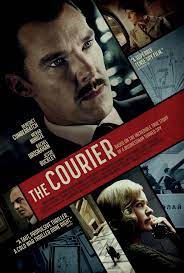
The Courier - 2021 film review


Benedict Cumberbatch is one of my favourite contemporary actors. He seems to enhance any TV drama or film that he appears in. The Courier, a new spy film, is a good example. It's based on a true story that I recall distantly from my early childhood, and his performance makes the most of a competent script by Tom O'Connor (not the Scouse comedian, for sure). The director is Dominic Cooke, who was also responsible for the low-key but interesting On Chesil Beach, which I watched on a plane a few years ago.

Cumberbatch plays Greville Wynne, a British businessman who is persuaded by MI6 (represented by Angus Wright, playing Dickie Franks) and the CIA (Rachel Brosnahan plays Helen Talbot) to assist with a plan to find out about the Soviet nuclear plans with the help of Oleg Penkovsky, a senior official who is contemplating defection.

From what I have read of Wynne, he was a bit of a fantasist, certainly in later life, but he also had plenty of courage, risking his life to assist the security services. If you're not familiar with the story, I won't spoil it for you, but suffice to say that this is a good spy yarn, lifted out of the common run by Cumberbatch's performance. Jessie Buckley is also very good as Wynne's long-suffering wife Sheila. There's a smallish part for the ever-reliable Anton Lesser.

Recent events in the Ukraine have provided depressing evidence that although the Cold War may be long over, international tensions remain and are becoming acute. The events explored in The Courier serve as a reminder of the tragedies that can occur when political vanity and aggression get out of hand. It's definitely worth watching.

Monday, 6 December 2021

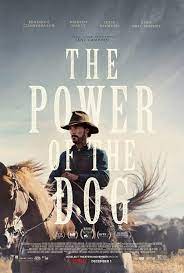
The Power of the Dog - 2021 film review


A few years ago Liz Gilbey recommended me to read Thomas Savage's novel The Power of the Dog, which was first published in 1967. I'd never heard of the book or the author and I was surprised when Liz told me that it was a superb crime novel - even more surprised when I bought a copy and started reading. But I soon realised that it's a terrific novel and that Liz's praise was well merited.

Now, more than fifty years after its first appearance, the book has been filmed, by Jane Campion no less. The lead character is the malevolent Montana rancher Phil Burbank and I must admit that if I'd been casting this part, I certainly wouldn't have thought of offering it to Benedict Cumberbatch. But I'd have been wrong. What a brilliant actor he is. Phil is a trick character to portray, but he does a great job.

On the surface, this is a Western, and I would not describe myself as a fan of Westerns (other than Butch Cassidy and the Sundance Kid). It's also a long film, a real slow-burner. The events of the book also move at a measured pace. I do feel that I enjoyed the film more because I'd read and loved the source novel. I felt Campion did Savage justice. It's an impressive piece of work.

I don't want to say too much about the storyline, but Phil and his amiable brother George (Jesse Plemons) are wealthy men who are very different but have a close relationship. That relationship is, in Phil's eyes, threatened when George marries Rose Gordon (Kirsten Dunst), a widow with a teenage son who is intelligent but not exactly macho. Kodi Smit-McPhee does a great job in the role of young Peter. It's a compelling story which is watchable and indeed gripping throughout - even if, like me, you usually prefer your stories to have a bit more pace. 


Monday, 27 April 2015

Tinker, Tailor, Soldier, Spy - film review

I've long been interested in spy fiction - when I was a small boy,I was given as a present The Spy's Bedside Book, an anthology by Graham and Hugh Greene, and that fuelled my interest in the genre. In recent years, though, my focus has been on detective fiction. However, partly as a result of getting to know the great Len Deighton, and partly through reading several spy thrillers on behalf of the British Library, my interest has been re-kindled.

So I looked forward to watching the film version of Tinker, Tailor, Soldier, Spy, based on the classic novel by another great of the genre, John Le Carre (who began life, let it be remembered, as an author of detective fiction.) This version has been widely acclaimed, and the cast is superb. Gary Oldman plays George Smiley, and John Hurt, Mark Strong, Toby Jones, Benedict Cumberbatch, Ciaran Hinds and Colin Firth are there too. Plus Kathy Burke. And even Le Carre himself in a "Hitchcock" type cameo. Wow...

I suspect, though, that if you didn't know the story,you might struggle to follow what is going on. Compressing such complex material into a film inevitably requires sacrifices, but I felt that there was too much mystification for the sake of it. And I also thought that it was odd not to devote more time to the relationship between George and his wife,which does have an important bearing on the plot and theme. I can see what the writers were trying to do,but for me it didn't quite work.

Nevertheless, this is a long film which is well worth following right to the end. Partly because of the story, but especially because the cast does such a good job with the material, cryptic though it is at times. Some people regard this film as a masterpiece. I'm not convinced it matches the quality of the original TV series, let alone the book, but it certainly deserves watching.

Tuesday, 30 December 2014

The Imitation Game - film review

Although I watch plenty of films, I usually only make a single annual pilgrimage to the cinema, at this time of year. This last couple of years I've seen two great movies, Skyfall and Gravity, and this year the choice was The Imitation Game, starring Benedict Cumberbatch as Alan Turing, who is most famous for his work on cracking the Enigma code.

I find codes and ciphers fascinating, although I don't always have the time and patience (or ability, in many cases) to try to solve them. They often crop up in Golden Age novels, and sometimes the explanations as to how to crack them can be rather tedious. And a story about building an early, complex computer could be very dull indeed if not handled correctly. The challenge for the writer of the screenplay, Graham Moore, was how to make the narrative gripping. He rose to the challenge quite splendidly.

Of course, he was helped by top-notch casting. Cumberbatch is brilliant, as usual, and Keira Knightley compelling, if perhaps slightly miscast as the gifted woman cryptanalyst, Joan Clarke (she played her as a strong woman confronting prejudice, which was fine, but much as I like Keira, I gained no real insight into the brilliance that Clarke must have had). Charles Dance and Mark Strong were very good indeed, as top brass at Bletchley, and Rory Kinnear excelled as a sympathetic policeman.

Moore employed several techniques. He used three timelines: the war years at Bletchley, Turing's schooldays, when he falls in love with another boy, and the post-war period when he was arrested on a charge of gross indecency. The story zipped around between the timelines, but was never confusing, partly because Moore delineated his characters clearly - quite simply, but in most cases with some depth. The film is based on a true story, but Moore was not afraid to deviate from the historical facts on numerous occasions. I didn't mind this, because it made for a pacy story that seemed convincing even if some aspects of it are debatable in terms of accuracy. And it seemed to me that Moore handled his depiction of Turing's sexual orientation sensitively and effectively, despite leaving some questions unanswered in my mind. You have to make choices as a writer, and I felt he made some very good choices. An excellent film, then, and a fine example of the screenplay writer's art.   

Sunday, 5 January 2014

Sherlock: The Sign of Three - BBC 1 TV review

Sherlock returned in double-quick time tonight with another nicely titled episode, The Sign of Three,which saw Watson (Martin Freeman) marry Mary Morstan (his real life partner, Amanda Abbington). Much as I've enjoyed previous episodes in the series, I think this is the one I've relished most. It was crammed with good things, and above all, it was great fun. That matters, because the central point about Conan Doyle's Sherlock Holmes stories is that they were great fun, and all the best detective fiction (whatever its other virtues may be) is highly entertaining..

I love the way the writers take aspects both of the Conan Doyle stories, and detective fiction from the Golden Age, and refresh them, cleverly and wittily. Tonight, for instance, we had a "locked room" mystery, countless neat deductions, an idea borrowed from Agatha Christie (a murder committed by way of rehearsal) and a plot line founded on Dorothy L. Sayers' theory that Watson's middle name was Hamish. Great stuff.

Mark Lawson wrote a fascinating piece in The Guardian the other day, ruminating on the festive season episodes of Doctor Who and Sherlock, from the prolific and talented Steven Moffat and Mark Gatiss, and the way that fan speculation (on blogs, for instance) seems to have influenced the writing. Like me, Lawson admires their achievements, but suggested that one risk of the writers' approach is that they cater increasingly for the more diehard series fans, rather than the typical viewer. His point is well-argued, but I think it is more persuasive in the case of Doctor Who than Sherlock. It seems to me that detective fiction tends to be more structured than sci-fi, and tends by its nature to impose rather more discipline on the writer.Much as I enjoy Doctor Who, I feel sometimes that the stories tip over into self-referential self-indulgence (and this was my feeling about the Christmas special), whereas in Sherlock, the self-indulgence which is undoubtedly present does not get in the way of the story.

Part of the cleverness of The Empty Hearse lay in the multiple solutions to the mystery of Sherlock's survival, and this device was not just a nod to fan obsessions but also, and more significantly, to the Golden Age tradition of multiple ingenious solutions to a given mystery. Anthony Berkeley was the master when it came to multiple solutions, but Agatha Christie, the excellent John Dickson Carr and others (including, in one wonderful post-modern take on the Golden Age story, "Cameron McCabe") also played games with their mysteries to great effect. Other than Jonathan Creek, I can think of no television show which has played games with the genre so often and so well as Sherlock.

Wednesday, 1 January 2014

Sherlock: The Empty Hearse: BBC One TV review

Sherlock returned tonight with The Empty Hearse, and Benedict Cumberbatch and Martin Freeman were in fine form, consolidating their joint reputation as one of the best, (and, many would argue, the very best), Holmes-Watson duos we have seen..The very title of this episode, The Empty Hearse, is a nice example of the wit that abounds in this series - in the canon, Holmes returns from the dead in a story called "The Empty House".

We were offered multiple solutions for Sherlock's escape from death - the kind of trickery that Anthony Berkeley, rather than Arthur Conan Doyle, delighted in. There was also, almost as a throwaway, an "impossible mystery" - how can a man disappear while travelling on a journey between two Tube stations? The ingenuity and playfulness of this episode were absolutely delightful. Mark Gatiss not only wrote the excellent script, but did his usual imperious job as Mycroft Holmes. All told, it made for a striking example of how detective fiction, old and new, can be both entertaining and enthralling when done well.

One of the highlights of the Crimefest week-end last May was a fascinating on-stage conversation led by Nev Fountain, with the creators of Sherlock, Steven Moffat, Mark Gatiss and producer Sue Vertue. I've mentioned my admiration for Gatiss more than once on this blog, and what struck me about the conversation as a whole was the respect that Gatiss and his colleagues showed for Arthur Conan Doyle's creation.

I do not believe that Sherlock would have been half as successful if it had been written by people who did not have a genuine affection for the character and the stories. Despite updating the basic premise to the 21st century, they have stayed true, by and large, to the spirit of the originals, and when I met members of the Sherlock Holmes Society of London in the autumn, it was clear that they approve of the show. Rightly so, because if you are going to reinvent fiction's greatest character, this is the way to do it.

Monday, 14 October 2013

Dinner with the Sherlockians - and the Gladstones

If, twenty years ago, you'd have told me that one day I'd not only be asked to deliver an after-dinner speech, but would accept the invitation and enjoy the experience. I wouldn't have believed you. For many years, I was a very reluctant public speaker, and although I did a lot of advocacy and gave quite a few legal lectures, public speaking was something I went to some lengths to avoid. I have always felt more comfortable away from the public eye, writing rather than talking. But times change, and life as an author has made me - gradually - increasingly confident about my public speaking. I'm still not a natural, but I cherish some of the kind speaker testimonials that I've put on my website, because this is a skill I've learned slowly and with some trepidation over a long period.

Quite out of the blue, the Sherlock Holmes Society of London approached me earlier this year. They were holding their annual conference in the North West, based at Gladstone's Library, and asked me to give the main speech. After a bit of hesitation, I said yes and started thinking about how to tackle the task. I decided to include in the speech a jokey pastiche of a Sherlock Holmes story, set at the Library and featuring William Ewart Gladstone himself. I ran it by a Sherlockian expert once I'd written it, but when I learned, a few days before the event, that the guests of honour were Sir William and Lady Gladstone, members of the great man's family who are still based at Hawarden Castle, I was a bit daunted!

I did feel a bit nervous, but the evening proved very enjoyable and I met some delightful people, including the Gladstones. And it's abundantly clear that Sherlock is as popular as ever. This Society alone (and there are others) has 1400 members, and the success of the recent films and Benedict Cumberbatch show has boosted numbers. Sherlockians are apparently very active on Twitter and I learned a great deal in pleasant company.

I've always been a Sherlock fan, but this experience has strengthened my enthusiasm especially since by coincidence, I've recently been commissioned to write an essay about Conan Doyle for  a literary book to be published in the near future. I may well write another Sherlockian pastiche before long, time permitting, using an idea that came to me when I visitied a museum in Prague lsat year. And on the subject of speaking, the after dinner speech has led to another speaking invitation, this time to one of the Oxford University Societies. Again, something I never would have imagined, twenty or so years ago.

Sunday, 15 January 2012

Sherlock: The Reichenbach Fall - review

Sherlock concluded its all too short three-episode run tonight with another cunningly titled episode - The Reichenbach Fall. Of course, I say "all too short", but part of the success of the series has been to leave viewers wanting more. The temptation for any writer is to outstay his or her welcome, whether with a series that has run out of steam, or a type of book that has passed its sell-by date. But this episode was probably as good as any we've seen to date. Will there be any more? We can only hope so.

I'm going to avoid spoilers, but I think even a Holmes super-purist would be impressed with the way the writers have taken themes from Conan Doyle's original stories, and updated them so cleverly that the effect is always of homage, not parody. And as the title of this episode suggests, there was a duel of wits between Sherlock and Moriarty which resulted in a dramatic climax.

Benedict Cumberbatch was as good as ever in the title role, but I was impressed also by Andrew Scott as Moriarty. At first, I wasn't convinced by the casting of Scott, which is certainly audacious, but the quality of his acting has won me over, as I'm sure it has won over many other doubters. The roof-top encounter brought out the best in both actors, while Martin Freeman was again excellent as the devoted Watson.

One of the many small touches that I've admired in this series was the casting of Douglas Wilmer, who celebrated his 92nd birthday earlier this month, as a guest in the Diogenes Club. Wilmer played Holmes in the TV series that I enjoyed very much as a young boy. He's not as celebrated as Basil Rathbone or Peter Cushing but I felt he was a very good Sherlock, and it was great that he was included in this terrific show.

Sunday, 1 January 2012

Sherlock: A Scandal in Belgravia: review

Sherlock returned to the screens this evening for a very welcome second series with A Scandal in Belgravia. The title is, of course, a play on the title of the first Holmes short story, 'A Scandal in Bohemia', but I wonder if the scriptwriter, Steven Moffat, is aware that it is also the title of a very good book by Robert Barnard? In fact, it might just be my favourite of Bob Barnard's many entertaining novels.

Back to Sherlock. Benedict Cumberbatch is splendidly cast as the great detective brought up to date for the 21st century, while Martin Freeman is a likeable Watson. If you buy into the basic concept - and I do - then there's much to enjoy in these shows, given that the scriptwriters have a real feel for detective fiction and an evident respect for Conan Doyle's achievements. Moffat has also done great work on Doctor Who, but there's a danger, as one or two episodes of Doctor Who have shown in the last couple of years, that the demands of filling an extended time slot can lead to some narrative padding. Happily, that wasn't a problem in this episode, even though it lasted for 90 minutes. It was very well crafted.

There were plenty of witty lines (I enjoyed "The Geek Interpreter", for instance), but the story was also strong, with seemingly random jokes at the start of the story turning out to form a part of quite an intricate plot which avoided tedious over-elaboration. It involved Irene Adler as a dominatrix, in possession of compromising material kept on her mobile phone. Sherlock got hold of the phone - but what was the password to unlock it? The solution to this particular puzzle was very neat.

The supporting cast was strong. Mrs Hudson is given a distinctive personality by Una Stubbs, while Mycroft Holmes is played in suitably aloof fashion by Mark Gatiss, co-creator of this series, and a succesful detective novelist himself (I haven't read his books yet, but this is a gap in my reading I must fill). And Lara Pulver was suitably glamorous as Irene Adler. You could see why Sherlock thought she was the woman.

Monday, 2 August 2010

Sherlock: The Blind Banker - review


The Blind Banker, second episode in Sherlock, starring Benedict Cumberbatch and Martin Freeman as Holmes and Watson, was my first encounter with the 21st century version of Conan Doyle’s classic detective duo. I missed A Study in Pink last week, but reviews were very positive, and I can see why.

The idea of updating the characters but retaining key elements from the originals was the brainchild of Steven Moffatt and Mark Gatiss, two very good TV writers. Purists might wince at the idea, but it seems to me that, crucially, the series respects the aspects of Conan Doyle’s stories that made them so memorable. The Blind Banker, certainly, was much more than capable pastiche. The story was written and acted with a great deal of flair.

The story kicks off with the appearance of a mysterious cipher at a City bank. Shortly afterwards, one of the senior bankers is found dead. A journalist dies in similar circumstances. Both men, it turns out, had recently travelled to China. What is the connection, and how can the cipher be decoded?

The story contained various elements of Golden Age detective fictions – locked rooms, ciphers, mysterious foreigners – and the script was full of witty asides. The two leading men are splendidly cast and I love the idea of Una Stubbs as Mrs Hudson. Sherlock is different from Jonathan Creek, but not totally different. Again, we have the updating of traditional crime fiction, done with wit and ingenuity. I really enjoyed this episode. Recommended.