Showing posts with label John Le Carre. Show all posts

Wednesday, 24 August 2022

A Perfect Spy - DVD review


I missed the BBC TV version of John le Carre's A Perfect Spy when it was screened way back in 1987. The series had a strong pedigree, with a screenplay by Arthur Hopcraft, a very good writer who graduated from soccer journalism to high-calibre TV writing. The cast is strong, with one truly stand-out performance, but I must admit there were times when the seven episodes felt more like twenty-seven. Fast-paced it isn't. And for me, it isn't a patch on the TV version of The Night Manager.

The story begins in the present. People are waiting in a car to catch up with Magnus Pym. It's not clear what is going on. And then we go into an extended flashback that takes up almost the entirety of the seven episodes. We learn what has brought Magnus Pym (Peter Egan) to a quiet seaside town (I recognised Dawlish, which I enjoyed visiting for the first time back in September). 

The key to Pym's life is his relationship with his father, Rick. Rick Pym is a con man, and it's no secret that the story fictionalises, in some respects, the relationship that le Carre had with his own very dodgy Dad. It's an interesting relationship, for sure, and links in closely with the theme of betrayal that is hammered home rather insistently in the script.

The difficulty for me stemmed, oddly enough, from the sheer brilliance of Ray McAnally's performance as Rick. He is a monster, but with a human side, and although McAnally was a fine actor, I doubt if he ever surpassed his interpretation of Rick Pym. Even Peter Egan,a very likeable actor in his own right, seems colourless in comparison. When McAnally was on screen, I was gripped. But at other times, the story was so unexciting and protracted that I found it difficult to care. Which I didn't expect. 

Monday, 21 February 2022

M: Maxwell Knight, MI5's Greatest Spymaster


A couple of weeks ago I had the interesting experience of sharing an online stage with the renowned expert on espionage Nigel West (who also published a couple of crime novels drawing on his experience as an MP under his real name, Rupert Allason). Listening to Nigel prompted me to delve into a book published five years ago by Henry Hemming, a biography of the legendary spymaster Maxwell Knight.

I knew a bit about Knight from my researches into the life and work of John Bingham, who was one of his agents - as was John le Carre. Another of his agents was Bill Younger, whose The Hammersmith Maggot I discussed on Friday. Yet another was Jimmy Dickson, who wrote as Grierson Dickson (confusion in the past caused some people to think that John Dickson Carr was one of the spies, but the person in question was Jimmy Dickson, an author of much less renown). One of the many interesting points that Hemming makes is that Knight seems to have liked to recruit authors as spies. He also had a prejudice in favour of female spies, since he prized their observational skills.

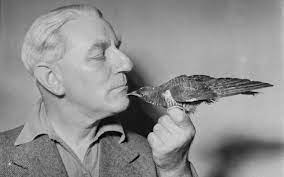
M: Maxwell Knight, MI5's Greatest Spymaster is a book I enjoyed reading. He was an extraordinary character, with an obsession about pets that made him famous in later life. I have a copy of his book Talking Birds, which was amusingly illustrated by David Cornwell - alias John le Carre. He also wrote two thrillers in the 1930s, Crime Cargo and Gunman's Holiday, the first of which was dedicated to Dennis Wheatley. I've never come across them, but Hemming doesn't think much of the first and doesn't even mention the title of the second.

Knight's private life was unorthodox. He married three times but seems to have had little or no interest in sex - unlike quite a few of his agents. His first wife took her own life. He flirted with fascism as a young man - one of his pals was William Joyce - but was responsible for its defeat in Britain in the early stages of the Second World War. Hemming gives a good, rounded portrait of this mysterious fellow and does so in a very readable manner.


Wednesday, 13 November 2019

The Looking Glass War - 1970 movie review

I became a John Le Carre fan in my early teens, devouring his first three books with a great deal of enthusiasm. Then I read The Looking Glass War, and simply didn't "get" it. With hindsight, that was probably due, at least in large measure, to my tender years. Le Carre has said that he aimed to write a satire about spying, but I think it's fair to say that it's a long way short of his best work. I thought about giving it another go, and then the film version, made in 1970, turned up on Talking Pictures TV so I decided to take a look at it.

The film has a strong and varied cast, although today, perhaps the most interesting thing about it is that the young son of Avery (Anthony Hopkins) is played by Russell Lewis, who is now renowned as the creator and sole writer of the excellent Endeavour and has written many other crime scripts for television.

The story begins with the murder in Finland of a British spy (Timothy West). Back home, a motley crew of secret service men, including Hopkins and Sir Ralph Richardson, persuade Leiser, a good-looking young Polish man (an oddly cast American actor, Christopher Jones) to undertake a mission at considerable risk to himself. So far, so good. Unfortunately, at this point Frank Pierson's screenplay begins to drag. And it continues to drag, apart from one or two interesting moments, right to the end. By that time, I really didn't care about the outcome. It's not nearly as good as another Le Carre film, The Deadly Affair, which I reviewed recently, far less the superb and much more recent TV series The Night Manager.

So the cast - including such stars as Susan George, Ray McAnally, Maxine Audley, and Anna Massey, as well as Pia Degermark (whose later life has apparently seen as much unhappiness as did the unfortunate Jones') - is largely wasted. The soundtrack by Wally Stott is a kind of poundshop Bacharach effort that simply isn't strong enough; Wally Stott (who later became Angela Morley) was talented, but he was neither Bacharach nor John Barry. Given Le Carre's fame and brilliance, I wonder if there is scope for a remake of this film. Perhaps. But if there is, it will need a much sharper script. 

Wednesday, 30 October 2019

The Deadly Affair - 1966 film review

I read John Le Carre's novel Call for the Dead a very long time ago, but I've only just caught up with the film made of it by Sidney Lumet, a director of distinction. It was retitled The Deadly Affair and stars James Mason as Charles Dobbs - the same character as George Smiley in the novel, but renamed for legal reasons as the naming rights were tied up by someone else. (I always tend to think, by the way, that a mutually sensible approach to negotiation could resolve these oddities, but alas, people don't always negotiate sensibly...)

The cast is excellent, starting with the ever-reliable Mason, who really was a good actor. Harry Andrews is a highly believable retired cop, while Simone Signoret, in a less than glamorous role, is terrific. So is Harriet Andersson as Anne, Mason's wife, who loves him but torments him with her affairs. Roy Kinnear, Kenneth Haigh, and Lynn and Corin Redgrave also make telling appearances. The script is by Paul Dehn, who had worked on Goldfinger and later teamed up with Lumet again on Murder on the Orient Express. The soundtrack is by Quincy Jones, and there's a decent title song, "Who Needs Forever" by Astrud Gilberto; the music isn't quite in the John Barry class, but it's still high-calibre 60s easy listening.

With so much talent involved, the film is very watchable, even if the story seems slightly stretched out and a bit predictable. The legendary Freddie Young was responsible for the cinematography and he gives the movie a distinctly dark look, with several very well-chosen London locations. It's quite a modern-seeming look, even if the Hyde Park restaurant in which one scene was shot was demolished about thirty years ago. The visual style of the film coupled with the performances contribute to a downbeat mood which works well, even if it lacks the pace and melodrama of, say, the James Bond movies. It wasn't a box office hit, and I can see why, but it's stood the test of time pretty well.

The premise is simple. After a tip-off, Dobbs interviews an agent who may be a spy. The agent promptly commits suicide - but did he really kill himself, or were dark forces at work? The answer to that question is easily guessed, but Lumet and his collaborators still kept me engaged from start to finish. 


Friday, 30 August 2019

Forgotten Book - The Double Agent

It's salutary that John Bingham, a major crime writer of the 50s and for much of the 60s (and whose career continued for a considerable time thereafter, though with decreasing success) is now unquestionably a forgotten author. I've highlighted his work several times on this blog, focusing on his crime fiction. But he also ventured into spy thrillers - and did so with a considerable advantage, given that he was himself a high-ranking spy.

The Double Agent (1966) is a classic Cold War thriller. It involves a businessman from Yorkshire, Reg Sugden, who is recruited to undertake some low-level spying behind the Iron Curtain, and also to help flush out a traitor in the domestic Secret Services. This novel isn't a fictonalisation of a real life case, but it's impossible not to see a few parallels with the case of Greville Wynne, a businessman and spy who was caught by the Russians and ultimately returned to Britain in exchange for a Russian spy, known here as Gordon Lonsdale.

Bingham was a skilled interrogator, and police interrogations of hapless suspects play a major part in his early books. Here again, the interrogation of Sugden takes up a sizeable chunk of the book. My personal feeling is that this results in a lack of action and pace for part of the story; Bingham, I suspect, realised this, and tried to address the problem, but not entirely successfully. For this reason, the book isn't quite in the class of Len Deighton and John Le Carre, but even so, it's a good read. Julian Symons recommended it strongly, saying that the story is "intellectually and emotionally absorbing because it is so thoroughly authentic."

There are a couple of good twists late in the story, and Bingham's wry observations about spying are always interesting, again in part because he was speaking from experience. He knew that the Cold War was then just the latest in a long series of human conflicts in which cunning and treachery have played a key part. In real life he was much more of an establishment man than either Deighton or Le Carre, but you wouldn't necessarily guess that from this accomplished thriller. 


Sunday, 27 March 2016

The Night Manager - spoiler-free reflections on a TV classic


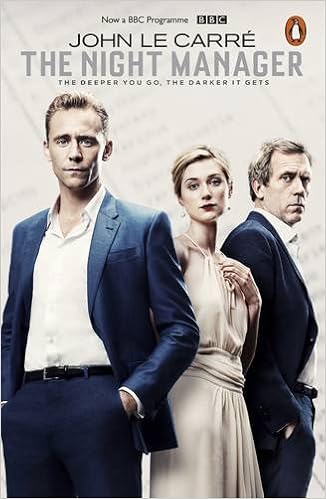
The Night Manager, the sixth and final episode of which aired on BBC 1 this evening, is one of the finest British television series I've seen in a long while. In recent years I can only think of Broadchurch (the first series, definitely not the second) and Happy Valley which were similarly compelling. In contrast to those two series, The Night Manager was based on a novel,. It was written by the legendary John Le Carre, and I haven't read it, although evidently the process of updating the story to the present and for the screen has resulted in many changes.

Why has the story hooked me, and millions of others? Well, first of all, it offers a gripping blend of plot and character. Jonathan Pine, the enigmatic hotel manager with a military past, becomes involved with a beautiful woman who falls foul of a fabulously wealthy villain called Roper. When she is murdered, Pine is jolted out of his apparently comfortable lifestyle,and is persuaded by a British secret agent, played by Olivia Colman, to infiltrate Roper's organisation and bring him down.

That' s the basic set-up, but the detail is full of complications that are so skilfully handled. Part of the fascination of the story for TV viewers like me is surely the glimpse into the lifestyles of absurdly rich people such as Roper and his circle. They move from one exotic spot to another, flunkies cater to their every whim. Sounds great, but there's a price to be paid. I was reminded vividly of an exceptionally rich person I once came across. He lived in a fantastic mansion, which I found fascinating to visit, and had a glamorous girlfriend and a private yacht and plane. But the mansion had a panic room where they could hide from kidnappers, and military guards at the gate...

Back to The Night Manager. The relationships, for example between Colman and her colleagues,and between Hiddleston and Roper's lover, are done in enough depth to make us care about the characters,and about what happens to them. I was glad that the final episode matched the quality of the preceding five. One brief but memorable scene did owe something to The Long Good Friday, but without in any way compromising the originality of the storyline.

A script so good deserved great acting, and that's exactly what was supplied by Tom Hiddleston, Tom Hollander, and Elizabeth Debicki. I wasn't quite sure at first about Hugh Laurie as Roper; was he credibly nasty enough to play the part? My misgivings proved needless Laurie presented a character with great superficial charm, a caring father who has people killed for profit; he was at his best in the final episode, when his true nature came to the surface. Hollander was brilliantly creepy as Corky, and Hiddleston has really made a name for himself with this show. I wasn't sure before I started watching The Night Manager whether I'd love it. But I did,- I really did.


Monday, 27 April 2015

Tinker, Tailor, Soldier, Spy - film review

I've long been interested in spy fiction - when I was a small boy,I was given as a present The Spy's Bedside Book, an anthology by Graham and Hugh Greene, and that fuelled my interest in the genre. In recent years, though, my focus has been on detective fiction. However, partly as a result of getting to know the great Len Deighton, and partly through reading several spy thrillers on behalf of the British Library, my interest has been re-kindled.

So I looked forward to watching the film version of Tinker, Tailor, Soldier, Spy, based on the classic novel by another great of the genre, John Le Carre (who began life, let it be remembered, as an author of detective fiction.) This version has been widely acclaimed, and the cast is superb. Gary Oldman plays George Smiley, and John Hurt, Mark Strong, Toby Jones, Benedict Cumberbatch, Ciaran Hinds and Colin Firth are there too. Plus Kathy Burke. And even Le Carre himself in a "Hitchcock" type cameo. Wow...

I suspect, though, that if you didn't know the story,you might struggle to follow what is going on. Compressing such complex material into a film inevitably requires sacrifices, but I felt that there was too much mystification for the sake of it. And I also thought that it was odd not to devote more time to the relationship between George and his wife,which does have an important bearing on the plot and theme. I can see what the writers were trying to do,but for me it didn't quite work.

Nevertheless, this is a long film which is well worth following right to the end. Partly because of the story, but especially because the cast does such a good job with the material, cryptic though it is at times. Some people regard this film as a masterpiece. I'm not convinced it matches the quality of the original TV series, let alone the book, but it certainly deserves watching.

Friday, 13 February 2015

Forgotten Book - The Great Impersonation

The British Library has been very active on the publishing front over the past year or so. Quite apart from its Crime Classics series, it has also republished a couple of espionage thrillers by E. Phillips Oppenheim, The Spy Paramount, and The Great Impersonation in another series, British Library Spy Classics. The latter novel is my choice for today's Forgotten Book.

Although I haven't written much about them on this blog, I've always had a soft spot for spy stories. As a schoolboy, I received as a present The Spy's Bedside Book by Hugh and Graham Greene, a wonderful anthology which really fired my interest n the genre. A while later, I became a huge fan of Len Deighton's books, and also had the pleasure of discovering the likes of Eric Ambler and John Le Carre.

I must confess, though, that until this pair of books came out last year, I'd never read E. Phillips Oppenheim. He was, in his day, highly successful, and known as "the Prince of Storytellers", but  I doubted whether his work would appeal to me, despite the fact that he evidently led a colourful life. But I can honestly say that I was pleasantly surprised by The Great Impersonation.

This edition benefits from an introduction by Professor Tim Crook, who gives an insightful overview of the author's life and career. He also confirms that the book was originally published in 1920 (the copyright page suggests 1935). The essence of the story is conveyed by the book's title. This is a tale about two men who are lookalikes. One is an English aristocrat, the other is a German baron. When Edward Dominey arrives back in the UK after time spent in Africa, the question arises - is he the man he claims to be, or the agent of a foreign power? Tales of duality always exert a considerable appeal, and this is no exception. This is a story which sold over a million copies, and thanks to the British Library's initiative, I now have a much better understanding of why Oppenheim was so popular in his hey-day.


.

Friday, 11 April 2014

The Riddle of the Sands and the birth of the spy novel

The Riddle of the Sands is a classic novel of 1903 by Erskine Childers which is widely regarded as one of the first notable spy novels. I saw the 1979 film version a long time ago, but despite a starry cast, including Michael York and the always watchable Jenny Agutter, it found it a bit flat. Perhaps partly because of that, it has taken me a long time to get round to reading the novel itself, but I recently read the Atlatntic Books edition, which includes an excellent afterword by Professor Robert Giddings.

Briefly, the story is narrated by a rather irritating civil servant called Carruthers, who is invited by an old university friend, Davies, to join him on a yachting trip. Carruthers' behaviour and attitudes in the early pages are boorish, although he recognises this later, and develops into a more likeable character. The relationship between him and the eager, obsessive Davies, is one of the strengths of the book. As they sail around the Frisian Islands, they have to figure out whether a mysterious man called Dollmann is all that he seems.

This is an important book for two reasons. First, in the short term, it drew people's attention to the threat to international peace posed by the Kaiser's Germany. Second, it set a standard for the spy story, and paved the way for the work of the likes of Eric Ambler and, much later, John Le Carre. Ambler and Le Carre, like Childers, were men who were prepared to question the status quo, but the story of how in real life, Childers eventually finished up paying the ultimate price for his attitudes is fascinating as well as upsetting.

There is a huge amount about sailing in this story, and - despite my admiration for the book - I felt this was a mistake. At one point Carruthers says of a train journey "the pace was execrable" and to be brutally honest, by that point. I felt much the same about The Riddle of the Sands. I suppose this is because endless details about how to sail a boat don't really interest me, yet Childers went overboard on them (sorry, couldn't resist that!)

Not a perfect novel, then, and I don't think Childers really was a committed novelist. He was more interested in ideas and actions and politics, and he was evidently as brave, stubborn and obsessive as Davies. But there's no doubt that he made a lasting contribution to espionage fiction. Giddings says the book has never been out of print, so I have not called it a Forgotten Book. And despite my reservations, it certainly does deserve to continue to be remembered.

Wednesday, 27 March 2013

The Man Who Was George Smiley

The Man Who Was George Smiley is a very good title for a new book by Michael Jago, published by Biteback, which is sub-titled The Life of John Bingham. Bingham's claim to fame - you've guessed it! - is that he was the spy whom John Le Carre used as a model for Smiley. Interesting in itself. But more interesting to me is that Bingham was a successful writer of crime novels and espionage stories, and I was glad to learn more about him, as well as about his work.

Due to Julian Symons' advocacy, I read many years ago Bingham's debut novel My Name is Michael Sibley, a story told from the point of view of an innocent man accused of crime. It's a strong and original story, and I'm really not sure why I've seldom read Bingham since. But Jago's book has definitely encouraged me to do so.

Jago gives a good and readable account of Bingham's life, and does not flinch from the rift that developed between Bingham and Le Carre. Bingham's wife was especially unhappy with Le Carre, and it's intriguing and rather sad to read about how their relationship deteriorated. Part of the problem was no doubt jealousy of Le Carre's critical and financial success, which far outstripped Bingham's. It's always a huge mistake to be jealous of others. Yet Jago suggests there were faults on Le Carre's side too, and that is probably right.

I enjoyed reading the sections about Bingham's own books, and his relationship with Victor Gollancz, one of the most brilliant of all British publishers. I suspect that Jago is not really a detective fiction fan, as there is little here that connects Bingham with the wider genre, or his place in it. Sir John Masterman, for instance, a spy of distinction, is mentioned, but his detective novels are not. The Detection Club, of which Bingham was a long-standing member, as was Masterman, isn't mentioned, one more frustration for its archivist. But I liked this book, which has made me want to read more of Bingham's work, and that's a sign of a good literary biography.

Saturday, 7 April 2012

Forgotten Book: The Mask of Dimitrios

It seems odd to class Eric Ambler’s The Mask of Dimitrios as a Forgotten Book. It is widely acknowledged as one of the great espionage thrillers of the 20th century, and it was the basis for a film (which I haven’t seen) as well as influencing writers of a subsequent generation such as John Le Carre. Yet I’ve not seen much discussion of it in recent years.

I read it in youth, because Michael Gilbert, a super judge, said it was a masterpiece, but when I was 13 or 14, the subtleties of the story eluded me. I appreciated it much more on a recent re-reading while on holiday. And I loved Amber’s device of taking a writer of Golden Age fiction, Charles Latimer, and making him come face to face with real villainy.

Latimer’s quest for the mysterious Dimitrios is a strange one. He’s become fascinated with the man after being shown his dead body in a morgue in Istanbul. He wants to find out what made him tick, and Ambler tells much of the story in flashback. Yet somehow he maintains pace and suspense throughout – a remarkable feat of writing. All the more remarkable because he produced this book when he was just 30.

I think it’s fair to say that there is a widespread consensus that, despite his later successes, Ambler never wrote a more powerful or more atmospheric book. (Though I haven’t read many of the later books, and two did win CWA Gold Daggers.) He lived another 60 years, and the left wing views that gave this book such energy faded as he became disillusioned first with Russia and then with the domestic politics. In due course, he became a tax exile in Switzerland, along with his second wife, who co-wrote the screenplay for Rebecca. But he deserves not just to be remembered, but to be celebrated, as a master of his craft. If you haven’t read The Mask of Dimitrios, you have a treat in store.