Showing posts with label John Bingham. Show all posts

Friday, 18 February 2022

Forgotten Book - The Hammersmith Maggot aka Shadow of a Killer


I can vividly recall where and when I first read William Mole's 1955 novel The Hammersmith Maggot. It was more than thirty years ago. I took the green Penguin edition with me when I stayed in a hotel in Hull one wintry night. I was due to conduct a tribunal case the following day, acting for a client who had been sacked simply for being pregnant because the employers thought they could exploit a loophole in the Sex Discrimination Act. It was a test case and after I'd spent a long time preparing for the morning, I relaxed by whizzing through the novel. 

I'd heard one or two good things about it, but I was disappointed by the low-key nature of the storytelling and by the absence of a dramatic plot twist. With hindsight, I'd have been better taking a very different book with me. However, I came across a nicely inscribed first edition and decided to give it another try. Lo and behold! I liked it much better this time, partly because I had a clearer understanding of what the author was trying to do.

The author's real name was William Younger, and by profession he was a spy. He worked for the legendary Maxwell Knight and John Bingham was a colleague and friend. He wrote two or three thrillers, but this was the first of three novels to feature a wealthy wine merchant called Alistair Casson Duker. In this book he hunts down a conscience-less blackmailer (the 'maggot' of the British title of the book; the American title is much less memorable). The bad guy's identity is revealed at a relatively early stage, as is his motivation, but this time my attention was held.

The story is certainly out of the ordinary, and Francis Iles admired it, as did the often acerbic Barzun and Taylor. In more recent times, John Norris heaped praise on the book. Interestingly, a female blogger, Karyn Reeves, took a very different view. After two readings, I find myself rather in the middle. Mole (also a poet) could write well but there are traces of amateurishness in his sudden shifts of viewpoint. I don't think he thought deeply enough about how to present the character of the blackmailer or how to structure the story. But it's an interesting and unusual piece of work. As for that tribunal case, justice was done - and when the bad guys appealed, they got their come-uppance!


Friday, 11 December 2020

Forgotten Book - Gold Was Our Grave

Gold Was Our Grave ranks as one of Henry Wade's more obscure titles. It was published in 1954, at a time when his reputation as one of the most accomplished practitioners of Golden Age detection was fading, and it has never attracted any significant critical discussion. But it features his main detective character, the likeable, hard-working, and occasionally fallible John Poole of  Scotland Yard, and boasts several of the attributes that made Wade well worth reading.

The book appeared at a time when the likes of Patricia Highsmith and Margaret Millar on the other side of the Atlantic, and Margot Bennett, Shelley Smith, Julian Symons, and John Bingham in the UK, were remaking the crime novel. Their books didn't, for instance, tend to include maps of the crime scene in the classic tradition - but Wade's novel does, with a drawing of the relevant part of Lincoln's Inn Fields. It's a small point, but it illustrates that he was working in a vein that was no longer fashionable.

The early pages of the story give us a rather plodding (although relevant) account of a fraud trial involving a South American gold mine. None of the alleged fraudsters was convicted and now, it seems, someone is out to take a rather belated revenge. The prime mover in the gold mine fiasco is now a successful businessman and appears to be the victim of an attempted murder. But he doesn't want police protection - will this prove to be a fatal mistake?

There are plenty of classic touches here, as well as a couple of digs, characteristic of Wade, at the pernicious nature of British taxation policy in the post-war era. The plot twist is a variant of one used to brilliant effect by Agatha Christie in the 30s, the detective work is in the Freeman Wills Crofts manner, and the cynical attitude at the end of the book towards the legal system and the nature of justice is worthy of Anthony Berkeley. This is a rather wordy novel, and it could and perhaps should have been pared down considerably. But it's decent entertainment, a book that doesn't deserve to have been so widely overlooked.


Friday, 29 May 2020

Forgotten Book - I Love, I Kill

I Love, I Kill, is an absurdly lurid title for a book that isn't at all lurid, by a writer of considerable discernment, John Bingham. It's a novel of psychological suspense and my copy has a cover blurb from Julian Symons praising the subtlety and psychological penetration of his best fiction. This book, however, was published in 1968, at a time when Bingham's powers were beginning to falter. It's extremely interesting (I even found its flaws rather interesting), but I don't think it ranks with his best.

The story is told in the first person and framed, so that the narrator is speaking in the present and looking back on events of the past. We know that someone called Paul King has been killed but we don't know why or by whom. Most of the story takes the form of extended flashbacks as the narrator, Charles Maither, looks back to his first meeting with King, a fellow actor, and how King married the woman that Charles loved, another actor called Shirley. Charles then explains how he conceived a highly elaborate plan to win Shirley back.

It's not a spoiler to say that the plan was for Charles, in his new role as a publicity agent, to help King (a vain and handsome man with limited talent as an actor) to become a success, so that King became bored with dull old Shirley, leaving the way clear for Charles to reclaim her. Of course, things don't go quite the way that Charles planned.

In Michael Jago's interesting biography of Bingham, he says that the publishers were worried that they might be sued for libel by Richard Burton. Maybe Bingham revised the book to address this, because King didn't remind me of Burton at all. Jago also says that the publishers' reader found parts of the story boring. Because I like Bingham's crisp, readable style, I did not have that problem with the book. He was a genuinely engaging stylist in my opinion. A fairer criticism is that he lacked in-depth knowledge of the theatrical background, but on the whole I felt he did enough to make the setting credible.

I did, however, struggle with the premise. Bingham simply didn't make me understand Charles' obsession about Shirley. She is not terribly interesting at any point in the story, while Charlie is unpleasant and at times surprisingly stupid - a big disadvantage with a first person narrator. As for his plan to make Charlie famous and thus get hold of Shirley, I thought it crazy. Nor did the resolution of the murder plot, handled in a very casual way, satisfy me. The structure was clearly designed to build tension - or rather to overcome the inherent lack of tension in the story, but it didn't really work for me. There are some good scenes in which the police interrogate Charlie, but here Bingham was simply repeating what he'd done in more successful books such as My Name is Michael Sibley.

All in all, I can understand why this book didn't do particularly well on its first appearance, and why it has since slipped out of sight. So why did I rather like it, despite its manifest failings. The answer, as I say, is because Bingham knew how to write readable prose and was a talented storyteller. Even though this story isn't a strong one, I raced through it, rather than giving up because I was frustrated by Charlie's behaviour. Which has to be a positive sign.   


Friday, 20 March 2020

Forgotten Book - The Crime against Marcella

I was prompted to seek out George Milner's The Crime Against Marcella, which dates from 1963, after reading a laudatory review by Francis Iles, who was no mean judge of a book. Milner was really George Hardinge, a noted publisher, who was the editor of (among many other crime writers) Julian Symons. He also edited the Winter's Crimes anthologies before handing over to Hilary Watson, aka Hilary Hale, another editor of distinction.

Milner was a good enough novelist to earn election to the Detection Club, and this book is fluently written. In a distant way, it seems to me to be an update for the Sixties of the type of ironic crime story in which Francis Iles himself specialised. The tone is reminiscent of that to be found in other crime books of similar vintage by the likes of John Bingham and Symons.

Milner plays a game with the structure of his story, while his title is ambiguous. The scene is set by internal memoranda from Scotland Yard, which discuss the disappearance and presumed murder of a young married woman called Marcella Pemberton, but the bulk of the novel is a first-person narrative by her husband. Jim Pemberton explains how he became besotted with Marcella, and the various complications that ensued from the fact that his best friend and business partner was equally interested in her.

I figured out the principal plot twist some time before the end of this short, snappy mystery, and my main reservation about the book is that it reads rather more like a novella than a full-length story. But it's agreeably written, and a good example of the way in which writers of the time were trying to update the conventional puzzle story with a focus on character and exploration of the nature of sexual repression and jealousy. An obscure book nowadays, but well worth reading. 

Friday, 17 January 2020

Forgotten Book - Vulture in the Sun

John Bingham began his career as a novelist with books featuring relentless police investigations, starting with My Name is Michael Sibley. In real life, he worked in intelligence rather than in the police, and perhaps the requirement for official secrecy deterred him, at first, from tackling the world of espionage with which he was familiar. But things changed with The Double Agent, and my Forgotten Book for today is another of his spy thrillers, written in 1971.

The setting of Vulture in the Sun is Cyprus, a beautiful island. I visited the Greek side of the island many years ago for a very enjoyable holiday, and thought then how sad it was that such a delightful place should be divided, with so much tension between the two communities. This novel is set a generation earlier, when tensions were at their height.

Our hero is Tom Carter, an agent who is sent out to the island by a ruthless boss called Ducane. We know from the start that Carter is going to become involved with a beautiful and mysterious woman, which was pretty much compulsory for the protagonists of spy novels in that era. Carter is sent out to provide short term back-up for a local agent called Frank Baker. But right from the start of his trip, things don't go to plan.

I liked the way this story cast light on the tense nature of life on Cyprus at the time, with various terrorist factions at work, sometimes cancelling each other out. Carter is rather thinly characterised, but the way that Bingham deals with antisemitism in the storyline is very interesting. It's a short, snappy thriller, and there are enough plot twists to keep one engaged after a rather quiet beginning. Well worth a look.


Friday, 10 January 2020

Forgotten Book - The Marriage Bureau Murders

My interest in John Bingham and his work has led me to cover quite a few of his books in this blog over the past year or so. I admire the originality of his approach to crime fiction, while his ironic storylines made him, along with Julian Symons, the most important successor to Francis Iles of his generation. It's no surprise to me that Iles the critic also admired Bingham. As novelists, they were both risk-takers. And as my regular readers will know, I do like a crime writer who is prepared to avoid formula and take a few risks. Nobody could sensibly accuse John Bingham of being formulaic. Although certain elements recur, each book he wrote strikes me as pleasingly different from its predecessor.

Taking risks doesn't, alas, necessarily pay off. Bingham could write in a very readable style, but his unorthodox plots often depend on coincidences outlandish even by the standards of our coincidence-rich genre. His literary style involves a good deal of authorial intervention: too much for my taste. And occasionally his attitudes strike me not merely as dated but also as a bit odd.

The Marriage Bureau Murders was published in 1977, when his crime writing career was more than a quarter of a century old. He should have been at his peak, but I'm afraid this is a novel of a writer whose powers are in serious decline. It's a pity, because there's a very dark and unusual idea (about a voyeur of murder) at the heart of the story which, although exceptionally tricky to handle, might drive a powerful work of crime fiction.   

This book, however, is a misfire. Sidney Shaw sets up a "friendship bureau" as a means of getting his kicks, but what happens after he chances upon a sociopath who signs up with his bureau is so odd and unlikely that I found the whole bizarre business hopelessly unconvincing. Of course it's reasonable to ask readers of a crime novel to suspend their disbelief - I do so myself in books like Gallows Court, and so do many of my colleagues - but there must be a limit. There are plenty of stabs at black humour, and I suspect that Bingham was trying for the mood of Symons' first two "Man Who..." books, but although I'm a fan of black comedy, it doesn't really work here.

So I was disappointed with this novel, and can't recommend it. Even at the time of its appearance, the critics weren't impressed. Edmund Crispin, who liked Bingham and his work, described it as a "nadir", and I'm not surprised. Despite Bingham's past achievements, it sold few copies and I don't think it's ever been reprinted. Many of his books definitely deserve a second look. This one certainly has curiosity value, but not much else.

Friday, 6 December 2019

Forgotten Book - A Tangled Web

A Tangled Web could be the title for any number of crime novels, but my Forgotten Book today was written by Nicholas Blake (aka C. Day Lewis) and published in 1956. It's one of only four Blake books not to feature Nigel Strangeways, and it's none the worse for that. I found it extremely readable, written in a smooth and entertaining style with several polished touches worthy of a future Poet Laureate.

The essentials of the plot were drawn from Sir Patrick Hastings K.C.'s account of a real-life criminal trial. In a prefatory note, however, the author emphasises that "the colour, detail and interpretation...are largely my own, and the characters are wholly imagined." The story is, in essence, about a post-war version of Raffles, a charming amoral character called Hugo Chesterman.

Hugo makes a living as a burglar, but his life changes when he meets the dazzlingly attractive Daisy Bland. They start a relationship, and she gives up the life she's known to be with him. But Hugo can't resist temptation, and when the opportunity to steal an old woman's jewels comes along, he can't resist. But, as we know from the outset, he then finds himself suspected of murder. The police investigators take a tough line, and I'm pretty sure that Blake's account of their approach was influenced by John Bingham; he acknowledges Bingham's influence (and that of Simenon and others) in a foreword to an omnibus volume containing this novel.

The book's strength lies in its account of the relationship between Daisy and Hugo, and in particular in the depiction of Hugo's deeply sinister friend Jacko, a character who clearly fascinated Blake. Where the story fails is in Blake's unwillingness to build on the basic plot - we are told too much in the first chapter for the web to be adequately tangled, given the failure to add plot twists at the end of the book. Indeed, Blake might have done better to abandon the first chapter altogether. So there's no great mystery about this particular crime novel, but that readability is a major compensation.


Friday, 29 November 2019

Forgotten Book - Marion, aka Murder Off the Record

I've discussed several of John Bingham's regrettably forgotten books on this blog during the past year or so, and today I'm turning my attention to a novel he published in 1957, when his reputation was at its height. This is Marion, and it's an interesting example of a post-war British novel of psychological suspense and irony, a sort of lineal descendant of Francis Iles' ground-breaking books from the 1930s.

Right at the start of the story, we are told the name of the killer, and also his alias; this is rather in the tradition of Malice Aforethought, but Bingham was a writer who liked to experiment, and his novel is quite original and distinctive. The narrator is a youngish journalist (Bingham himself had previously worked as a  journalist) who is recently married to the alluring and eponymous Marion. (Eponymous in the British edition, anyway; the alternative title Murder Off the Record doesn't strike me as a good one, even though it takes time for Marion's role in the story to become clear).

The narrator is, in fact, a conspicuously naive and pig-headed chap, and I soon found my tolerance of stubbornness waning, especially when he confesses to a crime that he didn't commit, and actually serves a short prison sentence because of it. He is besotted with Marion, but some of his actions, not least his evasiveness when the police interview him in connection with a murder, are not only stupid but irritating in the extreme. As in several of his other early books, Bingham handles the relentlessness of police investigations well, and one of the merits of his approach to writing is that you can never be quite sure what is going to happen next. I do find this appealing.

To an extent, Bingham was exploring the areas that the great Margaret Millar was examining in her novels of the Fifties, on the other side of the Atlantic. his work was popular, and Marion was adapted, as Captive Audience, for Alfred Hitchcock's TV series. Bingham wasn't as professional a writer as Millar, and this is evident in much of his work, but the intermittent waywardness of his narratives does have that charm of unpredictability. His portrayal of the relationships between men and women is very dated now, but this story doesn't deserve the oblivion that has been its fate for the past thirty years or so.


Friday, 30 August 2019

Forgotten Book - The Double Agent

It's salutary that John Bingham, a major crime writer of the 50s and for much of the 60s (and whose career continued for a considerable time thereafter, though with decreasing success) is now unquestionably a forgotten author. I've highlighted his work several times on this blog, focusing on his crime fiction. But he also ventured into spy thrillers - and did so with a considerable advantage, given that he was himself a high-ranking spy.

The Double Agent (1966) is a classic Cold War thriller. It involves a businessman from Yorkshire, Reg Sugden, who is recruited to undertake some low-level spying behind the Iron Curtain, and also to help flush out a traitor in the domestic Secret Services. This novel isn't a fictonalisation of a real life case, but it's impossible not to see a few parallels with the case of Greville Wynne, a businessman and spy who was caught by the Russians and ultimately returned to Britain in exchange for a Russian spy, known here as Gordon Lonsdale.

Bingham was a skilled interrogator, and police interrogations of hapless suspects play a major part in his early books. Here again, the interrogation of Sugden takes up a sizeable chunk of the book. My personal feeling is that this results in a lack of action and pace for part of the story; Bingham, I suspect, realised this, and tried to address the problem, but not entirely successfully. For this reason, the book isn't quite in the class of Len Deighton and John Le Carre, but even so, it's a good read. Julian Symons recommended it strongly, saying that the story is "intellectually and emotionally absorbing because it is so thoroughly authentic."

There are a couple of good twists late in the story, and Bingham's wry observations about spying are always interesting, again in part because he was speaking from experience. He knew that the Cold War was then just the latest in a long series of human conflicts in which cunning and treachery have played a key part. In real life he was much more of an establishment man than either Deighton or Le Carre, but you wouldn't necessarily guess that from this accomplished thriller. 


Friday, 12 July 2019

Forgotten Book - The Third Skin

The Third Skin was John Bingham's third novel, appearing in 1954 (in the US, the paperback edition was called Murder is a Witch). It's a little-known book, having received only limited coverage over the years. This is surprising, because Bingham's first two novels were well-regarded, and this one is certainly up to standard. It also marked a departure from his early books, which contained much fictionalised autobiography, and were narrated in the first person.

This is a story about a naive and weak-willed youth, Les Marshall, who works in a newspaper office and gets himself mixed up with a gang of youths with disastrous results. Les falls for Hester, the girlfriend of his pal Ron Turner, and finds himself lured into a trap, collaborating with Ron on a burglary which goes tragically wrong. And gradually the spotlight shifts away from clueless Les, and on to his mother, the resourceful widow Irene. It's a study of character as well as of crime, and as so often with Bingham, it offers an account of relentless police interrogation, this time with a sympathetic and well-rounded presentation of the lead detective, Vandoran.

The book is discussed in Michael Jago's enjoyable biography of Bingham, The Man Who Was George Smiley, and Jago makes the point that Bingham really didn't know anything about teenage gangs. That's true, and arguably it's a flaw in the story. But I don't know much about gangs either, and really I felt that Bingham's lack of first-hand knowledge wasn't a significant disadvantage. Hester, presumably the witch of the alternative title, is portrayed in a fairly superficial way, but Les is all too believable. There is also some excellent comedy in Bingham's presentation of Irene's friends, Gwen and Frederick Perry.

Although Jago doesn't mention it, I feel almost sure that Bingham's original idea for the story came from the circumstances of the Craig and Bentley case, in which a weak young man was hanged for a murder committed by his pal. Derek Bentley was, to an extent, the model for Les Marshall. The way he develops the idea, and in particular the passages dealing with Irene and her circle, is pleasing and reasonably original. As a result, suspense builds all the way to the end of the book. This is an under-rated novel, which I was very glad to read.


Friday, 24 May 2019

Forgotten Book - Night's Black Agent

John Bingham's seventh novel, Night's Black Agent, was published in 1961. In Michael Jago's excellent biography of Bingham, it doesn't get a particularly warm write-up, as Jago focuses on aspects of the story that test the suspension of disbelief. There are indeed some coincidences and unlikely incidents. Julian Symons, however, greatly admired the novel, and I think that it's my favourite of all the Binghams I've read.

We're told right from the start who wishes to kill whom and (at least in part) why. The would-be killer is a journalist (as Bingham once was) and the proposed victim, a man known as Green, is not only a blackmailer who ruins lives, but also a sociopathic sex killer. In other words, it's a book in the tradition of Francis Iles' Malice Aforethought. But the story follows an unusual path, effectively with two major digressions to explain the background before a climax in Norway. It's a relatively short book, and I found it compelling.

I was lucky enough to acquire a copy that Bingham had inscribed to Joe Gaute, a publisher and expert on true crime. The dust jacket bears a laudatory quote from none other than Francis Iles, in respect of one of Bingham's earlier novels, and I'm sure Iles must have been impressed with this one too, since Bingham tackles a favourite Iles theme - how can we do justice, when the legal system proves inadequate to meet the task?

The title of the book is taken from Macbeth, but it's also a punning reference to Bingham's secret service work - he was a member of Maxwell Knight's team of spies, known as Knight's Black Agents. But this isn't a spy novel. It's a study of crime and character, and even if the Bad Guy is thinly characterised, the portrayal of his victims is done with considerable skill. I really enjoyed this book, and I recommend it warmly, coincidences and all.

Friday, 10 May 2019

Forgotten Book - The Accident of Robert Luman

The Accident of Robert Luman was published in 1988. The author, David Fletcher (a pen-name for Dulan Barber) died in the same year. He was only 48. Fletcher's tragically early death probably explains why his work has been neglected in recent years. Another reason for that neglect is that he didn't create a major series character (although this novel introduces a cop called DS Jolley, who appeared in Fletcher's last two novels). He was a well-regarded novelist in his day, but I'm pretty sure that he'd have developed further had he lived, and he might well have become a doyen of the genre.

This novel is interesting on several levels. First, it's a "whowasdunin". An introductory section reveals that a murder of extraordinary savagery has been committed - but we don't know the identity of the victim. This aspect of the story is intriguing, though it's not Fletcher's main focus - and I think it's fair to say that the victim isn't characterised in great depth, a weakness of the story.

Second, it's a novel of psychological suspense, a gripping tale which reads in some respects like an updating for the 80s of the work that John Bingham and Julian Symons were doing twenty or thirty years earlier. Fletcher builds the tension as he shows a young man being trapped in a web of suspicion. In fact, in some respects, this book is a development from his previous novel, On Suspicion - but it's a superior work.

And one of the reasons why it's superior is that Fletcher presents a very interesting picture of a brain-damaged character, Robert Luman himself. I'm not sure that I can think of an earlier, more convincing portrayal of a character with a severe mental disability - if you can, please let me know! In recent years, several authors have tackled a comparable challenge with great success: one thinks of books like Elizabeth is Missing and The Curious Incident of the Dog in the Night-Time. Fletcher's novel is not quite as impressive as either of those two books, but I thought it a highly readable piece of work. 

Friday, 19 April 2019

Forgotten Book - Deadly Picnic

John Bingham was in his early 70s, yet commendably trying for a fresh direction in his writing, when he published Deadly Picnic in 1980. Michael Jago's excellent biography of Bingham, The Man Who Was George Smiley, suggests that Bingham was trying to follow in the footsteps of Colin Dexter with this one, although his detective duo, King and Owen, were about as different from Morse and Lewis as could be imagined.

At the start of the book, King and Owen are getting on like a house on fire, and Owen seems set to replace King when he retires. But at a picnic with their wives, Owen is offended by King's wife Laura, and an estrangement develops. King learns that Owen isn't going to get his job, and steps down from the Met at once, improbably taking a job with a marriage bureau. We then learn, perhaps even more unexpectedly, that Owen has a drug habit.

King is concerned that a criminal called Buller is determined to exact revenge after being sent to prison. And it just so happens that Buller is threatening the woman who set up the marriage bureau. King soon concludes that he needs to kill Buller, who is admittedly a nasty piece of work. So he tries to plan the perfect murder.

Of course, things don't work out as expected. But long before the sadly foreseeable twist ending, the reader has ceased to care. Jago described this book as a "disaster", which killed Bingham's relationship with his then publishers, Macmillan. It's certainly an unsatisfactory piece of work, which seems to have been written in an increasingly perfunctory fashion. I'm afraid that the characters didn't ring true, and the plot didn't appeal to me. I like Bingham as a writer, and feel that he is seriously under-estimated nowadays, but alas, this book is the work of a man whose powers were in sad decline.

Friday, 29 March 2019

Forgotten Book - Murder Plan Six


Image result for john bingham murder plan six

John Bingham's Murder Plan Six, first published in 1958, is an unusual book. Julian Symons, who was friendly with Bingham, and lauded several of his novels, found it "esoteric", and not in a good way. It's an extremely interesting piece of work, and it begins with a dedication, to Bingham's publisher Victor Gollancz, in which he denies that he is "anti-police" and talks about his ambitions as a crime novelist.

Even more interestingly, Bingham introduces Gollancz as a character in his novel. What is more, Gollancz doesn't just take a bit part - his role is important from start to finish. Nor does Bingham succumb to the temptation which may have struck some novelists over the years, and murder his publisher... I did find this aspect of the book thought-provoking, but I can't envisage ever putting any of my publishers into my fiction - assuming they continue to behave themselves, of course!

Much of the story takes the form of recordings sent to Gollancz by one of his novelists, who is known as Michael Barlow. Barlow, like some of Bingham's other protagonists, seems to be a rather weak-willed individual. His wife is killed in a car crash, and he starts an affair with a married woman he met on holiday. But when the woman encourages him to kill her husband, matters take a dark turn.

I thought this book began splendidly, but later on, some of the contrivances (and Barlow's endless soul-searching) began to get on my nerves. I applaud Bingham's determination to be different, and to explore character, but I suspect that sometimes he found it a struggle to combine these qualities with entertainment. Yet it must be said that the tension builds pretty well. I didn't enjoy this as much as some of his other books, but it did fascinate me.

Friday, 8 February 2019

Forgotten Book - The Paton Street Case


Image result for john bingham paton street

John Bingham's fourth novel, The Paton Street Case, received rave reviews when it appeared in 1955. Julian Symons hailed it as a "brilliant tour de force" - high praise from a stern critic - while Time and Tide described it as "a superb detective story in the classical tradition". I enjoyed the book, but one thing to say right away is that to describe it as a detective story in the classical tradition strikes me as weirdly inappropriate. This is a police story in which the likeable detective makes various dreadful mistakes, more than once with fatal consequences. Although there is a pleasing twist, it's essentially a downbeat and disturbing story of post-war urban life, far removed from the world of the country house or the pretty village, to mention two milieux commonly associated with classic crime.

A fire at 127 Paton Street leads to the discovery of a dead body. Have the owners of the premises, a German-Jewish couple, something to hide? It soon emerges that Otto Steiner had reason to wish his unpleasant lodger ill, and although Inspector Morgan is sympathetic to Steiner in many ways, his treatment of Steiner proves disastrous.

At first, I thought this was going to be a relentlessly dismal story, and I didn't care over-much for the occasional bits of authorial intervention in the story as it unfolded. But I must say that as matters developed, and the plot complexities began to emerge, I found myself gripped by Bingham's blend of neat plotting and thoughtful characterisation.

I wouldn't go as far as Symons in praising this novel, but I did conclude that overall it was a very good example of the British crime story of the 1950s. It also casts considerable light on the lives and behaviours of fairly ordinary people caught up in extraordinary and distressing events. And it's also an intriguing social document. All in all, then, a book that is at times poignant and is certainly worth reading.

Friday, 21 December 2018

Forgotten Book - Five Roundabouts to Heaven

I've become increasingly interested in the work of John Bingham in recent times, and having enjoyed the film Married Life, I decided to read the book on which it is (rather loosely, it has to be said) based. This is Five Roundabouts to Heaven, which first appeared in 1953. It's an unusual book, again in my opinion betraying the influence of Francis Iles, especially in the deployment of irony, notably with the final sentence of the book.

The story is told, though, in Bingham's rather discursive style, and it does take some time to get going. The narrator, Peter Harding, is a hotel owner, and the story focuses on his relationship with a friend called Philip Bartels. I have to say that I felt the early pages moved slowly, which is usually a great weakness in a crime novel, but Bingham wrote readable prose, and he maintained my interest, even when I was becoming a bit impatient.

Friendship - of a kind - is also at the heart of Bingham's first novel, My Name is Michael Sibley, and the relationship between two friends where one is a much stronger character than the other, and where one covets the other's lover, obviously fascinated him. Peter is more forceful than Philip, and this drive determines the course of the narrative.

Philip marries a pleasant and attractive woman, but then falls in love with someone else, called Lorna Dickson. Unfortunately, when he introduces Peter to Lorna, Peter immediately falls for her as well. To make matters more complicated, Philip decides to murder his wife. His motive for so doing, rather than simply seeking a divorce, is not easy to fathom, but Bingham makes a reasonably good fist of his attempt to explain the seemingly absurd. The explanation is rooted, in fact, in Philip's weakness of character.

Overall, the story is interesting and out of the ordinary; one can see why its potential for filming was spotted, and the film-makers made a good job of it too. Despite the fact that Bingham does meander at times, I can recommend this one.

Friday, 7 December 2018

Forgotten Book - On Suspicion

Dulan Friar Whilberton Barber (a great name!) was a talented novelist who wrote crime fiction under the rather less memorable name David Fletcher. His career in the genre lasted fifteen years, and the quality of his writing suggested that, (even though I think it's fair to say that he was never a leader in the field), there was a good chance that he might have become a major star. Sadly, it wasn't to be, because he died of a heart attack at the age of only forty-seven.

I remember borrowing his books from the library in the 70s and 80s, and my wife met him when she went on an Arvon writers' course which he was leading; she was impressed. Recently, I was pleased to acquired the inscribed dedication copy of a suspense novel he published in 1985, On Suspicion, which I hadn't come across before.

At first the story looks as though it will turn into a rite-of-passage narrative. The focus is on 18 year old Nick Garfield, who has just passed his exams with flying colours and is destined for Oxford. But the story becomes something darker when, having stumbled across a corpse when taking a girlfriend into the woods, Nick becomes a suspect in a serial killer investigation.

This is, essentially, a book about character and relationships. The plot twists are essentially character-related. We know that Nick is innocent, but he tells stupid lies in a manner reminiscent of John Bingham's Michael Sibley, and the police pursue him relentlessly. It's a highly readable story, and although there are one or two points which bothered me and which I'd have liked Fletcher to elaborate upon, I found it gripping. Dulan Barber alias David Fletcher left us too soon, and deserves to be better known. 

Sunday, 4 November 2018

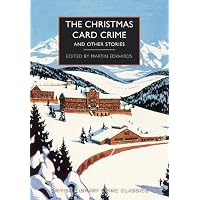
The Christmas Card Crime


The Christmas Card Crime and Other Stories (British Library Crime Classics)

So much has been going on lately that I've not even blogged  until  now about my latest anthology in the British Library Crime Classics series. It's a seasonal compilation, The Christmas Card Crime and other stories, and it's my third anthology of this type, following Silent Nights and Crimson Snow. In all, I've edited eleven collections of short stories for the BL, and there's another to come in the first part of 2018, Deep Waters.

With this book, I wanted to concentrate on less familiar winter and Christmas stories. The three which I think dedicated crime fans are most likely to have encountered are those by Baroness Orczy, John Dickson Carr, and Cyril Hare, but there are some pretty rare tales, including the title story, written by Donald Stuart. Stuart was one of several pen-names written by the author best known as Gerald Verner, and whose real name was J.R.S. Pringle.

There's a relatively unfamiliar story by Ronald Knox, and also one by Francis Durbridge. John Bude and John Bingham, two very capable novelists who seldom wrote short stories, are also represented, while other contributors include E.C.R. Lorac and Julian Symons, both of whom are, like Bude, the authors of a number of novels in the Crime Classics series.

Apparently, this book shot into the independent bookseller bestseller lists, and last time I looked, it was also riding high in the Amazon crime anthology bestseller charts. Last week, the kindle version and the paperback featured at number one and number two respectively. Whatever one thinks of bestseller charts, that can't be bad.

So, here's hoping that this book will (along with Gallows Court, obviously....) help to solve your Christmas present buying dilemmas! And I'd also like to recommend another British Library title which is sure to be a highly popular stocking filler. This is Kate Jackson's The Pocket Detective, a compilation of puzzles for fans of the Crime Classics series. I'm working my way through it right now, and having a great deal of fun.

Friday, 5 October 2018

Forgotten Book - My Name is Michael Sibley

Someone asked me recently about whether I ever bother to re-read crime novels. When so many remain unread, logically, can it be a good use of time to revisit books one has read before? Well, I do re-read books, for a variety of reasons. Sometimes it's simply because I love them. Sometimes, too, I'm prepared to give a second chance to a book that disappointed me first time around. The latter course may be risky, but sometimes it reaps dividends.

So it was with John Bingham's debut novel, My Name is Michael Sibley. The book came out in 1952, and was praised by Julian Symons in Bloody Murder, which led me to seek it out. I must have been in my early twenties when I read it, perhaps younger, and I felt that Symons had over-praised it. But when I read it again recently, I saw why Symons liked it, and appreciated Bingham's achievement as I should have done the first time around.

The book is told in the first person by, you guessed it, Michael Sibley. He's a professional writer, and a friend of his from school days has been found dead in suspicious circumstances. A police inspector and sergeant, whose names are never revealed, come to interview him, and he tells a less than truthful story. As events unfold, this proves to have been a serious error. Along the way, we learn about the nature of the supposed friendship between Sibley and the dead man.

I suppose that, originally, I was disappointed partly by the lack of a clever twist to the murder mystery, and partly by the fact that Sibley is a deeply flawed man, hard to warm to. Nowadays, I'm much readier to appreciate the cleverness of Bingham in the way he tells his story. I suspect this book had a considerable influence on Symons' books, and I also feel that there are elements of the story which suggest that Bingham himself was influenced by Francis Iles. Be that as it may, it's a good novel, and I'm really glad I re-read it.

Tuesday, 17 July 2018

Married Life - 2007 film review

Married Life is the rather odd (and to my mind unsatisfactory) title given to a 2007 American film version by Ira Sachs of a novel published more than half a century earlier by the British crime novelist and spy John Bingham. The book, Five Roundabouts to Heaven, was his second published novel, and is regarded as one of his best. It appeared in 1953 and had the alternative title The Tender Poisoner, which was the name given to a tv version in 1962 in the Alfred Hitchcock Hour series.

The film is set in 1949, with the action shifted across the Atlantic: many of the scenes were filmed around Vancouver. The strong cast includes Pierce Brosnan, who plays Richard, a likeable chap who has a particular liking for attractive women. His closest friend, Harry (Chris Cooper) is married to Pat (Patricia Carlson) but actually having a torrid affair with Kay (Rachel McAdams). After being introduced to Kay, Richard too becomes smitten, and things inevitably become complicated.

As the alternative title to the book suggests, Harry decides that the ideal solution to his marital dilemma is to murder Pat painlessly. But like so many other wannabe killers before him, he discovers that committing the perfect crime is not as easy as he'd like to believe. And then it turns out that Pat nurses a secret of her own...

This is a quirky film, and is much more entertaining than its commonplace title suggests. Ira Sachs offers plenty of touches of dark humour as well as a sequence of unpredictable developments. The historical setting adds to a sense of playful unreality which is part of its appeal. A major bonus with the DVD is the director's commentary on the three alternative endings that he toyed with. No spoilers from me, but they are well worth watching, as is the film as a whole. Although I haven't read Bingham's book, I'm now keen to do so. He was an interesting and sometimes original writer.