Showing posts with label Greville Wynne. Show all posts

Wednesday, 23 March 2022

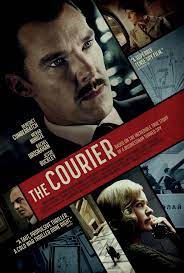
The Courier - 2021 film review


Benedict Cumberbatch is one of my favourite contemporary actors. He seems to enhance any TV drama or film that he appears in. The Courier, a new spy film, is a good example. It's based on a true story that I recall distantly from my early childhood, and his performance makes the most of a competent script by Tom O'Connor (not the Scouse comedian, for sure). The director is Dominic Cooke, who was also responsible for the low-key but interesting On Chesil Beach, which I watched on a plane a few years ago.

Cumberbatch plays Greville Wynne, a British businessman who is persuaded by MI6 (represented by Angus Wright, playing Dickie Franks) and the CIA (Rachel Brosnahan plays Helen Talbot) to assist with a plan to find out about the Soviet nuclear plans with the help of Oleg Penkovsky, a senior official who is contemplating defection.

From what I have read of Wynne, he was a bit of a fantasist, certainly in later life, but he also had plenty of courage, risking his life to assist the security services. If you're not familiar with the story, I won't spoil it for you, but suffice to say that this is a good spy yarn, lifted out of the common run by Cumberbatch's performance. Jessie Buckley is also very good as Wynne's long-suffering wife Sheila. There's a smallish part for the ever-reliable Anton Lesser.

Recent events in the Ukraine have provided depressing evidence that although the Cold War may be long over, international tensions remain and are becoming acute. The events explored in The Courier serve as a reminder of the tragedies that can occur when political vanity and aggression get out of hand. It's definitely worth watching.


Friday, 30 August 2019

Forgotten Book - The Double Agent

It's salutary that John Bingham, a major crime writer of the 50s and for much of the 60s (and whose career continued for a considerable time thereafter, though with decreasing success) is now unquestionably a forgotten author. I've highlighted his work several times on this blog, focusing on his crime fiction. But he also ventured into spy thrillers - and did so with a considerable advantage, given that he was himself a high-ranking spy.

The Double Agent (1966) is a classic Cold War thriller. It involves a businessman from Yorkshire, Reg Sugden, who is recruited to undertake some low-level spying behind the Iron Curtain, and also to help flush out a traitor in the domestic Secret Services. This novel isn't a fictonalisation of a real life case, but it's impossible not to see a few parallels with the case of Greville Wynne, a businessman and spy who was caught by the Russians and ultimately returned to Britain in exchange for a Russian spy, known here as Gordon Lonsdale.

Bingham was a skilled interrogator, and police interrogations of hapless suspects play a major part in his early books. Here again, the interrogation of Sugden takes up a sizeable chunk of the book. My personal feeling is that this results in a lack of action and pace for part of the story; Bingham, I suspect, realised this, and tried to address the problem, but not entirely successfully. For this reason, the book isn't quite in the class of Len Deighton and John Le Carre, but even so, it's a good read. Julian Symons recommended it strongly, saying that the story is "intellectually and emotionally absorbing because it is so thoroughly authentic."

There are a couple of good twists late in the story, and Bingham's wry observations about spying are always interesting, again in part because he was speaking from experience. He knew that the Cold War was then just the latest in a long series of human conflicts in which cunning and treachery have played a key part. In real life he was much more of an establishment man than either Deighton or Le Carre, but you wouldn't necessarily guess that from this accomplished thriller. 


Wednesday, 5 October 2016

Bridge of Spies - film review

Bridge of Spies is a 2015 Steven Spielberg film, starring Tom Hanks and Mark Rylance, with a script co-authored by the Coen brothers. With a pedigree like that, I expected something special, and I'm glad to say that I wasn't disappointed. This is quite a long film, but it's so watchable from start to finish that the time zipped by. It's not always like that with long films, but Spielberg is a master craftsman.

The story is based, quite closely, on real life events. It shows my ignorance of much American history that I wasn't aware of the Powers-Abel case, though I am familiar with its British equivalent, the Greville Wynne-Gordon Lonsdale case. Inevitably, some aspects of the story are rendered more dramatically than the way in which they occurred in real life, but I gather that the essentials of the story are captured fairly faithfully.

The action takes place during the Cold War, in the late 50s. Rylance plays Abel a tight-lipped Russian agent (in fact, Abel was born in Benwell, in Newcastle, and educated in Whitley Bay) who is caught and charged with espionage. Hanks plays Jim Donovan an insurance lawyer who is, rather oddly, brought in to defend him. I'm not sure that the insurance lawyers I know would relish conducting high profile criminal advocacy, but that's another story. The judge is appallingly biased (I would like to think that the script exaggerates this - his behaviour is utterly crass) and Abel is convicted; he is not, however, sentenced to death, but is imprisoned instead.

Powers, a pilot on a spying mission, falls into Russian hands, and the CIA persuade Donovan to broker an exchange of spies. Matters get complicated when a young American student is arrested in East Berlin, and Donovan resolves to try to free him as well. It was rather poignant, watching the Berlin Wall being built, and seeing soldiers shooting at people trying to escape. It took me back to an unforgettable trip to West Berlin in 1975. I stayed in a flat right next to the wall with Ute Wehmeyer and her family, and sometimes heard shots being fired. It was truly chilling and quite unforgettable.

Thankfully there was a happy ending to the story of Berlin's artificial division, and the experience of walking freely through the Brandenburg Gate when I returned to the city in more recent times was really memorable. But does the film have a happy ending? You'll have to watch it to find out...