Showing posts with label Detective Story Club. Show all posts

Friday, 15 December 2017

Forgotten Book - The Adventuress (and a word about Bill Crider)


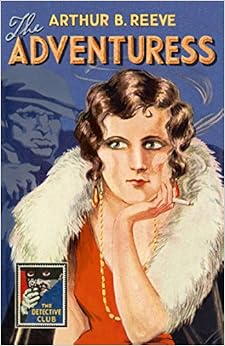
Image result for adventuress detective story club
The Adventuress is an odd title for a crime story, perhaps, but I was tempted to read Arthur B. Reeve's novel as a result of its appearance in the Detective Story Club series. One of the key features of this series, like the British Library Crime Classics, is the sheer variety of the material. Other than one or two short stories, I've hardly bothered with Reeve in the past, but found that this novel had some features of merit, even if its interest is mainly historical.

This edition also benefits from an excellent introduction by David Brawn, which sets the book in context. Reeve had a meteoric rise to fame as a crime writer, thanks to his creation of the "Scientific Detective" Craig Kennedy. The stories were packed with incident, and narrated by an excitable journalist who is constantly baffled by Kennedy's brilliant work and occasional enigmatic pronouncements.

This story gets off to a cracking start, quite literally, as someone attempts to shoot a lawyer who is about to consult Kennedy. And this highlights the nature of the Kennedy stories. Danger and excitement abound, even if some of the action is thinly motivated - I'm still not convinced that the assassination attempt made much sense.

The mystery concerns the murder of a munitions magnate while on board his fancy yacht. Various family members, and even perhaps a rascally lawyer or two, are suspects. And what about the exotic lady adventuress herself? Or the Japanese servant? Or the mysterious foreigner who keeps lurking in the background? Well, the narrator is always asking questions at the end of chapters, so is it any wonder I've found his habit infectious?

There's a lot of scientific jargon intended to impress the bemused reader, and the style is so dated that it's no great surprise that Reeve's reputation faded almost as quickly as it grew. But he was a lively storyteller, and there aren't many dull moments, that's for sure.

Last, but definitely not least, can I mention that many of the Friday bloggers, splendidly marshalled by Patti Abbott, who write about Forgotten Books are today paying tribute to Bill Crider, one of the finest bloggers of them all. Bill is a novelist with a long and distinguished track record, and has also contributed a regular column to Ellery Queen's Mystery Magazine. I've been glad to have a word with him, albeit all too briefly, at the last couple of Bouchercons, in New Orleans and a few weeks ago in Toronto. Sadly, Bill has been in poor health for some time, but I'm glad to take this opportunity to express my appreciation of him and his work. Do take a look at other Friday bloggers for more about Bill and his books,

Friday, 25 August 2017

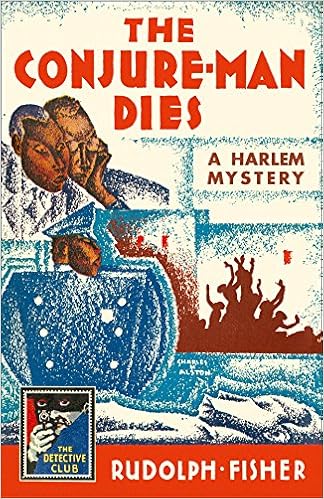
Forgotten Book - The Conjure-Man Dies


The Detective Story Club imprint has, since its welcome recent revival by Harper Collins, seen some fascinating titles come back to life. I've enjoyed my own involvement, writing intros for books by authors as diverse as Hugh Conway, Edgar Wallace, and E.C. Bentley, and I've enjoyed equally reading some books that are entirely new to me, by authors such as Vernon Loder.

A particular example is The Conjure-Man Dies, sub-titled "A Harlem Mystery". The author is Rudolph Fisher, and there is an excellent intro by that very fine writer Stanley Ellin, who is perhaps best remembered for his brilliant short stories, although he was no mean novelist. As he says, the book is "highly readable, wholly entertaining."

The book was, as far as is known, the first detective novel written by an African-American. His name was Rudolph Fisher, and he had previously one mainstream novel. By profession, he was a doctor, and his interest in the potential of science as an aid to detection is very much in tune with the work of Arthur Conan Doyle and Richard Austin Freeman in Britain. The reason that, despite his considerable gifts as a writer, his name has been more or less forgotten, is that he died all too young. He was born in 1897, this book appeared in 1932, and he died in 1934. Very sad.

The story is a good one, dealing with the death, in exotic and highly mystifying circumstances, of Frimbo, a "psychist". The official detective, Perry Dart, is assisted by John Archer, a doctor, in a pleasing variation on the Holmes-Watson partnership: both are good characters. This edition carries an extremely welcome bonus, a short story called "John Archer's Nose" which was published just after Fisher's death. As Ellin says, this novel offers not merely a good mystery puzzle but also a fascinating social document. Recommended.

Friday, 11 August 2017

Forgotten Book - Trent's Own Case


Unlike many authors associated with Golden Age detective fiction, Edmund Clerihew Bentley was far from prolific. Yet his impact on the genre was immense. Trent's Last Case is seen by many people (including me) as the effective catalyst for the development of the classic whodunit after the First World War, and when Bentley's old friend G.K. Chesterton died, Bentley was a popular choice to succeed him, and to become the second President of the Detection Club. This more or less coincided with the publication of Trent's Own Case, which records Philip Trent's long-awaited return to the fray of detection.

Bentley's short stories about Trent were also collected in a volume entitled Trent Intervenes. But although Trent's Last Case has been relatively easy to find over the years, the other two Trent books have been less widely available. Now Harper Collins have reissued all three books together as part of their Detective Story Club imprint.

I feel confident that crime fans will be delighted by this initiative, though I should declare my own involvement - I have written a new introduction to Trent's Own Case. This commission caused me to re-read the book recently, and in so doing I found I revised my original opinion of it somewhat. I read it first as a teenager, expecting something similar to the first Trent book. It's much better, though, to judge the book on its own merits,not least because it was actually a collaboration - Bentley co-wrote the novel with his friend H. Warner Allen, and the storyline features Warner Allen's own detective character, the wine merchant Mr Clerihew (who was named in Bentley's honour). It's a well-made story, and still very readable.

In The Golden Age of Murder, I discuss the "Trent Dinner" held in 1936 to celebrate the book's publication, and one of my most precious possessions is a copy of the first edition signed by those who attended the dinner. I also talk about this in a little more detail in the "Collecting Crime" section on my website.. The addition of this book, and the two other Trent titles, to the Detective Story Club list, is very welcome.


Friday, 28 July 2017

Forgotten Book - The Blackmailers

Harper Collins' Detective Story Club imprint is by no means confined to Golden Age detective fiction. Hugh Conway and Anna K. Greene are among the significant Victorian crime writers represented in the series. Another is Emile Gaboriau, creator of Monsieur Lecoq, a prototype of the Great Detective, and a master of disguise.

Richard Dalby's introduction contains useful background .The book was first published as Dossier No. 113 in 1867, and has also appeared in English translation as File No. 113. Apparently this original version ran to a massive 145,000 words. Collins commissioned a new translation by Ernest Tristan, which cut the word cut roughly by half while retaining the essentials of the storyline intact. The abbreviated version was called The Blackmailers, and this is the version of the story that has been reissued.

The story gets off to a very good start. A bank is robbed, and only two men appear to have access to the safe that the criminal(s) broke into. Which of them is guilty? Or has something else happened? The official police detective, nicknamed "the Squirrel", is keen but inclined to follow false scents. Before long, the rather enigmatic Lecoq becomes involved, sometimes in disguise.

After a suspenseful build-up, we then move into an extended flashback which charts events of the past which led up to the crime .Despite the (very wise) decision to cut the story in half, this melodramatic storytelling seems to go on forever, and my interest began to wane. This, the third case for Lecoq, is historically significant, but the structural weaknesses show that authors were still trying to figure out how best to tell a mystery story. Conan Doyle experienced similar difficulties with his own longer stories about Sherlock Holmes, but Holmes is an inherently more fascinating character than Lecoq. But, just possibly, without Lecoq there might not have been a Sherlock Holmes.

Friday, 23 June 2017

Forgotten Book - The Case of the Gilded Fly

Yes, I know. It's pushing things to describe Edmund Crispin's The Case of the Gilded Fly as a Forgotten Book. But the Harper Collins Detective Story Club has reissued the novel, and it's good to see it featuring in this eclectic and attractively presented collection. And this edition benefits from an introduction by Doug Greene, who knows more about classic crime than almost anyone I know.

I first came across this novel as a teenager. I'd read and enjoyed The Moving Toyshop, so I borrowed this one from the public library next. Now at the age of 13 or so, I had never been to Oxford, and certainly no concept of what it was like - quite a disadvantage when reading Crispin. This story, like The Moving Toyshop, features an apparent impossibility, but is an apprentice work - Crispin wrote it when he was still an undergraduate at St John's College. And the first chapter introduces a large cast of characters, wittily yet a little clumsily. I have to say that the young Martin Edwards was a bit disappointed, and in fact I didn't finish it. Nor did I return to Crispin until some years had passed.

Now, of course, I appreciate Crispin much more than I did then. His wit and cleverness are strengths, though I think that in this novel, the intelligence is rather self-conscious, a sign of the author's inexperience. My adolescent judgement of the book was too harsh, And now that I love Oxford as Crispin did, I empathise with his portrayal of the city and its eccentric characters.

Especially for such a very young author, this is a well-contrived mystery, although it's still, in my opinion, clearly inferior to books such as The Moving Toyshop and Buried for Pleasure. Yseut, the victim, is suitably unpleasant, but Fen is also, as Crispin seems to acknowledge, pretty irritating too - especially when he makes clear that he knows whodunit early on, but declines to tell. I know Poirot did this time and again, but Fen doesn't carry it off quite as well, and the killer strikes again before the final unmasking.. A critic in The Indpendent even said in a review that he wished Fen, rather than Yseut, had been the victim! As for the murder motive, I'm afraid it' emerges from nowhere, really: not exactly fair play. For a Golden Age fan, Crispin is always worth reading, and there's a lot of pleasure to be had here from his humour and his evocation of Oxford. But for all its merits, it is an apprentice work..

Monday, 21 March 2016

The Terror by Edgar Wallace


I've very much enjoyed reading the Detective Story Club reprints that are being so attractively republished by Harper Collins. They occupy a slightly different part of the market than the British Library Crime Classics series, covering a longer time frame and including thrillers as well as whodunits. The books are keenly priced hardbacks with dust jackets that reproduce the original cover artwork. As you can see from the above image, The Terror is nothing if not dramatic!

The Terror was written by Edgar Wallace and is the second book in this series to which I've provided an introduction; the first was that very intriguing Victorian novel Called Back, by Hugh Conway. This is a very different kind of story, but it's packed with twisty action; reading it,you can see that Wallace had the storytelling skills of a mega-seller.

The Terror headed the list of six books which got the Detective Story Club off to a flying start, and was the only one of the half-dozen that was not a reprint. Wallace got the idea while on holiday in France in 1926, and turned it into a stage play before writing the novel. It was quickly filmed, and then remade with Alastair Sim and Bernard Lee in lead roles.

This edition also includes, as a bonus, Wallace's story White Face, which was also based on a stage play. Again, it was also filmed, though the film is now considered 'lost', and again it supplies lively escapist entertainment. The titles included in this series are highly diverse, ranging from the two books I've introduced to The Ponson Case by Freeman Wills Crotts and the highly enjoyable first appearance of Colonel Anthony Gethryn, The Rasp. And quite apart from their lively contents, these books do look lovely on the shelf!

Friday, 21 August 2015

Forgotten Book - Called Back

A very, very long time ago,I reviewed Hugh Conway's novel Called Back for Geoff Bradley's magazine CADS. I enjoyed it then, and I enjoyed it all over again when I was asked to contribute an introduction to a welcome republication of the book by Harper Collins. It's just been published, and I hope that before long, it won't be possible to describe Called Back as a Forgotten Book any longer.

This novel was first published in 1883, so it preceded the first appearance of Sherlock Holmes, although it post-dated the best work of Wilkie Collins. The storyline is admittedly very melodramatic. A blind man inadvertently stumbles across a murder - and when he later regains his sight, the plot thickens rapidly. As usual, I don't want to say too much about the detail of the mystery, but if you make allowances for when it was written, I think that - even though the contemporary comparisons of Conway to Collins were over-done - you will see why it did well. Fargus could tell a good story.

The book's impact was massive. Apparently over 300,000 copies were sold in twelve months, the story was adapted for the stage, and burlesque versions were produced. Conway's name was made. In fact, Hugh Conway was a pen-name adopted by Frederick Fargus. He was born in Bristol in 1848 (perhaps Crimefest should celebrate him?) but died at the age of 37 before he'd had enough time to show that he could sustain the story-telling promise of this book in the long term. A great pity.

Harper Collins have issued this book along with a couple of others, in a new Detective Story Club edition, with a facsimile of the jacket used when the book was published under the Club's imprint in 1929. The relaunch of the Detective Story Club follows Harper Collins' earlier success with the reissuing of Detection Club books such as The Floating Admiral and Ask a Policeman, and I'm very much hoping that this will prove to be a long-running venture. The more forgotten books that are made available for present day readers, the better, above all when they are lively affairs such as Called Back.