Showing posts with label David Brawn. Show all posts

Monday, 20 June 2022

A British Library Weekend


In my online writing course Crafting Crime, I make the point that confidence counts for a good deal in writing. But confidence is fragile (there are plenty of lived examples in The Life of Crime, some of them rather poignant) and writers often find their morale needs boosting. Well, having just returned from London after an exhilarating weekend, I can say that I'm in very good heart, for a host of reasons. One of these, I must say, is that it was fantastic to see so many copies of my books (not to mention my Golden Age map, This Deadly Isle) for sale in the British Library shop. In fact, I don't think I've ever seen so many of my own books in a shop, anywhere....


At first, though, it seemed that things might go seriously awry. An event was planned for Friday, which would involve me, the Rev. Richard Coles and Laura Wilson in conversation at the British Library. Many tickets were sold, and I was really looking forward to it. But then disaster struck. As a result of a couple of electrical fires, it became impossible for the show to go on as planned. It was to be livestreamed, but during the course of a convivial lunch with John and Jonny of the Library's publications team, I learned that this was not going to be possible. So it became a recorded event, and part of it would involve me giving an impromptu presentation. It was all very unexpected, but I drew fresh energy from a convivial afternoon get-together with Moira Redmond, Jim Noy, Chrissie Poulson and others, and as things turned out, all went well. Richard, whom I'd never had a chance to talk to previously, but whose new detective novel I read over the weekend, was not only charming but generous in his comments about my writing, and Laura did a great job. I gather that everyone who paid for tickets will be refunded and the event will be made available on an open access basis. 


The following day, Bodies from the Library was due to take place after a three-year absence (though as with Alibis from the Archive, there was an online-only version last year). The volunteer team and the British Library staff worked tirelessly to make sure that it could go ahead, even though it was no longer possible for the Knowledge Centre to be used. The whole event was held in a rapidly reconfigured Terrace Restaurant. And it went really well. Jake Kerridge, Moira, Chrissie, Tony Medawar, Caroline Crampton, John Curran, and David Brawn were all very good and I enjoyed my session, talking to Chrissie about The Life of Crime


It was also wonderful to see so many old friends and to meet some nice people for the first time, including fellow Head of Zeus author Tom Mead. Online events are invaluable and, I'm sure, here to stay, but you can't beat the personal contact that comes with a live event. Twenty-five or so of us got together on Saturday evening for drinks and a meal, a nice way to round off a day that almost didn't happen, but - thanks to the hard work and dedication of those who turned potential disaster into a triumph - proved to be a great success. 


Monday, 11 October 2021

Alibis in the Archive 2021


This past weekend saw the first online version of Alibis in the Archive and what fun it was. Gladstone's Library was closed for eighteen months and only reopened at the start of September, but huge credit goes to the tireless Louisa Yates and Rhian Waller for managing the weekend so brilliantly. When I put the programme together, I was aiming for a combination of quality and variety and I'm enormously grateful to all the wonderful authors who took part.

Lynne Truss and Simon Brett got things off to a great start on Saturday morning with a very witty discussion which included Simon's memorable description of story structure as 'the Lego bit of the writing'. After that, David Brawn of HarperCollins interviewed me about Howdunit and other facets of my crime writing career; we also touched on The Life of Crime, the copy edit of which I'm currently working on.

Then came a wonderful contribution from two American writers whom I've long admired: Joseph Goodrich and Rupert Holmes. It was full of great moments and I particularly liked his story about his contribution to the soundtrack of Arthur (yes, Burt Bacharach wrote the soundtrack, but Rupert did play a part...) On Sunday morning, an American writer currently resident in London, Bonnie MacBird, talked to David Brawn about the enduring appeal of Sherlock Holmes.

Len Tyler led a discussion with Ruth Dudley Edwards, Michael Jecks and Antonia Hodgson about the timeless appeal of detective fiction. I was amused by Len's explanation of the appeal of Gladys Mitchell despite the fact that her books often fade after a bright start: 'she's worth reading for the first 50% of the book'. The weekend was rounded off with no fewer than four panellists joining us from the US to talk about American traditional detective fiction: Art Taylor, Shawn Reilly Simmons, Tonia Spratt-Williams, and Verena Rose. I loved every moment of the panels and feedback from the audience was just what we'd hoped for. Next year, Alibis will return as a live event over the weekend of 10-11 June, but with an online component as well. Can't wait...


Wednesday, 2 October 2019

Murder She Said: The Quotable Miss Marple

Murder She Said: The Quotable Miss Marple is a stocking-filler published, in extremely good time for Christmas, by HarperCollins. It follows a similar little book of Hercule Poirot quotes, Little Grey Cells, which landed on the shelves a couple of years back. The earlier book was put together by editor David Brawn; the new one is the work of Tony Medawar.

Like the Poirot book, this one includes an interesting bonus feature, namely a short essay by Agatha Christie herself: "Does a Woman's Instinct Make Her a Good Detective?" This piece dates from 1928, and was originally published in The Star newspaper to coincide with final publication of the first set of Miss Marple short stories (there is also a bibliography of the Marple short stories, most of which appeared between 1927 and 1931, as well as an intro to the book by Tony Medawar).

The quotes are grouped into eight sections: the art of conversation, men and women, crime and detection, the young, murder, Marple on Marple, human nature, and life. Here is one of my favourites, from the very first Agatha Christie novel that I read, The Murder at the Vicarage:

"Observing human nature for as long as I have done, one gets to expect not very much from it."

Cynical, of course, but in the past there have been times in my life (especially during my days as a partner in a law firm) when I have, despite my instincts to the contrary, felt much the same!


Friday, 25 January 2019

Forgotten Book - The Middle Temple Murder


Image result for middle temple murder

This year marks the centenary of the book that made J.S. Fletcher's name. So it is fitting that The Middle Temple Murder should now make an appearance in the Detective Club series of reprints. And the first thing to say is that it's certainly worth reading if you're not familiar with it. This edition also benefits from an introduction by Nigel Moss, who makes the point that the plot is "well-constructed, complex and entertaining". As he says, Fletcher doesn't leave loose ends, and the storyline is rather pacier than many others of the period immediately before the arrival on the scene of Agatha Christie.

Frank Spargo, a young newspaperman, happens to discover the body of a murdered man in the entrance to Middle Temple Lane, a part of legal London that lawyers like Nigel (and me) are very familiar with. Spargo is a likeable character, and he lurked in the recesses of my mind when I first thought up Jacob Flint, the journalist in Gallows Court. As Nigel points out, the book has "a surprisingly modern feel, brisk and light." A bonus is the inclusion of a short story, "The Contents of the Coffin", which Fletcher drew on for a strand of the plot of the novel. The short story features Archer Dawe, an inquiry agent who doesn't appear in the novel.

Fletcher continued to write through the Golden Age, although in style and focus his detective fiction really belonged to an earlier period. He was extraordinarily prolific, and that counted against him. Like so many other mass producers of crime fiction, he struggled to maintain quality control. But at his best, he wrote very agreeable stories. By common consent, this is the best of them, although I suspect there may be a few little-known gems lurking in his backlist.

Harper Collins have announced that, following this title's publication, they are pausing the Detective Club hardback reprint series. I hope that it returns one day, but already the project has made a very welcome contribution to the revival of interest in Golden Age fiction. It's a highly eclectic series, including books by everyone from Gaboriau to Agatha Christie and many wonderful obscure titles as well. I have been very happy to contribute intros to five books in the series, and it's been especially gratifying to see two novels by Donald Henderson back in print after many years of being absent from the shelves. The editor who has overseen the series from day one is David Brawn, and fans of classic crime owe him a real debt of gratitude. 


Monday, 14 May 2018

Guernsey and Jersey


I'm back home, briefly, after a trip to the Channel Islands, one of my favourite destinations. Originally, I was asked to give a library talk in Jersey, and this led in due course to a similar invitation from the library in Guernsey; that in turn prompted the organisers of Guernsey Literary Festival to get in touch. So in the space of a couple of hectic days, I undertook three events on two islands and met a good many pleasant people.


I was even given the bonus of a short sightseeing trip around the west coast of Guernsey, with a chance to see the little off-shore island of Lihue as well as to visit an ancient cavern steeped in myth and legend. Then it was off to St Peter Port, and a workshop on crime writing at Les Cotils, with a group which included, to my surprise and delight, that excellent blogger Harriet Devine. I've not run many workshops, but this one was so interesting that I'm tempted to do them more regularly.


On Friday evening I gave a talk about The Golden Age of Murder at Guernsey Library, and also had the chance to catch up with fellow crime writer Jason Monaghan (who sometimes writes as Jason Foss) and the editor of The Golden Age of Murder, David Brawn, whose presence on the island was a delightful coincidence. The three of us had dinner together after the talk, a convivial end to a rather long day.


It was up early again to take the short flight to Jersey, with a chance to look around St Helier before I gave another Golden Age talk to an excellent audience. After dinner I headed back to my hotel and promptly went to sleep for eleven hours: tiredness rather than too much to drink, I can assure you! But next morning I managed to fit in a little more sightseeing before catching the flight back to Manchester.


I've visited the Channel Islands six or seven times over the years, and each time I find something new and intriguing about them. On my last visit, I even planned out a short story set in Alderney, though I fear that it still remains unwritten. One of these days I do hope to get round to writing a mystery set on one of the islands. In the meantime, I'm very grateful to those who looked after me so well during my whistle-stop tour, and I'm very much looking forward to my next trip there - which will be in September, for the Jersey Literary Festival. 

Friday, 15 December 2017

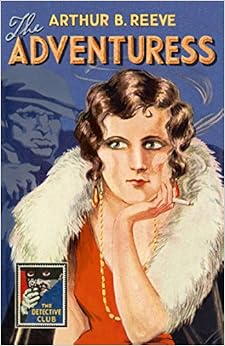
Forgotten Book - The Adventuress (and a word about Bill Crider)


Image result for adventuress detective story club
The Adventuress is an odd title for a crime story, perhaps, but I was tempted to read Arthur B. Reeve's novel as a result of its appearance in the Detective Story Club series. One of the key features of this series, like the British Library Crime Classics, is the sheer variety of the material. Other than one or two short stories, I've hardly bothered with Reeve in the past, but found that this novel had some features of merit, even if its interest is mainly historical.

This edition also benefits from an excellent introduction by David Brawn, which sets the book in context. Reeve had a meteoric rise to fame as a crime writer, thanks to his creation of the "Scientific Detective" Craig Kennedy. The stories were packed with incident, and narrated by an excitable journalist who is constantly baffled by Kennedy's brilliant work and occasional enigmatic pronouncements.

This story gets off to a cracking start, quite literally, as someone attempts to shoot a lawyer who is about to consult Kennedy. And this highlights the nature of the Kennedy stories. Danger and excitement abound, even if some of the action is thinly motivated - I'm still not convinced that the assassination attempt made much sense.

The mystery concerns the murder of a munitions magnate while on board his fancy yacht. Various family members, and even perhaps a rascally lawyer or two, are suspects. And what about the exotic lady adventuress herself? Or the Japanese servant? Or the mysterious foreigner who keeps lurking in the background? Well, the narrator is always asking questions at the end of chapters, so is it any wonder I've found his habit infectious?

There's a lot of scientific jargon intended to impress the bemused reader, and the style is so dated that it's no great surprise that Reeve's reputation faded almost as quickly as it grew. But he was a lively storyteller, and there aren't many dull moments, that's for sure.

Last, but definitely not least, can I mention that many of the Friday bloggers, splendidly marshalled by Patti Abbott, who write about Forgotten Books are today paying tribute to Bill Crider, one of the finest bloggers of them all. Bill is a novelist with a long and distinguished track record, and has also contributed a regular column to Ellery Queen's Mystery Magazine. I've been glad to have a word with him, albeit all too briefly, at the last couple of Bouchercons, in New Orleans and a few weeks ago in Toronto. Sadly, Bill has been in poor health for some time, but I'm glad to take this opportunity to express my appreciation of him and his work. Do take a look at other Friday bloggers for more about Bill and his books,

Monday, 12 June 2017

Alibis in the Archive


I'm back from an exhilarating week-end at one of my favourite places, Gladstone's Library in Hawarden. We had the Alibis in the Archive weekend event to celebrate the official launch of the British Crime Writing Archives - that is, the archives of both the Crime Writers' Association and the Detection Club.

We organised a packed programme, and the aim was to give delegates plenty of value for money Even so, we were delighted when the week-end sold out back in March -  only a few weeks after being announced. Capacity is limited, and delegates who couldn't be accommodated in the lovely rooms at the Library were able to stay at a nearby hotel.

After dinner on Friday, the first event was an interactive murder mystery evening hosted by Ann Cleeves. This proved enormously popular. On Saturday, we kicked off with David Stuart Davies (who had acted in the murder mystery) giving a rousing talk about Sherlock Holmes. David Brawn of Harper Collins then talked about working with Agatha Christie's estate. I talked about the CWA and the Detection Club, and also their archives. And then Ann talked about Vera and Shetland. TV scripts that she has donated will in due course form part of the archives.

On Saturday afternoon, Rob Davies talked about the British Library, Linda Stratmann about poison, Kate Charles about clerical crime, and Kate Ellis about digging up the past. After dinner we had - yes! - a second murder mystery evening, this time hosted by Kate Ellis. Then on Sunday, Stella Duffy talked about Ngaio Marsh, Rob and I about the British Library's Crime Classics, and there was a panel discussion about Golden Age detective fiction.
We were delighted with the convivial atmosphere, and the enthusiasm of the delegates. A new group of people previously unfamiliar with Gladstone's Library fell in love with it. I had the pleasure of meeting many nice people - including John Bude's daughter, Jennifer.- and also of seeing a project that I've been involved with for a long time finally achieve a very significant milestone. The Archives will develop in the years to come, and I am optimistic that they will become an increasingly important resource for people who are interested in the heritage of crime fiction. The photos illustrating this post were taken by CWA Secretary Dea Parkin, to whom many thanks.

Wednesday, 21 October 2015

Agatha and Anthea

Two books today, totally different from each other, but both enjoyable. Little Grey Cells, sub-titled The Quotable Poirot is a stocking-filler for the Christie fan in your life, a small, nicely presented book which includes not only Poirot's words of wisdom on a range of subjects, but also a couple of short pieces written by Agatha Christie herself about her love/hate relationship with the little Belgian.

I was interested in Christie's admission that "I never do see pictorial things clearly". She had an impression of Poirot when she invented him, rather than a complete picture. It may seem odd for a novelist to possess a limited visual sense, but I have to confess that I'm the same. I don't have a clear image in my mind of Hannah Scarlett or Daniel Kind or Harry Devlin, and even when I set out to evoke the atmosphere of the Lake District or Liverpool, I find I have to work very hard to do so. One of the things that has most pleased me about reviews of the Lake District Mysteries over the years is the fact that my descriptions of the Lakes have found widespread favour, even among those who know the area far better than I do. Achieving this has been the most challenging aspect of the series - much more so than dreaming up those convoluted plots.

Agatha found it even easier, of course, to come up with elaborate whodunit plots, though her note books reveal that, inevitably, this involved a degree of trial and error as she played with ideas. Many of the Poirot novels rank among her finest achievements, and this is due in large measure to the fact that, although Poirot irritated his creator at times, his outlook on life largely reflects hers. If you want to learn more about it, you can glean quite a bit of insight from Little Grey Cells, put together by David Brawn, who is the senior editor at Harper Collins dealing with all things Christie-related. He's also, I should disclose, the chap who acquired the rights to The Golden Age of Murder, so you will appreciate that I regard him as a man of impeccable taste!

I turn now to a crime novelist of today. Anthea Fraser kindly contributed a guest blog recetnly about her latest novel, A Tangled Thread, which has been published by Severn House. Although I've read quite a number of Anthea's books, almost all of them have been in the series featuring David Webb, a shrewd and likeable cop. This novel is different, tracing the possibility of an unexpected link between seemingly unconnected deaths. It's written in the smoothly readable style familiar to Anthea's existing readers, and is a welcome reminder of her talents.


Wednesday, 23 September 2015

The Agatha Christie Festival


I was lucky enough to be invited to take part in last week's Agatha Christie Festival in Torquay. The festival has been running for some years, but it was my first time in attendance, and it was good to be back on "the English Riviera". The last time I stayed at the Grand Hotel was at the time of the Christie Centenary in 1990, a very memorable week-end. At that point, I'd never published a single novel or short story. So it was a particular pleasure to return for the 125th anniversary of Agatha's birth as a fully-fledged crime novelist.


My first talk was in the Spanish Barn (photo immediately above) at Torre Abbey (photo at the top of this post), an atmospheric and historic setting, and I was gratified that the organisers had gathered an excellent crowd. I was introduced by David Brawn, my editor at Harper Collins, and my subject was The Golden Age of Murder. I didn't talk to a script, but after working on the book for so many years,I felt I would have more than enough to say without one! Some very interesting questions prompted a lively discussion, and I met several delightful people for the fist time.


In the afternoon, it was time to head off to the Imperial Hotel (said to be the model for the hotel in Peril at End House.) This time I was doing a double act with Rob Davies, from the publications department of the British Library. Rob is series editor for the BL's crime classics, and we talked about titles in this remarkably successful series (370,000 paperbacks sold so far!) as well as future plans. In a nutshell, we have titles lined up until the end of 2017. It seems like a long way ahead, but even then, the books will be appearing at a rate of more than one a month. Quite a schedule.


Rob and I both enjoyed the session, and we are hoping to repeat it at future festivals and other literary events in the future. One interesting aspect at Torquay was that the audience included some heirs of literary estates,and it was great to talk to them. Unexpectedly, Andrew Wilson, whose biography of Patricia Highsmith I reviewed here quite recently, came and said hello. We hadn't met before and I didn't know he lives in Devon. Andrew tells me he's written a new crime novel, which should be well worth looking out for. After two talks, I was more than ready for a convivial dinner with the British Library team, followed by a drink back in the Grand.

Then, the following morning, after goodbyes at Torre Abbey, it was off to Winchester, where I was talking about The Golden Age of Murder at Winchester Discovery Centre, a fabulous venue. Winchester is a lovely and, of course, very historic city, where the library is a proper community hub, and the schedule of events at the adjoining Discovery Centre is impressive. A model for libraries and associated services in the 21st century, I felt. This time, I was being interviewed by Gilbert Yates of the Discovery Centre, and the question and answer format made a refreshing change from a conventional talk. Next morning I satisfied my inner tourist with a sight-seeing trip around the city,and then it was off home after what had been, to say the least, an eventful week. One of many gratifying aspects of the trip was the enthusiasm shown by so many people for The Golden Age of Murder. I signed a lot of copies,and I remain bowled over by reaction to the book from so many people.


Thursday, 7 May 2015

Publication Day!


Never mind the General Election. For me, the exciting event of 7 May 2015 has to be the long-awaited (by me, anyway) UK publication of The Golden Age of Murder. When I reflect on how many years ago I started researching for a potential book about detective fiction, I find it hard to believe that it's finally hitting the shelves. I'm at least as excited as when my first novel was published.

Many people helped me to make the book into what it is. I've mentioned plenty of names in the acknowledgements, and I hope I haven't forgotten too many, but I'd like to make special mention of my agent, James Wills, and my editor, David Brawn. I wondered for several years whether I would find anyone in the publishing world who believed in this book. James and David do, and for that, I'll always be grateful.

One always wonders how one's new book will be received, and I was more than usually nervous about this one, given its very ambitious and unorthodox nature - and, let's face it, the fact that it's not exactly a slim volume. To say that I've been thrilled by the reviews to date is no exaggeration. I have highlighted the key quotes here. It's intensely rewarding to see some of the same enthusiastic phrases recurring in reviews written on both sides of the Atlantic.

I found, both at Malice Domestic, and at a talk I gave to members of the Liverpool Athenaeum yesterday, that there is enormous affection for and interest in Golden Age fiction. This has been under-estimated for decades, but the success of the British Library Crime Classics (over a quarter of a million paperbacks sold!) has shown that the appeal of classic mysteries is not just confined to a few diehards. The best books of the past have continuing appeal to vast numbers of readers.

Sarah Weinman has just said of The Golden Age of Murder: "this love he has for crime fiction permeates every page of this book." Despite being non-fiction, this is a very personal book, and I'm glad that I've managed to convey my love of the genre. My hope is that the book will inspire others, especially those who are not instinctive Golden Age fans, to take a fresh look at the wonderful fiction of the past, and to see it in a new light.


Thursday, 14 August 2014

Breaking News....The Golden Age of Murder

I'm probably as excited about this post as about any of the others (nearly 2000!) that I can remember adding to this blog. So excited, in fact, that I'll let the press release do the talking for me - for the time being, anyway...


"In a world rights deal HarperCollins has acquired from James Wills of Watson, Little Ltd the publishing rights to The Golden Age of Murder, a real-life detective story investigating how Agatha Christie and her colleagues in the secretive Detection Club transformed crime fiction, writing books that cast new light on unsolved murders whilst hiding clues to their own darkest secrets.


The book is written by the award-winning crime-writer Martin Edwards, author of 17 crime novels and 8 non-fiction books. Edwards is Archivist for both the Detection Club and the Crime Writers’ Association, and is a renowned expert on Golden Age detective fiction.


David Brawn, Publisher of Estates at HarperCollins, commented: ‘This ground-breaking study of detective fiction from between the wars captures how the social and political turbulence of the times impacted on authors and the appetites of their readers. Martin’s revelations about many of these colourful and turbulent writers, whose risky private lives inspired their more daring novels, provide a whole new insight into the generation of authors who created the prototypes for books we all still love today.’


Martin Edwards said: ‘The Golden Age of Murder seeks to overturn familiar stereotypes, and look at classic detective fiction in a fresh way. The years of research felt just like detective work, as I set out to solve the mysteries surrounding the Detection Club and its members. The best novels of the Golden Age are among the most popular and influential entertainments ever written, and the people who wrote them were even more fascinating. As interest in their fiction reaches new heights, this is the perfect time to reveal their untold stories.’


The Golden Age of Murder: Solving the Mysteries of the Writers Who Invented the Modern Detective Story will be published in hardback in May 2015."