Showing posts with label The Golden Age of Murder. Show all posts

Wednesday, 19 October 2022

Pistols, Bombs and Motor Bandits by Joan Lock


I first met Joan Lock (and her late husband Bob) more years ago than either of us would care to remember, at a CWA conference. We've kept in touch through the years and for a long time Joan contributed an excellent column about police matters to 'Red Herrings', the CWA members' newsletter. She was herself a woman police officer and she has written a good deal of non-fiction as well as publishing several novels.

Her latest book is published by Robin Books. It's called Pistols, Bombs and Motor Bandits, and it has an intriguing sub-title, The Real Golden Age of Murder. Joan was kind enough to read and enjoy my own non-fiction book The Golden Age of Murder, about the classic detective fiction of the Thirties. This book makes numerous references to mine, but it is very different, an account of what was going on in the real world of policing. 

Joan's practical know-how is reflected in her direct and readable writing style and she explores, in a crisp and satisfactory way, a number of famous cases (for instance, the 'Beach' or 'Crumbles' murder) as well as several that are just as intriguing but not at all well-known. There's a good deal of material in this book that's likely to interest writers who, like me, are interested in writing historical crime fiction and, importantly, there is a useful index.

In inscribing my copy of this book, Joan was kind enough to say that The Golden Age of Murder inspired her to write it. Regardless of that, I can say unequivocally that I really enjoyed reading it and can recommend it to anyone who is interested in the realities of the history of criminal investigation in this country. 

Wednesday, 13 April 2022

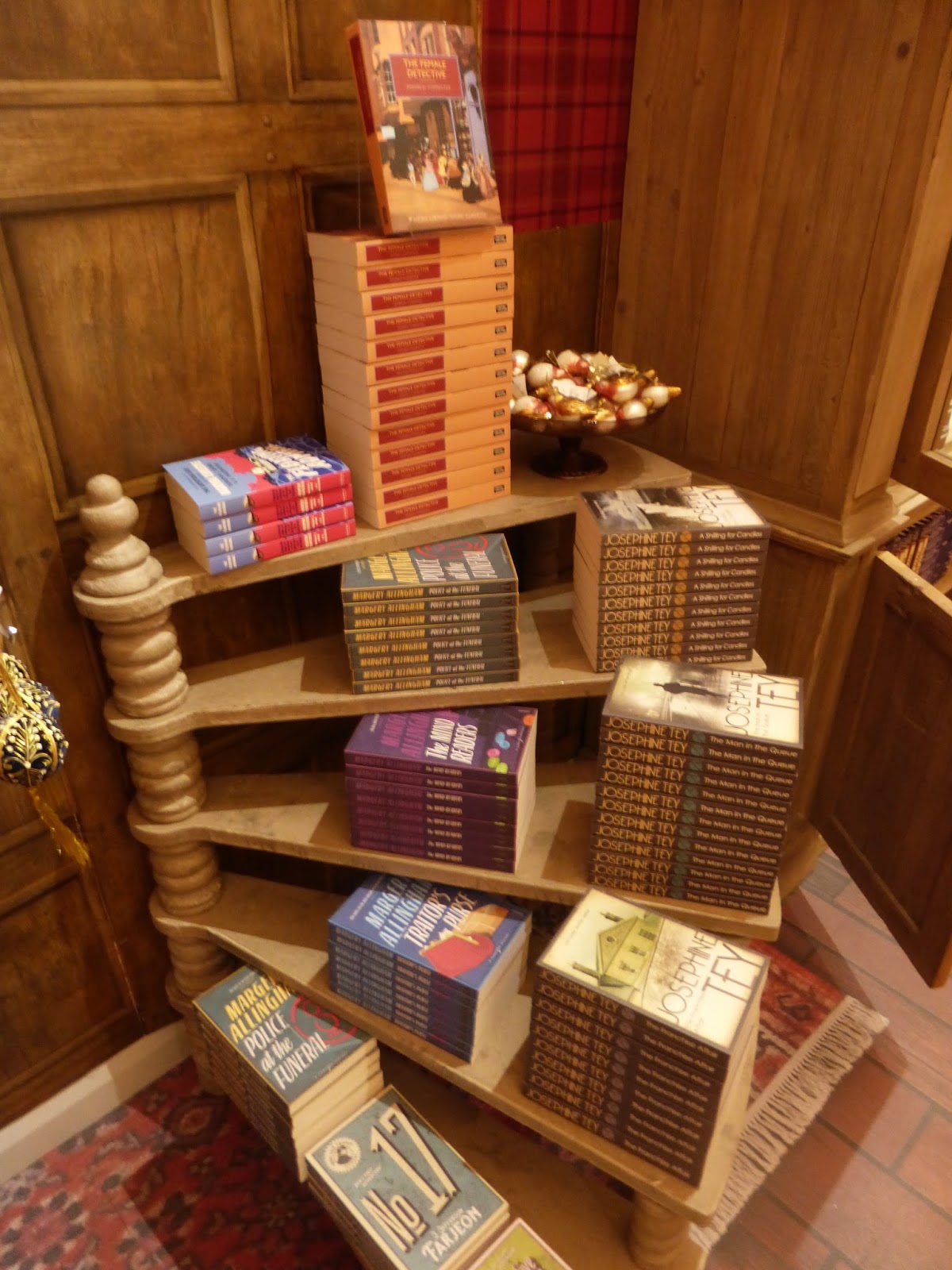
100 British Library Crime Classics


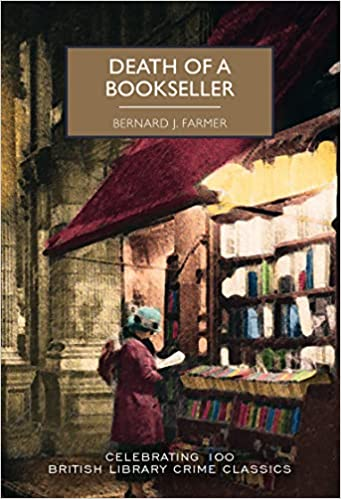
The one hundredth British Library Crime Classic has now been published. The title in question was, appropriately enough, a 'bibliomystery', Bernard J. Farmer's Death of a Bookseller, complete with a message on the inside cover from me to series fans. My association with the series dates back to July 2013, when I first met the then publisher, Rob Davies, who asked me to write intros for a couple of forthcoming titles by John Bude. I'd been writing intros for republished crime novels since the mid-90s, but it's fair to say that none had come close to the bestseller lists. And neither Rob nor I dreamed that the series would become such a runaway success.

It's interesting for me to cast my mind back to that stage in my career. I'd just published my sixth Lake District Mystery, The Frozen Shroud, but I was still a partner in my firm (although by that stage working four days a week). I was hard at work on The Golden Age of Murder, a project which had occupied me for years, and it seemed far from certain that book would even find a publisher. Suffice to say that the intervening years have been kind  and the Crime Classics have certainly played a part in my enjoyment of that time. Many have followed in the British Library's footsteps, sometimes splendidly, sometimes not quite so splendidly. From my point of view, it's marvellous to see so many long-neglected books becoming available again at affordable prices. The series' influence on the wider publishing world has been quite remarkable. Meanwhile my postbag (and the sales figures) indicate little doubt that the Crime Classics remain comfortably ahead of the field.  

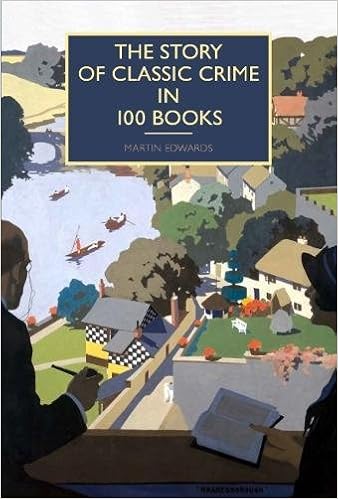
There have been many British Library-related highlights for me during the past nine years. I loved being given the chance to write a new solution to Anthony Berkeley's The Poisoned Chocolates Case: short as it is, I've been gratified by the response from reviewers and readers. The same is true of reaction to the eighteen anthologies (with two more on the way) that I've edited for the series. My companion volume to the series, The Story of Classic Crime in 100 Books, was nominated for five awards and won one; among other things, it's now been translated into Korean and Chinese. I designed a murder mystery for a pop-up shop at the Library one Christmas and I've also held a weekend masterclass on classic fiction there and been interviewed in the Library's Conference Centre, with Ann Cleeves, by Mark Lawson. There have been lots of other events, including last year's lovely visit to Ely, with more in the pipeline. I'd like to pay tribute to Rob and his successors at the Library and express my thanks for their encouragement and faith in my suggestions..

Today the Crime Classics are famous enough to merit a mention in Anthony Horowitz's Moonflower Murders. All this demonstrates how much people enjoy a well-made and entertaining story. I certainly don't choose all the titles or authors for the series, but I'm glad to have played a particular part in the rediscovery of interesting novels by such varied writers as E.C.R. Lorac, Mary Kelly, John Dickson Carr, Richard Hull, C.E. Vulliamy, Anne Meredith, Peter Shaffer, Christianna Brand, Nap Lombard, Raymond Postgate, and Margot Bennett. Do I admire every single book in the series equally? Of course not; the range is, quite deliberately, too diverse for that. Do I think that the series has made a wonderful contribution to readers' pleasure across the world? Absolutely.  


Monday, 31 August 2020

Rediscovering Josephine Bell


The Port of London Murders (British Library Crime Classics): Amazon.co.uk: Josephine  Bell, Martin Edwards: 9780712353618: Books

I first came across Josephine Bell's books when a feminist imprint, Pandora, reissued a number of excellent books by women writers in the late 1980s. These included The Port of London Murders, which became one of the first books I reviewed for The Criminologist. I was very struck by the fact that, although it was written in the late 30s, the story seemed ahead of its time in mood, setting, and treatment. No country house mystery this, but a novel that anticipated the approach of the Fifties.

Twenty years later, when I was working on The Golden Age of Murder, I was lucky enough to be sent some family documents which gave me fresh insight into Bell's writing, and I referred to these in the book. But she didn't become a member of the Detection Club until the Fifties, so she isn't a major figure in that particular study. I have, however, retained my interest in her work.

When the British Library agreed to reissue a book by Bell in the Crime Classic series, I was keen for The Port of London Murders to be the chosen title, and fortunately this was agreed. In writing the intro, I was again assisted by Bell's family, and (although a good deal still remains to be said) the result was a slightly longer introduction than usual, which I hope readers will find of interest.

But the story is the thing, and it's a good one. Bell made use of her medical know-how (she was a doctor, and so was her late husband) but it strengthens the storyline rather than overwhelming it. She also did a good deal of research into the workings of the port. There is an authenticity about the book that seems quite modern. Publication day is 10 October and it will be interesting to see how readers respond.

Monday, 2 March 2020

The Draughtsman's Contract - 1982 film review

I first saw The Draughtsman's Contract on television ten years or so ago. I began watching casually, probably not paying enough attention. I certainly didn't know what to expect and at times I found its enigmatic style perplexing, but I stuck with it and was duly shocked by the horrific and unexpected ending. It made a considerable impression on me, and I was interested, some years later, to read the thoughts of Peter Greenaway, who wrote and directed, and the comparisons he drew between his film and the country house murder mysteries of Agatha Christie. I even mentioned the film in The Golden Age of Murder.

Few films have haunted me like this one. There's just something about it that's different and memorable. I recently bought the DVD version, which has some good extras, and I think it's one of those films that is even better when you watch it for a second time. Knowing the ending didn't spoil my enjoyment at all.

So what is this strange film about? Well, it's set in 1694, and at the outset wealthy Lady Herbert (Janet Suzman) enters into a contract with a talented but arrogant draughtsman called Neville (Anthony Higgins). He is to make twelve drawings of the country house where she lives with her husband, and since the husband is off on a trip to Southampton, the contract contains a very unusual clause....

It's a visually stunning film, and the country house (Groombridge Place, which is near Tunbridge Wells, and whose gardens I'd like to visit one day) is very attractive. While working on the drawings, Neville gets to know Mrs Herbert's daughter (Anne-Louise Lambert) and her dreadful German husband (played, talking of Agatha Christie, by good old Hastings himself, Hugh Fraser). The supporting cast includes, equally unexpectedly, Lynda La Plante - this was before she shot to fame with Prime Suspect. The soundtrack is by Michael Nyman, channelling Purcell.

It's not a film that will be to everyone's taste. Some may think it arty and pretentious. But I remain impressed by Greenaway's imagination and flair.

Monday, 21 January 2019

The Life of Crime

When I started this blog, way back in October 2007, this is what I said:

"The aim is to share my enthusiasm for crime fiction, and the craft of writing. From childhood, I dreamed of becoming a crime novelist - and I love being part of a fascinating world.

I’m not only a writer, but a fan, and I’ll have lots to say about lots of terrific and often overlooked books and films, past and present. As for my own writing life, I’ll share the frustrations - and also the pleasures. If this blog encourages any would-be writers among you to keep at it, I’ll be delighted."

At that time I had no idea of what (if anything) the future held for me as a writer. I'd never won a single literary award, I was a grass roots member of the CWA, and the Detection Club was a famous institution that I'd once been invited to as a guest. Suffice to say, then, that the last eleven and a bit years have been a wonderful ride for me, proof that truth is stranger than fiction.

But it remains as true as ever that I'm a fan as well as a writer, and that in writing these blog posts (about 2750 of them now, eeek!) one of my over-riding aims is still to show that, even for ordinary writers like me, the writing life can offer all sorts of little unexpected pleasures which compensate for those moments when one despairs of ever being able to write a worthwhile bit of prose. (And inevitably there have been setbacks of one kind or another during those eleven years, too, which make the good moments all the sweeter.) So I'll continue to share with you some snippets from what I call in my talks my "life of crime"

Let me start with a few things that have happened during the first days of 2019. In the past three weeks, I've been contacted by a student from a university in the south of England who said that The Golden Age of Murder has inspired him to write his dissertation about the classic mystery. Julia Buckley kindly got in touch from the US to tell me that Yesterday's Papers features in the Oxford Dictionary of Literary Allusions. A journalist writing for the Smithsonian Magazine has interviewed me about fingerprints and early detective stories.A fan from the US who enjoyed The Story of Classic Crime in 100 Books shared information with me about Arthur Ransome's detective story reviews. Sheila Mitchell has given me fresh insight into the recording the audio version of Gallows Court. I've had the pleasure of corresponding with a new writer who has been battling with mental health challenges - a subject that I've become increasingly concerned with. And I've been invited to speak at Agatha Christie's home at Greenway (wow!), at the Rye Arts Festival, at a festival in Beverley, and to a women readers' group here in Cheshire. With colleagues from Gladstone's Library, I've worked out the programme for June's Alibis in the Archives. And I've even managed to get quite a bit of writing done.

So although the life of crime has its challenges, it has plenty of privileges as well. And that's why I remain so very, very keen to encourage other writers who become depressed and contemplate giving up to keep at it. You simply never know what is around the corner. And even when things seem to be going badly, there may be happier days ahead, if you only keep the faith. 

Monday, 3 December 2018

The Golden Age of Murder in Japan - and classic crime in China


I've just received my copy of the new Japanese edition of The Golden Age of Murder. And a handsome hardback volume it is. Of course, I can't read a word of it, since I don't speak or read Japanese, but seeing a book that one laboured over for so many years translated in this way is truly gratifying. I'm very grateful to the publishers and the hard-working translators who are, I'm assured by a Japanese friend, highly skilled.

I've never visited Japan (or at least I haven't so far; one never knows what the future may bring) but it's a country that I find increasingly fascinating. This is partly as a result of reading more Japanese detective fiction, partly as a result of having more contact with people from Japan. A couple of years ago, I was flown down to London to take part in a documentary for Japanese TV about classic detective fiction, and there's clearly a great appetite for the genre in Japan.

I wrote about The Tokyo Zodiac Murders the other day, and it's one of a number of ingenious detective novels from Japan which have been translated into English. Pushkin Vertigo have, for instance, published a couple of books by that fascinating character Masako Togawa. I've also enjoyed the work of Alice Arisugawa, whose non-fiction book about locked room mysteries is delightful to leaf through, even if one doesn't know the language, because of the gorgeous illustrations. Japanese culture seems very different to someone like me, raised in conventional fashion in the west. But it's enormously interesting, and Japanese crime fiction certainly appeals to me much at least as much as Nordic Noir. 

I'm delighted to say that there will also be a Chinese translation of The Golden Age of Murder, though that won't be published for another twelve months. In the meantime, I've just received a book from China that I'm really thrilled to see. It's primarily a collection of signatures and inscriptions from classic crime writers, British and American, and again the emphasis on images means that even if, like me, you speak no Chinese, it's still fascinating to look at. I supplied some images of inscribed books from my collection to the two editors, and my congratulations go to Eliot Han and his colleague for producing a splendid and (as far as I know) unique volume. Great stuff!


Saturday, 11 August 2018

The Story of Classic Crime in paperback

The Story of Classic Crime in 100 Books has just been published in paperback, another stage in the story of a book which has itself become a personal favourite of mine. Like The Golden Age of Murder, it's been a very lucky book for me. What started out as an idea to write a straightforward sort of companion to the British Library's Crime Classics series turned into something rather more ambitious.

It's in the nature of writing that, when you get to work, you find that you go in directions not necessarily contemplated when you first drew up a synopsis for a publisher, or first had your bright idea to create something new. With this book, I found myself telling a story of the evolution of the genre in the first half of the last century, a period of remarkable development. The books I chose (and in my enthusiasm, I did sneak over the 100 mark!) told part of that story, but so did the detailed intros to each of the chapters, which sought to set individual titles in context.

With all books, you never really know how the majority of people are going to react until it's too late. Will they "get" what you're trying to do? It's far from certain. This time, though, the reaction has been hugely gratifying. Only the other day, there was a wonderful review on the Random Jottings blog which truly delighted me. "Prepare to be beguiled" is a lovely phrase to link to a work of non-fiction...

The icing on the cake is that this year has seen the book nominated for five awards, three in the US (Agatha, Anthony, and Macavity) and two in the UK (Gold Dagger for non-fiction and HRF Keating). This sort of thing doesn't happen very often in an author's life, if at all, and it's another reason why it's been such a lucky book. I'm hoping, too, that the paperback edition will find a further readership. And perhaps that some of those who enjoy the book will be tempted to see what I've made of the Golden Age thriller in Gallows Court!

Thursday, 22 March 2018

The Story of Classic Crime - the paperback is coming...

The Story of Classic Crime in 100 Books has been a lucky book for me. In fact my whole relationship with its publisher, the British Library, has been a very fortunate one as far as I'm concerned. And I'm pleased with the cover of the UK paperback scheduled for publication on 5 July, which has just been finalised - here it is.
When I first conceived the book, I was conscious that it might be, or might at least be perceived as, something of an anti-climax following The Golden Age of Murder, which truly was a once-in-a-lifetime book, shortlisted for six awards, winning four, and reaching readers around the world. This didn't concern me, because I've always written primarily because of the sheer satisfaction of writing, but I did want to make the book as interesting and as worthwhile for crime fans as I possibly could.

The British Library were hugely supportive, and to my delight the book was extremely well received. The first print run sold out quickly, and there were an amazing number of positive reviews. Some of those from the national press feature now on the paperback cover. It even earned a place in the Agatha award shortlist. I'm looking forward to promoting the paperback at various events, including pre-publication events such as Alibis in the Archive and Bodies from the Library.

On the subject of reviews, incidentally, I had an interesting conversation the other day with a well-known publisher who's been around the business for a long time and enjoyed a lot of success. He told me that at least as regards press reviews, he had no doubt that it's far better for a book to get bad reviews than no reviews. He said he'd always had trouble persuading his authors that was the case, but almost invariably he saw a strong correlation between a review in (say) Kirkus Reviews in the US, and sales, even if Kirkus didn't like the book one bit. I suppose this simply demonstrates the way that marketing works. And at least it's a consolation if someone gives your masterpiece a thumbs-down!

Wednesday, 17 January 2018

New York, New York...


I'm just back from a short stay in New York, my third visit to the Big Apple. Each trip has been unforgettable. The first time coincided with the first time I had a novel published in the US - Eve of Destruction. I recall vividly checking into my hotel just off Broadway, then walking towards Central Park only to be lured into a bookstore. Imagine my glee when I was confronted by a huge display of my latest hardback! That hasn't happened too many times in life, I can tell you. The second trip was for the Edgars, two years ago, when The Golden Age of Murder had a lucky night. Very, very  memorable.

And this time, I'd been invited to stay in the Yale Club for four nights by the Baker Street Irregulars. They'd asked me to give their annual "distinguished speaker" (their term, not mine) lecture, and to take part in the BSI annual weekend, timed to coincide with Sherlock Holmes' official birthday, as well as some remarkable weather, ranging from snow to 60 degrees in the blink of an eye. The Irregulars were formed back in 1934, and they are a very prestigious group. Being invested as an Irregular is a big deal for Sherlockians. As for the lecture, I was following in the footsteps of some genuinely distinguished people, including Sara Paretsky, Christopher Frayling, Laurie R. King, and Pulitzer Prize winner Michael Dirda . No pressure, then...

Anyway, I got to the US in good time and had the chance of a "bracing" i.e. very cold walk to the fascinating Strand Bookstore, a huge and impressive place, where I managed to bag a couple of excellent signed books. On the flight I'd watched Goodbye Christopher Robin, and this prompted me to visit the New York Public Library, which is impressive, and boasts among many other treasures the original Winnie-the-Pooh, plus chums such as Piglet and Eeyore, in a glass case, in front of the famous map of the 100 acre wood.

The Yale Club proved very atmospheric, and among other things it boasts a fantastic library. I had the chance to attend a range of events, including a Baker Street Journal cocktail party, the main BSI dinner, a fabulous affair, a reception and lunch, a book fair and a private party given by Otto Penzler at the Mysterious Bookshop. Best of all, I had the chance to meet delightful people, including Mike Whelan, head of the BSI, and Les Klinger who invited me over, as well as many others. My thanks go to Dana Cameron for the photo at the top of this post, taken in the Club when I was fielding questions after my lecture. And then, on my last day, the sun shone (though it was again "bracing") and Michael Dirda and I had brunch together before doing sightseeing stuff at the Rockefeller Center, including a trip to Top of the Rock, with amazing views all around an amazing city. Quiet and understated New York is not, but I had a whale of a time.

Monday, 11 December 2017

Reading Reviews


Image result for the story of classic crime in 100 books


Image result for golden age of murder

Is it wise for writers to read reviews of their own books? Or is it simply a recipe for frustration and occasional rage, when the brilliance of one's efforts is ignored, and the reviewer displays a lamentable lack of enthusiasm, or even scorn? Writers invest a lot of time and effort in their work, and often a great deal of heartfelt emotion. So it's easy to become upset. And human nature means that bad reviews often make more of an impact than good reviews.

It's bound to be a purely personal matter for each writer as to the stance they take on reviews. My own attitude is influenced by the fact that I've been reviewing books for over 30 years, so I can see things from the reviewer's perspective as well as from the author's. As a writer, I'm interested in constructive reviews of my books, even if I don't agree with everything the reviewer says. We all make mistakes - critics as well as authors.

Of course, like everyone, I am very pleased when people say nice things about my books. And last week I was lucky enough to get two wonderful and very extensive reviews of two of my non-fiction works. The Invisible Event blog gave fantastic coverage to The Golden Age of Murder. I am still pinching myself about the fact that this book continues to sell well, even the hardback edition, which was published two and a half years ago.

And then the online library Interesting Literature discussed The Story of Classic Crime in 100 Books in depth, and in a way that again I found truly gratifying. And to see the book appear in Crimesquad's Christmas Top Ten (along with the Folio Society set for which I wrote an intro) was also delightful. 

What is especially satisfying is that both reviewers "got" what I was trying to do. And this is, to my mind, the key to reviewing. When one judges a book, it is best to judge it in the light of what the author's objectives were - not, or not mainly, by what the reviewer thinks the author's objectives should have been. Criticism that is sympathetic and constructive, and which strives not to be hurtful, is to my mind not just entirely proper, but well worth studying. One can learn from such criticism, in exactly the same way as one can learn from criticism of a first draft from a good editor. And anyway, you can't please all the people all of the time. If one sends a book out into the world, one has to be somewhat philosophical about the reaction, hard though that can be. Probably the worst scenario is for there to be no reaction at all!

Criticism that is unpleasantly expressed or reflects the reviewer's personal hang-ups (or vanity, or ignorance) is a waste of time, and not worth bothering with. And even the finest critics can sometimes err on the side of acerbity. I have huge admiration for both Dorothy L. Sayers and Julian Symons as critics, but occasionally I feel they overdid the brutality. Because they were people of great distinction, this must have caused quite a bit of hurt. I think that in later life Symons recognised this, and some (but not all) of his judgements mellowed. It was, in my opinion, a change for the better. In reviewing, as in life, a reasonable amount of tolerance is a very good thing.


Monday, 13 November 2017

After Ten Years of Blogging...


..it's a good moment to reflect. Actually, the ten-year anniversary was a month ago, but life has been too hectic to allow many moments of reflection. When I started this blog - the first post was on 13 October 2007 - my prime aim was to share my enthusiasm for crime writing. As part of this, I wanted to give  to anyone who was an interested an insight into the joys and frustrations of the professional life of a mid-list crime writer, someone who had been around for quite a long time, without becoming remotely famous. Hence the blog's title. I've often been asked if I write under my name, and it's a polite way of making it clear that the person asking the question has never heard of me.

In 2007, I had no idea of what the future held for me as a writer, but I did tell the story of my first TV option, and the fact that the dizzying excitement  ultimately faded when it became clear that the show would never be made. Ten years on, I've had half a dozen TV options, covering the Harry Devlin series, the Lake District series, and even The Golden Age of Murder, but still none of the scripts has actually made it on to the screen. It's frustrating (though option fees are definitely a consolation), but it's a common situation, and the only sensible reaction is to be philosophical. You can't be lucky all the time. And overall, I've been extraordinarily lucky.

If you'd told me ten years ago what would happen in my writing life over the next decade, I'd have suspected a cruel hoax. Back then, I wasn't even a member of the Detection Club, let alone its President, archivist, and author of The Golden Age of Murder. And I was nowhere near joining the committee of the CWA - my day job made it impossible - let alone becoming its Chair. I'd never won a literary award, and now I've picked up a totally unexpected number here and in the US, as well as various shortlistings. I'd never even set foot in the British Library, whereas in the past year I've been interviewed there by Mark Lawson, conducted a week-end master class there, plotted a murder mystery for their pop-up shop, and compiled my tenth BL anthology, as well as publishing The Story of Classic Crime in 100 Books and clocking up more than 40 intros to the Classic Crime series.

The past three years, in particular, have been amazing, and it's hard to figure out exactly what has made the difference. Some of it must be down to the fact that, although I'm still a practising lawyer, I now spend much less time on the law, and much of the energy I devoted to the day job (and endless commuting) is now directed towards writing-related activities. I've found, as many writers found before me, that there are all sorts of fascinating opportunities out there

Since I returned to the UK from the Toronto Bouchercon last month, I've taken part in literary festivals in Lancaster and in Dalton-in-Furness (the ancient capital of Furness might just feature in the next Lake District Mystery!) and given library talks in York, Beeston, and West Bridgford and a bookshop talk in Bramhall. I've  hosted the CWA Daggers Awards and the Detection Club's main annual dinner, survived a CWA board meeting without provoking my admirable colleagues to launch a coup d'etat, enjoyed an excellent lunch with the CWA's Northern Chapter, and given a talk in London to a marvellous group of American crime fans, as well as signing a pile of copies of the CWA anthology Mystery Tour at Goldsboro Books and piles of other books in Foyles and Waterstones. It's been a mad whirl of activity, but hugely enjoyable.

And I hope that if there are any writers, or would-be writers, reading this who are struggling with confidence at present, my story may offer them a bit of encouragement. Despite all the pitfalls, it's a privilege to live a writer's life, and I hate to see talented authors become so discouraged that they give up, something that happens far too often.

Writing is, as I said at the Dagger awards, a tough game, and setbacks are many; even in the past couple of weeks, I've had a couple of projects run into snags. I'm still very, very far from being a Big Name among authors. But surely the point about writing is to try to make the most of your skills and your opportunities, and hope that an occasional lucky break will compensate for all the knock-backs, however numerous the latter. Above all, the key is to have a good time, no matter how many well-meaning people keep wanting to know if you write under your own name!


Friday, 11 August 2017

Forgotten Book - Trent's Own Case


Unlike many authors associated with Golden Age detective fiction, Edmund Clerihew Bentley was far from prolific. Yet his impact on the genre was immense. Trent's Last Case is seen by many people (including me) as the effective catalyst for the development of the classic whodunit after the First World War, and when Bentley's old friend G.K. Chesterton died, Bentley was a popular choice to succeed him, and to become the second President of the Detection Club. This more or less coincided with the publication of Trent's Own Case, which records Philip Trent's long-awaited return to the fray of detection.

Bentley's short stories about Trent were also collected in a volume entitled Trent Intervenes. But although Trent's Last Case has been relatively easy to find over the years, the other two Trent books have been less widely available. Now Harper Collins have reissued all three books together as part of their Detective Story Club imprint.

I feel confident that crime fans will be delighted by this initiative, though I should declare my own involvement - I have written a new introduction to Trent's Own Case. This commission caused me to re-read the book recently, and in so doing I found I revised my original opinion of it somewhat. I read it first as a teenager, expecting something similar to the first Trent book. It's much better, though, to judge the book on its own merits,not least because it was actually a collaboration - Bentley co-wrote the novel with his friend H. Warner Allen, and the storyline features Warner Allen's own detective character, the wine merchant Mr Clerihew (who was named in Bentley's honour). It's a well-made story, and still very readable.

In The Golden Age of Murder, I discuss the "Trent Dinner" held in 1936 to celebrate the book's publication, and one of my most precious possessions is a copy of the first edition signed by those who attended the dinner. I also talk about this in a little more detail in the "Collecting Crime" section on my website.. The addition of this book, and the two other Trent titles, to the Detective Story Club list, is very welcome.


Monday, 29 May 2017

The Launch

I very much enjoyed the launch of Taking Detective Stories Seriously last Wednesday evening. The Dorothy L. Sayers Society did a very good job of organising the event, and Hatchards in Piccadilly was an excellent venue. The turn-out was excellent, especially since there was another crime book launch nearby that same night. And I admit to being chuffed when one of the Hatchards folk recommended me to a book about the Sayers era - which proved to be The Golden Age of Murder...

A book of reviews that were written more than 80 years ago is never going to disturb Paula Hawkins and all the celebrity chefs on the bestseller lists, but this is a project that has been dear to my heart for years, and it's so good to see it come to fruition. And there was a "feelgood" atmosphere at the launch, which was gratifying.

Other writers sometimes ask me about whether it is worthwhile to hold a book launch. I often regale them with an anecdote from my early days as a published novelist. At that time, I was published by Transworld in paperback, and one day I travelled to London to have lunch with my editor to celebrate the appearance of my second book, Suspicious Minds.

But my editor was unwell, and in her place was her boss, a very pleasant guy called Tony Mott. In my enthusiastic way, I asked him what advice he would give to writers hoping to improve their sales. He simply said, "Just remember that book launches don't sell books. They may be fun, but in the overall scheme of things, they don't make much difference."

He was a smart guy, and I'm sure he was right. The real question, though, is whether a launch can be arranged which is a truly enjoyable event. If it's possible, as with Taking Detective Stories Seriously, then it's well worth doing. I've launched a couple of books at Gladstone's Library, for instance, and found that was a delightful experience. But as Tony Mott said, when it comes to marketing a book, a launch is not an end in itself. It's merly the beginning.,


Wednesday, 19 April 2017

The Story of Classic Crime in 100 Books - the cover and the first review...


It really is a great thrill for me to be able to give advance notice of the publication (in July in the UK, August in the US) of my new book, The Story of Classic Crime in 100 Books, published by the British Library.

The first thing for me to say is that although the book covers some of the same ground as The Golden Age of Murder, it's very different in approach, and in almost every other respect. It's not a list, not even a collection of personal favourites. The clue is in the title - I wanted here to tell a story.

I've invested a lot of time and effort in this book, so naturally I'm anxious about how it will be received. The Golden Age of Murder is perhaps, quite a hard act for me to follow. 

So you will appreciate that I was excited (and relieved, let's be honest) when Publishers' Weekly in the US gave the book one of its prized "starred reviews" the other day. It's a great way for the story of this particular book to begin. 

And it's such a nice review, perhaps I'll be forgiven for quoting it in full:

Written as a companion to the British Library’s Crime Classics series of reprints, this descriptive critical catalogue of 100 crime and mystery novels (mostly British) published in the first half of the 20th century is irresistible for aficionados and a reliable reading list for newcomers. Edwards’ picks, most published during detective fiction’s golden age between the two world wars, range chronologically from Doyle’s The Hound of the Baskervilles (1902) to Julian Symons’s The 31st of February (1950) and include, in addition to many of the usual suspects, a few outliers sure to enliven debates among diehard fans. He groups his selections into 24 chapters that cover numerous aspects of the literature—the great detectives, the fair-play mystery (epitomized by Ronald Knox’s The Body in the Silo), the miraculous or locked-room mystery (a specialty of John Dickson Carr), country house and manor murder mysteries, and so on—and whose ordering shows classic tropes giving way to newer approaches more resonant with modern times. A crime novelist in his own right, Edwards (The Golden Age of Murder) brings a specialist’s discerning eye to discussions of each book’s significance, and without giving away key plot points. This is an exemplary reference book sure to lead readers to gems of mystery and detective fiction. 

Monday, 13 February 2017

Twinges of Regret?

One of the pleasures of the writing life comes from interactions with readers. I find the feedback of those who are kind enough to read my books, and this blog, quite fascinating. Occasionally, as with reviews, the feedback is either eccentric or less than positive, but life is far too short to become unduly disheartened by negativity. I treasure, for instance, the Amazon review of one of my novels which read "not a lot of interest in this as no trains", evidently from a railway lover who was not deterred from purchasing the book despite the complete absence of a promise of train-related material. Naturally, though, positive and constructive reactions warm the heart rather more.

I always pay close attention to comments, both positive and critical, from those who are supportive of my writing. As with suggestions from trusted agents or editors, they are well worth taking on board, whether or not one is always fully in agreement. One can always do better. And in another context, I found a comment the other day from Fiona, who has long been a valued supporter of my writing, very thought-provoking.

Fiona was commenting on the paperback publication of The Golden Age of Murder, and she asked an interesting question: "do you have any twinges of regret that you are becoming best known as an Authority rather than an Author...any pangs about your characters waiting for you to breathe new life into them?" Well, it's nice to be regarded as an authority, but to ask about twinges of regret is very perceptive. I've often talked about the ups and downs of the writer's life - and Chrissie Poulson's recent blog on the subject was very well received - and the issue underlying Fiona's very good question is to some extent about priorities and focus..

Fiona actually raises an issue which a number of people have raised with me in one way or another. Indeed, some years ago, when I was working on The Golden Age of Murder, someone advising me queried whether it was the right book to write, as the heavy workload involved might prove a distraction. But I carried on with what was really a labour of love. Similar points have been put to me in the past couple of years, and it is all to do with the fact that, at least apparently, I've focused much more on non-fiction during that time - The Golden Age of Murder, my work with the British Library, and The Story of Classic Crime,in 100 Books and so on. I've published various short stories, but no novel since The Dungeon House in 2015 (though I do have a storyline for another Lake District Mystery roughly worked out).

My answer, though, is unequivocal. I'll always see myself as a novelist, whether or not my novels are published and read, and whether or not they reach a wide audience. I was publishing non-fiction, though, before my first fiction was accepted, and I've always enjoyed non-fiction, researching subjects which intrigue me, and sharing my thoughts on them. The success I've been lucky enough to enjoy of late -The Times printed a rave review by Marcel Berlins of The Golden Age of Murder at the week-end - has been hugely gratifying. And my feeling, rightly or wrongly, is that all this has been very good for me as a novelist. I say this partly because sales of my books, including the early Harry Devlins, have steadily improved. But also because it's helped to motivate me as a fiction writer. I'm not absolutely sure why that is, if I'm honest, but it is a fact.

And right now, I'm feeling rather happy about my fiction for another reason. Over this past weekend, I've just finished the first draft of a brand new novel, quite different from everything I've done before. What is more, I've written it in a completely different way from my approach to all my earlier novels. But is it any good? you ask. I don't know, but I do know that at least the idea which is the driving force behind it is a strong one, compelling enough to have preoccupied me ever since I finished The Dungeon House. At this stage, I've no idea what will happen to the book. My previous stand-alones failed to become bestsellers, to put it mildly. So you could call it a bold or even foolhardy experiment. I can't be sure anyone else will love it as much as I do, but even if they don't, I won't regret having had a crack at the story. I'm not a believer in spending much time on regrets. My enthusiasm for writing fiction remains as strong as ever, and my aim is simple. For as long as I can, my priority will be to combine writing stories with writing about the genre I love.

Wednesday, 8 February 2017

The Golden Age of Murder in paperback


Tomorrow marks a milestone in my writing career, as The Golden Age of Murder appears in paperback in the UK for the first time, not quite two years after the original hardback publication. To say that this has been a lucky book for me is an under-statement. In terms of sales, reviews and awards, it's far surpassed even my most optimistic expectations.

I'd never have dreamed, for instance, that it would be translated into both Chinese and Japanese, yet that is exactly what will happen this year. In terms of both the number of reviews and their content, the reaction has been amazing- not just in the UK and US, but also in places such as Sweden and Australia. And I've recently been invited to talk about the Golden Age at literary festivals in such unexpected locations as Madrid and Dubai.

During the course of last year, the book picked up three awards in the US - the Edgar, the Agatha and the Macavity, and in the UK it earned the H.R.F. Keating award. For good measure there were two shortlistings - the Anthony award at Bouchercon, and the CWA Gold Dagger for non-fiction (which has never been awarded to a book that was a sort of reference book rather than a conventional true crime book). Attending those events was quite a surreal experience, but extremely gratifying.

Equally pleasing have been the shoals of emails and other messages I've had from readers who have enjoyed the book. Of course, I hope the paperback will reach an appreciative readership. And for those people who have asked me how I can follow up this book, my answer is - do look out for The Story of Classic Crime in 100 Books, which the British Library will publish in a few months' time. it's a very different book, but it's also one I'm proud of..

Saturday, 31 December 2016

2016 - Publications

In 2016, I didn't publish a new novel, although The Dungeon House appeared in paperback, and earned very pleasing reviews. I'm afraid the same will be true in 2017 (though I am working on a new novel, promise!) Even so, this past twelve months proved to be the most wonderful of my entire writing career. And one of the main reasons is the success of The Golden Age of Murder, which outstrips anything else in my experience.
There was a dizzying 48 hour spell last April when I took the train from DC to New York, won the Edgar award for best non-fiction book on a fantastic evening, then returned just in time to take part in a panel at Malice Domestic celebrating the work of Patricia Moyes, before the gala dinner the next evening when the book won the Agatha. The company of great friends made the celebrations all the more special. Something I'll never forget.
As if that were not enough, the next month the book won the H.R.F. Keating award at Crimefest; it was especially pleasing that the award was presented by Harry Keating's widow, Sheila. I'd had dinner with her and her agent the previous night, but they'd kept secret the judges' verdict, although they'd been told of it. Then at Bouchercon in New Orleans, Janet Rudolph presented me with the Macavity award, given to the book by Mystery Readers International. Given that the book was also shortlisted for the Anthony award and the CWA Gold Dagger for non-fiction, and that fellow authors on the shortlists included some renowned writers, not least Val McDermid, Frederick Forsyth and Adam Sisman, it was almost overwhelming. Memories to cherish. I'm also delighted to say that I've recently signed contracts to have the book translated into both Japanese and Chinese.

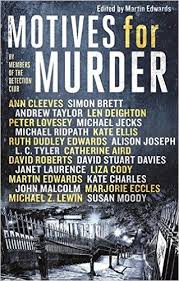
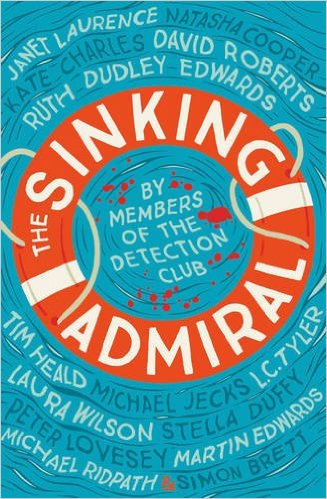
Another memory to treasure concerned the Detection Club's annual dinner at the Dorchester in November, the first over which I'd presided. We presented the US and UK editions of Motives for Murder, a collection of new stories that I'd edited in honour of Peter Lovesey's 80th birthday to the man himself. In the summer the Club had also published The Sinking Admiral, masterminded by Simon Brett, to which I'd contributed a chapter.

During the year, I've published occasional short stories, and I've written plenty of intros to books published by the British Library, Dean Street Press, and Harper Collins. The British Library published three anthologies that I've edited: Murder at the Manor, Serpents in Eden, and Crimson Snow, and they've all sold very well; far better than most of the anthos I've worked on over the years. I was especially gratified by reaction to my new solution to Anthony Berkeley's The Poisoned Chocolates Case, which was published in the autumn by the BL. And there are plenty more BL books to come in 2017. Including three more anthologies. So although I aim to have another novel out in 2018, there's plenty to keep me occupied between now and then....

Finally, I wrote something else that didn't appear in print, but which has enjoyed a splendid short life within the British Library - the puzzle for customers of the Classic Crime pop-up shop, Murder at Magenta Manor. Attending the opening and seeing how imaginatively the design team had interpreted my material was fascinating, quite a unique occasion, as well as one more reminder of the reason for the endless appeal of crime fiction. The subject is deadly serious - but the genre is fun..