Showing posts with label The Story of Classic Crime in 100 Books. Show all posts

Wednesday, 13 April 2022

100 British Library Crime Classics


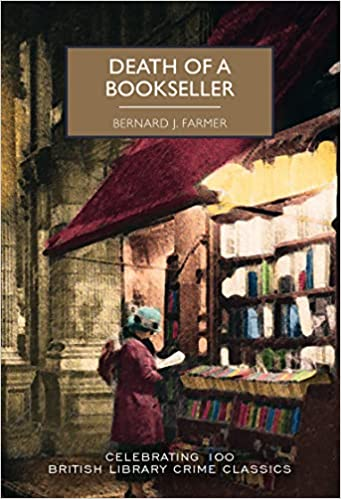
The one hundredth British Library Crime Classic has now been published. The title in question was, appropriately enough, a 'bibliomystery', Bernard J. Farmer's Death of a Bookseller, complete with a message on the inside cover from me to series fans. My association with the series dates back to July 2013, when I first met the then publisher, Rob Davies, who asked me to write intros for a couple of forthcoming titles by John Bude. I'd been writing intros for republished crime novels since the mid-90s, but it's fair to say that none had come close to the bestseller lists. And neither Rob nor I dreamed that the series would become such a runaway success.

It's interesting for me to cast my mind back to that stage in my career. I'd just published my sixth Lake District Mystery, The Frozen Shroud, but I was still a partner in my firm (although by that stage working four days a week). I was hard at work on The Golden Age of Murder, a project which had occupied me for years, and it seemed far from certain that book would even find a publisher. Suffice to say that the intervening years have been kind  and the Crime Classics have certainly played a part in my enjoyment of that time. Many have followed in the British Library's footsteps, sometimes splendidly, sometimes not quite so splendidly. From my point of view, it's marvellous to see so many long-neglected books becoming available again at affordable prices. The series' influence on the wider publishing world has been quite remarkable. Meanwhile my postbag (and the sales figures) indicate little doubt that the Crime Classics remain comfortably ahead of the field.  

There have been many British Library-related highlights for me during the past nine years. I loved being given the chance to write a new solution to Anthony Berkeley's The Poisoned Chocolates Case: short as it is, I've been gratified by the response from reviewers and readers. The same is true of reaction to the eighteen anthologies (with two more on the way) that I've edited for the series. My companion volume to the series, The Story of Classic Crime in 100 Books, was nominated for five awards and won one; among other things, it's now been translated into Korean and Chinese. I designed a murder mystery for a pop-up shop at the Library one Christmas and I've also held a weekend masterclass on classic fiction there and been interviewed in the Library's Conference Centre, with Ann Cleeves, by Mark Lawson. There have been lots of other events, including last year's lovely visit to Ely, with more in the pipeline. I'd like to pay tribute to Rob and his successors at the Library and express my thanks for their encouragement and faith in my suggestions..

Today the Crime Classics are famous enough to merit a mention in Anthony Horowitz's Moonflower Murders. All this demonstrates how much people enjoy a well-made and entertaining story. I certainly don't choose all the titles or authors for the series, but I'm glad to have played a particular part in the rediscovery of interesting novels by such varied writers as E.C.R. Lorac, Mary Kelly, John Dickson Carr, Richard Hull, C.E. Vulliamy, Anne Meredith, Peter Shaffer, Christianna Brand, Nap Lombard, Raymond Postgate, and Margot Bennett. Do I admire every single book in the series equally? Of course not; the range is, quite deliberately, too diverse for that. Do I think that the series has made a wonderful contribution to readers' pleasure across the world? Absolutely.  


Monday, 21 January 2019

The Life of Crime

When I started this blog, way back in October 2007, this is what I said:

"The aim is to share my enthusiasm for crime fiction, and the craft of writing. From childhood, I dreamed of becoming a crime novelist - and I love being part of a fascinating world.

I’m not only a writer, but a fan, and I’ll have lots to say about lots of terrific and often overlooked books and films, past and present. As for my own writing life, I’ll share the frustrations - and also the pleasures. If this blog encourages any would-be writers among you to keep at it, I’ll be delighted."

At that time I had no idea of what (if anything) the future held for me as a writer. I'd never won a single literary award, I was a grass roots member of the CWA, and the Detection Club was a famous institution that I'd once been invited to as a guest. Suffice to say, then, that the last eleven and a bit years have been a wonderful ride for me, proof that truth is stranger than fiction.

But it remains as true as ever that I'm a fan as well as a writer, and that in writing these blog posts (about 2750 of them now, eeek!) one of my over-riding aims is still to show that, even for ordinary writers like me, the writing life can offer all sorts of little unexpected pleasures which compensate for those moments when one despairs of ever being able to write a worthwhile bit of prose. (And inevitably there have been setbacks of one kind or another during those eleven years, too, which make the good moments all the sweeter.) So I'll continue to share with you some snippets from what I call in my talks my "life of crime"

Let me start with a few things that have happened during the first days of 2019. In the past three weeks, I've been contacted by a student from a university in the south of England who said that The Golden Age of Murder has inspired him to write his dissertation about the classic mystery. Julia Buckley kindly got in touch from the US to tell me that Yesterday's Papers features in the Oxford Dictionary of Literary Allusions. A journalist writing for the Smithsonian Magazine has interviewed me about fingerprints and early detective stories.A fan from the US who enjoyed The Story of Classic Crime in 100 Books shared information with me about Arthur Ransome's detective story reviews. Sheila Mitchell has given me fresh insight into the recording the audio version of Gallows Court. I've had the pleasure of corresponding with a new writer who has been battling with mental health challenges - a subject that I've become increasingly concerned with. And I've been invited to speak at Agatha Christie's home at Greenway (wow!), at the Rye Arts Festival, at a festival in Beverley, and to a women readers' group here in Cheshire. With colleagues from Gladstone's Library, I've worked out the programme for June's Alibis in the Archives. And I've even managed to get quite a bit of writing done.

So although the life of crime has its challenges, it has plenty of privileges as well. And that's why I remain so very, very keen to encourage other writers who become depressed and contemplate giving up to keep at it. You simply never know what is around the corner. And even when things seem to be going badly, there may be happier days ahead, if you only keep the faith. 

Saturday, 29 December 2018

2018: Publications


At this time of year, I like to indulge my nostalgic instincts by looking back on the events of the past twelve months and picking out special memories, before turning to the year to come. 2018 was no question, amazing, a year rich in terms of exciting experiences. So I'll group them under three broad headings, starting with publications. And there's no doubt about the stand-out moment for me - it was the publication in the UK of Gallows Court, by Head of Zeus, celebrated with a delightful launch event at historic Hatchard's in Piccadilly. Pictured above are Nic Cheetham of Zeus, Barry Forshaw, and Robert (Death in Paradise) Thorogood.


This novel, very different in so many ways from my other novels, was a project I'd worked on for about three years, without a contract, and without any guarantee that anyone would want to publish it. So it's been an absolutely thrill to see it produced in a lovely edition (complete with ribbon bookmark!) and also now in special limited, signed, lettered and numbered, editions. And then there was the reception accorded to the book. I've mentioned before that I was very uncertain about how people would react to it. This anxiety is pretty common with authors, but all the more so when one is experimenting with something fresh. But the pre-publication endorsements, from luminaries ranging from Lee Child and Peter James to Laurie R. King and Peter Robinson, were fantastic, while the reviews in the national newspapers and in magazines and on blogs were everything I could have dreamed of. And I've enjoyed talking about the book at a variety of events, for instance the Jersey Festival of Words:


The Story of Classic Crime in 100 Books appeared in paperback. This book had a fantastic year, earning nominations for three awards in the US and two in the UK. Receiving the Macavity award in St Petersburg, Florida, from Mystery Readers International, in the person of the wonderful Janet Rudolph, was a moment to savour. An evening of thoroughly enjoyable celebration duly followed...


I was delighted to be associated with Ten Year Stretch, an anthology which I co-edited with Adrian Muller, celebrating ten years of CrimeFest, and raising money for the RNIB, with stories by Deaver, Rankin, Child, Herron, Sjowall, and other superstars. The signing session is pictured above. Will any of those stories feature in award nominations next year? We'll have to wait and see, but I was so pleased that Christine Poulson's excellent "Accounting for Murder" from Mystery Tour was shortlisted for the CWA Short Story Dagger. That story is a real favourite of mine.


The British Library published two anthologies of mine during the year. Blood on the Tracks, a collection of railway-related mysteries, and the seasonal collection The Christmas Card Crime, both fared well in sales terms and were prominent in the Amazon bestseller lists. Meanwhile, I continued to write introductions to British Library Crime Classics; this year saw the appearance in the series of old favourites Richard Hull and Julian Symons, as well as The Arsenal Stadium Mystery, The Division Bell Mystery, and more titles by the long-undervalued E.C.R. Lorac. The continuing popularity of Golden Age reprints is illustrated by the enthusiasm shown by those attending two events in June, Bodies from the Library, and Alibis in the Archives. Events which will be returning next year - space at Alibis in particular is limited, so do register your interest in good time if you'd like to attend. 

As well as writing a story for Ten Year Stretch ("Strangers in a Pub") I also contributed "Farewell Cruise" to Ellery Queen's Mystery Magazine. And then there were articles for a variety of publications, as well as introductions to books published by Harper Collins - for instance, Donald Henderson's splendid A Voice Like Velvet - and Flame Tree Press. I find these side projects fun to do, and although they do take up a bit of time, I think it's worth it. Mind you, a key resolution for the coming year is to make sure I write plenty of fiction! 

Wednesday, 10 October 2018

Amsterdam


I've returned from a short and exhilarating break in sunny Amsterdam, a city I'd not visited for more than thirty years. Eurostar now runs there directly (though you have to change trains on the way back for some reason) and this made for a very convenient trip, as I'd been down in London, seeing friends, publishers, and my son/travelling companion.


To get in the mood for the trip, I took another look at the work of two notable crime writers, both now deceased, whose first novels were respectively Love in Amsterdam and Outsider in Amsterdam. The authors in question were Nicolas Freeling, an Englishman who spent much of his life on the other side of the Channel, and the even more widely travelled Janwillem Van de Wetering.


In their day, this pair were leading figures in the genre, although inevitably one hears less about them nowadays, and Van de Wetering's books aren't particularly easy to find. But both men were quirky, unorthodox characters and their fiction, which is certainly worth seeking out (though I found one or two of Freeling's later books rather dull - the Van der Valk series remains his strength), reflected their wide range of interests.


As for Amsterdam, it shone in the sunlight. The Rijksmuseum occupied almost a full day - there is so much to see - and Vondel Park was lovely to walk around. A lengthy canal trip and a bus tour gave a good overall perspective of the city (and travelling by canal and bus does at least enable one to minimise the risk of being mowed down by one of the innumerable cyclists - crossing a road is not for the faint-hearted), while the Oude Kirche, the city's oldest building, was wonderfully tranquil, even if it is situated in the heart of the red light district.


And there was a bonus for me, one of those pleasant moments that make the writing life seem highly gratifying. When I wandered into a bookshop, I was confronted by copies of Gallows Court and The Story of Classic Crime in 100 Books. And the lovely assistant proved to be a Golden Age fan who uses the latter book as a reference guide. Good for morale! It all contributed to an exceptionally enjoyable few days. 


Saturday, 11 August 2018

The Story of Classic Crime in paperback

The Story of Classic Crime in 100 Books has just been published in paperback, another stage in the story of a book which has itself become a personal favourite of mine. Like The Golden Age of Murder, it's been a very lucky book for me. What started out as an idea to write a straightforward sort of companion to the British Library's Crime Classics series turned into something rather more ambitious.

It's in the nature of writing that, when you get to work, you find that you go in directions not necessarily contemplated when you first drew up a synopsis for a publisher, or first had your bright idea to create something new. With this book, I found myself telling a story of the evolution of the genre in the first half of the last century, a period of remarkable development. The books I chose (and in my enthusiasm, I did sneak over the 100 mark!) told part of that story, but so did the detailed intros to each of the chapters, which sought to set individual titles in context.

With all books, you never really know how the majority of people are going to react until it's too late. Will they "get" what you're trying to do? It's far from certain. This time, though, the reaction has been hugely gratifying. Only the other day, there was a wonderful review on the Random Jottings blog which truly delighted me. "Prepare to be beguiled" is a lovely phrase to link to a work of non-fiction...

The icing on the cake is that this year has seen the book nominated for five awards, three in the US (Agatha, Anthony, and Macavity) and two in the UK (Gold Dagger for non-fiction and HRF Keating). This sort of thing doesn't happen very often in an author's life, if at all, and it's another reason why it's been such a lucky book. I'm hoping, too, that the paperback edition will find a further readership. And perhaps that some of those who enjoy the book will be tempted to see what I've made of the Golden Age thriller in Gallows Court!

Monday, 18 June 2018

A very brief breather...


I've arrived home after an action-packed few days in London. Whilst I was in the capital, I received the delightful news that The Story of Classic Crime in 100 Books has been shortlisted for a Macavity award by Mystery Readers International. The book has now received five major award nominations, three in the US, two in the UK, something I never dreamed of a few years ago when I first became involved with the British Library.

My trip included a variety of CWA events, notably hosting the annual lunch for former CWA chairs, an extremely convivial occasion in Covent Garden, a CWA board meeting, and the Detection Club's summer dinner at the Garrick Club. There was also a meeting with publishers to discuss marketing my new novel - more news about that very soon. I caught up with a number of old friends, including Tim Benson, with whom I went to school; among other things, he's now a guide at the Royal Academy, and he took me around the Summer Exhibition. If you like art, it's really a must-see.

Saturday saw the fourth Bodies from the Library conference at the British Library, and it proved to be another enjoyable occasion. The only downside is that because the programme is so full of things to do, there's never enough time to chat to all the people with whom one would like to catch up. But you can't have everything, and I'm delighted that Bodies is to return next year.

Christine Poulson hosted a conversation between Tony Medawar and myself about Golden Age anthologies, and it was good to see Tony again. We first met at, of all things, a Mastermind crime quiz at Bouchercon 1990, in London, before I was a published novelist. A lot of water under the bridge since then...Later in the morning I gave a talk about Richard Hull, and the various sessions included a panel about Francis Durbridge, a talk about Christianna Brand, one about crime dossiers, and a slightly bizarre Ellery Queen radio mystery from the 1940s. The final panel event, pictured, saw us discussing "Desert Island Detectives". Just to be quirky, I chose Ambrose Chitterwick...

There are detailed reports of the day on two of my favourite classic crime blogs, In Search of the Classic Mystery, from which I've taken the photo (well, crime is our shared enthusiasm...), and Cross Examining Crime. I was also delighted to chat to two more excellent bloggers, Jim and  Dan, with whom I recorded a podcast about impossible crimes. More about this another day.

It was good to meet Melvyn Barnes, and I hope to review his book about Durbridge, as well as Tony's new anthology, on this blog before long. In the meantime, I'm enjoying a breather today. Only two meetings, and a whole 24 hours of catch-up time before my next library talk tomorrow evening, which will be followed by a trip to the Lake District for a charity event...


Monday, 21 May 2018

The Daggers and CrimeFest


I'm back home, briefly, following an action-packed CrimeFest in Bristol. The convention celebrated its tenth anniversary in style, and a large room was packed to the rafters for the panel about our celebratory anthology, Ten Year Stretch. Considering that my fellow panellists included Lee Child, Yrsa Sigurdadottir, Simon Brett, John Harvey, and moderator Donna Moore, that wasn't perhaps surprising, and we had a great time. It was also good to see fellow contributors such as Jeffrey Deaver and Zoe Sharp during the course of the weekend.

I also, as usual, enjoyed moderating the Authors Remembered panel. This time I shared the platform with Sarah Ward, Nick Triplow, John Lawton, Chrissie Poulson and a new friend, Chris Curran. As ever time flew by all too quickly: so many great books to discuss, so little time. Sarah also moderated a splendid panel on "England's Green and Pleasant Land" in which I took part.

A very special highlight for me was the announcement of the CWA Daggers longlists. I'm truly delighted to say that, for the first time, and rather incredibly, I've been nominated for two Daggers in the same year: the CWA Dagger in the Library, and the CWA ALCS Gold Dagger for Non-Fiction (the latter for The Story of Classic Crime in 100 Books, which has this year been nominated for four awards, two in the UK, two in the US). It's all rather dizzying, and I'm hugely grateful.

Among many other things, I was delighted to present Peter James with a personal memento recording the award to him (a couple of years ago) of the CWA Diamond Dagger (see him wielding it with great aplomb below!). I also had a highly enjoyable dinner with my publishers, about whom more news before long...All in all, a terrific week-end. The delegates were sorry to hear Adrian Muller announce at the Saturday night banquet that there is some uncertainty about whether CrimeFest will take place next year, but here's hoping...


Thursday, 22 March 2018

The Story of Classic Crime - the paperback is coming...

The Story of Classic Crime in 100 Books has been a lucky book for me. In fact my whole relationship with its publisher, the British Library, has been a very fortunate one as far as I'm concerned. And I'm pleased with the cover of the UK paperback scheduled for publication on 5 July, which has just been finalised - here it is.
When I first conceived the book, I was conscious that it might be, or might at least be perceived as, something of an anti-climax following The Golden Age of Murder, which truly was a once-in-a-lifetime book, shortlisted for six awards, winning four, and reaching readers around the world. This didn't concern me, because I've always written primarily because of the sheer satisfaction of writing, but I did want to make the book as interesting and as worthwhile for crime fans as I possibly could.

The British Library were hugely supportive, and to my delight the book was extremely well received. The first print run sold out quickly, and there were an amazing number of positive reviews. Some of those from the national press feature now on the paperback cover. It even earned a place in the Agatha award shortlist. I'm looking forward to promoting the paperback at various events, including pre-publication events such as Alibis in the Archive and Bodies from the Library.

On the subject of reviews, incidentally, I had an interesting conversation the other day with a well-known publisher who's been around the business for a long time and enjoyed a lot of success. He told me that at least as regards press reviews, he had no doubt that it's far better for a book to get bad reviews than no reviews. He said he'd always had trouble persuading his authors that was the case, but almost invariably he saw a strong correlation between a review in (say) Kirkus Reviews in the US, and sales, even if Kirkus didn't like the book one bit. I suppose this simply demonstrates the way that marketing works. And at least it's a consolation if someone gives your masterpiece a thumbs-down!

Wednesday, 31 January 2018

Agatha and other awards

The Story of Classic Crime in 100 Books features on the newly announced shortlist for the Agatha award for best non-fiction book, and naturally I'm pleased, as well as grateful to those who have put the book forward for consideration. I was conscious that The Golden Age of Murder was potentially a once-in-a-lifetime book, and that there was a risk if I ventured into non-fiction about the genre again, the result would be anti-climactic. But it would be a mistake to be deterred by that sort of thinking, since the aim of writing is to do what you enjoy, and what you hope others may enjoy. And I found the experience of working on the book hugely enjoyable, not least because my British and American publishers are excellent, and I had wonderful support from a number of people, not least Nigel Moss and Barry Pike, whose comments on the draft were enormously helpful.

I've had wide-ranging experience of dealing with awards, both in my legal career and as a writer. I've been involved in decisions on awards, notably during the period of about twenty years when I was on the CWA Diamond Dagger sub-committee. My own efforts have appeared on shortlists, and occasionally been successful. And, it goes without saying, the vast majority of my works have not come close to featuring in any awards lists.

All this had led me to various opinions about awards. I've sometimes talked to people who develop conspiracy theories about award judging processes, but I tend not to be too sympathetic to these. The reality is that judging awards, or voting for an award, entails a great deal of subjectivity. I can think of many award-winning books that have benefited from good timing as well as intrinsic merit, and that's life. What is the "best"? The novel that I regard as my best got nowhere, in terms of sales or awards, yet three other novels did well. Perhaps that simply means that an author isn't the best judge of his or her own work.

In recent years, I've had a lot of good fortune with awards, and maybe that is why I take a fairly relaxed view of these things. But really, lovely as it is to have one's work recognised, it's surely best to strive to be philosophical about awards. What I'd say to any writer at the start of their career is to enjoy the good times, because all writers have plenty of less good times. To be shortlisted for an award is an honour, something to savour. And then what matters is to keep writing, and try to write something even better, whether or not it ever comes close to winning an award.

Friday, 29 December 2017

2017 - Publications


This has been an eventful year for me on many fronts, and I have an over-riding feeling of gratitude for twelve months of good health and good fortune. I became Chair of the CWA at the start of 2017, and it was always clear that this would take up much more time than does being President of the Detection Club, which is a much smaller and less complicated organisation. I'm the first person to have held both offices at the same time (which could suggest a certain naivete on my part) but despite the time pressures, fortunately I've managed, so far at least, to combine these roles with a reasonable amount of productivity as a writer.

The British Library's publication of The Story of Classic Crime in 100 Books in the summer was a highlight. I wanted this book not to seem like an anti-climax after the unexpected success of The Golden Age of Murder,which in some respect is a once in a lifetime kind of book, and which appeared in paperback in the UK this February. As things turned out, the reviews were great, and sales have been excellent (the two often do not go hand in hand, believe me). Less high profile, perhaps, but very rewarding, was the long-awaited publication of Taking Detective Stories Seriously, the collected reviews of Dorothy L. Sayers, to which I provided an intro and lengthy commentary. I'm so pleased that the Dorothy L. Sayers Society has made these wonderful reviews widely available - for the first time in more than 80 years.


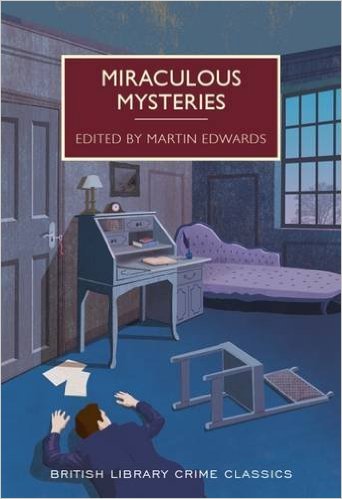
For the British Library, I've also compiled four anthologies of classic crime stories: Miraculous Mysteries, Continental Crimes, The Long Arm of the Law, and Foreign Bodies. I enjoyed putting these books together, and it's also been a pleasure to write a series of intros to new titles in the Crime Classics series, along with a special essay on Christmas crime fiction for the hardback edition of Anne Meredith's Portrait of a Murderer.  I also wrote intros for books from other publishers, including an essay on locked rooms for the Folio Society's box set of three classic novels, Trent's Own Case in the Detective Story Club series, and Agents and Spies, published by Flame Tree. And last but certainly not least was an intro for Locked Room International's reprint of Death in the Dark by Stacey Bishop, an extraordinary book.


For good measure, I edited the CWA's latest anthology, Mystery Tour, to which I contributed a story, "The Repentance Wood" inspired by a trip to Dubai and Sharjah in March.  And in case you're wondering what inspired that particular idea, here's the original Repentance Wood itself...

I published a number of other short stories during the course of the year, including "The Corpse Candle" in Mystery Most Historical and "Bad Friday" in Busted!, an anthology of law enforcement stories. "Bad Friday" had its origins in a train trip from Euston which I and other passengers spent listening reluctantly to the rather offensive rantings of someone on her mobile phone. It wasn't an enjoyable experience, but for a writer, nothing is wasted! And "Farewell Cruise" recently appeared in Ellery Queen's Mystery Magazine - a story inspired, you guessed it, by trips on cruise ships...


Monday, 11 December 2017

Reading Reviews


Image result for the story of classic crime in 100 books


Image result for golden age of murder

Is it wise for writers to read reviews of their own books? Or is it simply a recipe for frustration and occasional rage, when the brilliance of one's efforts is ignored, and the reviewer displays a lamentable lack of enthusiasm, or even scorn? Writers invest a lot of time and effort in their work, and often a great deal of heartfelt emotion. So it's easy to become upset. And human nature means that bad reviews often make more of an impact than good reviews.

It's bound to be a purely personal matter for each writer as to the stance they take on reviews. My own attitude is influenced by the fact that I've been reviewing books for over 30 years, so I can see things from the reviewer's perspective as well as from the author's. As a writer, I'm interested in constructive reviews of my books, even if I don't agree with everything the reviewer says. We all make mistakes - critics as well as authors.

Of course, like everyone, I am very pleased when people say nice things about my books. And last week I was lucky enough to get two wonderful and very extensive reviews of two of my non-fiction works. The Invisible Event blog gave fantastic coverage to The Golden Age of Murder. I am still pinching myself about the fact that this book continues to sell well, even the hardback edition, which was published two and a half years ago.

And then the online library Interesting Literature discussed The Story of Classic Crime in 100 Books in depth, and in a way that again I found truly gratifying. And to see the book appear in Crimesquad's Christmas Top Ten (along with the Folio Society set for which I wrote an intro) was also delightful. 

What is especially satisfying is that both reviewers "got" what I was trying to do. And this is, to my mind, the key to reviewing. When one judges a book, it is best to judge it in the light of what the author's objectives were - not, or not mainly, by what the reviewer thinks the author's objectives should have been. Criticism that is sympathetic and constructive, and which strives not to be hurtful, is to my mind not just entirely proper, but well worth studying. One can learn from such criticism, in exactly the same way as one can learn from criticism of a first draft from a good editor. And anyway, you can't please all the people all of the time. If one sends a book out into the world, one has to be somewhat philosophical about the reaction, hard though that can be. Probably the worst scenario is for there to be no reaction at all!

Criticism that is unpleasantly expressed or reflects the reviewer's personal hang-ups (or vanity, or ignorance) is a waste of time, and not worth bothering with. And even the finest critics can sometimes err on the side of acerbity. I have huge admiration for both Dorothy L. Sayers and Julian Symons as critics, but occasionally I feel they overdid the brutality. Because they were people of great distinction, this must have caused quite a bit of hurt. I think that in later life Symons recognised this, and some (but not all) of his judgements mellowed. It was, in my opinion, a change for the better. In reviewing, as in life, a reasonable amount of tolerance is a very good thing.


Monday, 4 December 2017

Books for Christmas


Tomorrow evening I'll be at the British Library, where there will be a Christmas shopping evening, and this has prompted me to give a plug to some of the books I've been involved with recently in the hope that if you're casting around for present ideas, you may be tempted. At least there are plenty of options to choose from this year!


For me,the publishing highlight of the year has been the appearance of The Story of Classic Crime in 100 Books. The reviews, here and in the US, have been fantastic, and the sales have been equally gratifying. At times in the past, I've found that great reviews don't always lead to great sales, but this year has been a happy exception.


And then there are the British Library anthologies that I've put together this year. Miraculous Mysteries, Continental Crimes, The Long Arm of the Law, and Foreign Bodies. Each very distinctive, but each an attempt to combine rarities from obscure authors with stories by more familiar name, always with an emphasis on variety around a common theme.


The British Library has brought out a new Crime Classic each month, and the series now numbers 50 books, which I find rather wonderful. The hardback edition of Anne Meredith's Portrait of a Murderer contains an extended essay of mine about Christmas crime. And of course my earlier seasonal anthologies, Silent Nights and Crimson Snow, are still very much available.


With other publishers, I've undertaken a variety of projects. I'm thrilled that the Dorothy L. Sayers Society brought out Taking Detective Stories Seriously, the Sayers reviews that I edited and wrote a commentary for. And a  project I haven't mentioned previously on this blog is the Folio Society's lovely collection of three classic locked room mysteries (by Gaston Leroux, Edgar Wallace, and John Dickson Carr), for which I wrote an extended introductory essay. A beautifully produced set of books.

Also rather lovely to look at is Flame Tree's Agents and Spies, for which I wrote a short intro. I'm a fan of the Detective Story Club, and I enjoyed renewing my acquaintance with E.C. Bentley when writing an intro for Trent's Own Case. There are two more books in this series for which I've written intros - more details next year.


And last but not least, there is the CWA anthology, Mystery Tour. 28 contemporary authors and 28 new stories. We're launching the book at Daunt's Bookshop on Wednesday, and I hope to see some of you there.

Monday, 13 November 2017

After Ten Years of Blogging...


..it's a good moment to reflect. Actually, the ten-year anniversary was a month ago, but life has been too hectic to allow many moments of reflection. When I started this blog - the first post was on 13 October 2007 - my prime aim was to share my enthusiasm for crime writing. As part of this, I wanted to give  to anyone who was an interested an insight into the joys and frustrations of the professional life of a mid-list crime writer, someone who had been around for quite a long time, without becoming remotely famous. Hence the blog's title. I've often been asked if I write under my name, and it's a polite way of making it clear that the person asking the question has never heard of me.

In 2007, I had no idea of what the future held for me as a writer, but I did tell the story of my first TV option, and the fact that the dizzying excitement  ultimately faded when it became clear that the show would never be made. Ten years on, I've had half a dozen TV options, covering the Harry Devlin series, the Lake District series, and even The Golden Age of Murder, but still none of the scripts has actually made it on to the screen. It's frustrating (though option fees are definitely a consolation), but it's a common situation, and the only sensible reaction is to be philosophical. You can't be lucky all the time. And overall, I've been extraordinarily lucky.

If you'd told me ten years ago what would happen in my writing life over the next decade, I'd have suspected a cruel hoax. Back then, I wasn't even a member of the Detection Club, let alone its President, archivist, and author of The Golden Age of Murder. And I was nowhere near joining the committee of the CWA - my day job made it impossible - let alone becoming its Chair. I'd never won a literary award, and now I've picked up a totally unexpected number here and in the US, as well as various shortlistings. I'd never even set foot in the British Library, whereas in the past year I've been interviewed there by Mark Lawson, conducted a week-end master class there, plotted a murder mystery for their pop-up shop, and compiled my tenth BL anthology, as well as publishing The Story of Classic Crime in 100 Books and clocking up more than 40 intros to the Classic Crime series.

The past three years, in particular, have been amazing, and it's hard to figure out exactly what has made the difference. Some of it must be down to the fact that, although I'm still a practising lawyer, I now spend much less time on the law, and much of the energy I devoted to the day job (and endless commuting) is now directed towards writing-related activities. I've found, as many writers found before me, that there are all sorts of fascinating opportunities out there

Since I returned to the UK from the Toronto Bouchercon last month, I've taken part in literary festivals in Lancaster and in Dalton-in-Furness (the ancient capital of Furness might just feature in the next Lake District Mystery!) and given library talks in York, Beeston, and West Bridgford and a bookshop talk in Bramhall. I've  hosted the CWA Daggers Awards and the Detection Club's main annual dinner, survived a CWA board meeting without provoking my admirable colleagues to launch a coup d'etat, enjoyed an excellent lunch with the CWA's Northern Chapter, and given a talk in London to a marvellous group of American crime fans, as well as signing a pile of copies of the CWA anthology Mystery Tour at Goldsboro Books and piles of other books in Foyles and Waterstones. It's been a mad whirl of activity, but hugely enjoyable.

And I hope that if there are any writers, or would-be writers, reading this who are struggling with confidence at present, my story may offer them a bit of encouragement. Despite all the pitfalls, it's a privilege to live a writer's life, and I hate to see talented authors become so discouraged that they give up, something that happens far too often.

Writing is, as I said at the Dagger awards, a tough game, and setbacks are many; even in the past couple of weeks, I've had a couple of projects run into snags. I'm still very, very far from being a Big Name among authors. But surely the point about writing is to try to make the most of your skills and your opportunities, and hope that an occasional lucky break will compensate for all the knock-backs, however numerous the latter. Above all, the key is to have a good time, no matter how many well-meaning people keep wanting to know if you write under your own name!