Monday, 4 August 2014
Called to the Bar
"I hereby call you to the Bar and do publish you barrister."
I've often been called to the bar, but not in the legal sense. I've spent more years than I care to remember as a solicitor, and wrote eight books about a solicitor detective, but of late I've become more and more interested in the lives of barristers - those lawyers who really are Called to the Bar. I'm often asked, mainly but not only by friends from outside Britain, what the difference is between barristers and solicitors, and it's fair to say that the distinction is less significant than it used to be. But barristers do have certain monopolies - only they can appear as advocates in the higher courts, for instance.
Each barrister is a member of one of the four Inns of Court based in central London, and although some are employed, e.g. by the government, the majority are self-employed. They usually work in 'chambers' or 'sets' of barristers, with clerks acting as the link between them and their clients (who are usually, but nowadays not always, firms of solicitors, who instruct barristers to advise their clients, for instance on complex issues or in some court cases.) Barristers are much less numerous than solicitors, though the numbers of both have increased in recent years.Some, but not all, of the most eminent and senior barristers apply to "take silk",and the candidates who are chosen become Queen's Counsel, sometimes known as "leaders"..
I've featured barristers in minor roles in some of my Harry Devlin books - notably Suspicious Minds. But the best crime novels about barristers that spring to mind are Tragedy at Law by Cyril Hare, which introduced Francis Pettigrew, a barrister who became one of the most appealing amateur sleuths in a short run of books, A Certain Justice by P.D. James, which was marked by the author's characteristic in-depth research (though one barrister friend who admired the book told me she greatly over-estimated the attraction of being a head of chambers!) and the series by Sarah Caudwell which began with Thus Was Adonis Murdered. I really ought to re-read Sarah's books sometime soon - they are great fun. Significantly, both Hare and Sarah were barristers themselves. Theirs is quite a mysterious world, and it's easy to be baffled by it. You need inside knowledge to get barristers right, and even fine writers can find this a major challenge (the clueless defence barrister in Jimmy McGovern's otherwise powerful TV drama Joint Enterprise springs to mind)
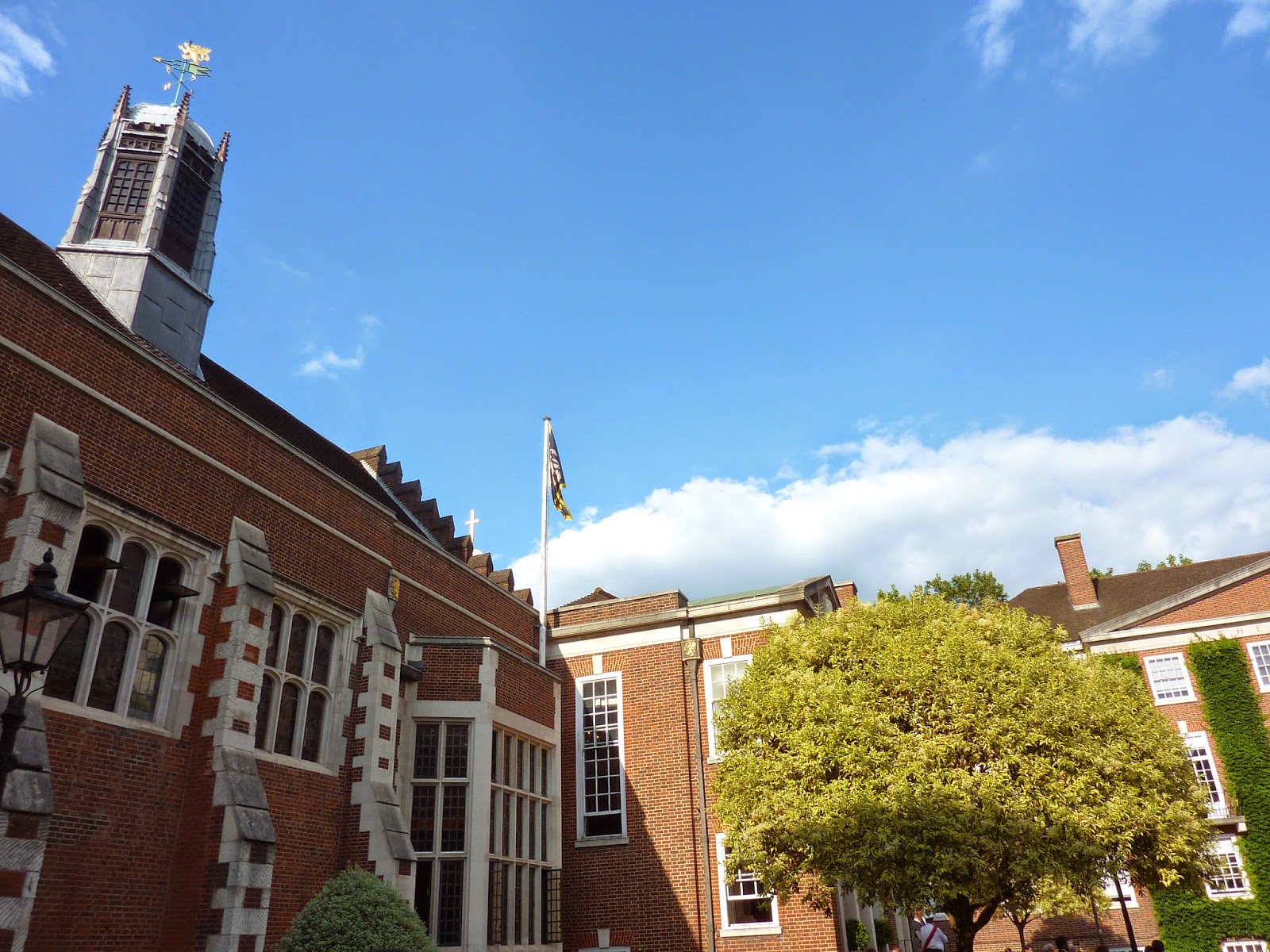
My webmaster's journey to becoming a barrister has, however, meant that I've become quite deeply interested in the world of the Bar, and last week I had the great pleasure and privilege of attending his call to the Bar ceremony in Gray's Inn, an ancient ritual which took place on a glorious day in delightful and very historic surroundings, and which was followed by a lavish reception. with... yes, a well-stocked bar.
In my younger days, I was never one for ceremonies, and I even skived out of my own admission as a solicitor ceremony, partly through lack of money, but also partly because it didn't mean a great deal to me. Suffice to say that my views on this, as on much else, have shifted over the years, and I was fascinated to gain first hand insight into a tradition that is just as fantastic and memorable as a graduation in the Sheldonian Theatre. Reflecting on my delighted reaction to the occasion, I suppose I've become more and more attracted by history, and by the chance of taking part in things, as the years have passed.
So am I tempted to write a story or two about barristers? How did you guess?
Wednesday, 30 July 2014
Top 10 Golden Age novels
Finally, I should say that, to show how difficult this game is, I changed my mind several times during the course of writing this post. And I'll probably change it a few more times as I'm reminded of classics I've overlooked...
10. The Crooked Hinge by John Dickson Carr - I'm a great fan of "impossible crime" mysteries, and Carr wrote several superb examples. Hard to choose just one, but I did admire this mystery.
9. Tragedy at Law by Cyril Hare - several of Hare's books appeared as late as the Fifties,but like Christie's and that of Edmund Crisipin and Christianna Brand, his work belongs in spirit to the Golden Age. This is a classic study of law and crime. Very unusual.
8. Excellent Intentions by Richard Hull - a strangely under-estimated book by a writer who was always trying something different. Very clever twist on the idea of the courtroom drama.
7. Death Walks in Eastrepps by Francis Beeding - a wonderfully original serial killer whodunit, with a great twist and terrific seaside setting.
6. Obelists Fly High by C. Daly King - King wrote barmily implausible books, but this one is written with such gusto, and has such a detailed "clue finder" that I find it impossible not to include it in my list.
5. Trent's Last Case by E.C. Bentley - this is the book that was the catalyst for the Golden Age school of writers, and it's really very well done. Elegant and memorable.
4. Murder Must Advertise by Dorothy L. Sayers - I find it very hard to pick my favourite Sayers book. They all seem flawed to me - but usually because she was so admirably ambitious. The Nine Tailors and The Documents in the Case are really good too. I'm not a member of the Gaudy Night fan club, I'm afraid, even though again I respect what Sayers was trying to achieve.
3. Lonely Magdalen by Henry Wade - a police story, and much darker than most Golden Age books. But very impressive, and a landmark title in terms of police procedure mysteries.
2. The Poisoned Chocolates Case by Anthony Berkeley - witty and clever, this is a masterly example of the multiple solution detective mystery. Both Sayers and Christie loved it, and so do I.
1. And Then There Were None by Agatha Christie - as I said on Monday, this one is simply unbeatable in my opinion...
Wednesday, 22 June 2011
Three Great Endings to Detective Stories
I was gratified by the interest shown in my last post, on detective story endings, and I thought I'd keep the pot boiling by mentioning a few of my fave endings.
First, a real classic - the closing lines of And Then There Were None, by Agatha Christie. Dame Agatha was a dab hand at great endings, but this one, which I read when young, has always stuck in my mind.
Second, an ending that gave me an idea for a very different book of my own - Yesterday's Papers. The great ending was in Margaret Millar's A Stranger in My Grave. What I borrowed from this marvellous book was a structural device, and I was really pleased with the result. Yesterday's Papers remains a personal favourite among my own titles I wish it was still in print.
Third, a bitter remark made by Francis Pettigrew at the end of Tragedy At Law by Cyril Hare. Totally original, and quite marvellous - especially for a lawyer!
If you don't know the Hare or the Millar, I heartily recommend them both.
Saturday, 8 August 2009
The Essence of Crime Fiction
In The Freewheelin’ Hakan Nesser, there’s a quote from Nesser which sums up beautifully the essence of mystery fiction. Offhand, I can’t think of anyone who has expressed it much more economically yet more accurately.
‘The crime novel is interesting because it is so clearly linked to the two basic questions every story tries to answer. What has happened? What’s going to happen now? The first is to do with the past and arouses curiosity. The second looks to the future and arouses excitement. In a detective story or crime novel, the relationship between those two time frames is interesting. The sequence of events comes together in the crime, which is both an end and a beginning. This is where the criminal investigation begins, and at the same time the crime marks the end of a conflict in the past.’
This analysis, it seems to me, can be applied as much to a Hitchcock movie as to, say, Trent’s Last Case or The Girl With the Dragon Tattoo. Even some authors of classic, Golden Age style mysteries, played games with the starting point of their novels – Towards Zero by Agatha Christie and Tragedy at Law by Cyril Hare are examples.
I’m not yet ready to start a new book, but when the time comes, I’ll give some thought to Nesser’s way of looking at the genre. Who knows, it may prompt fresh ideas.
Monday, 9 March 2009
Open Book etc.
Barry Forshaw rang to tip me off that he’d talked about my work on the BBC Radio 4 programme ‘Open Book’ yesterday, while warning me that there was always the chance that any mention of my name might be edited out of the final interview! The theme of that part of the programme was lawyers who write crime fiction and the starting point was Mariella Frostrup’s interview of P.D.James about Cyril Hare. I’ve talked about my admiration for Hare on this blog, and James is clearly a huge fan, especially of Tragedy at Law.
Barry was then interviewed by Mariella (lucky chap) about lawyers who write crime and gave me a name check, along with Frances Fyfield, when talking about British lawyer-writers. The Americans, he mentioned were Scott Turow, John Grisham and Mark Gimenez, so I felt I was in very select company.
By coincidence, Steve Steinbock has just blogged about my very first novel, All the Lonely People, which introduced the Liverpool lawyer Harry Devlin, on Criminal Brief. Steve recently gave my latest novel with a legal background, Waterloo Sunset, a terrific review in The Strand Magazine, and this time I am quite unable to resist linking to his generous remarks.
Finally, three more entries on the blogroll: Bookwitch, Paul Brazill, and Deighton Dossier. Do also check out Rob Mallows’ impressive website about Len Deighton.