Wednesday, 18 September 2019

The Rye Arts Festival Trip - part two


The Cryme Day that John Case organised for the Rye Arts Festival was designed around four crime novelists: Simon Brett, Lynne Truss, William Shaw, and myself. Guy Fraser-Sampson, another crime writer who lives nearby in Winchelsea, was tasked with interviewing William and Lynne, and at a late stage we agreed that he'd interview me. Even without time for prep, he did a very good job indeed, and it was a most enjoyable experience. I was fascinated to hear William talk about the Dungeness setting of some of his books, while Simon was (as always) highly entertaining. Lynne, whom I last met on the evening Ann Cleeves and I were initiated into membership of the Detection Club, when she was guest speaker and we walked back through the snow, was also very witty. John had organised a murder mystery lunch at the Mermaid Inn, which I enlivened inadvertently by squirting raspberry puree all over the tablecloth. I've always been inept, I'm afraid. At least it looked like blood spatter at a crime scene...


I met some lovely people during the day, and signed plenty of books, while John and his team did a great job. Afterwards, Simon and his wife Lucy, Lynne and Helena and I went out to dinner together at the Ship Inn and had a very convivial time. The Festival was a great success and Rye a marvellous location.

On Sunday, first stop was Lamb House in Rye. This was Henry James' home, and E.F. Benson was another occupant. I can't claim James as a crime writer, but Benson's The Blotting Book does feature in The Story of Classic Crime in 100 Books. The garden of the house is fabulous, and in the sunshine it was a truly lovely sight. After that, it was on to Winchelsea, a pleasing small town with plenty of interesting history (it was once a port but now lies inland), and then Winchelsea Beach, a long stretch of shingle.


William's discussion of Dungeness had fired my imagination, so that was the next destination. A wild and bleak place in poor weather, I'm sure, but benign enough in the sun. I resisted the temptation to go on the steam train to Dymchurch, travelling by car instead to a typical seaside resort. These coastal outposts lie on the edge of Romney Marsh, the setting for Russell Thorndike's Dr Syn novels. There is even a Dr Syn bedchamber in the Mermaid Inn. I have a first edition of the first Dr Syn book, and now I've experienced the landscape I hope shortly to read it.


Then it was off to Sissinghurst, where Vita Sackville-West and her husband created one of Britain's most famous gardens. Again, the weather was perfect. The tower contains Vita's writing room, and this fascinated me. I yearn for a tower of my own now! Anyway, Sissinghurst is a place I've wanted to visit for a long time, and it certainly lived up to expectations.


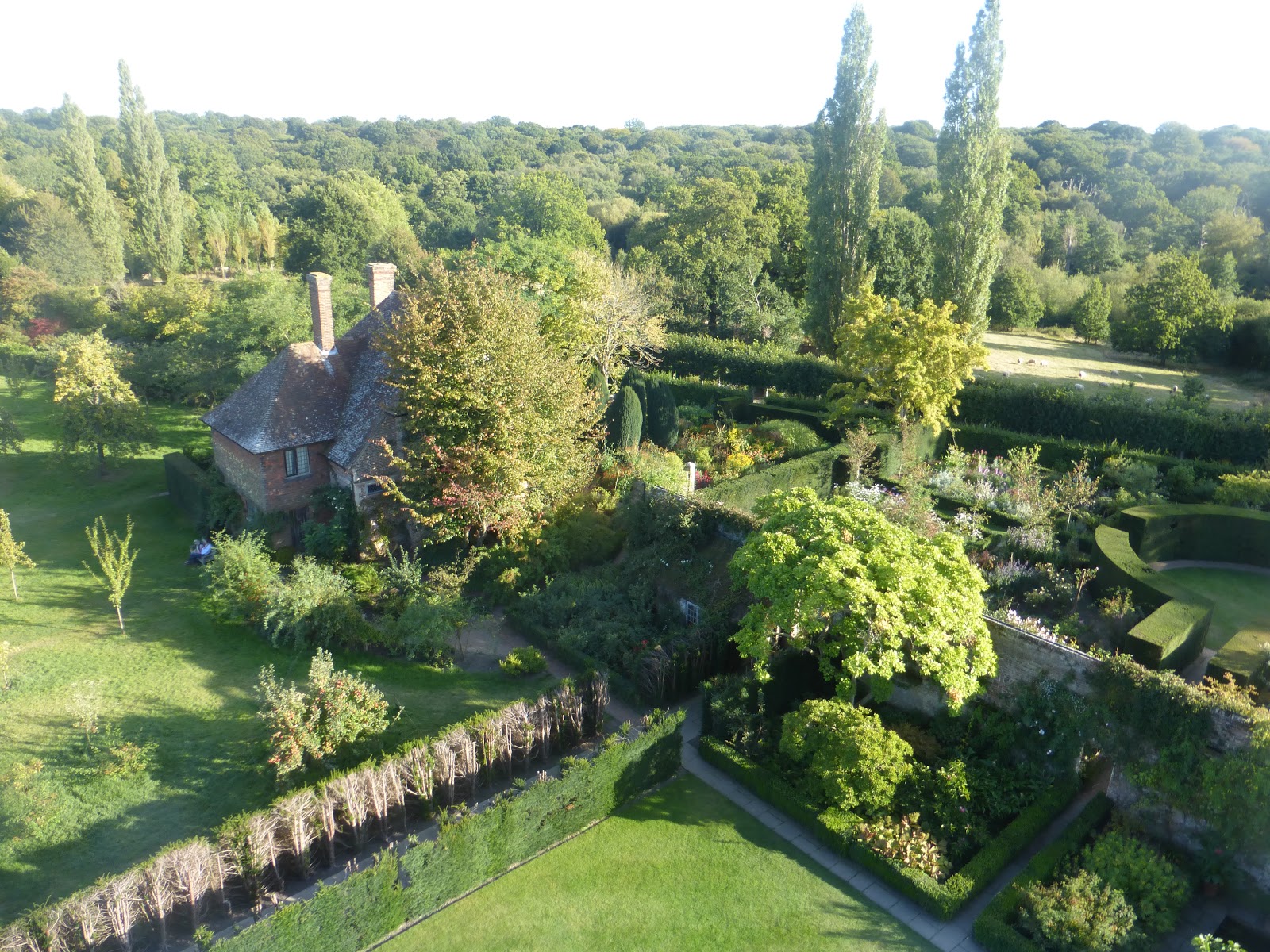


We were staying the night at Salomons Country House near Tunbridge Wells. This is an amazing hotel, not like anything I've ever encountered before. I was greeted by owls (a local couple fly them around the grounds; it's like walking the dog as far as they are concerned) and was shown to a museum and science theatre. How many hotels have their own museum, I wonder? There was also another tower, which the late Sir David Salomon used as an observatory. As far as inspiring story ideas is concerned, this was the ideal place to stay.


The following morning was again sunny, and there was time to visit Scotney Castle, yet another National Trust property, with a romantic ruin in the middle of a lake as well as a massive country house designed by Salvin and a rather good second hand bookshop. Scotney is really impressive, and the memories of this marvellous trip kept me going as I struggled back home via one clogged motorway after another.


Tuesday, 17 September 2019

The Rye Arts Festival Trip - part one


Readers of this blog will know that I enjoy discovering new places and that in recent years I've spent quite a bit of time combining literary activities with sight-seeing. There are several reasons for this. First, I feel as if I'm making up for lost time - all those years when I was working rather long hours in a law office and unable to get away very often. Second, I find that literary events seem even more enjoyable when combined with a little tourism. I'm not one of those writers who wants to travel long distances (especially on our wearisome motorway network) to do an event, then come straight back home again. Third, the break can be quite inspirational - one has time to think about writing projects, and I do tend to find that ideas come more readily when I'm wandering around rather than chained to my desk. All this is by way of preamble to my reflections on a wonderful trip to Rye Arts Festival, which turned into one of the pleasantest working holidays imaginable.


John Case, whom I met at Woking Library last year, had the excellent idea of setting up a crime day as part of the Rye Arts Festival, a prestigious event in a delightful town; I visited it many moons ago, but only briefly, and jumped at the chance to go back. And I thought that it offered a great chance to explore the south east, an area of England I'm not very familiar with. So when the weather forecast looked good, I arranged to add a couple of days to my touring itinerary, in the hope that I'd come across some interesting places (perhaps with literary associations) and also get a few ideas for future projects - including the next Lake District Mystery. (As it turned out, I also came up with an idea for a short story about knitting, of all things, and a non-Lakes crime novel, so the trip certainly worked wonders for my imagination...)


Sussex is a loooong way from Lymm, and I'd booked into Telscombe Cliffs, a small resort between Peacehaven and Brighton for the first night. I'd never been to Lewes, the county town of Sussex, and found it charming, castle and all. It also claims to be a cradle of American independence, which came as a surprise! There was also a fifteenth century bookshop, which was closed on my first visit, prompting me to return the next morning; very atmospheric, though rather lacking in crime fiction. Then it was off to Devil's Dyke, a National Trust property and ideal for walking. Next stop was another NT place, Batemans, Rudyard Kipling's former home in Burwash. A wonderful house and garden. I duly inspected his certificate in honour of his winning the Nobel Prize for Literature and read some of his correspondence which is on display. And I was intrigued to spot a couple of Dorothy L. Sayers books in his library before setting off for yet another NT site.


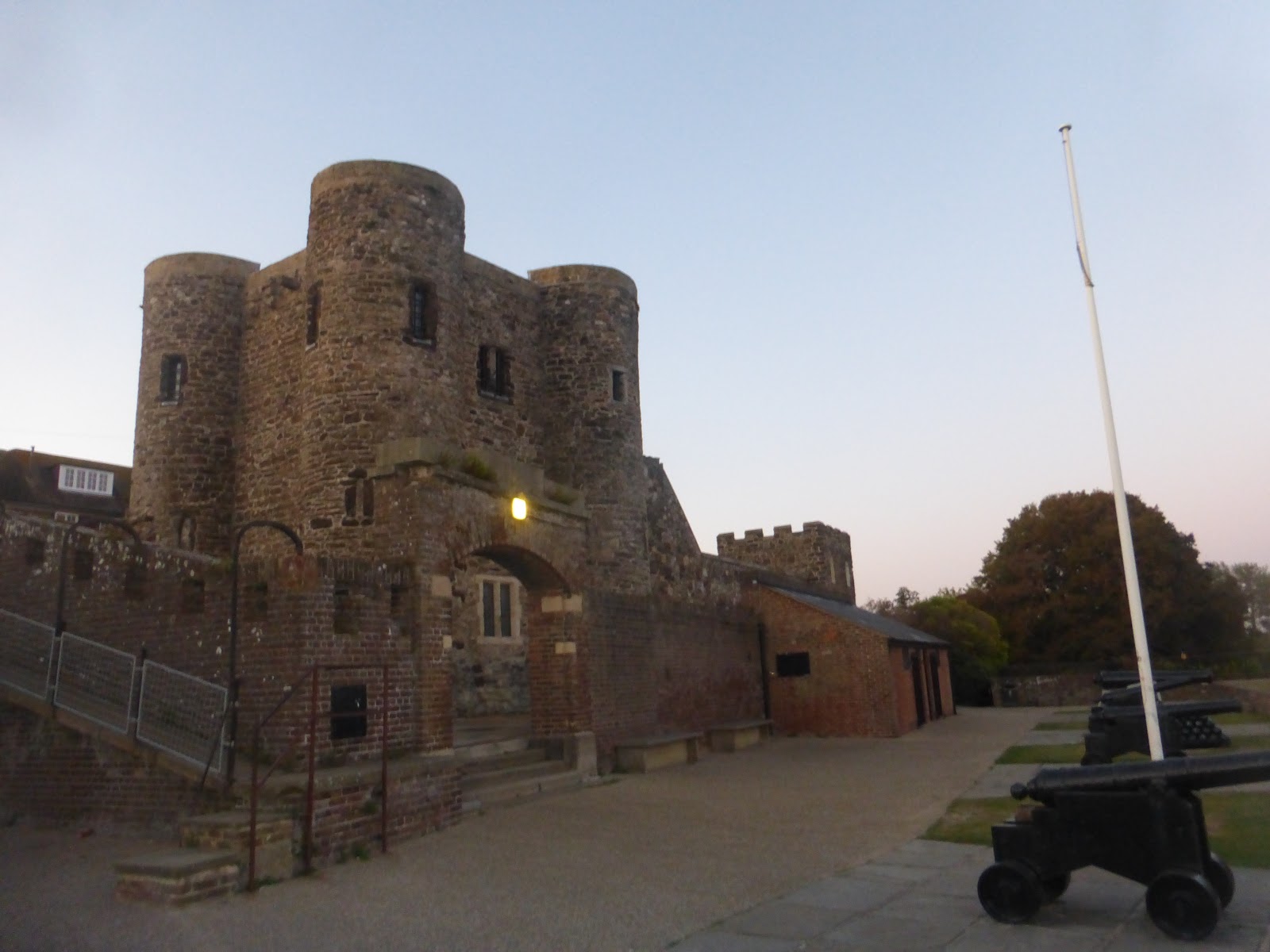
I'd seen photos of Bodiam Castle, and decided to find out if it's as beautiful in reality as the pictures suggest. The answer is yes. After wandering around and inside the moated castle, it was time to head for Rye. The Festival had kindly booked us into the Mermaid Inn, and this proved to be an incredible location, as historic and charming a hotel as I've stayed in anywhere. I really loved it, and also roaming round Rye as the sun set, figuring out where the next day's event would take place, in a Methodist chapel close to the Ypres Tower (now a local museum) and the splendidly named Gun Garden.


Friday, 13 September 2019

Forgotten Book - Cold Blood

I've sung the praises of Leo Bruce's Sergeant Beef stories before on this blog, and Cold Blood, the eighth and last novel in the series, is a good example of the traditional mystery. The book was published in 1952, and is darker and less exuberant in tone than the early novels in the series, but there are still several good jokes, not least the references to famous fictional detectives.

As usual, the story is narrated by the pompous Lionel Townsend, the most snobbish of Watsons. The Beef-Townsend relationship has a distinct flavour and is one of the great pleasures of the series. At this point in his career, Beef is a private investigator, having left the police, with whom he remains on pretty good terms. This is a country house mystery, and Golden Age tropes abound.

Beef is called in by a friend of the late Cosmo Ducrow, who has been found with his head bashed in, presumably by a croquet mallet. Ducrow was a wealthy man, and one of those who stood to inherit, his nephew, is the prime suspect. But those close to the nephew believe he is innocent, and curiously, despite the evidence against him, he has not been arrested.

The plot is very nicely structured, and it certainly kept me guessing. Kate Jackson has also expressed her enthusiasm for the novel in her splendid blog. I'd be interested to know why Bruce decided to abandon Beef in favour of Carolus Deene, who featured in a long series but has never attracted quite as much enthusiasm. One possibility is that, after a spell in prison for alleged sexual offences (a conviction that now has the strong whiff of a miscarriage of justice) he decided to break with the past. 

Wednesday, 11 September 2019

Gallows Court in the USA


Image result for "martin edwards" "gallows court" "poisoned pen"

I'm looking forward to next week's publication of Gallows Court in the US by Poisoned Pen Press, and I've been thrilled by the early reaction to the novel in the States. For the first time in my career, I've earned two starred reviews for the same book, in Publisher's Weekly and Booklist. And there have been wonderful advance reviews in the New York Journal of Books and, among other blog reviews, on Jason Half's excellent blog. As if all that were not enough, the novel is one of Apple Books "best for September" titles along with books by the likes of Salman Rushdie. Not often that I've figured in the same list as the great man!


Modesty should perhaps prevent me from quoting the kind words of reviewers, but I'm afraid it doesn't. Publisher's Weekly described it as an "exceptional series launch...The labyrinthine plot is one of Edwards's best, and he does a masterly job of maintaining suspense, besides getting the reader to invest in the fate of the two main characters." PW also carried an interview with me, conducted by Lenny Picker.

Booklist said the book offers: "Highly atmospheric, spine-tingling fun...the way that Edwards keeps deepening the creepiness of this mystery until the very end is utterly stunning." The New York Journal of Books said: "Martin Edwards crafts vivid descriptions of both character and setting that embed the reader into the scene in a way few writers can achieve." Jason Half's nice review makes the point that he'd expected a classic whodunit from me, rather than a thriller. I'm glad both that I have confounded quite a few readers' expectations and also earned a thumbs-up for the way "the plot gallops along and there are more than enough puzzles to work out regarding hidden motives and lurking dangers."

I'll be at the Poisoned Pen store in Arizona late next month, doing a couple of events to promote the novel before heading off for Dallas, where I'll be taking part in Bouchercon. It will be great to get back to the US, and I'm so glad that the new book is available there at last.


Monday, 9 September 2019

The Isle of Man and a Douglas Murder Mystery Night


I arrived back home last night after a short trip to the Isle of Man. As I've mentioned before on this blog, I'm a big fan of islands, and I must have been to the IoM half a dozen times or so over the years. The climate isn't invariably Mediterranean in nature, but I was lucky with the weather and also in the company I kept.


Back in 2011, Jan Macartney, the chief librarian at Douglas, invited me over to host a Victorian murder mystery evening and this time she'd asked me to present a Golden Age mystery night: Murder at Bigelow Manor. It was great to catch up with Jan over lunch after landing at Ronaldsway on Friday, and to meet her deputy Sophie. After wandering along the Douglas promenade during the afternoon, I had dinner with an old friend, fellow crime novelist and lawyer Doug Stewart. The previous day, I'd had the enjoyable experience of watching the Test Match at Old Trafford in the company of another old friend (and former literary collaborator on a legal book) Michael Malone, and Doug, another cricket fan, and I were able to ruminate on the fate of the  Ashes (alas, by the time I got back home, the urn was back on its way to Australia).


I spent most of Saturday with Doug, touring round some of the island's highlights, such as Castletown, Port St Mary, and Port Erin, and walking along the coastal route near Port Soderick in the sunshine. The island looked quite lovely as usual, and I'm not surprised that it's attracted plenty of crime writers over the years, including Chris Ewan and George Bellairs (whose Littlejohn mysteries are now enjoying a new lease of life thanks to the British Library's Crime Classics). And Agatha Christie, of all people, wrote a competition story set on the island, '"Manx Gold".


The evening was devoted to the murder mystery. Three of the four members of the cast which performed so well in 2011 were again involved, and I must say that all four of them performed the script superbly. Jan had secured a sell-out audience, and an excellent local bookshop, Bridge Bookshop, sold plenty of copies of Gallows Court. I was amazed to meet a lady who actually has a house in Lymm a short distance from mine, and delighted to have a chat with yet another Manx-based crime writer, Alan Bradley. It's ages since I've seen Alan, and it was good to catch up at long last. Bob Harrison of Manx Radio conducted a Q and A with verve, and it was a tremendous night, made all the better for me by a surprise cricketing success for Derbyshire in the T20 Blast; I caught the last moments after getting back to my hotel.


On Sunday I had a very pleasant lunch with Jan, and another chance to wander along the front at Douglas. It's a great place, and for those of you who aren't familiar with the island, I can heartily recommend a visit. I did write a short story set in Peel, "Sunset City", a few years back, and one of these days I may try my hand at another Manx mystery.


Friday, 6 September 2019

Forgotten Book - The Innocent Mrs Duff

I've mentioned several times my admiration for the pioneering work of Elisabeth Sanxay Holding in the field of domestic suspense. That field is very crowded now, but Holding was writing incisive stories about people under stress in domestic surroundings back in the 30s and 40s, and her work was of high quality. That's certainly true of The Innocent Mrs Duff, which first appeared in 1946.

The protagonist is Jacob Duff, 42, relatively prosperous, and rather handsome, but putting on weight. It quickly becomes clear that he's an extremely discontented man, and a particular focus of his unhappiness is his wife Regina, always known as Reggie. She's his second wife, and half his age. She's pretty and charming, and I waited some time to discover what dark secrets might lie behind the charming exterior. But really, with Reggie, what you see is what you get.

Jacob is a lucky guy, but he doesn't realise it. Worse, he sets about trying to extricate himself from Reggie in a very unwise manner. He starts drinking heavily, while persuading himself that his alcohol intake is moderate. His judgement is erratic, and gets worse, as his behaviour leads to catastrophic consequences.

There are quite a few similarities between this book and the rather less well-known but impressive The Unfinished Crime, not only in terms of the nature of the protagonist (a stupid man, who doesn't appreciate the admirable women around him; Holding's message on this is very clear), but also in terms of plot structure. But there are also enough differences to make both books a rewarding read.


Wednesday, 4 September 2019

Stockholm


I'm back home briefly from a short but splendid trip to Stockholm to enjoy a bit of quality time with my favourite journalist, Catherine Edwards and her charming boyfriend. It's my fourth trip to Sweden, and my third to the capital, and it continues to grow on me. In summer, it's quite delightful, and the fact that Stockholm is really a collection of islands gives it a great deal of character and interest. It's also a city with a fascinating history.


A boat trip was high on my list of travel priorities - I've managed at least one trip on the water on each of my previous visits to Sweden, and this time there was the opportunity to do an extensive tour of the waterways, including the vast lake, which is associated with a fascinating legend. While listening to the guide's commentary about this, I had the idea for a story - something I've striven for in vain on my earlier visits. This story is provisionally titled 'Thin Ice'. Mind you, given that I've got a number of major projects on the go at present, I'm not entirely sure when I'll get round to writing it up.


Among other highlights was a visit to the vast wooded cemetery where Greta Garbo is buried. The scale of the place reminded me of my visit to England's National Memorial Arboretum. There are plenty of great walks around the centre, both in Gamla Stan, the old town, and along various waterfronts. If you haven't visited Stockholm, you've a treat in store.


On the flights to and from Stockholm, I read a couple of entertaining books. Only one of them will be reviewed, though. This is because, to my amazement, I discovered after I'd finished the other book that I'd not only read it before, but I'd reviewed it on this blog - albeit quite a few years ago. The amazing thing was that it is a fairly enjoyable (if slightly trashy) story, even though none of it had stuck. The only consolation I have is that my feelings about the book haven't changed from those expressed in the review!


Monday, 2 September 2019

The Fatal Passion of Alma Rattenbury by Sean O'Connor


Image result for fatal passion of alma rattenbury

The Rattenbury-Stoner murder trial of 1935 was, as the dustjacket blurb of Sean O'Connor's new study of the case says, one of the great tabloid sensations of the interwar period. The story behind the trial is poignant and complicated and it certainly doesn't have a happy ending. But it does have a great deal of human interest, and casts light on the mores and legal process of the Thirties.

The story has fascinated a number of crime writers, most notably Francis Iles, who wrote a long essay about it in the Detection Club book The Anatomy of Murder (recently reissued in paperback, and a very good read covering famous and little-known murder cases) as well as As for the Woman. That book took some elements from the case as well as from the even more famous Thompson-Bywaters case, to which the Rattenbury-Stoner case bore certain striking similarities.

Another novelist who made good use of the story was Shelley Smith, in The Woman in the Sea, a book now so forgotten that it doesn't earn a mention even in this wide-ranging and well-researched study. And without giving too much away, I can say that there are one or two elements from the story that inspired one of the plot strands in Mortmain Hall, the sequel to Gallows Court, which I've been working on recently and which will be published next year.

Sean O'Connor is a writer, director, and producer who first came to my attention a few years ago with his interesting examination of the Neville Heath case, Handsome Brute. He makes the point in his foreword to this book that the Rattenbury case has been examined not only by the famous criminologist F. Tennyson Jesse but also by such leading lawyers as Sir Michael Havers and Sir David Napley. But he has undertaken extensive investigation of his own, and the result is a book that will, I'm sure, be of great interest to true crime fans.