J. C. Masterman was a man of many parts. An eminent figure who rose to become Vice-Chancellor of Oxford University, Sir John Cecil Masterman was an academic and also a key figure in British espionage during the war, overseeing the organisation of double agents. As if that wasn't enough, he wrote a notable detective novel, An Oxford Tragedy; it wasn't the very first Oxford-based crime story, but its success set the ball rolling and of course it has had innumerable successors.
It was on the strength of that book, above all, that he was elected to membership of the Detection Club. Many moons ago, I wrote a short article about Masterman for CADS, which was later adapted for the website Tangled Web UK, in its hey-day the go-to place on the internet for information about crime fiction. I'm sorry to see that the site has now vanished, but Geoff Lees and his family did a great service for many writers, publicising their books on the site over many years. Thank goodness CADS is still going strong.
The novel featured a Viennese professor, Ernest Brendel, and after the war, no doubt much encouraged by his admirers, Masterman revived Brendel, and brought him back to Oxford for another detective story. This was The Case of the Four Friends, published in 1957, almost a quarter of a century after its predecessor.
The story has a very clever premise, a sort of refined version of the "whowasdunin". Brendel tells a story about four people ("friends" is stretching it a bit) which is an exercise in pre-detection: can he prevent a murder from taking place? And the reader has to figure out both the prospective murderer and the prospective victim.
Unfortunately, the story is lacking in action and there's no attempt to make use of the Oxford setting - the story might have been recounted anywhere. I think the idea could have been livened up, and it's a pity Masterman didn't do this. Instead, we get a rather dry, cerebral tale. But for its inherent ingenuity, if not its execution, it earns high marks
Showing posts with label An Oxford Tragedy. Show all posts
Showing posts with label An Oxford Tragedy. Show all posts
Friday, 21 August 2020

Wednesday, 19 October 2011
The Oxford Mysteries


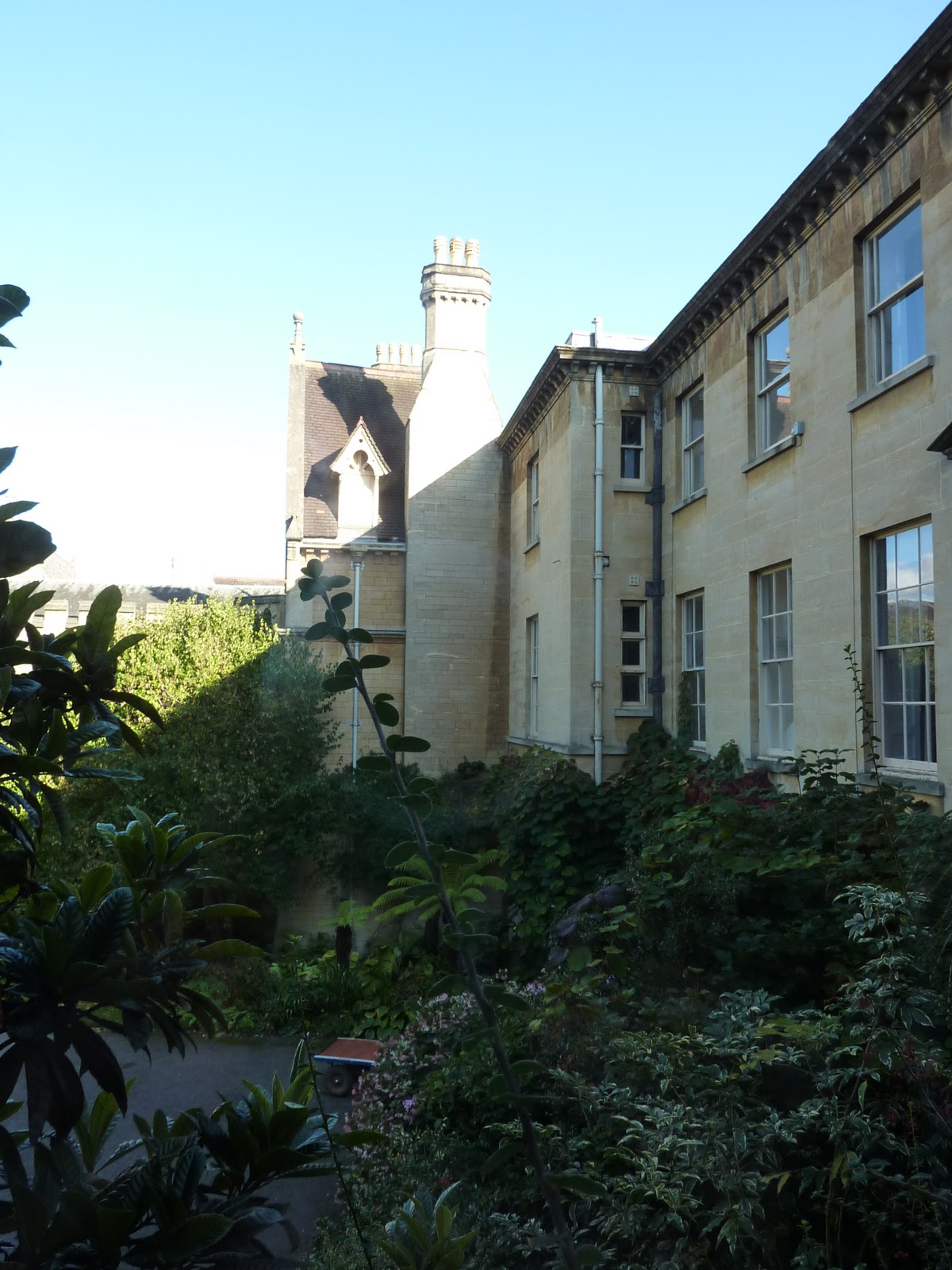

It's been a lousy summer in Britain, but of course there have been some exceptional days, and two of the last three Saturdays have been terrific. Last Saturday I walked in the sun around a relatively unfrequented part of the Lakes - gorgeous. And a fortnight earlier, it was baking hot in Oxford, quite amazingly so for early October, as I set about installing my children and their countless belongings in their college rooms.
Oxford was full of life, and I found myself wondering why it is that fictional death in the city has featured so often when compared to Cambridge. The Oxford crime mystery got going in the 30s, with books like J.C. Masterman's An Oxford Tragedy (a pretty good one I shall talk about in more detail one day). Michael Innes and Edmund Crispin set plenty of stories there, and then in the modern era Colin Dexter made the place his own.
But there have been plenty of other Oxford mysteries. I have in my TBR pile a book called The Body in the Turl, which I really must read now my daughter lives in Turl Street. And I was once responsible for a short story set in 19th century Oxford - 'The Mind of the Master'. Benjamin Jowett was my choice as a legendary armchair detective, and I did contemplate writing a whole series of stories about him. But I've never got round to it. One day, perhaps.
As for the photos, they show some of the views that greet the young Edwardses when they finally get round to opening the curtains in their college rooms. Lucky things.
Friday, 28 May 2010
Forgotten Book - The Cambridge Murders
Adam Broome was one of the authors I highlighted at the Forgotten Authors panel at Crimefest, and so it seems appropriate to feature a book by him in Patti Abbott’s series of Forgotten Books.
I am not sure I’d ever heard of Broome until quite recently, and I have comments on this blog to thank. Philip drew my attention to the fact that Broome wrote an Oxford mystery which predated J.C. Masterman’s well-known An Oxford Tragedy. He also wrote a number of books set in Africa.
The Cambridge Murders is another of his academic mysteries. Two African students are found murdered and Chief Inspector Bramley of the Yard is called in to investigate. This book was first published in 1936. Happily, it has recently been reissued by Ostara Press.
I didn’t get much time on the panel to talk about Broome or his books, and I still have a lot to learn about him and them. But he was a notable figure of the Golden Age, even if mainly for historic reasons, and Ostara have done crime fans a service by making some of his work readily available again.
Thursday, 27 August 2009
Oxford and Crime


It’s intriguing that such an apparently civilised place as Oxford should have formed the backdrop to so many murder stories, on the page, and on the screen. I’ve much enjoyed working on a new essay about the city’s murderous heritage. Of course, Colin Dexter is the leading writer of Oxford crime, but there have been many others.
The reason for Oxford’s long-term popularity as a setting for crime fiction s is surely not so much the inherently criminal tendencies of the local population as the enthusiasm of alumni of the University, and others associated with it, and with the city, for writing detective stories. For instance, more than thirty old members of Balliol College alone have published crime fiction.
J.C. Masterman, who later became a notable war-time spymaster, and then Provost of Worcester College, is credited with inaugurating the Oxford whodunit set in academe, in 1933, with An Oxford Tragedy. Soon, there was a flurry of books to delight dons and many others. Michael Innes, who again would become a don, introduced his series policeman John Appleby in Death at the President’s Lodging, set in a fictional university strongly reminiscent of Oxford, and Operation Pax sets key scenes in the Bodleian. Innes’ principal disciple was Edmund Crispin (the pen-name adopted by Bruce Montgomery, whose first detective novel was written while he was still an undergraduate.)
Surely the most famous crime novel set in Oxford appeared just four years after An Oxford Tragedy. Dorothy L. Sayers’ Gaudy Night,, in which Somerville College (where Sayers read English) is fictionalised as Shrewsbury College, which she locates in Jowett Walk, on Balliol's cricket ground. Ian Morson’s historical Falconer series is set in medieval Oxford, while Veronica Stallwood has written eleven books to date featuring historical novelist Kate Ivory. The late Michael Dibdin wrote a witty stand-alone set in the city, Dirty Tricks – and fascination with the city is not confined to English authors. And even a novelist from Argentina, Guillermo Martinez, got in on the act. He wrote The Oxford Murders, the film of which I covered in a blog post a while back.
Subscribe to:
Posts (Atom)