Showing posts with label Anton Lesser. Show all posts

Wednesday, 23 March 2022

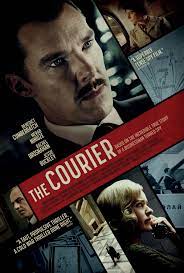
The Courier - 2021 film review


Benedict Cumberbatch is one of my favourite contemporary actors. He seems to enhance any TV drama or film that he appears in. The Courier, a new spy film, is a good example. It's based on a true story that I recall distantly from my early childhood, and his performance makes the most of a competent script by Tom O'Connor (not the Scouse comedian, for sure). The director is Dominic Cooke, who was also responsible for the low-key but interesting On Chesil Beach, which I watched on a plane a few years ago.

Cumberbatch plays Greville Wynne, a British businessman who is persuaded by MI6 (represented by Angus Wright, playing Dickie Franks) and the CIA (Rachel Brosnahan plays Helen Talbot) to assist with a plan to find out about the Soviet nuclear plans with the help of Oleg Penkovsky, a senior official who is contemplating defection.

From what I have read of Wynne, he was a bit of a fantasist, certainly in later life, but he also had plenty of courage, risking his life to assist the security services. If you're not familiar with the story, I won't spoil it for you, but suffice to say that this is a good spy yarn, lifted out of the common run by Cumberbatch's performance. Jessie Buckley is also very good as Wynne's long-suffering wife Sheila. There's a smallish part for the ever-reliable Anton Lesser.

Recent events in the Ukraine have provided depressing evidence that although the Cold War may be long over, international tensions remain and are becoming acute. The events explored in The Courier serve as a reminder of the tragedies that can occur when political vanity and aggression get out of hand. It's definitely worth watching.


Wednesday, 23 September 2020

The Hour - DVD box set review


The Hour (TV Series 2011–2012) - IMDb

This year has, for all its other shortcomings, at least given me the chance to catch up on some film and TV viewing pleasures. Some time ago my kind daughter gave me as a present a box set of the 2011-12 TV series The Hour, which had always sounded interesting to me, but which I missed when it was first screened. At last I've been able to catch up with it.

The show was the work of an experienced screenwriter Abi Morgan, whose films include The Iron Lady and Suffragette, both of which were very watchable. The premise of The Hour is particularly interesting, and again reflects her interest in history with a political slant. The two series were set in 1956 and 1957 respectively, around a BBC current affairs show called, you guessed it, The Hour. The political events in the background - the Suez Crisis and the nuclear arms race - play an important part.

Each series comprised six episodes. The producer of the fictional programme is Bel Rowley, played by Romola Garai, with the show's anchor played by Dominic West. Ben Whishaw is a reporter called Freddie Lyon. There are also key roles for Anton Lesser and, in the second series, Peter Capaldi. With a cast like that, you can't go far wrong. In particular, I thought that Dominic West was brilliant in his portrayal of the charismatic but deeply flawed Hector Maddern. It's a tricky role that calls for an actor with a considerable range, and West definitely delivered. 

The scripts are enjoyable, but they did suffer from a common weakness. The first series in particular sagged in the middle. I got the impression that Abi Morgan had enough ideas to fill three or four episodes, and that there was quite a bit of padding to spin things out. This criticism applies with less force to the second series, two episodes of which were scripted by other writers. But overall the virtues of The Hour certainly outweigh its weaknesses. 

The BBC cancelled the series because of poor viewing figures, which was a pity, because I think the idea had great potential that could have been developed further, perhaps in shorter series, or with two sets of three episodes in a single series. There were also, I gather, some anachronisms, but these didn't spoil my enjoyment at all. It's worth watching for the quality of acting, but the two stories are also entertaining, especially in the closing stages.

Wednesday, 17 May 2017

Allied - 2016 film review

Allied, first screened last year, is one of the best new films I've watched in recent months. It's a wartime thriller which stars Brad Pitt and Marion Cottillard as a couple who are pitched together in the fight against Hitler. They meet in Morocco,where Pitt, playing a Canadian spy,called Max and Cotillard, playing a French resistance fighter called Marianne, pose as a married couple who risk their lives conspiring together in an assassination plot.

The killing of a senior Nazi goes according to plan, and by this time the pair have fallen for each other, turning their loving charade into reality. They go to England, marry, and Marianne gives birth to a child. Meanwhile Max's work in intelligence goes on. One day, however, he receives terrible news. Marianne is suspected of being a German spy.

Can this possibly be true? Can Max really trust the woman he loves? The moral dilemma is nicely presented, and the tension continues to mount. I thought the screenplay was very crisply written. When I investigated, it turned out that the writer, Steven Knight, was also a co-creator of Who Wants to Be a Millionaire? He's obviously keen on games of cat and mouse, and Allied is a very good thriller indeed.

Both the stars give strong performances, and rhey are well supported by a cast that includes the versatile Anton Lesser. Robert Zemeckis, a gifted director, does a good job with the material and there's a soundtrack by Alan Silvestri. Suffice to say that I found the film gripping from start to finish. Not all the critics loved Allied, but I did.

Sunday, 17 January 2016

TV detectives - new series

The new year has seen a flurry of new detective series, including the return of a number of old favourites. These include Endeavour, which is written by the excellent Russell Lewis. At the end of the last series, I did wonder how the cliffhanger situation would be resolved. The short answer is that it wasn't addressed very fully at all: Morse spent a bit of time in prison before being freed once the truth was revealed, and then found himself lured back into police work. Not totally satisfactory, but I must say that in other respects the first two stories in the new series have been well-plotted. The error was that end-of-series cliffhanger, which was simply over the top.

Endeavour is a two-hour show in the finest Inspector Morse tradition. Shetland, which returned on Friday, is split into a sequence of two-part one-hour episodes. The new story was, I felt, the strongest so far of those not based on the original novels by Ann Cleeves. A great location can do wonders for a TV show,but it's not everything - above all, you need a good story, and this tale of a young man who meets a grisly fate after travelling to Shetland by sea got the series off to an excellent start.

I'd not seen the first series of The Young Montalbano, but I caught the first episode of the new series. The setting in Sicily is again very attractive, and a lot sunnier than Shetland, while the story was pleasingly convoluted. However, I felt that the tone of the episode was rather uneven, a mix of jokey and serious that jarred a little. There's not much doubt about the tone of Death in Paradise, which has returned with more stories which combine Golden Age style plot devices with an exotic tropical setting. It's very light, undemanding entertainment.

I've stayed with Dickensian, which is a sort of soap opera bringing together lots of characters from Dickens, and held together by an ongoing murder investigation (that of Jacob Marley) conducted by Inspector Bucket. The cast is superb, but the story (20 episodes of 30 minutes each) is starting to drag, while the jaunty background music is an example of too much of a good thing. With this one, I think less would have been more. But what a fine actor Anton Lesser is. He plays Endeavour Morse's prissy boss and, in Dickensian, Fagin, with equal conviction.

And then, away from cop dramas, there's War and Peace. I've never read Leo Tolstoy, and I don't watch many historical dramas, but I do admire Andrew Davies' storytelling skills, and I must say that I am really enjoying this series. Some people tell me that it's dumbed-down, but if that's true, it's dumbed-down very well indeed.

Wednesday, 17 April 2013

Endeavour: Girl - ITV review

If Broadchurch has, as I said in my last post, underlined the continuing appeal of the whodunit, then Endeavour does not only that but also highlights the seemingly endless potential of Inspector Morse spin-offs. I enjoyed the pilot episode when it was screened, and the first episode of the first full series, Girl, was a high quality murder mystery.

A great deal of credit has to go to Russell Lewis, the writer, who has taken the essence of the original series,and the character as played by John Thaw, and given us a very appealing prequel set in the sixties. The plot of Girl was clever and the revelation of the culprit's identity took me completely by surprise. Pleasurable surprise, I must add. As I said yesterday, it is good to be fooled fairly, and I thought Russell Lewis paced the plot twists perfectly. There was even a neat little code which provided a crucial clue to that person's name. Colin Dexter would have been well pleased, I think.

The acting, too, is very good. Shaun Evans catches the young Morse's bolshie but vulnerable personality, and Roger Allam, as DI Thursday, is humane and believable. Some comic relief is offered by Anton Lesser's prissy disdain for the young cop. Sophie Stuckey, playng a suspect with epilepsy whom Morse fancies, handled the tricky role of the girl of the title very well.

Setting counts for a great deal in so many TV crime shows,and of course the Morse franchise has the inestimable advantage of being set in one of the most photogenic of cities. I wonder sometimes if people who are less keen on Oxford than I am may get bored with the endless flow of cop shows set there, but all the signs are that demand for those shows is as strong as ever. Yes, the broadcasters are playing it safe, and that's why a less conventional series like Broadchurch is so welcome. But if subsequent screenplays are as sharp as this one was, there is a good chance that Endeavour will run and run.