Showing posts with label Mary Kelly. Show all posts

Monday, 30 May 2022

Denis Kendal and Mary Kelly


Life is hectic, in a good way, right now, thanks to a combination of promotional activities connected with The Life of Crime and two or three current writing projects. But I did want to take a quick break to mention a bit of sad news, in that I've learned that Denis Kendal has died. Denis, as I've mentioned on this blog before, was the widower of Mary Kelly, Gold Dagger winning author of The Spoilt Kill. Here is a set of photos of Mary which Denis sent to me - I don't think they have been published before.

I never met Denis in person, but we chatted on the phone and corrresponded extensively during the past few years. I found his recollections about Mary's writing career fascinating (and yes, she is referenced in The Life of Crime). I also greatly admired, not just his devotion to preserving her memory, but also his determination to overcome the problem of limited vision, which must have been a great restriction and source of distress. But he triumphed over it.

Of all the good things associated with the British Library's Crime Classics series, one that I'm especially happy about is the revival of Mary's reputation. We've managed to introduce her to a new generation of fans, with three titles, each of them entirely distinct: The Christmas Egg, The Spoilt Kill, and Due to a Death. She never wrote to a template, and I find that admirable, although it helps to explain why her career at the pinnacle of British crime writing didn't continue for as long as those of many of her contemporaries.

With Denis's support, I was able to include a contribution from Mary in the Detection Club's masterclass on crime writing, Howdunit. My article about Mary's life and work for CADS is, I think, the most comprehensive that has appeared, and I couldn't have written it without Denis' s help and encouragement. He was thrilled to see his wife's books recognised again and I was thrilled for him. He died on 5 April at the age of 93 and I shall remember him with a good deal of affection.

Monday, 16 December 2019

Classic Crime aplenty


It's been another great year for fans of classic crime fiction. Many good books have reappeared after decades out of print and connections between enthusiasts in different parts of the world are becoming ever stronger. A fortnight ago I attended a meeting at the British Library where, among other things, we were discussing titles for the rest of 2020 and into 2021 and I'm happy to report that there are some terrific books lined up. Details to follow before long....

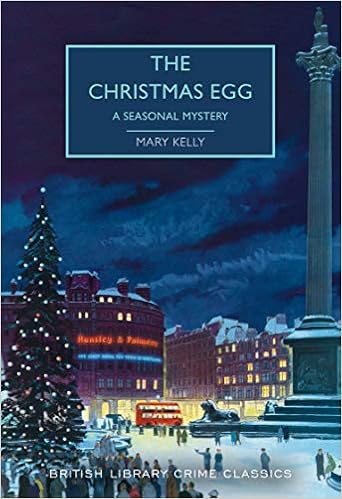
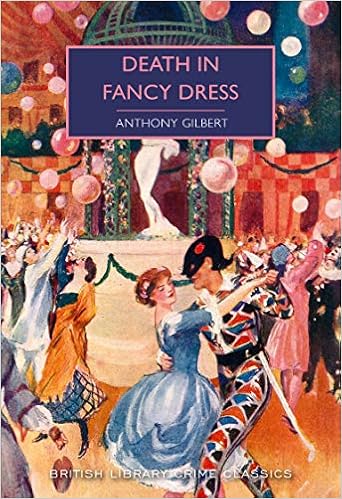
What is more, there is no sign of public appetite for the BL's Crime Classics series starting to diminish. Take, for instance, Mary Kelly's book The Christmas Egg, this year's principal seasonal title (there's also a more orthodox whodunit, Death in Fancy Dress by Anthony Gilbert). It's a rather idiosyncratic story by a writer of distinction and when the book first appeared towards the end of the 50s, it gained respectful reviews but didn't set the world on fire in sales terms. How things change. After just three weeks, the book went into its third reprint, and sales in that time are massive - already far outstripping those of the original. When you think about it, that's really quite remarkable. And some perceptive reviewers have highlighted the book's strengths. I'm particularly glad for Mary's widower, Denis, who has had so much joy from seeing his late wife's reputation as a novelist revived. And there's more to come - her masterpiece, the Gold Dagger-winning The Spoilt Kill, will be published next year.

In the UK, the support of Waterstones has been an invaluable help in ensuring that the series gets plenty of attention. How many other UK publishers have, like the BL, their own dedicated table in Waterstones' branches? When I popped in to Waterstone's Piccadilly branch recently I was thrilled to see the piles of classic mysteries on a very large table indeed. And yes, I can't deny that I relished seeing many copies of my own anthologies there too.

Other publishers are doing their bit. HarperCollins' Detective Story Club series is taking a sabbatical, but my understanding is that HarperCollins will soon be bringing out new paperback editions of several good titles by Freeman Wills Crofts that have long been unavailable. And hats off to Dean Street Press, who continue to produce large numbers of reprints in ebook or print on demand paperback format. 

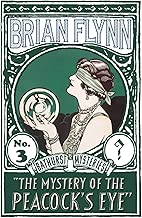
Among the Dean Street Press books, I'd particularly like to highlight two series. The first is the set of books by Brian Flynn, the second is those by E. and M.A. Radford. They benefit from excellent introductions by two fans who have done a good deal of admirable work in the field. Steve Barge (who blogs as The Puzzle Doctor) is a passionate Flynn fan, while Nigel Moss has long admired the work of the Radfords. I haven't yet read enough of either novelist to be able to judge them for myself (where does the time go?), but the enthusiasm of Steve and Nigel is a recommendation in itself. 

Who Killed Dick Whittington?: A Dr. Manson Mystery (The Doctor Manson Mysteries)The Mystery of the Peacock's Eye: An Anthony Bathurst Mystery
  

Wednesday, 6 March 2019

Forthcoming Crime Classics


The British Library has just issued its catalogue of publications for the second half of this year, and there are many good things in store. And of course that includes the forthcoming Crime Classics. Among notable features of the list is another novel written by E.C.R. Lorac, whose work has proved extremely popular with fans. This is Fell Murder, set in Lunesdale, where she made her home. It is a lovely part of the world, and this is a book with an exceptionally strong sense of place, and a sense of the intimacy of the rural community.

I'm especially thrilled that the series will, for the first time, include a novel by John Dickson Carr. This is It Walks By Night, which was his very first novel, set in Paris and featuring his first major series detective, Henri Bencolin. I've been hoping for some years that it would be possible to include Carr in the series, but it has proved tricky, because the rights position is extremely complicated. But the Library team has done great work in finally overcoming the obstacles and achieving success. Although Carr was American, his work seems to make a very natural fit with the series; he was an Anglophile who lived in England for many years and was Secretary of the Detection Club and a gifted practitioner of the "fair play" whodunit. This book also includes a Bencolin short story.

Anne Meredith's Portrait of a Murderer was a very successful book the Christmas before last, and Lucy Malleson who wrote under the Meredith name returns to the series with a book written under her best-known pen-name, Anthony Gilbert. This is Death in Fancy Dress, a country house mystery very much in the classic tradition. The book will also include a couple of Gilbert short stories.

Talking of short stories, there will be another anthology, The Measure of Malice, which is a collection of tales of scientific detection that I've put together. I'm delighted that the British Library anthologies have done so well in terms of sales and reviews, and I can also commend their "weird tales" collections, some more of which will be forthcoming (I like the sound of a collection of "killer tales of the botanical Gothic"!)

Other crime titles include another novel by George Bellairs, who is back by popular demand, Mary Kelly's The Christmas Egg, and a second Pocket Detective puzzle book by Kate Jackson. Something for everyone, in other words! And I can assure you that plans for 2020 are already making good progress. At least one more Carr title is on the way... 

Monday, 4 March 2019

Remembering Mary Kelly

Mary Kelly won a CWA Gold Dagger, and she also attracted a good deal of critical praise. Her writing was stylish and unorthdox, and she wrote books featuring a police detective, others featuring a private investigator, and several stand-alone novels of psychological suspense. A good mix of work, to say the least. She also served as Secretary of the Detection Club, and was friendly with writers as diverse as Anthony Berkeley, Michael Innes, Harry Keating, Joan Aiken, and Patricia Highsmith. Yet I don't think it's unfair to say that she is now forgotten. How can this have happened?

Whilst there's no simple answer, one factor is that she ceased publishing crime fiction when she was in her forties, although she lived on for more than forty years after her last book appeared (and towards the end, she started work on a new novel). But that isn't the only reason. Mary Kelly was one of those admirable authors who wrote what she wanted to write, and when she wanted to write it. She was, I suspect, someone who made her publishers despair. But she really could write well.

I've been fortunate enough to talk to Mary's husband, Denis, over recent months, and I hope that I can weave some of the material with which he's kindly supplied me into a magazine article about Mary. Her approach to her craft was so unusual, and her gifts so distinctive, that she definitely deserves to be remembered. For the time being, let me focus on one particular title of hers that was published in paperback as a green Penguin.

Due to a Death, which first appeared in 1962, was her follow up to The Spoilt Kill, her Gold-Dagger winner of the previous year. It shares a key character with the earlier novel. Yet it's an exceptionally bleak book, and a dark tale is told rather elliptically. Most writers would have been tempted to try to cash in on a smash hit by writing a commercial novel, but this story hardly fits the bill. Penguin published it in paperback, but I'm guessing it was hardly a runaway bestseller. It is, however, very well written.

It's a first person narrative, and the story is told by a young woman called Agnes. She's married to a fairly decent cove called Tom, but she isn't content, and she finds herself drawn to a newcomer in the village. We know from the start of the book that someone has died, but the precise nature of the mystery doesn't become clear for a long time. The atmosphere is evocative but melancholy: the setting is a decaying village called Gunfleet. The secret at the heart of the story is even grimmer. Not a light-hearted read, that is for sure. But it's equally true that Mary Kelly was one of the most interesting British writers to emerge in the post-war era prior to the arrival of P.D. James and Ruth Rendell. She wasn't in their league, but who was?   

Monday, 18 December 2017

Marian, Mary, Tim - rest in peace

I'm sorry to report the deaths of three people, two of them friends of mine, during the course of the past few days. First, Marian Babson, whose real name was Ruth Stenstreem, and who was 88. American by birth, she'd lived in England for many years, and served as Secretary of the CWA for many years; she was a prolific writer of traditional detective novels from 1971 onwards. In addition, she was a worthy winner of the CWA Dagger in the Library, and a member of the Detection Club. On a number of occasions, she sent me copies of nice reviews of my books that she'd spotted in American magazines and newspapers, a kindness I much appreciated. She was a reserved, private person, and in recent years, she'd been in very poor health, but it's still sad that she's no longer with us.

Mary Kelly was someone I never met, because her relatively brief writing career ended long before mine began. She was, however, a writer of high calibre, and her 1961 novel, The Spoilt Kill, won the CWA Gold Dagger award. She too joined the Detection Club, and became its Secretary. There's a lovely anecdote about her in Peter Lovesey's recollections at the end of Motives for Murder, when she was hiding from an editor who wanted to know where her latest book was. She never produced it; writer's block seems to have been the culprit. She'd not been involved with either the Club or the CWA for many years, but her work deserves to be remembered. She was 90.
fullsizeoutput_1537.jpeg
Not a crime writer, but a stalwart of our community and a delightful and witty man, was Tim Cleeves, who died on Saturday. I first got to know him and his wife Ann at the end of the 80s, and I still vividly remember staying at their house in Whitley Bay with my family when Ann, Bob Barnard, Val McDermid, Chaz Brenchley, Reg Hill, and I were working on the first CWA northern chapter anthology. Tim and Helena took the children off to Newcastle while the writers talked crime. We've had plenty of times together since, but what I find particularly poignant is that Tim and I had a couple of convivial conversations only a few weeks ago at the Daggers dinner, when he and the girls were so proud to see Ann receive the CWA Diamond Dagger. The photo shows Tim alongside Brenda Blethyn, watching the presentation on a very happy night. His sudden death is a real tragedy, and the thoughts of crime writers and readers will be with Ann, Sarah, and Ruth at this sad time.