Showing posts with label The Spoilt Kill. Show all posts

Monday, 16 December 2019

Classic Crime aplenty


It's been another great year for fans of classic crime fiction. Many good books have reappeared after decades out of print and connections between enthusiasts in different parts of the world are becoming ever stronger. A fortnight ago I attended a meeting at the British Library where, among other things, we were discussing titles for the rest of 2020 and into 2021 and I'm happy to report that there are some terrific books lined up. Details to follow before long....

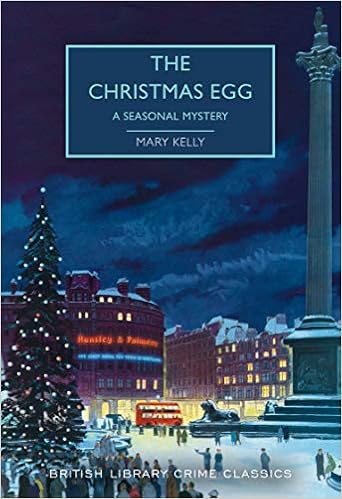
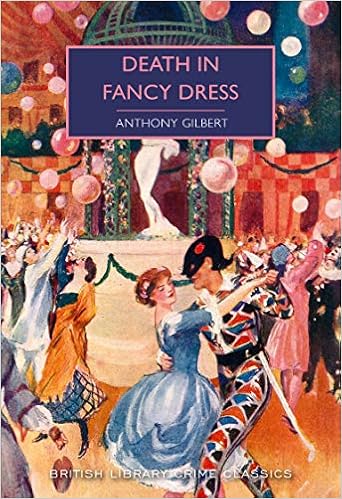
What is more, there is no sign of public appetite for the BL's Crime Classics series starting to diminish. Take, for instance, Mary Kelly's book The Christmas Egg, this year's principal seasonal title (there's also a more orthodox whodunit, Death in Fancy Dress by Anthony Gilbert). It's a rather idiosyncratic story by a writer of distinction and when the book first appeared towards the end of the 50s, it gained respectful reviews but didn't set the world on fire in sales terms. How things change. After just three weeks, the book went into its third reprint, and sales in that time are massive - already far outstripping those of the original. When you think about it, that's really quite remarkable. And some perceptive reviewers have highlighted the book's strengths. I'm particularly glad for Mary's widower, Denis, who has had so much joy from seeing his late wife's reputation as a novelist revived. And there's more to come - her masterpiece, the Gold Dagger-winning The Spoilt Kill, will be published next year.

In the UK, the support of Waterstones has been an invaluable help in ensuring that the series gets plenty of attention. How many other UK publishers have, like the BL, their own dedicated table in Waterstones' branches? When I popped in to Waterstone's Piccadilly branch recently I was thrilled to see the piles of classic mysteries on a very large table indeed. And yes, I can't deny that I relished seeing many copies of my own anthologies there too.

Other publishers are doing their bit. HarperCollins' Detective Story Club series is taking a sabbatical, but my understanding is that HarperCollins will soon be bringing out new paperback editions of several good titles by Freeman Wills Crofts that have long been unavailable. And hats off to Dean Street Press, who continue to produce large numbers of reprints in ebook or print on demand paperback format. 

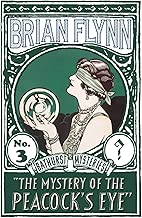
Among the Dean Street Press books, I'd particularly like to highlight two series. The first is the set of books by Brian Flynn, the second is those by E. and M.A. Radford. They benefit from excellent introductions by two fans who have done a good deal of admirable work in the field. Steve Barge (who blogs as The Puzzle Doctor) is a passionate Flynn fan, while Nigel Moss has long admired the work of the Radfords. I haven't yet read enough of either novelist to be able to judge them for myself (where does the time go?), but the enthusiasm of Steve and Nigel is a recommendation in itself. 
Who Killed Dick Whittington?: A Dr. Manson Mystery (The Doctor Manson Mysteries)The Mystery of the Peacock's Eye: An Anthony Bathurst Mystery
  

Wednesday, 16 October 2019

More Crime Classics on the way


The British Library has just issued its catalogue for the first half of next year, and it's full of good things. Including, naturally, half a dozen Crime Classics that will offer a wide variety of delights for fans of good mystery fiction. For many people, I suspect the stand-out title will be The Woman in the Wardrobe by Peter Shaffer. This splendid impossible crime story was the work of a major writer in the making. Shaffer wrote it in his early twenties and I've been trying to get it back in print for years. This has not been easy to achieve, but I'm glad that a new generation of readers will have a chance to enjoy it at last.

John Dickson Carr returns, with another Henri Bencolin story, the splendidly atmospheric Castle Skull, set in the Rhineland. We're also back in continental Europe with Crossed Skis, by Carol Carnac. Carnac was a pen-name of Carol Rivett, better known as E.C.R. Lorac, and this is a very enjoyable Alpine mystery indeed - even if, like me, you wouldn't want to be caught dead on a pair of skis.

I'm delighted that Mary Kelly's The Spoilt Kill is included in the list. This is the book that won her the CWA Gold Dagger when she was  still in her early thirties - perhaps there have been younger winners since then, but not many, that's for sure. I read the novel many years ago and thoroughly enjoyed it when rereading it prior to writing my intro for this edition. I've also benefited from the insights of the author's husband, Denis, who has been enormously helpful.

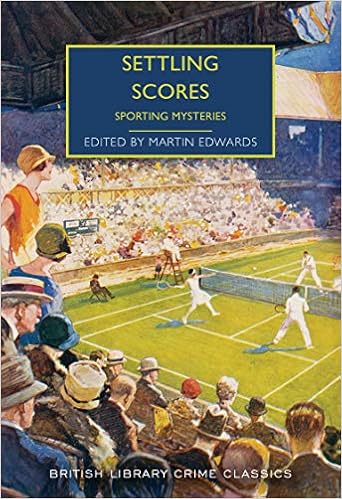
By popular demand, there's another John Bude book - in fact, a volume which contains two rare Bude novels, Death in White Pyjamas and an impossible crime story, Death Knows No Calendar. And finally there is another anthology which I've put together. Settling Scores is a collection of sporting mysteries; each story is by a different author, and each features a different sport. 

Monday, 4 March 2019

Remembering Mary Kelly

Mary Kelly won a CWA Gold Dagger, and she also attracted a good deal of critical praise. Her writing was stylish and unorthdox, and she wrote books featuring a police detective, others featuring a private investigator, and several stand-alone novels of psychological suspense. A good mix of work, to say the least. She also served as Secretary of the Detection Club, and was friendly with writers as diverse as Anthony Berkeley, Michael Innes, Harry Keating, Joan Aiken, and Patricia Highsmith. Yet I don't think it's unfair to say that she is now forgotten. How can this have happened?

Whilst there's no simple answer, one factor is that she ceased publishing crime fiction when she was in her forties, although she lived on for more than forty years after her last book appeared (and towards the end, she started work on a new novel). But that isn't the only reason. Mary Kelly was one of those admirable authors who wrote what she wanted to write, and when she wanted to write it. She was, I suspect, someone who made her publishers despair. But she really could write well.

I've been fortunate enough to talk to Mary's husband, Denis, over recent months, and I hope that I can weave some of the material with which he's kindly supplied me into a magazine article about Mary. Her approach to her craft was so unusual, and her gifts so distinctive, that she definitely deserves to be remembered. For the time being, let me focus on one particular title of hers that was published in paperback as a green Penguin.

Due to a Death, which first appeared in 1962, was her follow up to The Spoilt Kill, her Gold-Dagger winner of the previous year. It shares a key character with the earlier novel. Yet it's an exceptionally bleak book, and a dark tale is told rather elliptically. Most writers would have been tempted to try to cash in on a smash hit by writing a commercial novel, but this story hardly fits the bill. Penguin published it in paperback, but I'm guessing it was hardly a runaway bestseller. It is, however, very well written.

It's a first person narrative, and the story is told by a young woman called Agnes. She's married to a fairly decent cove called Tom, but she isn't content, and she finds herself drawn to a newcomer in the village. We know from the start of the book that someone has died, but the precise nature of the mystery doesn't become clear for a long time. The atmosphere is evocative but melancholy: the setting is a decaying village called Gunfleet. The secret at the heart of the story is even grimmer. Not a light-hearted read, that is for sure. But it's equally true that Mary Kelly was one of the most interesting British writers to emerge in the post-war era prior to the arrival of P.D. James and Ruth Rendell. She wasn't in their league, but who was?