Showing posts with label Shetland. Show all posts

Monday, 8 October 2018

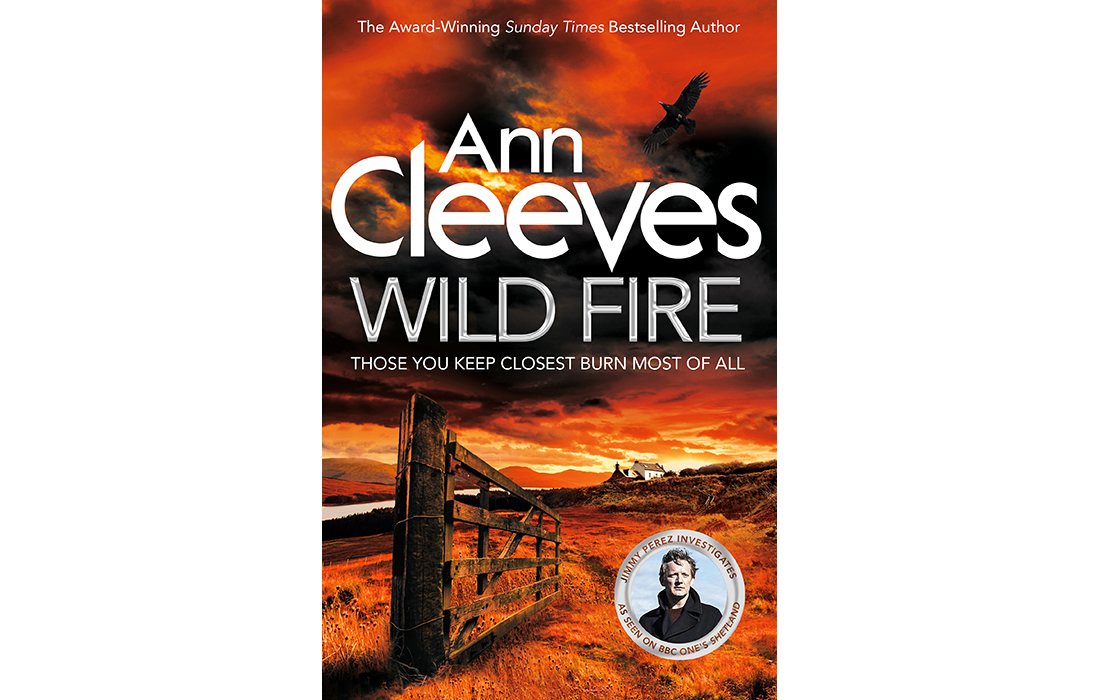
Wild Fire by Ann Cleeves


Image result for wild fire ann cleeves

The crime writing career of Ann Cleeves is an excellent example of the mercurial nature of this extraordinary profession. She was quietly producing very good books for many years before her first Shetland novel, Raven Black, won the CWA Gold Dagger, an achievement swiftly followed by two enormously popular TV series, Vera and Shetland. She's now one of the genre's superstars, but her feet remain firmly rooted on the ground, and she often mentions when giving talks how lucky she's been. Well, up to a point that's bound to be true, and luck is generally necessary in life, but it's also true that in certain respects one makes one's own luck. The fact is that her books have always been enjoyable reads, with a particular strength in the evocation of landscape. We became friends more years ago than either of us cares to remember, and I've found it both wonderful and extremely fascinating to follow her progress.

Which brings me to her new book, Wild Fire, announced as the last Shetland novel (that might, of course, not necessarily also mean the last Jimmy Perez novel, although the publisher's flyer implies that it is - we'll have to wait and see). Ann originally planned the Shetland books as a quartet, but their success meant that four more were commissioned. It's a shame to see such a good series come to an end, but I think it's a sensible decision. Sometimes, a popular series character outstays his or her welcome - I read a book by a fine author (now deceased) the other day; it was written towards the end of the author's career, and featured her regular detective, but I felt it just wasn't up to standard.

No danger of that with Wild Fire. I've been reading Ann's books since before we first met, and I feel this is one of her very best, showing her talents to best advantage. The blend of setting, characterisation, and plot is excellent. I also liked, incidentally, the endpaper map of Shetland; a nod to the classic tradition, yes, but also helpful to readers unfamiliar with the geography of the islands. The book is dedicated to Ann's late husband Tim, who died suddenly last year, a few short weeks after celebrating with the family the award to her of the CWA Diamond Dagger.

What of the mystery? An English family have moved to Shetland, hoping to give their son Christopher, who is on the autistic spectrum, a better life. Unfortunately they become embroiled in a murder case - the victim is a young woman hired by a doctor and his wife to look after their children. The story encompasses important social issues, not just autism but also domestic violence, yet - crucially - this isn't done in a preachy way or at the expense of the narrative momentum. This book is bound to be a bestseller, but so was the disappointing book by the other author I mentioned earlier. What matters much more is that Wild Fire is an excellent example of the traditional detective story, written by an author at the height of her powers.

Sunday, 21 February 2016

Television Writing: Shetland, Dickensian, and War and Peace

I've been following a number of well-crafted TV series lately, including War and Peace and the soap opera-like Dickensian, which finally comes to an end this evening, though I gather a second series may be planned. War and Peace was quite brilliantly adapted by Andrew Davies. His scripts seem to me to offer a masterclass in economical writing; you could say that he's the TV writing equivalent of a Len Deighton or an Elmore Leonard. I have also continued to watch Shetland, which - as I mentioned here a while ago - got off to a very good start.

I hadn't realised that this series of Shetland was to involve a single story stretched over six episodes, and this structure has cons as well as pros. However, the added length has given the writers the chance to address a number of issues, above all the effect of the rape of one of the central characters. Ann Cleeves has written an eloquent article about this aspect of the story in The Guardian which I think raises some important questions about the portrayal of violence in crime fiction, and deserves a wide readership.

Quite apart from this, the series has made clear to me what a fine actor Douglas Henshall is. He has the knack of conveying a considerable range of emotions with great economy, (you'll have gathered that I'm an admirer of economy!) and I've been increasingly impressed by his performance. Originally, he didn't fit my idea of Jimmy Perez, but he's definitely won me over.

Shetland has held my attention from the first episode, and credit must go to the main writer, Gaby Chiappe. The story is more like a thriller rather than a detective story, complete with a somewhat stereotypical gangland villain, and it has seemed rather meandering at times. It could be argued that, sensitively as the rape sub-plot is handled, the rape itself was largely superfluous to the plot, though whether that is so or not won't be clear until we've seen the final episode.

Possibly six episodes was one or two too many; the same issue arises even more acutely with Dickensian.,which has occasionally dragged. Overall, though, like Dickensian, it makes very good television, and if you haven't watched the shows this time around, it's definitely worth looking out for the repeats or the DVDs. As for War and Peace, until recently I've never felt a burning desire to read Tolstoy. But Davies' wonderful writing has made me realise that I've been missing out..

Monday, 7 December 2015

Books for Christmas


What better gift for Christmas than a book? Or preferably a number of books! I've enjoyed reading lots of different works of fiction and non-fiction this past year, and here are a few suggestions that I hope might be of interest. I make no apology for the fact that some of them are written by friends of mine; I can promise that you won't be disappointed.

On that note, I have a weakness for - amongst other things - coffee table books,and Ann Cleeves' recently published Shetland is a splendid example. Ann maintains that she isn't a non-fiction writer, rather as she maintains that she doesn't like quizzes - yet still managed to win Celebrity Mastermind. Here again, this book is a winner. Sumptuous photos accompany her  text, and remind me that Shetland's a place I really want to visit before long. I'm not entirely convinced that winter is the best time to go there,but the photos of the Up Helly Aa Viking fire festival are almost enough to make me change my mind.


Ann also edited The Starlings and other stories, a Murder Squad collection which includes stories by my wife Helena and me, and also by Kate Ellis. A book we were all proud to be part of, with lovely photos by David Wilson which inspired each of the stories. Kate's latest novels, The Death Season and Walking By Night (yes, two novels in one year) are definitely recommended. So too Peter Lovesey's Down Among the Dead Men and Sarah Ward's debut In Bitter Chill, to name just two out of a dozen or so new books that I've really enjoyed. There have also been numerous excellent books about books, and writers, and I'd like to highlight Melvyn Barnes' book about Francis Durbridge, Derek Collett's His Own Executioner (a biography of that excellent author Nigel Balchin) and Steven Powell's study of James Ellroy, And if you happen to be a cricket fan, let me again recommend Steve Dolman's biography of Edwin Smith (a blameless spin bowler whose name I once borrowed for one of my naughtier characters...)

I can't fail to mention the British Library's Crime Classics, which continue to do a roaring trade. Plenty of readers have already been tempted by my three anthologies, Capital Crimes, Resorting to Murder, and Silent Nights, and of the novels to appear in the series this year, I have a particularly soft spot for Freeman Wills Crofts' Antidote to Venom and Christopher St John Sprigg's Death of an Airman. This year also saw the publication of an anthology of true crime essays by members of the CWA, and edited by me, Truly Criminal. It's not a book that has attracted  a huge amount of attention, but there are some wonderful pieces in there, believe me. Finally, I can't complain about the attention accorded to The Golden Age of Murder, that's for sure. And Harper Collins did such a good job in terms of making an attractive book to look at and read that I am hoping it finds its way into a few Christmas stockings!


Wednesday, 9 April 2014

The Spice of Life


The fascination of islands is, for me, endless .The final port of call on my recent trip to the Caribbean, before returning to Barbados, was Grenada, the Spice Island, and it proved to be rich in natural beauty as well as vibrant in culture, with warm, friendly people. Every island has its distinct personality, shaped in part by the climate, and Grenada (unlike, say, Aruba, which has an arid, desert-type climate) is rich in flora and fauna, but also vulnerable to hurricanes. Among the places I visited was the lake in a volcanic crater,close to the nature reserve which is home to some very affable monkeys.


I haven't been able to track down any Grenada-based crime stories. T.S. Stribling's Poggioli, who I have mentioned in my last two posts, detected crimes in Barbados, Martinique and Hait as well as Curacao, but his later cases were set in the US. But there is certainly an appetite for Caribbean crime, if the popular success of Death in Paradise (set on a fictional island, but filmed in Guadeloupe) is anything to go by. Will some author be encouraged to write a new series, in which a detective moves from one Caribbean island to another, solving mysteries as he or she goes? I wouldn't be surprised. After all, what a wonderful part of the world to "have" to visit to research!


And the sheer variety of islands was brought home to me again last night, when I watched the first part of the new Shetland story, based on Blue Lightning, and set on Fair Isle. Very different in mood and temperature from Grenada, of course, yet in its way equally appealing. Visiting some of the Scottish islands (I've been to Mull and Skye but that's about it) is high on my to-do list. In the meantime, my trip to the Caribbean has provided a host of happy memories.


Monday, 17 March 2014

Au revoir Salamander - thoughts after the final episode

Salamander finished its twelve-part run at the week-end, and I must say at the outset that, despite a few reservations, I really enjoyed this Belgian thriller, and I'm glad to hear that a follow-up series is proposed. Really, this was three stories in one. First, the hero Paul Gerardi's quest to solve the mysteries surrounding the enigmatic group known as Salamander. Second, the machinations of the people who had their own reasons for attacking that group. And third, the backstory of the mastermind behind the robbery which was meant to destroy Salamander.

In commenting on Shetland and DCI Banks the other day, I mentioned the increasing popularity of two-part crime series. The snag, of course, with a twelve-part series is that you need a very strong story to keep the viewer interested. Fortunately, Salamander rose to the challenge - although I have a sneaking suspicion that ten parts could have done the job. It moved a bit slowly in the last four or five episodes,and I felt that too much time was devoted to the backstory in war-time.

In terms of writing technique, I found it interesting to compare the show with Laura Lippman's After I'm Gone, which also relied heavily on flashbacks. On the whole, the novel worked better, because the flashbacks were integrated more subtly into the narrative, and did not occupy more time than was necessary. Having said that, the idea of corruption at the heart of a national establishment is one that has fascinated me for years, and I've often toyed with writing a thriller about it myself. Maybe one day...

One key factor that Salamander and After I'm Gone have in common is the focus on a very appealing and dogged detective's relentless hunt for the truth about a complex mystery. The two stories are very different, but the appeal of detective work is universal - at least when it's done as well as this.

A final observation - my original blog post about Salamander is now the second most viewed post in the history of this blog. Blogger stats are far from totally reliable, since they miss out some links, but there's not much doubt that I'm far from alone in having found this a very watchable series..

Wednesday, 12 March 2014

Shetland - BBC tv review - and DCI Banks

Shetland returned for a six-part run on BBC TV yesterday evening, the day after I'd finally caught up with the latest series of DCI Banks, another of those cop shows where novels are turned into two episodes of one hour each. It's become a fashionable format, although this seems a little surprising, given the success of the two-hour episodes of Inspector Morse, the pre-eminent classic British cop show of the past thirty years,let alone shows split into eight or ten or twelve parts like Broadchurch, The Tunnel and Salamander. However, it can work pretty well when the ingredients are right, as they are in these two shows. The original Shetland Quartet began with the Gold Dagger winning Raven Black, and this was the story that started last night..

About twenty-five years ago, before my first novel was published, I wrote a short article called (as I remember) "Up the Garden Path". It discussed a number of recent novels with rural settings that I'd enjoyed, and which - I thought - suggested an increasing focus in the Britain of that time on rural mysteries. The article was rejected by the only magazine I sent it to, and so was never published (shame!) but it did highlight the first books written by Ann Cleeves and Peter Robinson, both of which I'd much enjoyed, and who are the creators, respectively, of Shetland's Jimmy Perez and Yorkshire's DCI Alan Banks. So perhaps I can at least claim to have been ahead of the game in spotting the excellence of those writers. I never dreamed that one day I would have the pleasure of getting to know both of them, or indeed that eventually I'd write a rural series of my own - for at that time, I was hard at work on Harry Devlin's debut, set in resolutely urban Liverpool.

The success of the books about Perez and Banks owe a great deal to the authors' shared ability to explore character, setting and storyline in an interesting way, and these attributes are reflected in the TV adaptations. There are, of course, some differences between Ann and Peter as writers, which are to some extent evident in the screenplays. Ann is fascinated by landscape, and the shots of Shetland are bound, I think, to boost tourism to this relatively remote island.. Peter is very keen on, and knowledgeable about, music, and this interest was central to Piece of My Heart, whereas music rarely plays a major part in Ann's work. But there are various similarities between Perez and Banks, two likeable characters with a touch of vulnerability in their make-up.

Both detectives are played by very good actors. Douglas Henshall is nothing like my mental picture of Perez, but he brings a sense of integrity to the part which is just right. Stephen Tompkinson plays Alan Banks with a kind of startled melancholy which again differs from my idea of the Eastvale cop, but which is growing on me. When I wrote that long ago article - perhaps I should disinter it - I had no idea that one day both writers would achieve so much success. But I was intrigued by the fact that they were people of my generation who had already shown that they could write mysteries of genuine quality while I was struggling to finish my debut. Over the years, they have shown great staying power, and today their mysteries entertain millions. And much as I enjoy seeing their work adapted for the small screen, I remain first and foremost a fan of the books.

Sunday, 10 March 2013

Shetland - BBC TV review

Shetland,the new BBC TV crime drama which started tonight, is an adaptation of the work of one of my oldest friends in crime writing, Ann Cleeves, so it was a particular pleasure to watch its transition to the small screen. When I first learned that the role of Jimmy Perez, the cop who takes centre stage, was to be played by Douglas Henshall, I was rather surprised, as he does not look anything like my idea of Jimmy, whose heritage is Spanish. But he's a very good actor, as his performances in very different roles in The Secret of Crickley Hall and Doors Open illustrate, and he makes a very likeable Jimmy.

Another interesting aspect of the adaptation is that the books began with the award-winning Raven Black, whereas the first story to be televised was the final novel of what was originally planned to be a quartet, Red Bones. For plot reasons, there have therefore had to be significant changes to the presentation of Jimmy's personal life, but I felt that, in this first episode, these worked pretty well. The story involves a murder close to an archaeological dig, which as a number of writers, including Ann, Agatha Christie and Kate Ellis have shown, is an eminently suitable setting for a murder mystery.

A great strength of the books, of course, is the location. I'm tempted to dub Ann the Queen of Rural Crime, and Shetland really is a tremendous setting. She's often urged me to visit the place to see for myself and I'd certainly like to do that one of these days. In the meantime, I thought the programme presented Shetland very attractively, and (despite the body count) this show should do wonders for the local tourist trade..

An immediate question is: how does this series compare to the ITV series of Ann's books about Vera Stanhope, the chaotic but appealing Geordie who is played by the admirable Brenda Blethyn? On the evidence of this first episode, I'm tempted to suggest that Shetland is likely to be even more successful, given that the setting is unfamiliar, fascinating and atmospheric - even more so than the North East countryside, where Vera is set. We'll see in due course, but in the meantime I look forward to watching the second and concluding episode of Red Bones..

Wednesday, 26 December 2012

Doors Open: TV review

Doors Open, a TV film based on Ian Rankin's novel, was ideally suited to a screening on Boxing Day - a light and very entertaining thriller, involving an art heist and benefiting from an excellent cast. Three friends, played by Stephen Fry, Douglas Henshall and Kenneth Collard, have varying motives for indulging in an amateur robbery on a grand scale - the theft of valuable paintings from a bank vault.

The trio soon realise that they need professional help, and - needless to say - this is where things start to get tricky. For the career criminal who helps them out is in hock to a nasty English gangster, who is all too ready to take ruthless revenge if he is not paid back what he is owed. The complications increase because Henshall's character is still emotionally involved with a former lover (played by Lenora Crichlow), who just happens to have been brought in to assesss the bank's collection of art before it is sold off.

I've been a fan of Ian Rankin since the early 90s, when I read his first Rebus novel. A few years later, I was delighted to receive from him a contribution to the first CWA anthology I edited, Perfectly Criminal. The story, "Herbert in Motion", won him a Dagger,and that, too, concerned an art theft. So Doors Open had, for me, an added interest.

The jaunty and sometimes obtrusive soundtrack emphasised, perhaps too insistently, that this was a "feelgood" show rather than anything serious, but I found it very enjoyable, even down to the finale, which borrowed a device used in Christie's Why Didn't They Ask Evans? and other Golden Age stories. The acting was good, and there were some funny lines (including reference to the ultimate feelgood heist movie, The Italian Job). When last seen, Henshall was playing the deranged villain of The Secret of Crickley Hall. Soon he will morph into Jimmy Perez in Shetland. He's becoming almost as ubiquitous as - well, Stephen Fry.

Sunday, 2 December 2012

The Secret of Crickley Hall - tv review (episode 3)

The Secret of Crickley Hall reached a suitably melodramatic climax this evening, as the third and final episode of the ghost story adapted from James Herbert's novel drew together the strands of its two story-lines, one from 1943, one contemporary. This has been a very popular show - yesterday a fellow writer whose judgment I respect was telling me how much she'd enjoyed it, and I've noted that my review of the first episode has already entered the list of the top ten most viewed of all the blog posts I've written. And since I've written over 1500 so far, that's quite something.

Much of the strength of the show came from the quality of the acting rather than the scariness of the story. When David Warner, playing (for once) a good guy, met his old adversary, played by Donald Sumpter, it was a pleasure to watch two highly accomplished veteran actors at work. Suranne Jones and Tom Ellis were good as the bereaved couple who made the mistake of taking a break from their ordinary lives at a place as sinister as Crickley Hall. And Douglas Henshall was such a nasty chap as the deranged Augustus Cribben that it will be fascinating to see how he copes with the very different role of Jimmy Perez in the forthcoming series based on Ann Cleeves' books, Shetland.

I wondered how the scriptwriter, Joe Ahearne, would manage to produce a "happy ending" suitable for the Sunday evening light entertainment slot without making the whole thing unacceptably twee. By and large, I think he managed to achieve the objective. That said, there were one or two elements that didn't quite work for me. For instance, the character of Cribben's dodgy sister wasn't clearly developed, and although there was an interesting glimpse of the (by now, very aged) sister in the present day that was pleasingly macabre, I'd have liked to know more about what she'd got up to since the 1940s.

I've read some very negative reviews of the show, including a rather witty if withering put-down of the early family scenes in episode one ("Alfred Hitchcock doing Outnumbered"). All the same, I'm glad I stayed with it. It doesn't bear comparison with, say, The Innocents, which is still definitely unsettling 50 years on, but it was well-fashioned light entertainment.


Thursday, 2 April 2009

Red Bones


I’ve just finished reading the new Jimmy Perez mystery, set in Shetland, by Ann Cleeves. It’s called Red Bones and it’s set in spring – each of the Shetland Quarter is set in a different season of the year. I’m planning to review the book for Tangled Web UK, but suffice to say that I very much enjoyed the fluency of the writing, as well as the wonderful way in which Ann evokes the setting. A gift for evoking place - above all, for portraying rural communities in depth – is one of Ann’s great strengths as a writer.

I’ve mentioned before that Ann is a friend of long-standing and one point that sometimes crosses my mind is whether it’s legitimate to review books written by personal friends. I began reviewing crime fiction, for a magazine called ‘The Criminologist’, back in 1987 – having learned, from reviewing legal books, that it was a good way of expanding one’s library at little or no cost. I enjoyed reviewing, and in those days I was not a published novelist. But of course, as one publishes more and more, inevitably (and happily) one gets to know more and more fellow writers. Does this mean that one should stop reviewing their work?

I don’t think so. Where practical, it’s a good idea to flag up to readers of the review that the author of the book is someone known to the reviewer. This is what I try, in most cases, to do. But to do it every single time would become wearisome for readers – it would seem as if the reviewer were showing off how many people he or she is acquainted with.

I’m not sure there’s a perfect answer to this sort of dilemma. My own approach is to try to be both honest and positive, whether or not I know the writer in question. I would not wish to hurt anyone’s feelings. But where I sense weaknesses in a book, even one written by a good friend, I would be likely to allude to them in a review, whilst striving to highlight the positive aspects of the book. And if I really did not like a book, then almost certainly I would not review it. This approach suits me, not least because I’m a passionate crime fan, and I’m naturally predisposed to enjoy crime novels - whether or not the writer has ever crossed my path.

Tuesday, 6 January 2009

Vaila's Fund

Today, I’m glad to hand over the blog to my Murder Squad colleague Ann Cleeves, for a very worthwhile cause. Here’s Ann’s message:

‘I sometimes use real people's names in the Shetland books - a bit of fun and occasionally a way of thanking friends and people who've helped. In Raven Black, I mention the Harvey girls; one of the lead characters goes to their party. Appropriate I thought, because whenever we visited Liz and Paul and their daughters were home the house was full of people and laughter. Last year the youngest Harvey girl, Vaila, was diagnosed with cancer. It seemed that the illness had been treated and when I visited Shetland for Up Helly Aa, she was there watching the parade, cheerful and energetic. But on my next trip in May she was desperately ill in hospital in Aberdeen. It seemed that the whole of Shetland was holding its breath, willing her to get well. Unfortunately she died soon after. She was sixteen years old.

Her parents have decided to set up a fund in her memory, to allow Shetland young people to have the adventures Vaila would have enjoyed. Travel from Shetland can be complicated and expensive. Vaila's Fund would make it possible for a student of Vaila’s age to explore the world away from the islands. The fund will be administered by teachers from the Shetland High Schools and will be the best possible memorial for the young woman we, who knew her, already remember so fondly. To support the fund, I'm offering you the chance to have your name (or that of your friend or relative) in the fourth book in the Shetland quartet. Of course you'd get a signed first edition and an invitation to the launch party! The book will be published in the US and probably be translated into a dozen languages. Take part in the online auction and become a character in this popular series.

To take part in the auction, check out existing offers on my website: www.anncleeves.com, then email your bid to me using the form on Vaila's page. The website will be updated regularly. The auction closes at midnight on Sunday March 8th and the winning name will be announced at the Shetland launch of Red Bones in Lerwick Library on Tuesday March 10th.’