Showing posts with label Vera. Show all posts

Monday, 8 October 2018

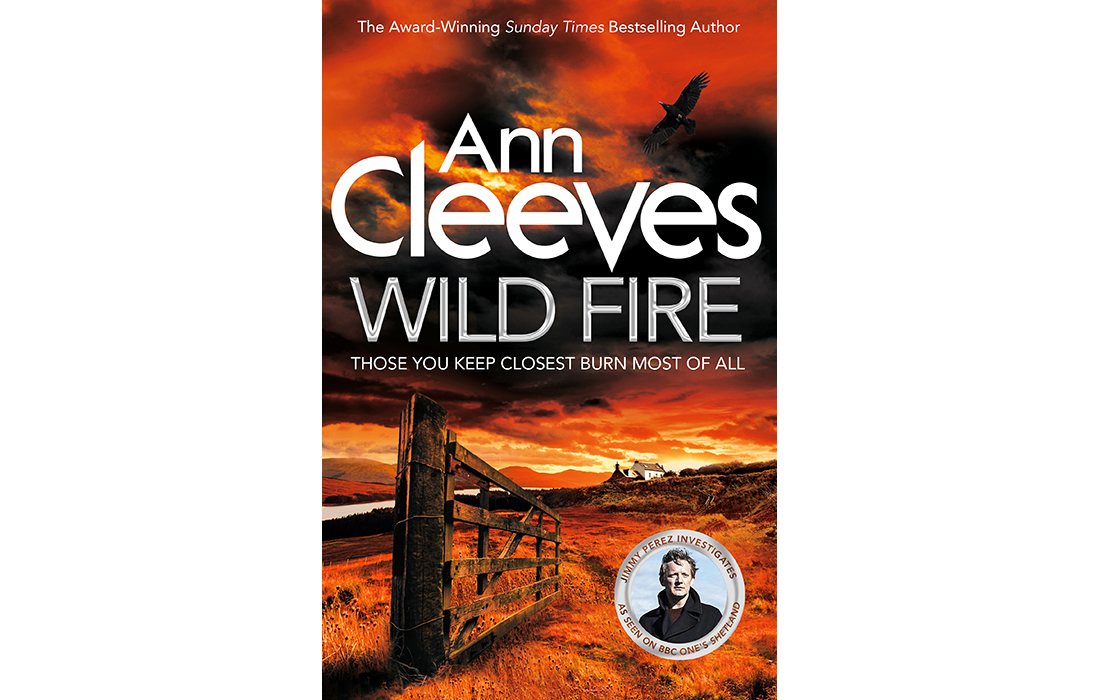
Wild Fire by Ann Cleeves


Image result for wild fire ann cleeves

The crime writing career of Ann Cleeves is an excellent example of the mercurial nature of this extraordinary profession. She was quietly producing very good books for many years before her first Shetland novel, Raven Black, won the CWA Gold Dagger, an achievement swiftly followed by two enormously popular TV series, Vera and Shetland. She's now one of the genre's superstars, but her feet remain firmly rooted on the ground, and she often mentions when giving talks how lucky she's been. Well, up to a point that's bound to be true, and luck is generally necessary in life, but it's also true that in certain respects one makes one's own luck. The fact is that her books have always been enjoyable reads, with a particular strength in the evocation of landscape. We became friends more years ago than either of us cares to remember, and I've found it both wonderful and extremely fascinating to follow her progress.

Which brings me to her new book, Wild Fire, announced as the last Shetland novel (that might, of course, not necessarily also mean the last Jimmy Perez novel, although the publisher's flyer implies that it is - we'll have to wait and see). Ann originally planned the Shetland books as a quartet, but their success meant that four more were commissioned. It's a shame to see such a good series come to an end, but I think it's a sensible decision. Sometimes, a popular series character outstays his or her welcome - I read a book by a fine author (now deceased) the other day; it was written towards the end of the author's career, and featured her regular detective, but I felt it just wasn't up to standard.

No danger of that with Wild Fire. I've been reading Ann's books since before we first met, and I feel this is one of her very best, showing her talents to best advantage. The blend of setting, characterisation, and plot is excellent. I also liked, incidentally, the endpaper map of Shetland; a nod to the classic tradition, yes, but also helpful to readers unfamiliar with the geography of the islands. The book is dedicated to Ann's late husband Tim, who died suddenly last year, a few short weeks after celebrating with the family the award to her of the CWA Diamond Dagger.

What of the mystery? An English family have moved to Shetland, hoping to give their son Christopher, who is on the autistic spectrum, a better life. Unfortunately they become embroiled in a murder case - the victim is a young woman hired by a doctor and his wife to look after their children. The story encompasses important social issues, not just autism but also domestic violence, yet - crucially - this isn't done in a preachy way or at the expense of the narrative momentum. This book is bound to be a bestseller, but so was the disappointing book by the other author I mentioned earlier. What matters much more is that Wild Fire is an excellent example of the traditional detective story, written by an author at the height of her powers.

Wednesday, 29 July 2015

Harrogate - and a question

Other commitments have meant that I'm reporting on the Theakstons Old Peculier Crime Writing Festival at Harrogate ten days after it came to an end. But it was a really enjoyable week-end, and it's prompted me to ask readers of this blog a question.

The programming chair for the Festival was Ann Cleeves, and she is such an efficient person that it was predictable that the whole week-end would be very well organised. And it was. Ann would be the first to give much credit to the very professional team that handles all the arrangements. It all seemed to me to run like clockwork. As usual, there was much socialising in the bar and elsewhere, and I took the opportunity to have a number of meetings, not least with my agent, with whom I was discussing my future writing plans. The good news is that he is happy with them!

I enjoyed the hospitality of Harper Collins at a dinner on the Friday evening, and met a number of fascinating people, including a new author, Ben McPherson; I sense that his debut novel will be well worth looking out for. Later on, Ann introduced me to Brenda Blethyn, the extremely pleasant star of Vera, and I finished up having a long chat with an old friend, that very fine writer Peter Robinson. The following night, I hosted a table at the Sicilian-themed murder mystery dinner masterminded by Kate Ellis. Great fun.

On Sunday, I took part in a panel celebrating the life and work of Patricia Highsmith. The moderator was Andrew Taylor and my colleagues were Peter James, Perer Swanson, and Sarah Hilary. Sarah had just won the Theakstons Prize for best crime novel of the year, and this gave me special pleasure as some years ago I included an early short story of hers in one of my anthologies for the CWA. She is a real star.

One questioner in the audience raised the issue of the relative significance of the author's life and the author's work. And this is my question to you - how interested, if at all, are you in the biography of a writer? Do you think it's relevant to their books?

My own views on this have shifted over the years. I used to think that the books were overwhelmingly more important than the life. Now, I take much more interest in the biographical material. In fact, I now think that you can't fully appreciate Highsmith (who, admittedly, had an extraordinary life) without knowing something of her life. But I'm sure that plenty of readers would take a different view. So - do let me know your opinion, and why you hold it.. 

Wednesday, 18 September 2013

What Remains and the modern whodunit

What Remains maintained to its fourth and final part the appeal that I wrote about in my review of the first episode and David Threlfall continued to perform superbly in the role of the decent but emotionally bereft ex-cop Len Harper.

The claustrophobic shared house setting was brilliantl captured, and although the last ten minutes or so were pretty melodramatic in comparison to the subtle tension-building that had gone before, overall I very much enjoyed the story. While watching it, I was prompted to reflect on the strength of the whodunit as a narrative form, because despite its highly contemporary mood and subject matter, What Remains was a genuine whodunit, with added value in terms of characterisation and, above all, the compelling portrayal of how desperately lonely life can be in the heart of bustling metropolitan London.

Stripped of the moody and dark photography, the storyline was reminiscent of the Golden Age. Almost all the occupants of the shared house nursed dark secrets. Possible motives were lightly sketched (a slight plotting weakness, perhaps?) but almost everyone seemed capable of having murdered the luckless young woman whose body had been found in the attic two years after she was last seen - a disappearance to which hardly anyone paid attention. There was even a "least likely culprit" in the Christie tradition.

If analysed carefully, I'm not sure that - despite its superficially very "realistic" take on modern life - What Remains was much more plausible than many a Golden Age mystery. But on the whole,that didn't matter. It was good entertainment, and offered a story that will linger in my mind for quite a while. This is something that a good whodunit can do -whether it's a modern TV drama, such as Lewis or Vera or Broadchurch, or an older story,such as the better 'forgotten books' that I cover on Fridays. The combination of a mystery to solve, coupled with interesting people and a well-evoked setting has just as much appeal today as it did eighty years ago..


Sunday, 10 March 2013

Shetland - BBC TV review

Shetland,the new BBC TV crime drama which started tonight, is an adaptation of the work of one of my oldest friends in crime writing, Ann Cleeves, so it was a particular pleasure to watch its transition to the small screen. When I first learned that the role of Jimmy Perez, the cop who takes centre stage, was to be played by Douglas Henshall, I was rather surprised, as he does not look anything like my idea of Jimmy, whose heritage is Spanish. But he's a very good actor, as his performances in very different roles in The Secret of Crickley Hall and Doors Open illustrate, and he makes a very likeable Jimmy.

Another interesting aspect of the adaptation is that the books began with the award-winning Raven Black, whereas the first story to be televised was the final novel of what was originally planned to be a quartet, Red Bones. For plot reasons, there have therefore had to be significant changes to the presentation of Jimmy's personal life, but I felt that, in this first episode, these worked pretty well. The story involves a murder close to an archaeological dig, which as a number of writers, including Ann, Agatha Christie and Kate Ellis have shown, is an eminently suitable setting for a murder mystery.

A great strength of the books, of course, is the location. I'm tempted to dub Ann the Queen of Rural Crime, and Shetland really is a tremendous setting. She's often urged me to visit the place to see for myself and I'd certainly like to do that one of these days. In the meantime, I thought the programme presented Shetland very attractively, and (despite the body count) this show should do wonders for the local tourist trade..

An immediate question is: how does this series compare to the ITV series of Ann's books about Vera Stanhope, the chaotic but appealing Geordie who is played by the admirable Brenda Blethyn? On the evidence of this first episode, I'm tempted to suggest that Shetland is likely to be even more successful, given that the setting is unfamiliar, fascinating and atmospheric - even more so than the North East countryside, where Vera is set. We'll see in due course, but in the meantime I look forward to watching the second and concluding episode of Red Bones..

Tuesday, 27 November 2012

Falcon - TV review (episode 2)

The Blind Man of Seville, the first story in Sky Atlantic's new series Falcon, came to an end last week and I've just caught up with the second of the two episodes. I mentioned in my review of episode 1 that the source of the story is a book by Robert Wilson, but I should add that the screenplay is by Stephen Butchard, and even though I haven't read the book, I thought Butchard did a extremely good job in producing an entertaining and watchable show.

I've touched before on the thorny issue of what length works best for a TV cop show. The truth is that (as was depressingly stated on the cover of one of my student law books) there are no "right" answers, but it can be argued that the Morse/Lewis/Vera formula of two-hour stories is more appealing than two parts of one hour each. But the latter format seems to be gaining popularity (DCI Banks is another example) and as long as the screenplay holds the attention throughout, with no sagging (or rushing to cover all the plot elements) in the second episode, it can work very well.

Butchard succeeded so well that I found the second episode even more gripping than the first, despite the unlikely nature of the plot. Suffice to say that the eponymous Falcon was confronted with some unpleasant truths concerning his family, and especially his late parents, as he battled to find the truth about the murderer of three men, two of whom he was close to.

It was all a bit of an endurance test for poor old Falcon, but Marton Csokas performed the role with aplomb and plenty of charisma, and he did have the considerable consolation that one of the suspects, played by Hayley Atwell, fell for him big style. I was amazed, by the way, to discover that Csokas is a New Zealander. It was as much a surprise to me as the solution of many a whodunit!

Thursday, 18 October 2012

DCI Banks: Strange Affair - review

DCI Banks' latest two-parter, Strange Affair, concluded unexpectedly yesterday. I say "unexpectedly", because for twenty minutes it seemed perfectly clear in which direction the story was heading, and the dialogue felt equally predictable. Yet, all of a sudden, the narrative motored off in a new direction, and I found myself enjoying it very much indeed.

This owes much, of course, to the strength of the plot in Peter Robinson's book on which the adaptation was based. But there was also fine work from a strong cast in which Stephen Tompkinson was at his most anguished and Caroline Catz at her spikiest, while Keith Barron was excellent as Banks's dad. In the end, the story posed a moral dilemma which I'd really not seen coming, and this device worked very well. Importantly, it didn't feel contrived.

Another pleasing feature, for me, of this episode was an element of nostalgia, in that I recognised a couple of locations. After I left law college, I spent a couple of years working in Leeds, a time when money was, to put it mildly, in short supply. I left Yorkshire to work in Liverpool, but I remain a great fan of the White Rose county, and DCI Banks makes good use of the Yorkshire setting, even though it is, admittedly, slightly less dramatic that that of, say, Lewis or Vera.

DCI Banks is, I think,starting to develop into a very good series, and it's reassuring to know that, because Peter Robinson has been so prolific and consistent over the years, there are plenty of story-lines to come. I look forward to the next instalment.

Monday, 23 July 2012

Harrogate

I am just back from a truly enjoyable trip to Harrogate, for the Theakston's Old Peculier Crime Writing Festival. This is a major event in the crime calendar nowadays, and although there are not as many authors featured as at, say, Crimefest, because the focus tends to be on the big names,the organisation and profile of the week-end is genuinely impressive. Sharon Canavar and her team do an excellent job. I also seized the chance while in Yorkshire to spend quite a long time at an excellent book fair at Ilkley. Inevitably, I succumbed to the lure of buying several future Forgotten Books.

For me, the stand-out event at the Festival was "Come Die With Me", a combination of dinner and murder mystery organised by my old friend Ann Cleeves. Ann first ventured into murder mystery events quite some ago, with "The Body in the Library", which I've seen several times. Her latest mystery was geared specifically to the Harrogate Festival, while drawing on characters from her novel The Glass Room, and the connection between the Old Swan Hotel in Harrogate, and Agatha Chrstie, who was found there after she went missing in 1926.

The four characters in the mystery were played by N.J.Cooper, Cath Staincliffe, Jeremy Trevathon (a senior publisher with PanMacmillan) and Jon Morrison, an actor who appears as DC Kenny Lockhart in Vera. I had the pleasure of sitting between Jeremy and Jon, who were very good company, as well as terrific performers in their parts.

A nice feature of the event was PanMac's promotion of the Bello:Best of British Crime omnibus, to which I wrote an introduction, and which I mentioned here last week. It was the first time I'd seen the book in physical form: another addition to the bookshelf! Also on our table was Professor Lorna Dawson, an expert in soil science and forensics, who has helped Ann with some of her research.

After the dinner was over, there was time to celebrate with Margaret Murphy, following her CWA short story success, and to chat some more with Jon and Lorna. All very agreeable and as a result I didn't go to the quiz this year. But I bumped into Stuart MacBride, who told me something about the Specific Gravity round robin story that I hadn't realised - there's a hidden message in the final chapter, but it's very well hidden!