Bought all your Christmas presents yet? If you're anything like me (though I trust that many of the readers of this blog are a bit better organised!) the answer will be no. So I thought I'd offer a mixed bag of ideas for last minute stocking fillers. These are, for the most part, books I haven't mentioned previously on this blog - though my publishers would shoot me if I didn't point out that Gallows Court is still available on a Kindle monthly deal at an absolutely bargain price!
With novels, of course, one is spoiled for choice. Christine Poulson's An Air That Kills recently received a rave review from Jake Kerridge in the Sunday Express, and is high on my TBR list. During my enjoyable visit to the Isle of Wight for their literary festival, I met James London, and his mystery set on the island (not many crime novels are based there, oddly enough), The Island Murders, offers the opportunity to revisit a very pleasant part of the country. A belated mention too for Mark Brend's Undercliff, an atmospheric read.
Among the big bestsellers, my favourite recent read is Steve Cavanagh's Twisted, which I really enjoyed; it appealed to me even more than his Gold Dagger winning novel The Liar. As regards Lianne Moriarty's megaselling and highly readable Nine Perfect Strangers, it was really the comic lines, some of them very good, that stood out for me ahead of the plot. In contrast, Lucy Foley's The Hunting Party has a plot that twists and turns from the start to finish and although I felt the puzzle element did have a weakness (don't want to give a spoiler, but I wasn't convinced by her account of student life at Oxford) I did find it a gripping story.
For those readers of academic inclination, for a while I've been meaning to mention a couple of definitely niche but interesting textbooks. The Disabled Detective by Susannah B. Mintz is a wide-ranging book, one of the few to discuss John Trench's books (for instance) in any detail. The Bible in Crime Fiction and Drama, edited by Caroline Blyth and Alison Jack boasts an afterword by Liam McIlvanney and is another unexpected but informative book (I certainly didn't expect to come across mention of The Golden Age of Murder in a couple of footnotes!)
And finally, a fun book. I've waxed lyrical about the British Crime Classic often enough and Kate Jackson's Pocket Detective 2 is a follow-up to her previous puzzle book based on the series. If you fancy yourself as a sleuth, you'll find a good deal to enjoy here.
Happy reading!
Friday, 20 December 2019

Wednesday, 18 December 2019
Elaine Viets: guest blog

I first met the American crime writer Elaine Viets at Malice Domestic two or three years ago and very much enjoyed chatting to her. Elaine now has a book coming out with Severn House in the UK at the end of this month; it has the rather nice title A Star is Dead and it's the fourth in the Angela Richman Death Investigator series. So what exactly are death investigators? Elaine explains...
"There’s a new crime profession in the US – death investigator – and my Angela Richman series features a working death investigator. A Star Is Dead is set in mythical Chouteau County, a 'ten-square-mile pocket of white privilege' in the Midwest. Angela works for the Chouteau County medical examiner. She investigates all unexpected and unexplained deaths: accidents, murders, suicides. She's responsible for the dead person. The police handle the scene – everything but the body.
To make sure Angela had the most
accurate forensics, I took the Medicolegal Death Investigators Training Course
at St. Louis University's School of Medicine. Death investigators started in my
hometown of St. Louis, Missouri, in 1978 because of a shortage of forensic
pathologists. DIs are sort of like forensic paralegals. They are trained, but
don't have medical degrees like pathologists. Students came from as far away as
Australia for this course. I sat between an Illinois police chief and a working
DI from Austin, Texas.
Here's one day's agenda for the
death investigator course:
In the morning, we learned about
gunshot wound fatalities, explosion-related deaths, motor vehicle fatalities
and drowning. At lunch we watched a video about teen driving and alcohol that
made me want to trade my car for an armored personnel carrier.
Then it was alcohol-related deaths,
suicide, blunt-trauma fatalities and more. I was grateful that the airplane
crash investigations weren't on the same day I flew home.
For more than eight hours, the death
investigator course studied photos and videos from crime scenes and autopsies.
I'm sure if I saw – and smelled – real autopsies, I'd be pea green and
upchucking. The photos gave enough distance that I could tolerate the gruesome
illustrations. By the end of the course, I even watched an autopsy video during
lunch.
The course made me a different
woman. Not only do I have the latest forensics – I became a temporary
vegetarian. It was months before I could eat pasta with red sauce or cut up a
chicken. After all, people are a hundred-plus pounds of raw meat.
Oh, and if you have a "Born to
Lose" tattoo? That almost guarantees you'll live up that promise. I lost
count of how many times I saw that tattoo in autopsy photos. The most dramatic
was a man with "Born to Lose" in black Gothic letters on his
forehead.
Right under the bullet hole."

Monday, 16 December 2019
Classic Crime aplenty
It's been another great year for fans of classic crime fiction. Many good books have reappeared after decades out of print and connections between enthusiasts in different parts of the world are becoming ever stronger. A fortnight ago I attended a meeting at the British Library where, among other things, we were discussing titles for the rest of 2020 and into 2021 and I'm happy to report that there are some terrific books lined up. Details to follow before long....
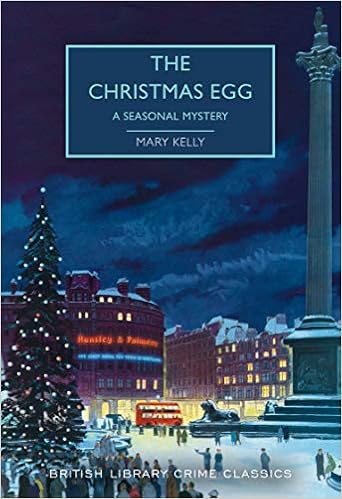
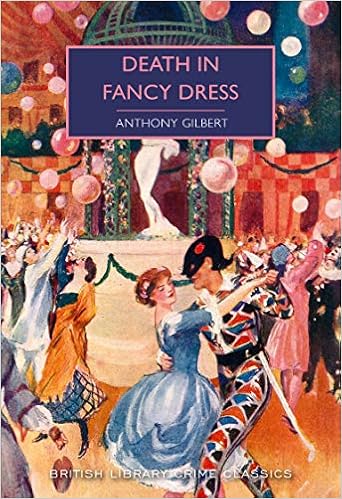
What is more, there is no sign of public appetite for the BL's Crime Classics series starting to diminish. Take, for instance, Mary Kelly's book The Christmas Egg, this year's principal seasonal title (there's also a more orthodox whodunit, Death in Fancy Dress by Anthony Gilbert). It's a rather idiosyncratic story by a writer of distinction and when the book first appeared towards the end of the 50s, it gained respectful reviews but didn't set the world on fire in sales terms. How things change. After just three weeks, the book went into its third reprint, and sales in that time are massive - already far outstripping those of the original. When you think about it, that's really quite remarkable. And some perceptive reviewers have highlighted the book's strengths. I'm particularly glad for Mary's widower, Denis, who has had so much joy from seeing his late wife's reputation as a novelist revived. And there's more to come - her masterpiece, the Gold Dagger-winning The Spoilt Kill, will be published next year.
In the UK, the support of Waterstones has been an invaluable help in ensuring that the series gets plenty of attention. How many other UK publishers have, like the BL, their own dedicated table in Waterstones' branches? When I popped in to Waterstone's Piccadilly branch recently I was thrilled to see the piles of classic mysteries on a very large table indeed. And yes, I can't deny that I relished seeing many copies of my own anthologies there too.
Other publishers are doing their bit. HarperCollins' Detective Story Club series is taking a sabbatical, but my understanding is that HarperCollins will soon be bringing out new paperback editions of several good titles by Freeman Wills Crofts that have long been unavailable. And hats off to Dean Street Press, who continue to produce large numbers of reprints in ebook or print on demand paperback format.
Among the Dean Street Press books, I'd particularly like to highlight two series. The first is the set of books by Brian Flynn, the second is those by E. and M.A. Radford. They benefit from excellent introductions by two fans who have done a good deal of admirable work in the field. Steve Barge (who blogs as The Puzzle Doctor) is a passionate Flynn fan, while Nigel Moss has long admired the work of the Radfords. I haven't yet read enough of either novelist to be able to judge them for myself (where does the time go?), but the enthusiasm of Steve and Nigel is a recommendation in itself.

Friday, 13 December 2019
Forgotten Book - Appointment with Yesterday
Celia Fremlin was a remarkable woman, and a remarkable writer. I had the pleasure to meet her briefly in the early 1990s, at a CWA conference, although I didn't have the chance to talk to her at great length. I've admired her writing for a long time, though I haven't read all her books by any means, and I've only recently caught up with her 1972 mystery Appointment with Yesterday.
This is a really terrific novel. It's a story of domestic suspense, but it's the wittiest example of that sub-genre that I can recall having read. There are many acute insights and touches of humour, which relieve a rather dark storyline, and make the whole book entertaining as well as perceptive. It's at least as good as her excellent debut, The Hours Before Dawn, which won an Edgar.
This is the story of a woman who calls herself Milly Barnes. We know that isn't her real name, and we also know that she is on the run, fleeing from something terrible. What has she done, why is she so afraid? Milly can be exasperating, and can seem weak and rather stupid, but gradually Fremlin reveals the circumstances that have shaped her personality, and our sympathy for her grows.
Milly runs off to a seaside town where she takes a number of part-time jobs as a cleaner. Fremlin herself had worked in domestic service, and her presentation of the relations between employer and employed is as enjoyable as it is plausible. Meanwhile, the tension mounts, since someone is trying to find Milly. Who can it be, and what do they want? I can strongly recommend this excellent novel. It deserves to be much better-known.
This is a really terrific novel. It's a story of domestic suspense, but it's the wittiest example of that sub-genre that I can recall having read. There are many acute insights and touches of humour, which relieve a rather dark storyline, and make the whole book entertaining as well as perceptive. It's at least as good as her excellent debut, The Hours Before Dawn, which won an Edgar.
This is the story of a woman who calls herself Milly Barnes. We know that isn't her real name, and we also know that she is on the run, fleeing from something terrible. What has she done, why is she so afraid? Milly can be exasperating, and can seem weak and rather stupid, but gradually Fremlin reveals the circumstances that have shaped her personality, and our sympathy for her grows.
Milly runs off to a seaside town where she takes a number of part-time jobs as a cleaner. Fremlin herself had worked in domestic service, and her presentation of the relations between employer and employed is as enjoyable as it is plausible. Meanwhile, the tension mounts, since someone is trying to find Milly. Who can it be, and what do they want? I can strongly recommend this excellent novel. It deserves to be much better-known.
Wednesday, 11 December 2019
The House on the Cliff - a play
I've mentioned previously that the local amateur dramatic society here, the long-established Bridgewater Players, occasionally perform entertaining whodunits at Thelwall Parish Hall, not far from where I live. Through one of their earlier shows, I got to know the playwright Derek Webb, and I recently attended their latest production, The House on the Cliff, by George Batson.
I was particularly intrigued by the title, given that Mortmain Hall, due to be published in April next year, involves - well, a house on a cliff. Suffice to say that the two storylines have nothing else in common - phew! The play concerns Ellen, a young heiress (daughter of a deceased lawyer) who is confined to a wheelchair, although her doctor believes there's nothing really wrong with her. She is looked after by her father's second wife and a housekeeper. When the doctor has to go to France, he calls in a nurse and a second doctor to look after her.
There is an odd aspect of the plot of the play which didn't seem to make sense in legal terms - it concerns the late lawyer's will. And I wasn't the only person to spot the anomaly. The explanation, I suspect, comes from the fact that the play was written by an American and originally set in the US, where the law is different. The action of the version I watched has been transposed to the UK, with the house relocated to a cliff in Kent, overlooking the English Channel. However, whoever amended the script (many years ago, I suspect) would have done better to correct the error - it could have been done quite easily.
I'd never heard of George Batson (1918-77), but Amnon Kabatchnik's invaluable Blood on the Stage reveals that he wrote nine plays, including one called Ramshackle Inn (1944) which enjoyed poor reviews but a good run. Kabatchnik reckons that The House on the Cliff is his most intriguing work, and I certainly enjoyed the performance by the Bridgewater Players. The challenging role of Ellen was particularly well-handled by Maria Marano, while Deborah Harper was a suitably equivocal stepmother and Cat Mercer a breezy nurse. Groups such as the Bridgewater Players deserve a good deal of support, and the first two nights of the three-night run were sold out. I managed to get tickets for the Saturday performance simply because it clashed with Strictly Come Dancing! I was glad I watched the play instead...
I was particularly intrigued by the title, given that Mortmain Hall, due to be published in April next year, involves - well, a house on a cliff. Suffice to say that the two storylines have nothing else in common - phew! The play concerns Ellen, a young heiress (daughter of a deceased lawyer) who is confined to a wheelchair, although her doctor believes there's nothing really wrong with her. She is looked after by her father's second wife and a housekeeper. When the doctor has to go to France, he calls in a nurse and a second doctor to look after her.
There is an odd aspect of the plot of the play which didn't seem to make sense in legal terms - it concerns the late lawyer's will. And I wasn't the only person to spot the anomaly. The explanation, I suspect, comes from the fact that the play was written by an American and originally set in the US, where the law is different. The action of the version I watched has been transposed to the UK, with the house relocated to a cliff in Kent, overlooking the English Channel. However, whoever amended the script (many years ago, I suspect) would have done better to correct the error - it could have been done quite easily.
I'd never heard of George Batson (1918-77), but Amnon Kabatchnik's invaluable Blood on the Stage reveals that he wrote nine plays, including one called Ramshackle Inn (1944) which enjoyed poor reviews but a good run. Kabatchnik reckons that The House on the Cliff is his most intriguing work, and I certainly enjoyed the performance by the Bridgewater Players. The challenging role of Ellen was particularly well-handled by Maria Marano, while Deborah Harper was a suitably equivocal stepmother and Cat Mercer a breezy nurse. Groups such as the Bridgewater Players deserve a good deal of support, and the first two nights of the three-night run were sold out. I managed to get tickets for the Saturday performance simply because it clashed with Strictly Come Dancing! I was glad I watched the play instead...
Monday, 9 December 2019
Elizabeth is Missing - BBC TV review

As soon as I heard that Glenda Jackson was going to play the lead role in the BBC TV version of Emma Healey's brilliant novel Elizabeth is Missing, I felt sure that it was the most perfect piece of casting. And so it proved. Jackson was fantastic as Maud, the elderly woman with dementia who becomes obsessed about the disappearance of her best friend. She's convinced something bad has happened to Elizabeth, but nobody believes her.
The past becomes intertwined with the present, and the screenplay by Andrea Gibb impressed me, even though some important aspects of Healey's storyline were lost. This was a necessary sacrifice because the TV version ran only for 90 minutes, and on the whole this made a refreshing change from the present day pattern of storylines stretched out interminably beyond their natural length in order to make a six or eight part series (I've seen several of these this year and have mostly not bothered to review them, because the format makes one lose the will to live).
No such danger here. When I reviewed the book here back in March 2017 I talked about the poignancy of the story and this element came over, if anything, even more powerfully in the visual medium. We see Maud's mind slowly disintegrating and the love of her daughter and grand-daughter, although powerless to halt the progress of the disease, remind us of the innate compassion of so many devoted family members struggling to cope with a terrible situation.
The whodunit plot seems, at times, almost incidental, but it isn't really. The outcome of the story is a triumphant vindication of Maud and her persistence, and even if it's inevitable that her memory will continue to deteriorate, it is - as far as it can be - a happy ending. But a realistic one. A television triumph.
Saturday, 7 December 2019
Christmas Mysteries: guest post from Nigel Bird

Nigel Bird has a new novel coming out called Let it Snow, published by Down and Out Books. As you might imagine, the storyline has a seasonal theme. So I invited him to write a guest post, musing on the appeal of Christmas mysteries. Over to you, Nigel:
"Why are so many crime novels set
over Christmas?
I began by wearing my cynical hat. Everyone’s out there
buying presents at this time of year and people love receiving books as gifts.
Pair the two and perhaps it’s the kerching of the cash tills that tempts
publishers and authors to set work over the festive period. But that seems harsh.
I’d prefer to think that their motivation is less the cold drive of economic
reality than that they want plenty of angels to get their wings as registers
ring.
And if you think about it, writing a story set at such a
specific time of year might actually be detrimental to a book’s success. Sure,
crime fans will want to read murder mysteries set over Christmas as they build
up to the holiday and while they wind down afterwards, but do they really want
to be doing that very same thing in the height of summer? Or during the rebirth
of spring? Or on a crisp autumnal evening? I’m not convinced.
If the financial reason is eliminated then what else does
Christmas offer to the crime novel?
For starters, Christmas can be murder.
And what else comes to mind?
Time pressures for one. The need to buy gifts before the 25th,
to ensure the drinks cabinet is full and to get the food cooked and plated
while it’s all still piping hot. They’re mirrored by the pressing need to solve
a case before the serial killer takes out another victim or the kidnapper who has
set a deadline that has police racing the clock. Between the crimes and the domestic pressure
there’s plenty of conflict to drive a story forward and maintain levels of
tension.
And then there’s the natural environment. It’s the bleak
mid-winter. There can be snow, hail, rain, ice or fog. The days are short and
the nights long. The criminal has plenty of natural cover to work with.
Add to that the boozy chaos of revellers that December
brings. Wild office parties that so easily descend into chaos, tempting folk
let their hair down until they’re doing impressions of Rapunzel without caring
too much who is climbing their way to the top. Anything can happen and, in the
hands of the right imagination, probably will.
Into the mix, we can throw in the element of disguise. What
better way to blend in with the background than to wear a red suit and black
gloves with a beard of cotton wool? Not to mention the empty sack to gather all
the swag the average thief can carry. I suspect that the nature of Santa Claus
was less defined by Coca Cola than by some criminal mastermind with a
wonderfully twisted sense of humour.
To help the writer further, the Christmas period spans three
days, each with their own identity and traditions. That’s plenty of time to
settle many a mystery and if that’s not enough, things can be easily stretched
into the New Year and all the madness that brings.
I can imagine you’re coming up with lots of reasons of your
own. How December becomes an easy backdrop: Christmas trees, gardens lit up
like Vegas, crowds with plenty of pockets to be picked and bags to be snatched.
We have carol singers, shoplifting, fraud, holiday traffic, empty houses, piles
of presents in full view to passers-by, stray kisses under the mistletoe, over-indulgence,
hangovers and the ghosts of Christmas past. There might even be something
deadly baked into that pudding, so let’s be careful out there..."
Friday, 6 December 2019
Forgotten Book - A Tangled Web
A Tangled Web could be the title for any number of crime novels, but my Forgotten Book today was written by Nicholas Blake (aka C. Day Lewis) and published in 1956. It's one of only four Blake books not to feature Nigel Strangeways, and it's none the worse for that. I found it extremely readable, written in a smooth and entertaining style with several polished touches worthy of a future Poet Laureate.
The essentials of the plot were drawn from Sir Patrick Hastings K.C.'s account of a real-life criminal trial. In a prefatory note, however, the author emphasises that "the colour, detail and interpretation...are largely my own, and the characters are wholly imagined." The story is, in essence, about a post-war version of Raffles, a charming amoral character called Hugo Chesterman.
Hugo makes a living as a burglar, but his life changes when he meets the dazzlingly attractive Daisy Bland. They start a relationship, and she gives up the life she's known to be with him. But Hugo can't resist temptation, and when the opportunity to steal an old woman's jewels comes along, he can't resist. But, as we know from the outset, he then finds himself suspected of murder. The police investigators take a tough line, and I'm pretty sure that Blake's account of their approach was influenced by John Bingham; he acknowledges Bingham's influence (and that of Simenon and others) in a foreword to an omnibus volume containing this novel.
The book's strength lies in its account of the relationship between Daisy and Hugo, and in particular in the depiction of Hugo's deeply sinister friend Jacko, a character who clearly fascinated Blake. Where the story fails is in Blake's unwillingness to build on the basic plot - we are told too much in the first chapter for the web to be adequately tangled, given the failure to add plot twists at the end of the book. Indeed, Blake might have done better to abandon the first chapter altogether. So there's no great mystery about this particular crime novel, but that readability is a major compensation.
The essentials of the plot were drawn from Sir Patrick Hastings K.C.'s account of a real-life criminal trial. In a prefatory note, however, the author emphasises that "the colour, detail and interpretation...are largely my own, and the characters are wholly imagined." The story is, in essence, about a post-war version of Raffles, a charming amoral character called Hugo Chesterman.
Hugo makes a living as a burglar, but his life changes when he meets the dazzlingly attractive Daisy Bland. They start a relationship, and she gives up the life she's known to be with him. But Hugo can't resist temptation, and when the opportunity to steal an old woman's jewels comes along, he can't resist. But, as we know from the outset, he then finds himself suspected of murder. The police investigators take a tough line, and I'm pretty sure that Blake's account of their approach was influenced by John Bingham; he acknowledges Bingham's influence (and that of Simenon and others) in a foreword to an omnibus volume containing this novel.
The book's strength lies in its account of the relationship between Daisy and Hugo, and in particular in the depiction of Hugo's deeply sinister friend Jacko, a character who clearly fascinated Blake. Where the story fails is in Blake's unwillingness to build on the basic plot - we are told too much in the first chapter for the web to be adequately tangled, given the failure to add plot twists at the end of the book. Indeed, Blake might have done better to abandon the first chapter altogether. So there's no great mystery about this particular crime novel, but that readability is a major compensation.
Wednesday, 4 December 2019
Crime Fiction: a Reader's Guide, by Barry Forshaw

Christmas is coming and for those of you looking for a present for the crime fan in your life, Barry Forshaw's Crime Fiction: a Reader's Guide, published by Oldcastle Books in paperback at the price of £12.99 is definitely an attractive solution. This is a book that is concise yet wide-ranging, and is particularly well-suited for crime fans who are looking for fresh titles to add to their to-be-read list. For good measure, there is a short intro from Ian Rankin.
I don't claim to be wholly impartial about this book. Barry is someone who has done a great deal of good for many, many crime writers over the years, and I'm in that long list of beneficiaries; specifically, this book includes a nice piece about Gallows Court. Two of the things I've always liked about Barry's writing about the genre are his enthusiasm and his positivity. He is, like me, a fan of crime fiction as well as someone who writes about it, and at a time when critical negativity often seems depressingly fashionable, his constructive approach comes as a breath of fresh air.
Right at the start, Barry acknowledges that in a book like this, there are bound to be many omissions. Of course, that is absolutely unavoidable, and would still be unavoidable if the book was even longer. The publishers (almost inevitably) claim that this is 'a truly comprehensive survey with definitive coverage', and I wouldn't go that far. What is beyond doubt is that, in the space available, few writers could have covered so much ground, particularly as regards books written in the twenty-first century.
The kernel of this book was the earlier (and much shorter) Rough Guide to Crime Fiction, a point which Barry acknowledges. So if you're familiar with that book and/or Barry's newspaper reviews, you shouldn't expect something totally original, but you will find a great deal of material here that wasn't in the book's earlier incarnation. Even if you have the original volume, therefore, you will find that this one is a worthwhile purchase.
The emphasis of the book is on relatively recent titles, and Barry's expertise in the field of translated crime means that books originally written in languages other than English receive excellent coverage. One of the charms of the layout is the juxtaposition of titles. So in the section about 'Cops', you get in quick succession books by the following slightly unlikely bedfellows: Martyn Waites; Martin Walker; Joseph Wambaugh; and Sarah Ward. There are many other examples of Barry's flair for spotting the common threads in superficially different works of fiction. I've really enjoyed dipping into this volume randomly to discover new-to-me titles, and I am sure many other crime fans will take equal pleasure from it.
Monday, 2 December 2019
The Mortmain Hall cover and the Gallows Court monthly deal

The hardback cover of Mortmain Hall, the sequel to Gallows Court, has just been unveiled. What do you think? The artist, Edward Bettinson, was appointed by Head of Zeus in view of his track record of producing top class cover artwork for a whole range of writers. It's often said that you shouldn't judge a book by its cover, but there's no doubt that covers count for a great deal in book marketing.
I've told the story before of how, when my first book was published, I was startled to be told by a Transworld rep that covers counted for more than content in his experience. I'd like to think that in the long run, that is not true (and I really don't believe it is) but in the short term, a cover helps to attract interest and to sell books. So I'm keeping my fingers crossed that Edward's design meets with widespread approval.
Mortmain Hall is published in the UK in April and I'll be telling you more about it nearer the time.
On another note, I'm pleased to say that Gallows Court has been selected for the Kindle monthly deal. So if you're interested in an ebook version at very modest cost (I think this promotion is limited to the UK, by the way), now is your chance...
Subscribe to:
Posts (Atom)