Showing posts with label Anthony Gilbert. Show all posts

Monday, 16 December 2019

Classic Crime aplenty


It's been another great year for fans of classic crime fiction. Many good books have reappeared after decades out of print and connections between enthusiasts in different parts of the world are becoming ever stronger. A fortnight ago I attended a meeting at the British Library where, among other things, we were discussing titles for the rest of 2020 and into 2021 and I'm happy to report that there are some terrific books lined up. Details to follow before long....

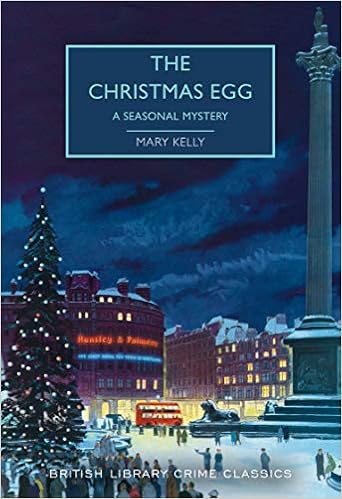
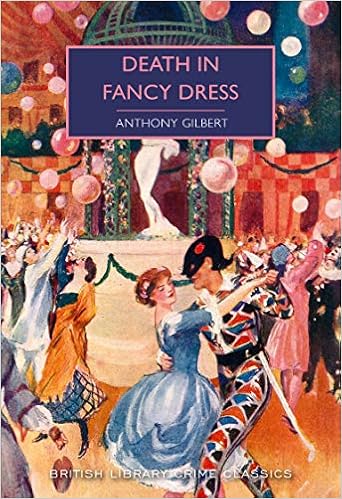
What is more, there is no sign of public appetite for the BL's Crime Classics series starting to diminish. Take, for instance, Mary Kelly's book The Christmas Egg, this year's principal seasonal title (there's also a more orthodox whodunit, Death in Fancy Dress by Anthony Gilbert). It's a rather idiosyncratic story by a writer of distinction and when the book first appeared towards the end of the 50s, it gained respectful reviews but didn't set the world on fire in sales terms. How things change. After just three weeks, the book went into its third reprint, and sales in that time are massive - already far outstripping those of the original. When you think about it, that's really quite remarkable. And some perceptive reviewers have highlighted the book's strengths. I'm particularly glad for Mary's widower, Denis, who has had so much joy from seeing his late wife's reputation as a novelist revived. And there's more to come - her masterpiece, the Gold Dagger-winning The Spoilt Kill, will be published next year.

In the UK, the support of Waterstones has been an invaluable help in ensuring that the series gets plenty of attention. How many other UK publishers have, like the BL, their own dedicated table in Waterstones' branches? When I popped in to Waterstone's Piccadilly branch recently I was thrilled to see the piles of classic mysteries on a very large table indeed. And yes, I can't deny that I relished seeing many copies of my own anthologies there too.

Other publishers are doing their bit. HarperCollins' Detective Story Club series is taking a sabbatical, but my understanding is that HarperCollins will soon be bringing out new paperback editions of several good titles by Freeman Wills Crofts that have long been unavailable. And hats off to Dean Street Press, who continue to produce large numbers of reprints in ebook or print on demand paperback format. 

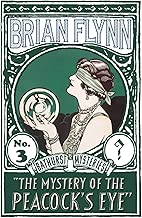
Among the Dean Street Press books, I'd particularly like to highlight two series. The first is the set of books by Brian Flynn, the second is those by E. and M.A. Radford. They benefit from excellent introductions by two fans who have done a good deal of admirable work in the field. Steve Barge (who blogs as The Puzzle Doctor) is a passionate Flynn fan, while Nigel Moss has long admired the work of the Radfords. I haven't yet read enough of either novelist to be able to judge them for myself (where does the time go?), but the enthusiasm of Steve and Nigel is a recommendation in itself. 
Who Killed Dick Whittington?: A Dr. Manson Mystery (The Doctor Manson Mysteries)The Mystery of the Peacock's Eye: An Anthony Bathurst Mystery
  

Wednesday, 6 March 2019

Forthcoming Crime Classics


The British Library has just issued its catalogue of publications for the second half of this year, and there are many good things in store. And of course that includes the forthcoming Crime Classics. Among notable features of the list is another novel written by E.C.R. Lorac, whose work has proved extremely popular with fans. This is Fell Murder, set in Lunesdale, where she made her home. It is a lovely part of the world, and this is a book with an exceptionally strong sense of place, and a sense of the intimacy of the rural community.

I'm especially thrilled that the series will, for the first time, include a novel by John Dickson Carr. This is It Walks By Night, which was his very first novel, set in Paris and featuring his first major series detective, Henri Bencolin. I've been hoping for some years that it would be possible to include Carr in the series, but it has proved tricky, because the rights position is extremely complicated. But the Library team has done great work in finally overcoming the obstacles and achieving success. Although Carr was American, his work seems to make a very natural fit with the series; he was an Anglophile who lived in England for many years and was Secretary of the Detection Club and a gifted practitioner of the "fair play" whodunit. This book also includes a Bencolin short story.

Anne Meredith's Portrait of a Murderer was a very successful book the Christmas before last, and Lucy Malleson who wrote under the Meredith name returns to the series with a book written under her best-known pen-name, Anthony Gilbert. This is Death in Fancy Dress, a country house mystery very much in the classic tradition. The book will also include a couple of Gilbert short stories.

Talking of short stories, there will be another anthology, The Measure of Malice, which is a collection of tales of scientific detection that I've put together. I'm delighted that the British Library anthologies have done so well in terms of sales and reviews, and I can also commend their "weird tales" collections, some more of which will be forthcoming (I like the sound of a collection of "killer tales of the botanical Gothic"!)

Other crime titles include another novel by George Bellairs, who is back by popular demand, Mary Kelly's The Christmas Egg, and a second Pocket Detective puzzle book by Kate Jackson. Something for everyone, in other words! And I can assure you that plans for 2020 are already making good progress. At least one more Carr title is on the way... 

Friday, 13 April 2018

Forgotten Book - Death Knocks Three Times

Lucy Malleson was an interesting and capable writer who enjoyed a good deal of success without ever, really "breaking through" into the literary big-time. After her death in 1973, her work quickly faded from view, but she'd had a long career, writing under a variety of pen-names: J. Kilmeny Keith, Anthony Gilbert, and Anne Meredith. The Gilbert name became the best-known, but last year I was delighted to write an introduction for her first Anne Meredith novel, Portrait of a Murderer, when it became the Christmas title for the British Library's Crime Classics series. The book did well- so well, in fact, that although the main focus was on the paperback edition, I gather that the hardback edition swiftly sold more copies than the original first edition! Who would have expected that?

I've read a few of the Anthony Gilbert titles over the years, and I've had mixed feelings about them. She was a capable writer, and she had the important strength of caring about her work which meant that she was not content to stick rigidly to a single storytelling formula. Her main protagonist, Arthur Crook, is a rascally solicitor, so you might think he has a particular appeal for me, but in truth I'm not much of a Crook fan. Sometimes he seems to get in the way of the story, and to me, it's no surprise that a good film made of one of her books, My Name is Julia Ross cut him out of the storyline altogether. So did the remake, Dead of Winter.

All of which brings me to Death Knocks Three Times, a novel she published in 1949. The date is significant, because a key element of the story is the period setting: we really get a feel of life in post-war austerity Britain, although some of the political comments seem a bit delphic to a modern reader. The story begins, like others such as The Nine Tailors, with the detective hero - if one can call Crook a hero - stuck in the middle of a car journey due to bad weather, and taking refuge somewhere just before a mysterious sudden death occurs.

It's not quite clear whether murder has taken place (though the reader will suspect it has...) and the action then shifts to a sequence of poison pen letters, sent to a rather unpleasant elderly lady, who summons help from another woman, who is very nicely characterised and whose name is Frances Pettigrew (was Gilbert referencing Cyril Hare's Francis Pettigrew? Given the number of literary and specifically crime fiction allusions in the book, it is possible). Anyway, as the book title suggests, two more deaths fall to be considered, but an unusual air of mystery pervades the story. It's far from clear what is really going on until Crook comes up with an explanation - which, to be honest, I didn't find wholly satisfying, especially in relation to the first death. 

This is a novel that has earned rave reviews from good judges such as John Norris. For my part, I admired Gilbert's ambition, and her attempt to do something different and unusual, but I felt that the narrative was too diffuse to be altogether successful, and Crook's muted role also felt rather unsatisfactory. An interesting book, though, and despite my reservations I'm glad I read it.


Monday, 14 December 2015

Dead of Winter - 1987 film review

As seasonally chilly as its title suggests, Dead of Winter is a 1987 film directed by the capable Arthur Penn, who is best known for Bonnie and Clyde and Night Moves. It's a loose re-make of My Name is Julia Ross, which I reviewed back in January. Oddly, the earlier film is not credited. Nor is Anthony Gilbert, author of the book on which the screenplays were based. John Norris recommended the re-make, and he's a good judge of films, as he is of books Some of the Gothic touches in the later stages of the film are excessively melodramatic, but overall this is an entertaining film.

In the opening scenes, a woman is murdered, and her finger cut off, just after she has collected a large sum of money. The action then switches to the life of Katie McGovern, a struggling actress, played by Mary Steenburgen. Katie auditions for a lucrative role and makes an immediate hit with the chap doing the casting, a Mr Murray (Roddy McDowall, in one of his more eccentric roles.) He explains that an actress called Julie Rose has had a breakdown in the middle of a film, and a lookalike needs to be cast to replace her so that the movie can be completed.

On getting the part,. she finds herself driven by Murray to a remote and spooky house in a pine forest. The place belongs to a Dr Lewis, who is wheelchair-bound, and - it soon becomes apparent - not a film director at all. Katie soon realises that Lewis and Murray are lying to her and that something unpleasant has happened to Julie Rose. Can she avoid a similar fate?

I enjoyed this one, largely because I am keen on storylines based on impersonations and doppelgangers. Although the screenplay is radically different from the original Gilbert story, it offers some creepy moments and genuine excitement, as well as plenty of hokum. Roddy hams it up rather to excess, but Mary Steenburgen tackles no fewer than three roles with a good deal of panache. Definitely worth watching..

Saturday, 3 January 2015

My Name is Julia Ross - film review

My Name is Julia Ross is a 1945 film based on Anthony Gilbert's novel The Woman in Red, published four years earlier. The story does not features Arthur Crook, the solicitor who usually crops up in Gilbert's novels, and the film is a "woman in jeopardy" story that I found a cut above the average. Joseph H. Lewis directs, and the screenplay is by Muriel Roy Bolton, and between them they fashioned something short, snappy, and suspenseful.

NIna Foch plays Julia Ross, an attractive young woman who has struggled to find work since recovering from ill health. She rents a room in an unlovely London house, and the man she fancies has just gone off to marry someone else. She answers an advert placed by a new employment agency, and they put her in touch immediately with a prospective employer and her son. She is offered a live-in secretarial job with suspicious rapidity, and duly accepts. When she goes back home to pack her things, she finds that the man she cared for has decided not to get married after all. They arrange to meet - but Julia doesn't show up.

In fact, Julia has been kidnapped, and finds herself the victim of a monstrous conspiracy which involves taking her off to an eerie house in Cornwall and giving her a new identity. What on earth can be going on? The answer doesn't take long to emerge, but it's fun to follow the twists and turns of the plot. The old lady is played by Liverpool-born Dame May Whitty, surely one of the more unlikely Scousers, who is best known to crime fans as Miss Froy in Hitchcock's version of another "woman in jeopardy" film, The Lady Vanishes.

 Apart from Dame May, the cast members are mainly unfamiliar to modern viewers,and the acting of the chap who played the weird son struck me as less than convincing. But overall, the film is well made,and I liked the way it raced along. Apparently, it was loosely remade by Arthur Penn in 1987 as Dead of Winter, but I haven't seen that. Whether or not you're not an Anthony Gilbert fan, I think this film is well worth a look, a period piece that is a nice blend of Gothic and British noir, and anyone seeking a more in-depth analysis might like to take a look at the excellent review by John Norris..

Friday, 15 July 2011

Forgotten Book - Portrait of a Murderer


Anne Meredith is not a name to conjure with in the history of crime fiction, yet this pseudonym does not deserve to have sunk into oblivion. It is one of a number of pen names used by Lucy Malleson, who is far better known as the prolific detective novelist, and creator of Arthur Crook, Anthony Gilbert.

My choice for today's Forgotten Book is the first novel she produced under the Meredith pseudonym, back in 1934. Portrait of a Murderer is, considering its date, arguably a pioneering work. There are some hints of the irony deployed by Francis Iles, but the novel has a bleakness of tone which is distinctive.

The opening section, comprising just one paragraph, is memorable – so much so that I will quote it in full.

"Adrian Gray was born in May 1862 and met his death through violence, at the hands of one of his own children, at Christmas, 1931. The crime was instantaneous and unpremeditated, and the murderer was left staring from the weapon on the table to the dead man in the shadow of the tapestry curtains, not apprehensive, not yet afraid, but incredulous and dumb."

Even though the identity of the culprit is revealed fairly early on, the story that Meredith tells held my interest throughout; at times, her approach almost put me in mind of Ruth Rendell. I don't want to say too much about the plot, as to do so would probably spoil it to some extent. But although I missed the wit that Iles often deployed, I can recommend it. Certainly, I'm very surprised that it has been ignored by historians of the genre.

Friday, 18 February 2011

Forgotten Book - Three-A-Penny


The name of Anthony Gilbert is not often mentioned in the blogosphere, but in her day she (yes! Gilbert was a pseudonym for Lucy Malleson) was a prolific and successful crime writer, most famous for her books featuring Arthur Crook. I read one of them a long time ago, but wasn’t hugely tempted to try another.

However, I’ve just read her memoir, Three-A-Penny, published in 1940 under one of her other pen-names, Anne Meredith, and found it very interesting, not least for her take on her initiation into the Detection Club. She was very different from many of her fellow members – the likes of E.C.Bentley, G.D.H.Cole, Ronald Knox and Dorothy L. Sayers were all Oxford-educated. Gilbert was educated in the good old university of life.

She writes well of her early life, and the financial hardship her family suffered. She left school and became a shorthand typist, but with a burning ambition to write. And before long, she succeeded. Her early crime novels were nothing special, but adopting the Gilbert name transformed her fortunes.

The merit of this memoir is such that it has tempted me to give her work another try. One person she did not mention in the book, perhaps surprisingly, was her cousin. This was Miles Malleson, the actor, still remembered as the hangman in Kind Hearts and Coronets.