Showing posts with label John Dickson Carr. Show all posts

Friday, 13 October 2023

Forgotten Book - The Four False Weapons


Henri Bencolin, the Great Detective who appeared in John Dickson Carr's first four novels returns in The Four False Weapons, a story written a few years later and offering a modified presentation of the character. I gather from Doug Greene's biography of Carr that he felt the detective was, in effect, too dark, and here he's retired and in lighter and less devilish form than in the earlier books. 

The story begins, however, with Richard Curtis, a young partner in a London law firm who dreams of adventure being summoned to France to assist a client who is caught up in a very difficult situation. Ralph Douglas wants to marry Magda Toller, but his former mistress, Rose Klonec, has been found murdered in the villa where he had 'installed' her. Soon Richard is getting all the adventure he could ever have wished for. Such assignments never came my way during my legal career, I have to say!

Rose's body has been surrounded by weapons, but it's not clear how, let alone why, she came to die. I did wonder if this scenario was a distant inspiration for Agatha Christie's The Clocks, which name-checks Carr, whose storyline does actually feature a clock. Christie was a friend and admirer of Carr and inscribed at least one book to him, which is still in the family's possession.

Even more so than The Clocks, I'm afraid the brilliance of the set-up is not maintained throughout the story and I agree with Doug Greene that it's a minor work. I think the changes to Bencolin's character are not for the better while Curtis is simply a substitute for Jeff Marle in the earlier books. The plot and indeed the motive disappointed me. Yet there are occasional flashes of Carr's customary zest which make the book worth reading as long as you're not hoping for one of his masterpieces. 

Friday, 14 October 2022

Forgotten Book - Death Watch


John Dickson Carr published Death Watch in 1935. It's not a locked room mystery, but it does feature the great Dr Gideon Fell. At this point, Carr was still very young, not even thirty years old, yet he was already approaching the peak of his powers. The next Fell novel, appearing later that same year, was The Hollow Man, often cited as the finest of all impossible crime stories.

Death Watch is crammed with wonderful ingredients. The house of Johannus Carver is in Lincoln's Inn Fields, a great setting. Carver is a clockmaker and there is some fascinating stuff about timepieces. The characters include a female solicitor, and I've not read many Golden Age novels which feature such a person. The motive is unusual and very dark. And in a preamble to the story, the story is hailed as Fell's greatest case. Unfortunately, the whole strikes me as amounting to less than the sum of its parts.

There are a number of reasons why I think Death Watch is an interesting failure rather than the triumph I'd hoped for. Most commentators accept that it's not a story in which Carr plays fair and that's certainly my view. Above all, the storyline is regrettably static. Although the events are told from the point of view of a chap called Walter Melson, he plays no real part in the story, a wasted opportunity. There's a lot of talk and not much action. For instance, events in a department store called Gambridge's, which play an important part, are merely reported, and thus their impact is much diminished. A good example of why authors are urged to 'show, not tell'. And I'm afraid I didn't find the murderer's psychological make-up convincing.

I've tried to understand Carr's approach from my perspective as a fellow writer. I've come to the conclusion that he rushed the story. It would have been possible to revise it - substantially - and turn it into something much more vivid and powerful, that would actually have justified the hype in the opening pages. A plan of the house where most of the events take place would also have helped. Really, it illustrates the truth that even terrific writers get things wrong some times. I was disappointed, but I don't want to over-state the book's weaknesses. As I say, the raw material was brilliant and it's worth reading, even if one regrets the possible masterpiece that got away.  

Saturday, 20 August 2022

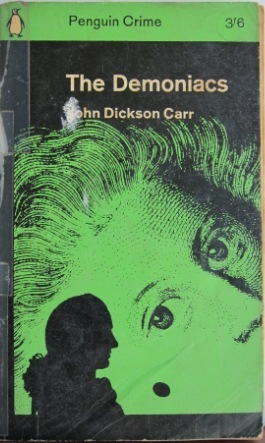
Forgotten Book - The Demoniacs


The Demoniacs, first published in 1962, is one of the historical mystery novels in which John Dickson Carr specialised in the later stages of his career. Like Carr, I'm fascinated by history, and I share his view that historical fiction offers the novelist rich possibilities. In this story, set in 1757, his protagonist is Jeffrey Wynne, a Bow Street Runner, and this choice reflects his interest in the history of policing in Britain, another appealing subject in its own right.

The title of the book is intriguing, and it's rather a pity that it is, as Doug Greene says in his biography of Carr, of little relevance to the storyline. The cast of characters includes Henry Fielding, himself later a lead character in one or two other mystery novels, and Laurence Sterne of Tristram Shandy fame, here seen as a rather disreputable clergyman.

As ever with Carr, the atmospherics are very well done and complement the action effectively. What of the action itself? Well, Jeffrey has been sent to France by Sir Mortimer Ralston to bring back to England Sir Mortimer's headstrong (but beautiful) niece Peg. She risks being imprisoned in Newgate Jail for 'harlotry'. The central mystery concerns the death of an old woman.

The book begins quite vividly, but I'm afraid that within a few chapters, I'd lost interest. This is partly because the dialogue is slightly wearisome, but mainly because the story is - at least to me - lacking in grip. I've been a Carr fan since my teens, but - like Christie and Sayers among many others - not every book he wrote was a winner. Doug Greene acknowledges the weaknesses, and points out a significant mistake that Carr made in the clueing (though authors are only human - if this had been the only flaw in the book, it would have been easily forgiven as far as I'm concerned). Alas, long before the end, I'd ceased to care about either the characters or the puzzle.

Friday, 6 May 2022

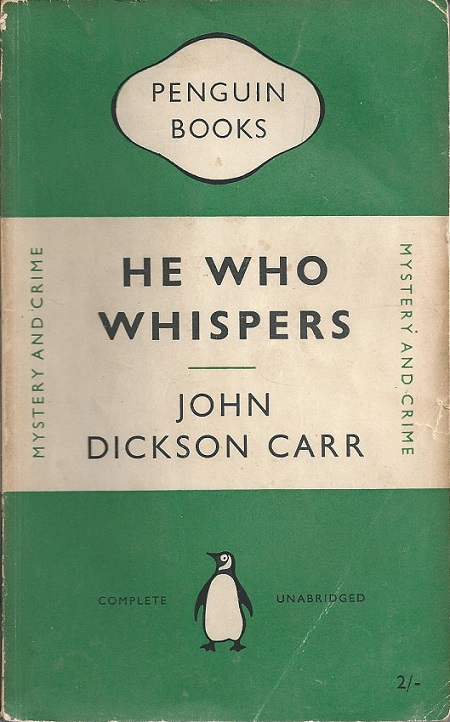
Forgotten Book - He Who Whispers


He Who Whispers was first published in 1946 and many people rank it as one of John Dickson Carr's finest novels. It features Dr Gideon Fell, my favourite Carr detective, and some crafty work with impossible situations. So why haven't I got round to reading it until now? Too many books, too little time, is the answer. But at last I've read the story - and with considerable pleasure.

The novel opens in post-war Soho. Miles Hammond has been invited to a dinner of the Murder Club, which seems to be modelled to an extent on the Detection Club and also on its true crime counterparts. However, when Miles arrives at the restaurant, neither his host (Fell) nor any of the other Club members are present. Instead, he meets a young woman called Barbara Morell and a French professor called Rigaud. What has happened to the Club members? This preliminary riddle turns out to be quite easily solved: what matters is that the conditions are ripe for Rigaud to tell his two companions a tale about a mysterious murder committed in France before the war. 

The story of the murder amounts, in effect, to a fairly long flashback. I did wonder, as I was reading, why Carr did not opt for the greater immediacy of presenting the events as they happened, rather than in retrospect. On reaching the end of the book, I understood why he opted for this method, although I still think it might have been worth structuring the story differently. Fortunately, Rigaud's account is itself quite atmospheric, and the puzzle he presents is intriguing.

I don't want to say too much about the detail of the book, in order to avoid spoilers. The cast of characters is quite small and early on I spotted a point of similarity between this novel and one of Carr's early Bencolin books. This prompted me to come up with a theory about the puzzle that, I'm very happy to say, was completely mistaken. As a result, a crucial plot twist took me completely by surprise - yet it was adequately clued and foreshadowed. Fell isn't as prominent as usual, but this is an entertaining mystery in the classic tradition.


Monday, 21 February 2022

M: Maxwell Knight, MI5's Greatest Spymaster


A couple of weeks ago I had the interesting experience of sharing an online stage with the renowned expert on espionage Nigel West (who also published a couple of crime novels drawing on his experience as an MP under his real name, Rupert Allason). Listening to Nigel prompted me to delve into a book published five years ago by Henry Hemming, a biography of the legendary spymaster Maxwell Knight.

I knew a bit about Knight from my researches into the life and work of John Bingham, who was one of his agents - as was John le Carre. Another of his agents was Bill Younger, whose The Hammersmith Maggot I discussed on Friday. Yet another was Jimmy Dickson, who wrote as Grierson Dickson (confusion in the past caused some people to think that John Dickson Carr was one of the spies, but the person in question was Jimmy Dickson, an author of much less renown). One of the many interesting points that Hemming makes is that Knight seems to have liked to recruit authors as spies. He also had a prejudice in favour of female spies, since he prized their observational skills.

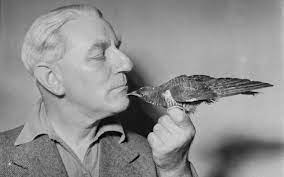
M: Maxwell Knight, MI5's Greatest Spymaster is a book I enjoyed reading. He was an extraordinary character, with an obsession about pets that made him famous in later life. I have a copy of his book Talking Birds, which was amusingly illustrated by David Cornwell - alias John le Carre. He also wrote two thrillers in the 1930s, Crime Cargo and Gunman's Holiday, the first of which was dedicated to Dennis Wheatley. I've never come across them, but Hemming doesn't think much of the first and doesn't even mention the title of the second.

Knight's private life was unorthodox. He married three times but seems to have had little or no interest in sex - unlike quite a few of his agents. His first wife took her own life. He flirted with fascism as a young man - one of his pals was William Joyce - but was responsible for its defeat in Britain in the early stages of the Second World War. Hemming gives a good, rounded portrait of this mysterious fellow and does so in a very readable manner.


Monday, 7 February 2022

Blackstone Fell


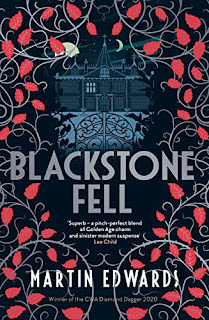
I'm delighted with the gorgeous cover that Ed Bettison has designed for my next Rachel Savernake novel, Blackstone Fell, which will be published in the UK by Head of Zeus in September. Ed was responsible for the covers of Gallows Court and Mortmain Hall, and there is a clear brand identity for the series now which appeals to me and, I hope, appeals to a lot of readers. The covers certainly seem to have contributed to sales growth over the past couple of years, and there is no doubt that Ed is very talented.

The central concept of Blackstone Fell came to me during 2020, when - after the easing of the first lockdown - I went on a trip to Hardcastle Crags, a National Trust site in Yorkshire and had a great day in a marvellous and evocative setting. It seemed to suit adaptation and the fictitious village of Blackstone Fell was the result. The village incorporates a dangerous stretch of water inspired by Bolton Strid, as well as a spooky tower which was largely the product of my imagination, but drew on a number of monuments in the real world.

At the time I was thinking about the book, I'd been watching again the complete run of episodes of David Renwick's Jonathan Creek, as well as working on John Dickson Carr titles for the British Library. So I decided it would be fun to have a genuine locked room mystery in the book - but as a sub-plot rather than the mainspring of the story. I've written locked room mysteries in the short story form but this is the first time I've incorporated one into a novel.

I won't say too much about the main plot-line since, as with Mortmain Hall, I've tried to disguise the nature of the over-arching puzzle. But suffice to say that this is a novel which offers all manner of Golden Age ingredients, including a sanatorium, a village pub, a church with a dodgy vicar - and a seance. Oh, and a cluefinder....

I'm really looking forward to publication and I hope that the cover artwork, at least, will whet the appetites of readers!


Wednesday, 1 September 2021

Murder She Drew - A Japanese Perspective on John Dickson Carr


I've talked before about the pleasure I take in hearing from readers of my books, and of this blog, around the world. Some time ago, quite out of the blue, I received a message from Akira Moriwaki of Japan about a fascinating project of his connected with the works of the locked room king, John Dickson Carr. One thing led to another, and I'm now the proud possessor of an inscribed copy of Murder, She Drew: Notes of the Curious, by the Curious, for the Curious by Akira and two other talented Japanese Carr enthusiasts. What is more, I have a couple of maps of scenes from Carr's work, in London and New Orleans respectively, which are so lovely to look at that I've had them framed and they now hang on the wall alongside a number of other prints with crime writing associations. 


The authors are now branching out, and I'm delighted to host a short guest blog post from them about their latest activities. Over to Akira Moriwaki:

'Murder, She Drew: Notes of the Curious, by the Curious, for the Curiouswas the first attempt in the world to review John Dickson Carr's historical mysteries and illustrate it with crime scenes and maps. Fortunately, this project was unexpectedly well received, both in Japan and abroad. This was due, in no small part, to the fact that the illustrator, who was the 'She' in the title and had previously read very few of Carr's novels, was awakened to Carr's charms.

We are pleased to announce a new challenge: Carr Graphic. It is a far-reaching project to make Carr's works into a Graphic in the "SR (=Sealed Room) no Kai", the longest established mystery novel enthusiasts' group in Japan, to which the three co-authors belong. This is the result of the illustrator's love for Maestro Carr.

This project will be published in the SR Monthly magazine on even-numbered months and in the SR Blog on odd-numbered months. Both the paper and the blog will be linked together to form a series of pieces.

The first piece, It Walks by Night, was published last month in the June issue of SR Monthly.

The first SNS piece, The Lost Gallows, was published at the following address. http://sealedroom.blog.jp/

Friday, 23 October 2020

Forgotten Book - No Coffin for the Corpse

No Coffin for the Corpse, first published in 1942, was the fourth and final novel of Clayton Rawson. Rawson, an advertising artist and semi-professional conjuror, was a specialist in impossible crime mysteries and a good friend of John Dickson Carr. His Great Detective was the Great Merlini, who has a shop which sells magic tricks and a 'Watson' in the shape of narrator Ross Harte.

Rawson's career as a novelist was brief, although he continued to write short stories with a locked room or impossible crime focus. In addition to Merlini, he created Don Diavolo (great name!), who makes a fleeting appearance in this book, although generally the Diavolo stories were published under the name Stuart Towne. No Coffin for the Corpse failed to find a UK publisher and did not appear in this country until Tom Stacey brought it out in 1972, the year after Rawson's death.

It may be that Rawson became disappointed and frustrated as a novelist (it happens!), or it may be that he struggled to find story ideas that would sustain a full-length novel. It may be relevant that this story begins quite brilliantly but does not, in its later stages, quite fulfill its early promise. I do think it is a real challenge to write a high-calibre impossible crime novel - the locked room is a trope that, I feel, tends to suit the short story form better (and yes, I know there are quite a number of excellent exceptions, not only by Carr but by others).

Here, Harte is frustrated when the rich but odious Dudley Wolff determines to nip his daughter's romance with Harte in the bud. Wolff has a fear of death which again is eminently suited to this kind of macabre mystery, and when he becomes embroiled in an attack on a blackmailer, he persuades others to help him to bury the blackmailer's body in the woods. But then the corpse appears to take on a life of its own...

A great premise, but the amount of space devoted to justifying the legitimacy of the explanation for the mystery seems rather like protesting too much. I suspect Rawson realised that the trick he used would frustrate some readers. However, he does a good job in terms of coming up with - and juggling - multiple solutions to the key murder in the story. Overall, even though this book is not his best, it's good light entertainment.

Friday, 16 October 2020

Forgotten Book - Deadly Hall

Deadly Hall is a relatively little-known novel by John Dickson Carr dating from 1971. His penultimate book, it is another of his history-mysteries, set in New Orleans in 1927. Jeff Caldwell is summoned by an old friend, Dave Hobart, to the family home in the Big Easy. It's called Delys Hall, and it is an old English manor house which has been transplanted to the United States.

Delys Hall has earned the nickname Deadly Hall: some years ago, a man died there in mysterious circumstances. Now Dave is perplexed by the will of his late grandfather, who has bequeathed the Hall to Dave and his sister Serena. It seems that the Hall contains a great deal of gold, but the treasure is well hidden...

There is a good story lurking in Deadly Hall. The treasure sub-plot is, I feel, really neither here nor there, but the method by which a murder is committed on the premises, and the motive and identity of the perpetrator are interesting and satisfactory. The main difficulty is that it's quite a slog to get to "the good bits" of the story. The narrative is, to put it kindly, discursive. Pace is often lacking as the narrative gets bogged down time and again.

Carr was not a well man at the time he wrote this book, and it certainly doesn't compare with his best novels. There were, I must confess, moments when I thought that Deadly Dull might have been a better title. However, developments later in the story did engage my interest. If you haven't read Carr before, I certainly wouldn't start here. And if you're a fervent fan, you need to manage your expectations of this one. Overall, however, I was glad I battled through to the final revelations. 

Monday, 16 March 2020

Seishi Yokomizo and The Honjin Murders

In recent times I've become increasingly interested in crime fiction from the Far East, countries like Japan, China, and Korea. (And that reminds me, I have some nice news to share. The Story of Classic Crime in 100 Books has just been acquired by a Korean publisher - the first time a book of mine has been published in that country.) Pushkin Vertigo have done crime fans a service by publishing translations of two novels by Japan's Soji Shimada, whom I enjoyed spending time with in Shanghai last November. And now they've gone back in time by publishing two books by Seishi Yokomizo.

Yokomizo lived from 1902-81. He was born in Kobe and his first story was published as early as 1921. He introduced his series detective Kosuke Kindaichi in The Honjin Murders, which won the first Mystery Writers of Japan award in 1948 but the book has never been translated until now, by Louise Heal Kawai (who, I think, has done a good job.) Pushkin Vertigo have also published The Inugami Curse, which I hope to read shortly.

In the meantime, I must say that I enjoyed The Honjin Murders, which is firmly in the "impossible crime" tradition. There's a list of characters and a plan of the crime scene, coupled with extensive discussion about locked room mysteries. As early as page two, John Dickson Carr gets a mention, along with Leroux, Leblanc, Van Dine, and an author I haven't read, Roger Scarlett, author of Murder Among the Angells. Scarlett, by the way, was a pen-name for two American women, Dorothy Blair and Evelyn Page. Their five books were reprinted not long ago and I must take a look at one or two of them.

Yokomizo sets his story in 1937, a decade or so before it was written, and I was interested that it illustrates Dorothy L. Sayers' belief that 'respectability' and its preservation were key ingredients in Golden Age mysteries. In fact, I've just written a short Golden Age style story for My Weekly called "Respect and Respectability" which deals with the same theme. Anyway, Yokomizo got there a long way ahead of me. His book is short and entertaining, with an ingenious if unlikely plot. I'm delighted that it's finally been translated into English.


Friday, 5 July 2019

Forgotten Book - It Walks by Night


Image result for british library john dickson carr walks by night

1930 was an important year for the detective novel. Among much else, it saw Jane Marple's first appearance in a novel, and the beginning of the relationship between Lord Peter Wimsey and Harriet Vane in Strong Poison. This was also the year when a young American detective novelist, aged just 23, published his first book. The novel was called It Walks by Night, and his name was John Dickson Carr.

Actually, his original title for the novel was With Blood Defiled - a good job he changed it, I'd say! The story was an expansion of a novella, "Grand Guignol", which he'd published in his college magazine, The Haverfordian. There is an excellent account of the genesis of Carr's writing in Douglas Greene's marvellous biography of him.

It Walks by Night is set in Paris, and it brims with macabre atmospherics. It's a young man's book, definitely, and he would go on to write finer mysteries, but it's absolutely full of interest. And, of course, it boasts an impossible crime - the inexplicable beheading of Duc de Savigny. A case for Henri Bencolin to investigate, narrated by his Watson-like American friend Jeff Marle.

The late Bob Adey was a Carr fan, and I was thrilled to acquire from his estate the American first edition of this book (no jacket, but never mind), complete with an inscription from Carr about water flowing "over the matrimonial bridge". You can see in the book traces of the opened seal - a marketing gimmick from the publishers, Harper, who sealed the last third of the novel, and offered purchasers their money back if they returned the book with the seal unopened. I bet there are few copies with the seal unbroken...

Anyway, the good news is that the British Library is bringing this landmark title back into print, and there will be a bonus extra in the Crime Classics edition - the inclusion of a short story featuring Bencolin called "The Shadow of the Goat". I'm looking forward to its reappearance on the shelves.

Wednesday, 5 June 2019

Not Wanted on Voyage

One of the lecture topics I chose for my recent talks on board Queen Mary 2 was "cruise mysteries". And the more I researched the subject, the more examples I found of such novels. Quite a few of them will feature as Forgotten Books over the coming months. There are plenty of enjoyable titles from the past where writers have made excellent use of cruise ships as a background for murder mysteries. The "closed community" on board ship makes for an atmospheric setting.

Then again, and perhaps inevitably, I did encounter a few disappointments. On this blog, I like to focus on books I've enjoyed, rather than the misfires, but if anyone thinks I am besotted with all classic mysteries, regardless, perhaps this post will alter that view! There were four books which didn't really do it for me, alas. Each of them had some redeeming features, but not enough for me to want to devote a whole "Forgotten Book" post to them. So here's a round-up - and of course, feel free to disagree...

One of the disappointments was The Blind Barber by John Dickson Carr. It's a Gideon Fell mystery, first published in 1934, and featuring an Atlantic crossing from New York to Southampton. I was really looking forward to reading this one, which had previously eluded me. But I have to say that, despite my enthusiasm for both Carr and Fell, this book disappointed me. It's really an armchair detective story, with Fell told about misadventures on board ship by his friend, the mystery writer Henry Morgan. The story is, really, a farce, and the humour hasn't worn particularly well.

I was also optimistic about Robin Forsythe's The Pleasure Cruise Mystery. Once very obscure, it's an example of Dean Street Press's admirable commitment to reprinting forgotten mysteries. The story features Algernon Vereker, and it's quite well and amusingly written, especially in the early stages. But the plot simply didn't capture my interest. I shall definitely give Forstyhe another go, but this was a rather discouraging introduction to his work.

K.K. Beck was a prolific writer of cozy-type mysteries in the later years of the twentieth century. I read her Death in a Deck Chair, set in the Golden Age, and it's a competent piece of  light (very light) entertainment, but the involvement in the storyline of one of those Ruritanian-style countries so beloved of minor GA writers put me off.

Finally, Nancy Spain's Not Wanted on Voyage. There's a nice plan of the cruise ship at the start of my copy, but the story didn't appeal to me. In real life, Nancy was a fascinating character, as her biography and autobiography make clear, but her speciality as a detective novelist was humour, and I found the facetiousness of this one simply too much. I'm afraid the title is all too accurate; I still haven't finished it..

Wednesday, 6 March 2019

Forthcoming Crime Classics


The British Library has just issued its catalogue of publications for the second half of this year, and there are many good things in store. And of course that includes the forthcoming Crime Classics. Among notable features of the list is another novel written by E.C.R. Lorac, whose work has proved extremely popular with fans. This is Fell Murder, set in Lunesdale, where she made her home. It is a lovely part of the world, and this is a book with an exceptionally strong sense of place, and a sense of the intimacy of the rural community.

I'm especially thrilled that the series will, for the first time, include a novel by John Dickson Carr. This is It Walks By Night, which was his very first novel, set in Paris and featuring his first major series detective, Henri Bencolin. I've been hoping for some years that it would be possible to include Carr in the series, but it has proved tricky, because the rights position is extremely complicated. But the Library team has done great work in finally overcoming the obstacles and achieving success. Although Carr was American, his work seems to make a very natural fit with the series; he was an Anglophile who lived in England for many years and was Secretary of the Detection Club and a gifted practitioner of the "fair play" whodunit. This book also includes a Bencolin short story.

Anne Meredith's Portrait of a Murderer was a very successful book the Christmas before last, and Lucy Malleson who wrote under the Meredith name returns to the series with a book written under her best-known pen-name, Anthony Gilbert. This is Death in Fancy Dress, a country house mystery very much in the classic tradition. The book will also include a couple of Gilbert short stories.

Talking of short stories, there will be another anthology, The Measure of Malice, which is a collection of tales of scientific detection that I've put together. I'm delighted that the British Library anthologies have done so well in terms of sales and reviews, and I can also commend their "weird tales" collections, some more of which will be forthcoming (I like the sound of a collection of "killer tales of the botanical Gothic"!)

Other crime titles include another novel by George Bellairs, who is back by popular demand, Mary Kelly's The Christmas Egg, and a second Pocket Detective puzzle book by Kate Jackson. Something for everyone, in other words! And I can assure you that plans for 2020 are already making good progress. At least one more Carr title is on the way... 

Friday, 23 November 2018

Forgotten Book - The Tokyo Zodiac Murders

Today's Forgotten Book, The Tokyo Zodiac Murders by Soji Shimada, dates back to 1981, but more than thirty years elapsed before the novel was published in English by those splendid publishers Pushkin Vertigo. The translation was undertaken by the equally splendid John Pugmire, whose own imprint, Locked Room International, has been responsible for bringing to to English language readers some truly fascinating locked room mysteries.

Shimada's book caused quite a sensation in Japan on its original release, in that it represented a striking move away from a focus on gritty realism. The story has many elements (such as floor plans and footprints in the snow) that are pure Golden Age, and Shimada is a long-time admirer of classic detective fiction from Britain and America, but it is also modern, dealing with some subjects in a degree of gruesome detail that you would never find in, say, the work of John Dickson Carr or Anthony Wynne.

The story deals with a sequence of murders (and dismemberments) that took place in 1936, and their reinvestigation in 1979. The new inquiry is undertaken by a sort of Holmes-Watson duo, the brilliant young astrologer Kyoshi Mitarai and his friend, the narrator (of most but not all of the book), an illustrator called Takeshi Yoshiki. So it's a cold case mystery, and a very complicated one too. But there are some nice touches of humour, as in Kyoshi's witty debunking of some of the most famous Sherlock Holmes stories - rather as Holmes affected to disdain Gaboriau's stories about Lecoq.

I've never visited Japan, but in recent years I've become increasingly interested in the country's detective fiction, and it was a great thrill for me when The Golden Age of Murder was bought by a Japanese publisher. The Tokyo Zodiac Murders paved the way for a new generation of writers such as Alice Arisugawa who have made intriguing use of classic tropes in their fiction, combining elements familiar from Carr and company with a Japanese sensibility that I find intriguing. I gather that Pushkin Vertigo are planning to publish more crime fiction from Japan, and I look forward to reading it.

Friday, 27 April 2018

Forgotten Book - Death in Five Boxes

Death in Five Boxes is a novel featuring Sir Henry Merrivale that was first published in 1938. The author was Carter Dickson, the pen-name under which John Dickson Carr wrote about H.M., "the old man". And I must say that the opening scenario of this story shows Carr at his most brilliant. It's quite entrancing.

A young doctor, walking in central London one night, is accosted by a pretty young woman, who is a state of some distress. She wants him to accompany her into a house, and when he agrees to do so, first they encounter a blood-stained umbrella-cum-swordstick, and then they are presented with a bizarre situation. Five people in a room, four of them in a drugged state, the fifth one dead. One of those who is still alive is the young woman's father...

It's a great premise, and Carr develops it splendidly in the next chapters. All the people in the room are rich and well-known, all of them are - allegedly - criminals. What on earth do we make of the strange items found on their person, such as a smattering of quicklime, four watches, and part of the insides of an alarm clock? Not to mention the five boxes which apparently contain deadly secrets, and have been stolen from a solicitor's office. It's all weird, and all entrancing. Suffice to say that I was absolutely hooked.

Unfortunately, my enthusiasm waned as the story progressed. The complications about how the drug was administered began to wear me down, and the presence in the story of a renowned cat burglar rather irritated me (perhaps this was unreasonable of me). We are presented with a "least likely person" culprit, but I felt, again perhaps unreasonably, that this character's motivation hadn't been adequately foreshadowed. Maybe I wasn't paying close enough attention. In the end, I felt that a superb situation was rather inadequately resolved. But full marks for the set-up; it really did grip me. 


Friday, 28 April 2017

Forgotten Book - The Dead Man's Knock

As regular readers of this blog know, I have a very soft spot for locked room and impossible crime mysteries. Yes, they are artificial, but they can be highly entertaining. And nobody mastered the art of the locked room mystery, and produced so many brilliant variations on the theme, than John Dickson Carr. What is more, he created not only one Great Detective in Dr Gideon Fell, but also a second, Sir Henry Merrivale (although it has to be said that the two have much in common.)

Dickson Carr's heyday was in the 30s and 40s. By the late 50s, he seems to have been running out of steam, although he was not an old man. His powers of invention were, however, flagging, and I'm afraid this is evident in my Forgotten Book for today, The Dead Man's Knock, published in 1958. It's a Fell book, but it's set in the US (Fell is on a trip over there), in academe in Virginia.

The book begins with an account of various spiteful pranks in college, very faintly reminiscent of t those in a very different book, Gaudy Night. We are introduced to Mark Ruthven and his wife Brenda, whose marriage seems to be threatened by a woman called Rose Lestrange who has, Brenda thinks, designs on Mark. Rose hasn't made herself popular in the community, and she soon winds up murdered.

This story has a locked room element, as well as a "lost" Wilkie Collins novel, which gives the book its title. But Carr doesn't make enough of these ingredients, and I'm afraid the result is very thin far. The characters spend too much time in neurotic squabbling, and I found myself unable to care about them, or about the mystery. This isn't a good Carr. I looked around for other views to see if I was being too harsh, but I'm afraid The Puzzle Doctor, for one was also unimpressed.

Friday, 23 September 2016

Forgotten Book - Till Death Do Us Part

Another Forgotten Book today from one of my favourite maestros of the Golden Age. First published in 1944, Till Death Do Us Part is a very well-regarded novel by John Dickson Carr, and I'm not about to dissent from the reviewers' chorus of approval. The setting is an English country village (there is even a cricket match, as well as a village fete), nicely evoked by this most Anglophile of American writers, and the detecting is done by Carr's premier sleuth, Dr Gideon Fell.

Richard Markham is, at the start of the story, blissfully happy. He's just become engaged to be married to the delightful, if rather mysterious, Lesley Grant. But in a crime novel, every silver lining has a cloud, and unfortunately one of the star attractions at the village fete is a fortune teller. Dick learns that the fortune teller is Sir Harvey Gilman, a famous criminologist, and before long he is being told something rather terrible - Lesley Grant is not the woman she appears to be.

Dick Markham learns that Lesley has been associated with three poisonings; in each case the victim was the man in her life. There was never any evidence to establish her guilt of murder, but the coincidence is appalling. Dick is not, however, destined for an early grave. In fact, it is the fortune teller who meets an unnatural end - poisoned in exactly the same way as Lesley's three supposed victims.

The plot twists and turns very nicely. One of the characters, Major Price, was evidently based on Carr's chum, the author John Rhode (who was also the model for Colonel March in another set of Carr stories). I thought I had solved the puzzle, but Carr bamboozled me - very satisfying in a fair play whodunit in the classic mould. This is an ingenious and highly enjoyable story, with a very pleasing solution and a brisk narrative pace. It's one of Carr's best books, I think.


Friday, 9 September 2016

Forgotten Book - The Mystery of the Yellow Room

Is The Mystery of the Yellow Room a forgotten book? That's very debatable. It was once a bestseller, one of the most famous crime stories of the early years of the 20th century, and it remains much admired by many fans of the locked room mystery. But the author, Gaston Leroux, is now much better remembered as the author of The Phantom of the Opera - thanks to the Midas touch of Andrew Lloyd Webber.

The Mystery of the Yellow Room was first published in 1907, and translated into English the following year. It made an instant impression, as did its very youthful hero, Joseph Rouletabille, a newspaper reporter with unquenchable self-belief and a penchant for sleuthing. The story is told by his friend Sanclair, who fulfils the Dr Watson role of bewildered admirer of the brilliant maverick detective.

A young woman called Mathilde Stangerson, daughter of a scientific genius, is overheard in a pavilion in the park attached to the Stangersons' chateau. It is clear that she is in terror as a result of being attacked, but she is inside the locked Yellow Room, and by the time rescuers break in, she is seriously injured, and there is no sign of how her assailant could have escaped.

Rouletabille can't resist getting involved, and pitting his wits against those of the capable cop who is assigned to the case - "the great Fred". The style is breathless and melodramatic, and there are plenty of twists and turns. It's a period piece, of course, but in its day, this story was highly influential. Agatha Christie talked about it in her autobiography and John Dickson Carr was another fan. Whether it counts as "fair play" detection is arguable, but I enjoyed rereading it after a gap of many years.

And I had a very pleasurable reason for re-reading it-too  it is to form part of a trio of locked room classics to be sumptuously reissued by the Folio Society. And I've written an introduction to the set of books. More about this in due course.

Friday, 19 August 2016

Forgotten Book - The Seat of the Scornful

My Forgotten Book today is a John Dickson Carr novel that tends to be under-estimated, perhaps because it does not offer a locked room mystery. The Seat of the Scornful (known in the US as Death Turns the Tables) was one of the first Carr books that I read in my teens; it appeared in the "Fingerprint" reprint series that also included fine books by the likes of Julian Symons and Richard Hull. Coming to it for a second time, I was again impressed.

This is a Gideon Fell novel, but in many ways the real focus is on an acquaintance of his, a tough-minded judge, Mr Justice Ireton. We see the judge in court at the start of the book, meting out his brand of justice in a manner that borders on the sadistic. Fell plays chess with him (and there's quite a bit of symbolism in the chess game) but is defeated by the judge, who is a very clever chap indeed.

The judge is a widower, with a pretty but headstrong daughter. He wants her to marry an affable barrister called Fred Barlow, but Constance has fallen for a man called Tony Morell, who appears to be a shady customer. When the judge learns that the couple are due to marry, he isn't impressed,and he soon has reason to believe that Morell is nothing more than a gold-digger.

Morell is then found dead, and the judge is at the scene, brandishing a revolver. It appears to be an open and shut case, but things quickly become complicated. This is a book where there is a good deal of focus on the subject of justice, and if I'd had more space in The Golden Age of Murder, I'd certainly have discussed it in more detail, as I think that it reflects some of the concerns about justice that preoccupied members of the Detection Club during the Golden Age. Doug Greene, the greatest Carr expert, has questioned the ethics of the final scene, and I can see why, but I found it in keeping with the mood of the times. To say more would be a spoiler. This is a really good Carr story, which deserves to be better known.  

Friday, 12 August 2016

Forgotten Book - The Problem of the Wire Cage

The Problem of the Wire Cage by John Dickson Carr first appeared in 1939. It's a novel renowned for a tantalising "impossible crime" puzzle, tailor-made for that Chestertonian sleuth, Dr Gideon Fell. The eponymous "wire cage" is, in fact, a tennis court, with a clay surface that is surrounded by a wire fence and also poplars and a yew hedge - an ingenious variation on the classic "locked room".

Frank Dorrance is engaged to be married to Brenda White, a typically attractive Carrian heroine. Dorrance, alas,is an arrogant fellow, much less worthy than Hugh Rowland (a typically decent, yet sometimes rather irritating Carrian hero) who yearns in vain, or so it seems, for Brenda's affection. There's a financial motive for the match - Frank and  Brenda are destined to inherit a fortune if they tie the knot, and Brenda's guardian, the wheelchair-bound Dr Nicholas Young, is keen to secure her long-term welfare.

Dorrance is duly found strangled, by his own scarf, in the middle of the tennis court. Heavy rainfall has left the surface muddy, and footprints to and from the body seem to incriminate Brenda. Yet surely the lovely young woman cannot have killed the man to whom she was betrothed? On the other hand, if someone else was responsible, how they did manage to murder Dorrance?

This is, first and foremost, a howdunit; guessing whodunit is much more straightforward, even though I felt the motive was not entirely convincing. The plot is ingenious, and so are the false solutions that Carr offers to tease the reader. An acrobat duly makes an appearance in the later part of the story, and a fresh line of enquiry develops before a second murder -not very satisfactorily conceived - takes place. I confess to having reservations about several aspects of this story (including the rather peripheral part played by Fell, but to say much more would be to risk giving spoilers). However, the breathtaking nature of the central murder scenario makes the book, despite those flaws, well worth reading.