Showing posts with label Cyril Hare. Show all posts

Friday, 3 March 2023

Forgotten Book - The Cast to Death


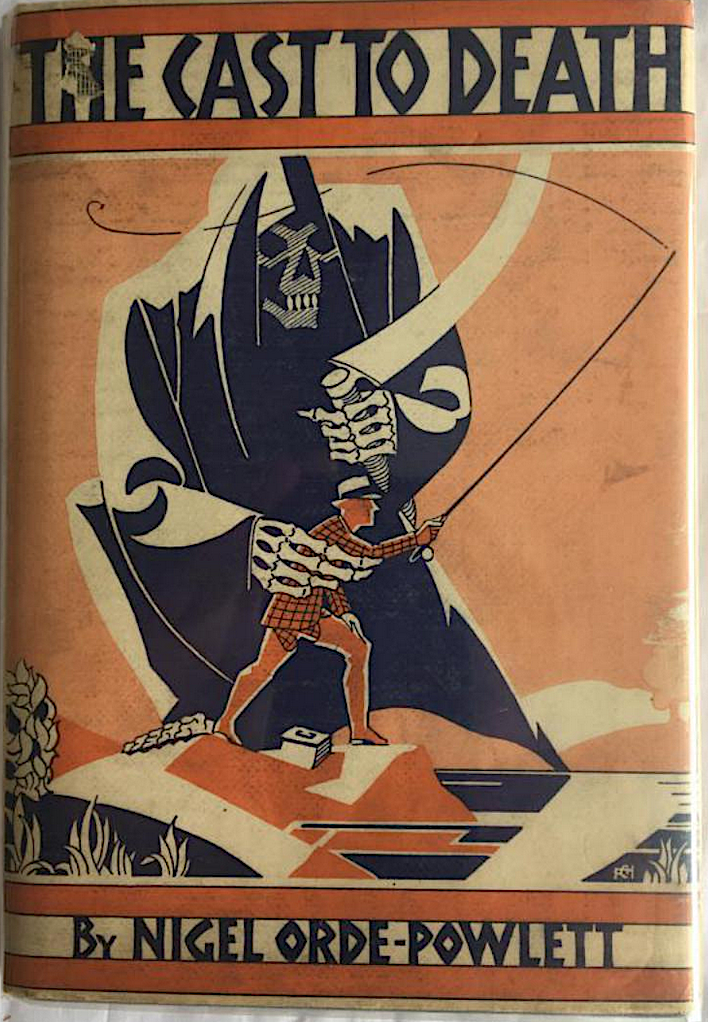
The Cast to Death is an obscure and very hard-to-find detective novel published by Ernest Benn in 1932. Benn, who published Dorothy L. Sayers and E.R. Punshon before their former M.D. Victor Gollancz lured their stars away, were good at talent-spotting and they evidently saw potential in the author, Nigel Orde-Powlett. As things turned out, however, he published only one further detective novel which (unlike this one) didn't achieve publication in the US. Both are listed in Bob Adey's Locked Room Murders.

Dorothy L. Sayers, so often a stern judge, had good things to say about Orde-Powlett's two novels. The only online review I'm aware of is by John Norris on the excellent Pretty Sinister blog (which is where I found the vivid cover image). As John mentions, Orde-Powlett was a member of the landed gentry. The family seat is Bolton Abbey in Yorkshire and perhaps he was distracted from writing by his social and family duties. He did, however, publish a book about practical forestry in the 1950s, which surprise, surprise, I haven't read.

The Cast to Death is set not in Yorkshire but in Hampshire and I did wonder if his fictional setting was inspired by the River Test, also the inspiration for Cyril Hare's setting in Death is No Sportsman. Like Hare's later book, this one is about angling. In fact, there's a great deal of information, material to the plot, about angling. I've no interest in angling at all, but the smoothness of the writing kept my attention.

For a debut novel, I'd say this is a good effort. A businessman called Lenton is murdered while out fishing, although there is some mystery about the wounds he suffers. He was on holiday with three angler friends; one appears to have a solid alibi, leaving the other pair as the prime suspects. The police think they have a strong case against one of them, but a young sleuth called Tony Rillington has other ideas. There are one or two weaknesses, but I liked this book more than John did. My thanks go to Jamie Sherwin for encouraging me to read it. Now I'm in search of Orde-Powlett's second mystery... 

Friday, 17 April 2020

Forgotten Book - Murder in Blue


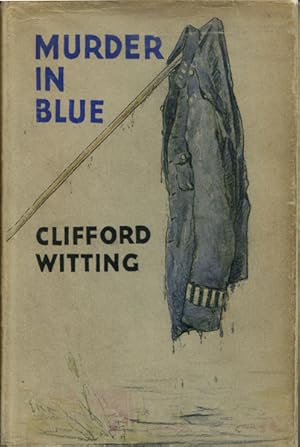
clifford witting - murder in blue - AbeBooks

Murder in Blue, published in 1937 by Hodder & Stoughton, was the first detective novel of Clifford Witting. It was an auspicious debut, proclaimed by Hodder as "a first-class detective story...about the murder of a policeman". It's interesting to compare the first edition of this book with first editions written by debut authors today. Now, readers are always presented with information about the author. Publishers are keen, almost to the point of obsession sometimes, to focus on an author's "platform", i.e. the means by which, it's thought, he or she can attract readers. It was very different in 1937. We are not told a word about Witting.

So who was he? I don't possess a lot of biographical information but I do know that Clifford Witting (1907-68) was educated at Eltham College and worked for many years for Lloyds Bank. He enjoyed a long career as a crime novelist, spanning 27 years, but was much less prolific than many others who started during the Golden Age. In that time he published sixteen novels. Quite possibly, like Cyril Hare for instance, his day job reduced his literary output. But lack of productivity is no bad thing if it is matched by a corresponding increase in quality. He wrote accomplished traditional mysteries and in 1958 he was elected to membership of the Detection Club, a sign of the esteem in which he was held by fellow practitioners.

Nick Fuller writes about Witting on the excellent gadetection site, and asks why he is so obscure, given the engrossing nature of his stories. It's a good question. I missed out on Witting for many years and it was only because of the advocacy of Nigel Moss, an excellent judge, that I sampled him. I'm glad I did, because all the books of his that I've read have merit.

Narrated by a likeable bookseller, John Rutherford, and set in a thinly disguised Sussex, Murder in Blue introduced Detective Inspector  Charlton, who was to become a series character. There's more focus on characterisation and setting than you find in, say, most of the Freeman Wills Crofts books, and definitely more humour. Witting was witty! The story begins extremely well thanks to Witting's smooth narrative style, although I felt it sagged in the later stages. Overall, however, a decent start to a career of under-valued accomplishment.


Wednesday, 18 March 2020

Top Ten Escapist Crime Reads


As promised yesterday, here are ten escapist crime reads. I call it a "top ten" but my inner lawyer advises me to include, well, if not a disclaimer then at least a note of explanation! I've opted for books that are British (I may do more top tens with other criteria, for instance American books, if this little list finds favour), and easy to obtain, here if not everywhere. So I've excluded some great stories that are harder to find, such as Henry Wade's Heir Presumptive and Robert Player's The Ingenious Mr Stone. I've limited myself to one book per author (sorry, Agatha) and I've tried to inject some variety, so that these are not exclusively Golden Age stories or novels inspired by the Golden Age.

With that in mind, here goes:

Agatha Christie - Why Didn't They Ask Evans? a light-hearted mystery with a clever clue in the title and a likeable pair of amateur detectives.

Anthony Berkeley - The Poisoned Chocolates Case - a cerebral whodunit with six solutions, which must represent good value. Christianna Brand (whose own books make excellent escapist reading) and I both had the temerity at different times to come up with additional solutions, which can be found in the British Library reprint.

Dorothy L. Sayers - Murder Must Advertise - never mind the dodgy sub-plot, the main story is enjoyable, the advertising world wonderfully well evoked, and there's even a cricket match...

Michael Gilbert - Death Has Deep Roots - a consistently lively blend of courtroom drama and thriller, this is one of the best books of a writer I have always admired.

Donald Henderson - A Voice Like Velvet - a BBC radio announcer as a cat burglar! A great premise and good story from a very talented writer whose life and career were sadly cut short.

Cyril Hare- An English Murder - this Christmas mystery features an engaging sleuth in Dr Bottwink and a classic closed-circle setting.

Pamela Branch - The Wooden Overcoat - Branch was one of the most amusing crime writers of the 1950s, matched only by the excellent Colin Watson, and it's a shame that she only published a handful of books. This is probably the best of them.

Peter Lovesey - The False Inspector Dew - Peter's award-winning slant on the Crippen is characteristic of his entertaining and imaginative work. I've limited myself to just one living writer, which means no place for Simon Brett, Ruth Dudley Edwards, or L.C. Tyler, but all of them are splendid entertainers too.

Sarah Caudwell - Thus Was Adonis Murdered - the mannered style will take some readers a bit of getting used to, but once you're in the swing, reading about the exploits of Chancery barristers is, surprise, surprise, enormously pleasurable.

Robert Barnard - A Scandal in Belgravia - Robert was a gifted maker of mischief in life and in his fiction. There's a lot of fun to be had in novels like Sheer Torture but the brilliant finale of Scandal makes it my favourite of his books.


Monday, 1 July 2019

Bodies from the Library 2019


I doubt I was the only person who was surprised to be reminded that Saturday's Bodies from the Library conference was the fifth to be held. What a five years it has been for lovers of classic crime fiction! How vividly I still recall my first chat over coffee with Rob Davies (a welcome attendee on  Saturday, even though he has now left the BL) and his suggestion that I write a couple of intros for forthcoming novels by John Bude, as well as my telling him that I was just about to conclude work on a manuscript about "the golden age of murder".....

The programme for the day was packed but well-organised and as ever I'd like to congratulate all those who worked so hard to make the day a success. I was on a flying visit to London, but Moira Redmond of the Clothes in Books blog had invited me to join a small gathering for tea at the Wallace Collection, and this proved a convivial occasion, at which I had the pleasure of meeting Brad Friedman, a blogger based in San Francisco, who was over in the UK for a few days. (Moira took the photo above, of Christine Poulson, Kate Jackson, Brad and me). We even did a bit of book shopping in Charing Cross Road before heading over to Euston for a meal with the Bodies team, David Brawn of HarperCollins, and a number of other friends.

Because it's such a busy day, there's never as much time to socialise as would be ideal, but it was good to see the likes of Nigel Moss, Barry Pike, and Geoff Bradley during the breaks. I enjoyed listening to the various talks, including one by Sarah Ward about E.C.R. Lorac which was very timely given that earlier in the week I'd been on a trip to Lorac's country - about which, more another day.

There was a live performance of "Sweet Death", a radio play by Christianna Brand, which worked very well, and I was interested to learn more about June Wright, an author about whom I knew nothing, from Kate Jackson. I was interviewed by Christine Poulson about Cyril Hare, and there was also an enjoyable session at the end of the day when the speakers answered questions posed by audience members. Great fun.


Tuesday, 19 February 2019

Agatha Again


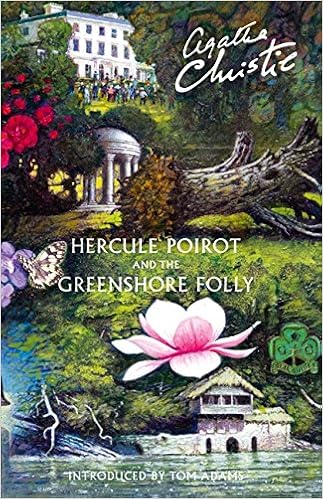
Image result for hercule poirot greenshore

In my young days, I had a recurrent dream. It was a dream in which I discovered an Agatha Christie novel I'd never read. Yes, I'm afraid that I was so hooked, and so frustrated when I'd read her complete works (up to that point) in the genre that I yearned to find a new one. And to this day, when new Christie mysteries come to light, I'm very pleased.

I've just caught up with Hercule Poirot and the Greenshore Folly, a novella written in 1954, but not published until 2014. Christie turned the story into the novel Dead Man's Folly, a mystery for which I've always had a soft spot, even though many Christie purists assure me it's not one of her best. This edition has wonderful jacket artwork by Tom Adams, who was responsible for so many of the covers of Fontana paperback editions of Christie that I devoured in my youth. He also contributes a foreword, and in addition there are pieces by Mathew Pritchard and John Curran.

The novella is a truncated version of the novel, but I was pleased to read it. And it's a lovely production, with illustrated endpapers and a colour reproduction of Adams' artwork for Dead Man's Folly. Incidentally, if you fancy buying the original typed ms of the novella, you can pick it up on Abebooks for a mere £10,000. But if that's a bit too much of a stretch even for a completist, I can definitely recommend the Harper Collins edition!

An early and rare Christie short story is the highlight of another Harper Collins publication, this time dating from last summer. Bodies from the Library is an anthology edited by that leading researcher Tony Medawar. It comes as something of a shock to me to recall that Tony and I first met almost thirty years ago, when we both took part in a Mastermind quiz at the 1990 London Bouchercon. Since then, he's made many discoveries, often reporting them in CADS (whose editor Geoff Bradley kept score in the same quiz.) One of the most interesting is a lost Christie treasure hunt story, set on the Isle of Man and called "Manx Gold." It can be found in While the Light Lasts.

The Christie story in the book is "The Wife of the Kenite", which dates back to about 1922, and first appeared in an Australian magazine. The plot twist is one she used subsequently, not least in a splendid radio play, but this apprentice effort shows already the slickness of her storytelling. The anthology as a whole takes its title from the Bodies from the Library conference, which has become a highly enjoyable event based in the British Library over the last few years, and which will return in June.

The anthology doesn't have a connecting theme, and the stories are a random assortment from some notable names. I was pleased to see two long-time favourite stories of mine making an appearance - Cyril Hare's "The Euthanasia of Hilary's Aunt" and A.A. Milne's "Bread upon the Waters". Both are very well-crafted stories (Milne's makes me wish that he'd written more extensively in the genre), and the same is true of a Roy Vickers story I hadn't read, "The Starting-Handle Murder". This one dates from 1934, and forms part of Vickers' long-running and celebrated series of short stories about the Department of Dead Ends.


Monday, 4 August 2014

Called to the Bar


"I hereby call you to the Bar and do publish you barrister."

I've often been called to the bar, but not in the legal sense. I've spent more years than I care to remember as a solicitor, and wrote eight books about a solicitor detective, but of late I've become more and more interested in the lives of barristers - those lawyers who really are Called to the Bar. I'm often asked, mainly but not only by friends from outside Britain, what the difference is between barristers and solicitors, and it's fair to say that the distinction is less significant than it used to be. But barristers do have certain monopolies - only they can appear as advocates in the higher courts, for instance.

Each barrister is a member of one of the four Inns of Court based in central London, and although some are employed, e.g. by the government, the majority are self-employed. They usually work in 'chambers' or  'sets' of barristers, with clerks acting as the link between them and their clients (who are usually, but nowadays not always, firms of solicitors, who instruct barristers to advise their clients, for instance on complex issues or in some court cases.) Barristers are much less numerous than solicitors, though the numbers of both have increased in recent years.Some, but not all, of the most eminent and senior barristers apply to "take silk",and the candidates who are chosen become Queen's Counsel, sometimes known as "leaders"..

I've featured barristers in minor roles in some of my Harry Devlin books - notably Suspicious Minds. But the best crime novels about barristers that spring to mind are Tragedy at Law by Cyril Hare, which introduced Francis Pettigrew, a barrister who became one of the most appealing amateur sleuths in a short run of books, A Certain Justice by P.D. James, which was marked by the author's characteristic in-depth research (though one barrister friend who admired the book told me she greatly over-estimated the attraction of being a head of chambers!) and the series by Sarah Caudwell which began with Thus Was Adonis Murdered. I really ought to re-read Sarah's books sometime soon - they are great fun. Significantly, both Hare and Sarah were barristers themselves. Theirs is quite a mysterious world, and it's easy to be baffled by it. You need inside knowledge to get barristers right, and even fine writers can find this a major challenge (the clueless defence barrister in Jimmy McGovern's otherwise powerful TV drama Joint Enterprise springs to mind)

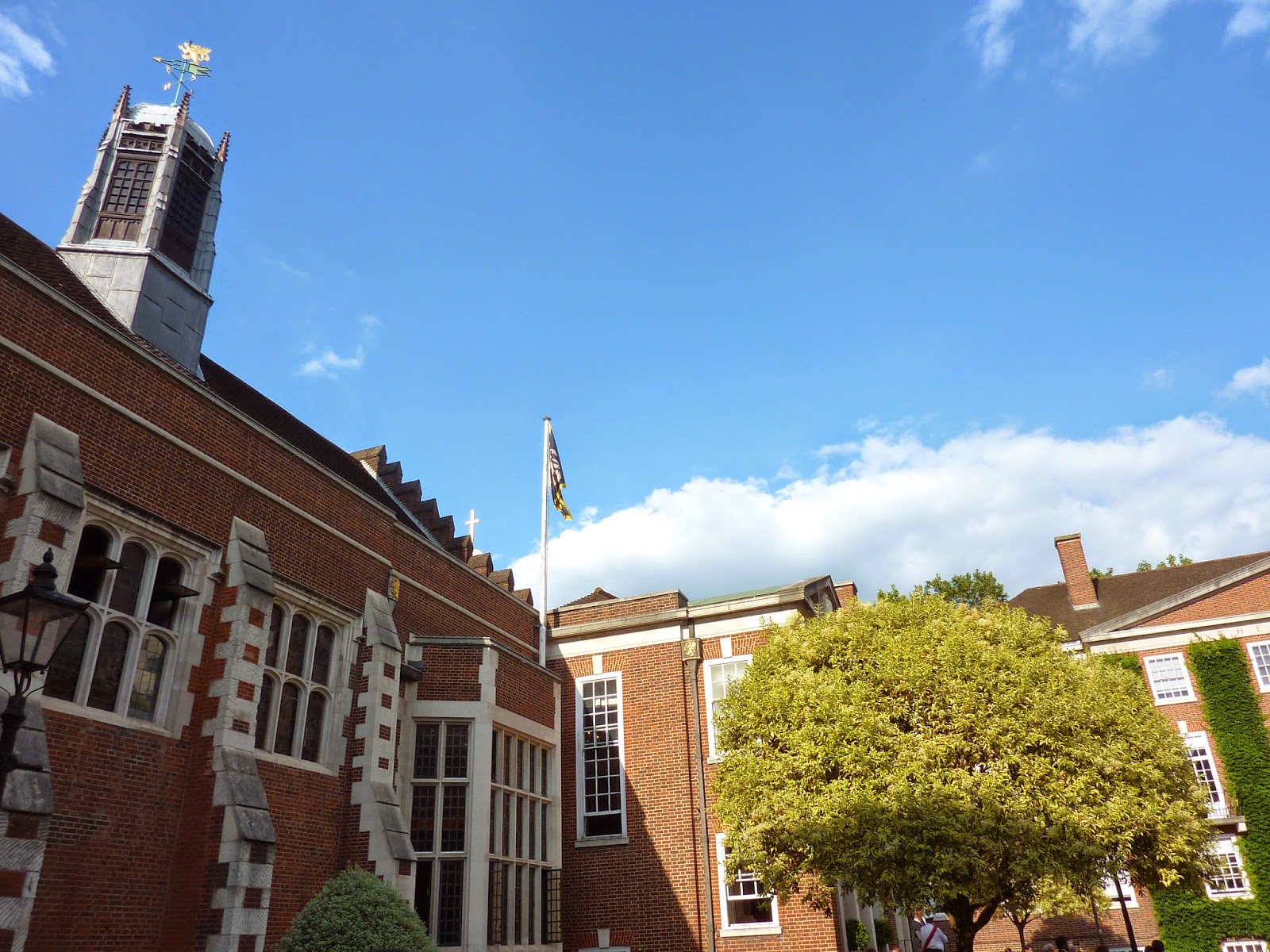
My webmaster's journey to becoming a barrister has, however, meant that I've become quite deeply interested in the world of the Bar, and last week I had the great pleasure and privilege of attending his call to the Bar ceremony in Gray's Inn, an ancient ritual which took place on a glorious day in delightful and very historic surroundings, and which was followed by a lavish reception. with... yes, a well-stocked bar.

In my younger days, I was never one for ceremonies, and I even skived out of my own admission as a solicitor ceremony, partly through lack of money, but also partly because it didn't mean a great deal to me. Suffice to say that my views on this, as on much else, have shifted over the years, and I was fascinated to gain first hand insight into a tradition that is just as fantastic and memorable as a graduation in the Sheldonian Theatre. Reflecting on my delighted reaction to the occasion, I suppose I've become more and more attracted by history, and by the chance of taking part in things, as the years have passed.

So am I tempted to write a story or two about barristers? How did you guess?


Saturday, 24 December 2011

Merry Christmas!

I've now finished work for the Christmas break, one that I've been looking forward to. A chance to relax and also reflect on what has been a momentous year for the whole world, and certainly momentous and memorable for me.

I'm also hoping to do plenty of reading - got to make an impact on that TBR pile somehow! In fact, it's not so much a pile, more a mountain range of Himalayan proportions.

There have been, of course, plenty of mysteries set at and around Christmas. Hercule Poirot's Christmas is probably the most famous, but my favourite is Cyril Hare's An English Murder. This is a classic mystery by one of the most agreeable stylists at work in the genre in the 20th century. If you like older books, and don't know this one, do consider giving it a try.

And now all that remains is to wish you all a very happy Christmas, and to express my grateful thanks for your support for this blog, and for your consistently constructive and thought-provoking comments. More posts soon, but now I'm off to wrap presents!

Monday, 22 August 2011

St Hilda's


The 18th St Hilda's College Crime and Mystery conference was another triumph for organisers Kate Charles and Eileen Roberts, as well as for Natasha Cooper, who chaired the sessions with the unobtrusive excellence as well as efficiency that seem to come so naturally to her.

I was glad to share a platform with Andrew Taylor, who gave a very good talk about Wilkie Collins - my subject was the British lawyer-author, with special focus on Cyril Hare and Michael Gilbert. Among the highlights of a varied programme, Ayo Onatade gave fascinating insight into the world of the courts, while Val McDermid spoke very interestingly about justice, referring to one of her own excellent thrillers, A Place of Execution. What I didn't know was that the book was inspired by a true crime case - which she learned about from our mutual friend, the true crime expert Douglas Wynn.

As ever, there was the chance to meet pleasant people for the first tme as well as to renew old friendships. I was glad, for instance, to have a chat with Marcia Talley, who is in the foreground in the photo. Marcia is an accomplished American author who is a regular attendee at St Hilda's.

It was a real privilege to be invited to take part, and I'm very grateful to Kate and Eileen for all their hard work. After an excellent but very hectic week, I must admit I was pretty exhausted by the time I was driving home. But it was well worth it.

Wednesday, 22 June 2011

Three Great Endings to Detective Stories


I was gratified by the interest shown in my last post, on detective story endings, and I thought I'd keep the pot boiling by mentioning a few of my fave endings.

First, a real classic - the closing lines of And Then There Were None, by Agatha Christie. Dame Agatha was a dab hand at great endings, but this one, which I read when young, has always stuck in my mind.

Second, an ending that gave me an idea for a very different book of my own - Yesterday's Papers. The great ending was in Margaret Millar's A Stranger in My Grave. What I borrowed from this marvellous book was a structural device, and I was really pleased with the result. Yesterday's Papers remains a personal favourite among my own titles I wish it was still in print.

Third, a bitter remark made by Francis Pettigrew at the end of Tragedy At Law by Cyril Hare. Totally original, and quite marvellous - especially for a lawyer!

If you don't know the Hare or the Millar, I heartily recommend them both.

Wednesday, 15 September 2010

100 Great Detectives


Over the years, I’ve contributed to quite a number of reference books about crime fiction, including The Oxford Companion to Crime and Mystery Writing, edited by Rosemary Herbert. But the very first book for which I wrote an essay about the genre was 100 Great Detectives, edited by Maxim Jakbowski.

My subject was an amateur sleuth whose few cases I have much enjoyed, This was Francis Pettigrew, created by Cyril Hare. He is a barrister, who becomes involved in mysteries against his will. The classic Pettigrew case is A Tragedy at Law, a unique masterpiece, but all of Hare’s books are worth reading. They have stood the test of time pretty well.

The idea of the book in a nutshell was that each detective would be the subject to an essay by a crime writer or critic who was enthusiastic about the particular character. The concept worked very well, I thought. The variety of styles of the essays is a part of the book’s charm.

Of course, the snag with such a book is always that some deserving detective characters are bound to be left out. Even so, the coverage was wide and eclectic. Not surprisingly, Maxim won an Anthony Award for the book. It has a quirky charm, but it’s also packed with fascinating material by a remarkable range of contributors.

Tuesday, 8 June 2010

Neil White and Dead Silent


The United States appears to be full of attorneys who dash off bulky legal thrillers at will. In the UK, by contrast, there are relatively few lawyers – solicitors or barristers – who combine full-time professional life with writing crime fiction. There have been some great exceptions to the rule, of course – Cyril Hare, Michael Gilbert and more recently Frances Fyfield spring to mind. But some lawyers who appeared destined to make a mark a decade or more ago, the likes of Dexter Dias and the duo who wrote as Rankin Davis (not Ian Rankin and Lindsey Davis, I hasten to add!) seem to have moved away from the genre.

But one newish name to note is that of Neil White. Neil is a Yorkshireman by birth, who now works with the Crown Prosecution Service in Lancashire. I met him again at Crimefest recently, although my happiest memory of being in his company has to be that memorable night when I won the CWA Dagger for best short story a couple of years back.

Neil started his writing career with a little known book, Salem, which I’m happy to have a copy of, but he then moved into the big time with a contract for a series of paperback original thrillers, featuring his regular characters Jack Garrett and DCI Laura McGarrity.

The latest, Dead Silent, is just out. It is published by Harper Collins and the premise is this: ‘Twenty years ago Claude Gilbert buried his wife alive and then killed himself – or so everyone believes. But as Gilbert disappeared on the night of the murder, the mystery has remained unsolved. Until now….”

Saturday, 13 March 2010

Following the Detectives


I've had the pleasure of contributing short stories to a number of anthologies edited by the prolific (and hugely knowledgable) Maxim Jakubowski, but the first piece I ever wrote for one of his books was a little essay for a non-fiction volume he edited. This compilation was called 100 Great Detectives (my piece featured Cyril Hare's Francis Pettigrew).

More recently, I've written a couple of essays to feature in one of his latest projects, another factual book about locations associated with great detectives. The book is due to appear in the autumn and I'm very much looking forward to reading the entries from a range of very well-informed commentators. The book will be called Following the Detectives and the full list of places and authors is:


• Boston: Michael Carlson
• Brighton: Barry Forshaw
• Chicago: Dick Adler and Maxim Jakubowski
• Dublin: Declan Burke
• Edinburgh: Barry Forshaw
• Florida: Oline Cogdill
• Iceland: Peter Rozovsky
• London: David Stuart Davies
• Los Angeles: Maxim Jakubowski
• New Orleans: Maxim Jakubowski
• New York City: Sarah Weinman
• Nottingham: John Harvey
• Oxford: Martin Edwards
• Paris: Barry Forshaw
• San Francisco: J. Kingston Pierce
• Shropshire: Martin Edwards
• Sicily: Peter Rozovsky
• Southern California: Michael Carlson
• Sweden: Barry Forshaw
• Venice: Barry Forshaw
• Washington, D.C.: Sarah Weinman

Wednesday, 6 January 2010

Snowbound - and Murder Mysteries


I don’t remember snow like this in Cheshire since my schooldays. Lovely to look at, even if massively inconvenient as regards commuting to work or hospital visiting. Yesterday evening, the dramatic weather prompted me to reflect on murder mysteries that I’ve enjoyed over the years where snow falls have played a prominent part in the story. One of the best in the last twenty years was Jim Kelly’s Death Wore White, a modern take on the classic locked room mystery, which I reviewed on this blog a year or so ago.

Snow also plays a background role in Cyril Hare’s An English Murder, a classic whodunit, and one of the finest of all mysteries set at Christmas, which dates from 1951. It was based on a radio play that Hare had written three years earlier; this was one of a series of six plays written by member of the Detection Club, and it would be wonderful if some enterprising publisher could one day republish them all.

An English Murder
features an appealing amateur sleuth, Dr Bottwink, who is very different from Hare’s regular characters, notably the sceptical barrister Francis Pettigrew. It’s a thoroughly enjoyable story, which I first read more than twenty years ago. At the time of his premature death, Hare had just started writing another novel featuring Dr Bottwink, and a few years ago, I had the privilege to be shown the very short incomplete manuscript by Hare’s son. It was utterly fascinating to see it, although Hare wrote so little of it that it was impossible to figure out the nature of the mystery, far less the prospective solution.

A couple of years ago, I co-authored with Philip Scowcroft for CADS an article about Cyril Hare, and anyone interested in this fine writer (who is referenced in the latest P.D. James) can find the piece on the articles page of my website.

Monday, 7 September 2009

P.D. James and Victims


The latest Adam Dalgleish novel, The Private Patient, is published in paperback by Penguin on 24 September. It’s P.D. James’ 18th novel, and I read and enjoyed it upon publication last year. Apparently, it was a ‘top five bestseller in hardback’. I’m never quite sure about the definition of ‘bestseller’. I can even recall seeing promotional literature which has referred to a couple of my books as bestsellers, which in all honesty does require a bit of an imaginative leap. But one thing is for sure, P.D. James is genuinely a Premier League crime writer, and her sales must put her close to the top of any table.

The key figure in the book is Rhoda Gradwyn, a notorious investigative journalist. Her face is scarred, and as the blurb correctly, if rather melodramatically, puts it, the scar ‘was to be the death of her’. She checks into a private clinic for cosmetic surgery, only to meet her Maker in rather grim circumstances.

Rhoda is one of those characters whose life and behaviour provide plenty of people with reason to kill her. By detective fiction standards, she is a natural victim. This book was one of those that I covered in my recent paper at the St Hilda’s conference, dealing with ‘sinful victims’. Sinful victims, as I tried to show, are a staple of the genre, although I very much enjoy those books where the victim is apparently so blameless that there is a real mystery as to who would wish to kill them. Playing games with human motivation is one of the great challenges for whodunit writers, I think. The aim nowadays must be to come up with a solution to the game that does not defy credibility, and treats the players in the game as believable human beings.

P.D. James is very good at this, I think. The Private Patient is not by any means her best book (my choice would be Devices and Desires), and there are some parts of the closing section which I struggled with, but it’s nevertheless an excellent read. An incidental pleasure for me came with her references in the story-line to the late, great Cyril Hare, in whose footsteps she followed when she first signed up with Faber and Faber – which, remarkably, was not all that far short of half a century ago.

Saturday, 8 August 2009

The Essence of Crime Fiction


In The Freewheelin’ Hakan Nesser, there’s a quote from Nesser which sums up beautifully the essence of mystery fiction. Offhand, I can’t think of anyone who has expressed it much more economically yet more accurately.

‘The crime novel is interesting because it is so clearly linked to the two basic questions every story tries to answer. What has happened? What’s going to happen now? The first is to do with the past and arouses curiosity. The second looks to the future and arouses excitement. In a detective story or crime novel, the relationship between those two time frames is interesting. The sequence of events comes together in the crime, which is both an end and a beginning. This is where the criminal investigation begins, and at the same time the crime marks the end of a conflict in the past.’

This analysis, it seems to me, can be applied as much to a Hitchcock movie as to, say, Trent’s Last Case or The Girl With the Dragon Tattoo. Even some authors of classic, Golden Age style mysteries, played games with the starting point of their novels – Towards Zero by Agatha Christie and Tragedy at Law by Cyril Hare are examples.

I’m not yet ready to start a new book, but when the time comes, I’ll give some thought to Nesser’s way of looking at the genre. Who knows, it may prompt fresh ideas.

Monday, 9 March 2009

Open Book etc.


Barry Forshaw rang to tip me off that he’d talked about my work on the BBC Radio 4 programme ‘Open Book’ yesterday, while warning me that there was always the chance that any mention of my name might be edited out of the final interview! The theme of that part of the programme was lawyers who write crime fiction and the starting point was Mariella Frostrup’s interview of P.D.James about Cyril Hare. I’ve talked about my admiration for Hare on this blog, and James is clearly a huge fan, especially of Tragedy at Law.

Barry was then interviewed by Mariella (lucky chap) about lawyers who write crime and gave me a name check, along with Frances Fyfield, when talking about British lawyer-writers. The Americans, he mentioned were Scott Turow, John Grisham and Mark Gimenez, so I felt I was in very select company.

By coincidence, Steve Steinbock has just blogged about my very first novel, All the Lonely People, which introduced the Liverpool lawyer Harry Devlin, on Criminal Brief. Steve recently gave my latest novel with a legal background, Waterloo Sunset, a terrific review in The Strand Magazine, and this time I am quite unable to resist linking to his generous remarks.


Finally, three more entries on the blogroll: Bookwitch, Paul Brazill, and Deighton Dossier. Do also check out Rob Mallows’ impressive website about Len Deighton.

Monday, 16 February 2009

Michael Gilbert

I’ve mentioned Michael Gilbert a few times in this blog, and one of his titles is my ‘forgotten book’ this coming Friday. He’s a writer whom I came across in my teens. My parents liked his books and encouraged me to read him.

They had an ulterior motive, actually. The biographical note in the Gilbert books that Hodder published in those days explained that Gilbert combined a career as a solicitor with his crime writing. He achieved a good deal of success in both fields (he was Raymond Chandler’s solicitor in England, incidentally and a good friend of the great man). At this time my parents were unnerved by my stated ambition to become a crime writer, and naturally wanted me to have a ‘proper job’. When I proved resistant to this, they pointed to Michael Gilbert as an example of someone who wore both hats.

Duly persuaded, I studied law and ultimately became a solicitor. I remained a firm fan of Michael Gilbert’s books and during the 1980s, I persuaded a legal magazine to allow me to write an article about his work. This gave me the chance to interview a man who was something of a hero. I talked to him at length on the telephone and found him as urbane and likeable as his books. He was, too, remarkably and genuinely modest, a man who had spent most of his career in a world where solicitors were not allowed to advertise and in grave trouble if they did so surreptitiously.

After that, we spoke again on various occasions. He encouraged my own writing and was kind enough to provide an extremely positive quote for Eve of Destruction (something he seldom, if ever, did for other writers, and something of which I am rather proud). In later years he allowed me to reprint some of his classic short stories for CWA anthologies and shared with me his disappointment at the lack of critical attention given to The Queen against Karl Mullen, one of his last books, and quite splendid. The pity was that, by the time the novel came out, Michael Gilbert was no longer truly fashionable. Even Hodder, to whom he had long been faithful, dropped him. He had won much acclaim, including the CWA Cartier Diamond Dagger, but he is associated primarily with the post-war era, in which his most famous whodunit, Smallbone Deceased, is set. Yet he wrote with great accomplishment for half a century.

One other thing about Michael Gilbert. He had a great deal of insight into the crime genre in all its forms. As well as many novels and countless short stories, he wrote with success for both tv and stage, and Death in Captivity , Danger Within, was enjoyably filmed by Don Chaffey. He was a friend and admirer of Cyril Hare, and edited a posthumous collection of Hare’s best short stories. He wrote intelligently about the work of other writers, and thereby introduced me to such notable authors as Henry Wade and Christianna Brand.

Oh, and he and his wife found time to produce seven children, one of whom also became a successful writer. Quite a man.

Friday, 23 January 2009

Forgotten Book - Tragedy at Law

Discussion about great opening lines in crime novels is common enough. But what about great last lines? A number spring to mind, but I don’t want to include spoilers. One of the best, though, crops up in Cyril Hare’s Tragedy at Law – and it must be one of the most original. I thought I'd include it in Patti Abbott's series Friday's Forgotten Books, but I do hope that at least those who have read it haven't forgotten it.

Tragedy at Law, first published in 1942, is in fact full of good things. I was drawn to it as a law student by high praise from Michael Gilbert and Henry Cecil, and I was certainly not disappointed. It’s a brilliant and unusual detective story, in which the murder is committed quite late in the book. But interest is maintained throughout, because of the evocative description of the life of an English circuit judge, Sir William Hereward Barber, coupled with acute characterisation and Hare’s good ear for dialogue.

The novel features Hare’s police detective Inspector Mallett, but also introduced the unlucky barrister, Francis Pettigrew. Pettigrew proved to be such an effective and appealing amateur sleuth that Hare wisely decided to bring him back for further adventures.

Cyril Hare died all too young. He was Faber and Faber’s star detective novelist, and when they were casting around for a successor, they had the good fortune to receive a manuscript from a new writer called P.D. James. The rest is history. But I was delighted to see that, in James’ latest novel, The Private Patient, not only does a plot-line from another novel by Cyril Hare plays a significant part in the story, but she takes care properly to acknowledge her gifted predecessor.

I too had a bit of good fortune a few years ago, when out of the blue I was contacted by Cyril Hare’s son, Charles Gordon Clark. To my regret, we never met, but Charles provided me with a great deal of fascinating information about his father. Some of it found its way into an article that I co-wrote with that tireless researcher, Philip Scowcroft, and which, having first appeared in CADS, is now to be found on my website: Cyril Hare.


Sunday, 21 December 2008

Lawyers as Authors


Neil Rose is a novelist who also works as a writer in the legal profession. He edits The Legal Executive Journal and contributes to other legal magazines. Naturally he has a keen interest in the link between fiction writing and the law – which I share.

In the UK, there are many fewer practising lawyers who publish fiction than in the US, for reasons that aren’t really clear to me (surely it cannot be that British lawyers work harder or are less literate?!) But there have been a few of us over the years, including in the past such notable names as Cyril Hare and Michael Gilbert. In the last year or two, the new kids on the block have included fellow crime writer Neil White, whom I met a few times this year (most memorably on the night of the CWA Dagger Awards).

Neil Rose has just published, in the Law Society’s Gazette, an article about lawyers who write fiction and which features some of us. Here is the link: Solicitors as Authors