Showing posts with label Bats in the Belfry. Show all posts

Monday, 26 February 2018

Fire in the Thatch - Lorac is back again!

Fire in The Thatch: A Devon Mystery (British Library Crime Classics) by [Lorac, E. C. R. ]

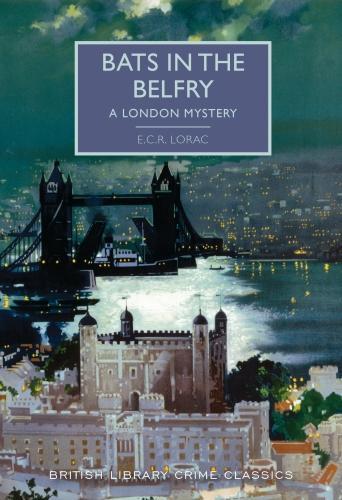
Just over a month ago, I was delighted to report the republication, the first for many a long year, of E.C.R. Lorac's Bats in the Belfry. I've been very glad to learn from the British Library that the book has sold really well, and has already been reprinted. Quite something. And this more than vindicates the decision the Library took last year to acquire the rights to a second Lorac title, which has also now been published.

Fire in the Thatch has a rural setting, and so is very different in that respect, as well as in terms of plot, from Bats in the Belfry. In the early years of her career, Lorac often set her books in London, whereas later on, especially after she relocated to the Lune Valley, her main focus was on life (and death) in the countryside. The cover artwork of this particular edition strikes me as delightful, and very much in keeping with many readers' impression of Golden Age fiction.

There's no doubt that setting does influence the way one writes a novel. My first eight books all had urban backgrounds, seven in Liverpool, one in London, and when my new editor said he'd like me to consider a new series with a rural setting, I wasn't sure about it. In fact, I'm really glad I took up the challenge, and I'm sure that Lorac also enjoyed a change of scene for her crime stories. I don't want to give any spoilers in relation to Fire in the Thatch, but if you read it, you'll see that it is structured rather differently from Bats in the Belfry. Lorac was a more versatile writer than many people realise.

It will be interesting to see how Fire in the Thatch is received. My hope is that more Loracs will be republished, and there are certainly plenty of titles to choose from. The enthusiasm of readers for vintage crime stories seems, if anything, to be growing. The good news is that there are still plenty of titles out there waiting for someone to publish them...

Monday, 22 January 2018

Bats in the Belfry


Image result for "e c r lorac" "bats in the belfry"

I'm excited about this year's programme for the Crime Classics series published by the British Library. The mix of titles that will appear this year is extremely varied. There should be something, I hope, for everyone who enjoys classic crime. My belief is that variety in a series such as this is essential, just as it is in an anthology. Yes, it means that not everyone will enjoy every story equally. But overall, that scarcely matters, because it also means that readers have the chance to sample writers and styles of writing that are unfamiliar to them, which has to be a good thing. And one of several exciting developments is that 2018 will see the reappearance in mass market paperback of two novels by E.C.R. Lorac.

I was first told about Lorac by my parents, when I was young. Both of them liked the books in particular because some of them were set in a part of the country, north west England, which they knew very well. My Dad was a real fan, although I'm not sure he ever cottoned on to the fact that the Lorac pen-name concealed the identity of a woman, Edith Caroline Rivett. But the books were out of print, something my Mum and Dad mourned. So when I started working, and haunting second hand bookshops, I snapped up every Lorac title that I could find, and presented it to my parents. (I did the same with quite a few other authors they liked; I'll say more about those books, some other time.) After their deaths, the books came back to me, and I've slowly been working my way through them, as well as adding some more titles to the collection.

One of the additions I made a couple of years ago was Bats in the Belfry, which is set in central London. I happened to be on holiday in, of all places, the Atacama Desert, when I checked a favourite dealer's site (as you do) and discovered that an inscribed copy was for sale. I nabbed it while still in Chile, on the assumption that I'd never get another chance, even though the book lacked a jacket. And when I read the book, I was delighted, not just by the inscription (to Lorac's mother) but by the story, which struck me as entertaining and atmospheric. Yes, I did guess whodunit, but I felt that the plot overall was pleasing enough for this not to be a problem.

Even before I bought that book, I'd been keen for the British Library to bring Lorac's books back into the public eye. But it proved very difficult to trace the rights holders. Finally, thanks to the sterling efforts of Rob Davies's department at the Library, the deed was done, and now Lorac is back in print. Bats in the Belfry was published last week, and another title, Fire in the Thatch, will come out before too long. I'm really pleased about this, and I hope that if you sample Lorac for yourself, you'll find her work enjoyable too.


Monday, 6 November 2017

Crime Classics in 2018


The British Library recently published its catalogue for the first six months of next year, and this gives me a chance to talk about some of the titles in the Classic Crime series that will be coming the way of fans of Golden Age fiction before very long. It's an eclectic mix, and one that personally, I'm very pleased with.

I've already mentioned on this blog that I've compiled a new anthology of classic railway mysteries, called Blood on the Tracks. In the past there have been a few railway-themed short story collections, but I've managed to track down some stories that I'm fairly sure will be unfamiliar to the overwhelming majority of readers, as well as some that may be known to aficionados, but deserve a fresh life.

Then there's the republication of Richard Hull. I've talked about Hull's work both on this blog and in The Golden Age of Murder (and, come to that, in The Story of Classic Crime - I guess you could call me a fan!) He was a disciple of Francis Iles, and a very interesting writer indeed. Two of his best books will appear next year: The Murder of My Aunt and Excellent Intentions. I'm pleased to say that, thanks to members of his family, the introductions will contain quite a bit of fresh info about the life of this most creative of crime-writing accountant.

I'm also delighted to say that there will be two books from another writer whom I've championed, E.C. R. Lorac - Bats in the Belfry and Fire in the Thatch. I was introduced to Lorac's work by my parents, who were enthusiastic about her later work, set in Lunedale. These two books were written earlier. Bats in the Belfry has a great setting in London, while Fire in the Thatch, as you might guess, is a rural mystery

Among the authors whose novels are republished in the Classic Crime series are quite a few whom I've long hoped to revive - Anthony Berkeley, Raymond Postgate, Christopher St John Sprigg, Anne Meredith, and Freeman Wills Crofts among them. Hull and Lorac are two more authors whom I really enjoy, and I am optimistic that these reissues will find a highly appreciative new readership.

Friday, 3 February 2017

Forgotten Book - The Sixteenth Stair

E.C.R. Lorac published The Sixteenth Stair in 1942. As usual, it features her low-key but appealing cop, Inspector Macdonald, and as so often in books written during the first part of her career, it is set in central London. A family called the Hazelys are at the heart of the action, along with a house in St John's Wood called the Villa Eugenie, which has an intriguing history..

Timothy Hazely, an American member of the family, comes to London and is tempted by the stories he's heard to take a look at the Villa Eugenie, which has been left unoccupied for many years, but his visit takes an unexpected turn when at the foot of the stairs, he discovers the body of a man with his neck broken. It turns out that the victim is a member of the family.

The house may not have been lived in for a long time, but it hasn't been entirely deserted. Macdonald and his team soon find out that it has been used as a rendezvous for an illicit love affair. A doctor has become involved with one of his patients, and one possibility is that he may be the culprit. Another is that he may have been framed by his lover's husband.

The Hazelys are a complex family in more ways than one, and I would have found a family tree helpful to enable me to keep in mind all the different family members. One reason why Lorac may not have supplied a tree is that it would have spoiled one of her surprises, but I still think it would have been worthwhile. It's an interesting and fairly distinctive story, and although I prefer some of Lorac's other books, such as Murder by Matchlight and Bats in the Belfry, it is a decent, and at times atmospheric read..

Friday, 1 April 2016

Forgotten Book - The Organ Speaks


When The Organ Speaks was first published in 1935, Dorothy L.Sayers wrote a rhapsodic review in The Sunday Times, saying that it had an aesthetic value she hadn't previously found in the work of E.C.R. Lorac. She said the story was "highly original, highly ingenious, and remarkable for atmospheric writing and convincing development of character".

High praise, which makes it surprising that the book has disappeared so completely from sight. When copies do surface on the internet or in an auction, they tend to go for high prices. It's taken me a long time, consequently, to track the story down, and see whether it appealed to me as much as it did to Sayers. Now I've read the book, I can see why she liked it, though in my opinion it's  not as successful as the slightly later Bats in the Belfry.

The opening is dramatic. The body of a man called Loudon is founded in a music pavilion in Regent's Park. He has been playing the organ, but has died in the most mysterious circumstances. The cause of death is soon revealed, though. (This is not one of those stories of the type favoured by the likes of John Rhode, where the discovery of a complex murder method comes at the climax.) The challenge for Inspector Macdonald is to find whodunit.

I agree that it's a well-written book, and highly readable. If I were, like Sayers, very knowledgeable about classical music, I might have admired it even more. For me, the whodunit mystery is not particularly impressive, and I'm not sure Lorac played entirely fair in terms of enabling us to deduce the motive. Sayers was less interested in the whodunit aspect of a story than, say, Agatha Christie (or me) and that may be why she valued it so highly. That said, it's definitely worth reading - if you are lucky enough to find a copy.


Friday, 13 November 2015

Forgotten Book - Bats in the Belfry

I've mentioned E.C.R. Lorac occasionally on this blog -the first time was more than six years ago -, but I've never covered any of her books,and it's high time I put that right. My Forgotten Book for today is one of her more obscure titles, Bats in the Belfry, which dates from 1937, and features her series cop Inspector Macdonald. One thing it doesn't deserve is obscurity, because it's a consistently interesting and readable novel. I've never seen it reviewed elsewhere, which is unusual these days, even for forgotten books,,but I can certainly recommend it.

Be warned, though. It's not an easy book to find. I'd never seen a copy of this particular title until I came across a rare book dealer who was offering a unique example for sale. I was lucky enough to obtain it - complete with an author signature, and a really interesting inscription from Lorac to her mother. From this I learned that the novel was written in August 1936, while Lorac and her mother were holidaying at Westward Ho! Collins Crime Club published it the following January - very fast work.

The novel does not read as though it was written in haste, and my guess is that Lorac planned the story very carefully before sitting down to write it up. The first chapter introduces us to the key characters - Bruce Attleton and his attractive but selfish wife Sybilla, their friends Thomas Burroughs, Neil Rockingham and Richard Grenville, and Bruce's ward, Elizabeth. The occasion is the funeral of Attleton's cousin, who has been killed in a car accident.

We soon learn that Attleton is being plagued by a mysterious stranger called Debrette, but the nature of the connection between them is unclear. When both Attleton and Debrette go missing, Grenville tries to find out what is going on. The London setting is very well evoked, and the mystery proves satisfyingly complex. I figured out what was going on, but only because Lorac plays very fair with her clues. A very satisfying read.