Showing posts with label The Ipcress File. Show all posts

Monday, 25 July 2022

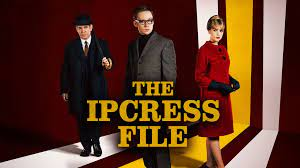
The IPCRESS File - ITV review


The IPCRESS File was one of the great spy novels of the 1960s. It's a book often bracketed with The Spy Who Came In From The Cold, but people often forget that Len Deighton's novel came first. It was the book that first made Len's name and it became an iconic Sixties film, starring Michael Caine as Harry Palmer (the protagonist whose name is not actually mentioned in the book). Now it has been made into a TV series in six parts, scripted by John Hodge, with Joe Cole as Harry.

Some critics have questioned the rationale for a new version of the story, but after a gap of more than half a century, it seems to me to be perfectly reasonable to come up with a new take on this espionage classic. The real question is: is it any good? After all, it has to be measured against the high standards of novel and film.

At first I wasn't sure about this version. As I've often said, the desire that TV people have to turn stories into six episodes when two, three, or four episodes often mean a tighter story, is regrettable. The first episode left me unimpressed, but I stayed with it and was rewarded by a steady improvement. The last couple of episodes in particular are excellent. An added bonus was that much location shooting was done in Liverpool - and in Great Budworth, the Cheshire village where I first discovered Agatha Christie! I was also amused by the fact that Agatha Christie's The Clocks features, although no real effort was made to make anything of it in the script.

Joe Cole does a good job; his performance is more nuanced than Michael Caine's, although less memorable. Lucy Boynton keeps her emotions in check as Jean Courtney, and the result is a bit uninvolving, but Tom Hollander is excellent as Dalby. Special mention for Anastasia Hille, who is quite brilliant in a supporting role. So, despite some padding in the script, this one is definitely worth watching. Alas, the music is nothing like as good as John Barry's soundtrack for the film, but that was probably inevitable! 


Wednesday, 28 March 2018

Death is a Woman - 1966 locked room mystery film review

Death is a Woman is spy film with a glamorous Mediterranean setting, a starring role for Wanda Ventham (mother of Benedict Cumberbatch), and a plot involving a locked room mystery. It's very much a product of the Swinging Sixties, with a soundtrack written by John Shakespeare, aka John Carter, who wrote (and performed) several hit songs. What could possibly go wrong?

Well, quite a lot, actually. This is a film I really wanted to like, but in the end I had to admit defeat. It's like a poor man's version of James Bond or The Saint, minus Connery and Moore. The script was written by Wally Bosco, who as Wallace Bosco had begun an acting career way back in 1919; he was also a prolific writer, but he was in his 80s when this film was made. I'm afraid he and his colleagues who worked on the film lost the plot.

Right from the film's melodramatic opening, when a villainous couple murder a confederate, under the prying eyes of a blackmailer, the script is hard to take seriously. The quality of the acting doesn't help. The villainess of the piece is played by former pop star Trisha Noble, who divides her time between wearing a bikini and killing people, sometimes multi-tasking by doing both at the same time. She's pursued by an undercover agent, listlessly played by Mark Burns. Wanda Ventham assists him, and she too spends plenty of time in her bikini. Anita Harris, then at the height of her fame as a pop star, sings a song but otherwise contributes nothing, and the background music is irritating; Carter was no John Barry.

The best bit of acting comes from Blake Butler, a character actor of the era, who does a pleasing job as a lift attendant who accuses Burns of the locked room murder (of which he's innocent, of course). Alas, the detection and explanation of the crime is hardly in the John Dickson Carr class. It's all a bit of a mess. Worth watching mainly to remind yourself that it wasn't all Bond and The Ipcress File in the Sixties. At least the shots of Malta are nice.

Monday, 31 January 2011

John Barry R.I.P.


John Barry has always been one of my favourite musicians and the news of his death today saddens me. I've mentioned Barry several times in this blog and given that he won five Oscars,I think it can safely be said that he was Britain's finest ever writer of film music.

John Barry will forever be associated with the music for James Bond, and rightly so, but he achieved so much more. Working with a variety of lyricists, including Don Black and the great Hal David, he produced some of the finest songs of the 60s. My personal favourite is 'We Have All the Time in the World', co-written with Hal David and sung by Louis Armstrong, of all people, in On Her Majesty's Secret Service. And the best tune might just be 'The Girl with the Sun in her Hair', from You Only Live Twice, even though most people associate it with a TV commercial.

There's a drama and a dynamism about Barry's music that sets it apart. He's associated with lush, romantic sounds, but it's no coincidence that he wrote music for classic crime films and TV shows. His music is truly exciting.

Think of The Ipcress File, The Persuaders, and the magnificent score to that brilliant film Body Heat. All of them gain a great deal, in different ways, from Barry's music. There are plenty of other examples of his gifts from the crime genre, even before we come to Midnight Cowboy, Born Free and Dances with Wolves. A little while ago, I tried to find a DVD of one of his concerts - but there are none available. Astonishing. John Barry was a superstar among modern composers.

Friday, 6 March 2009

Forgotten Book - Close Up


It seems heretical to suggest that a book by Len Deighton might be 'forgotten' so as to qualify for inclusion in Patti Abbott's series. But I think Close Up does qualify, and given that Deighton has just celebrated his 80th birthday, it seems timely to remember this foray into the movie world. I covered the book as my contribution to an extensive Deighton appreciation for Shots, that excellent online magazine, and I thought I'd include in a blog post a few of my thoughts about it.

Inevitably, Deighton will always be associated with the spy novel. I have long been a fan of books like Bilion Dollar Brain and Horse Under Water. There was one nice little trick connected in a way with the concealment of identity in Billion Dollar Brain which I was cheeky enough to adapt and then utilise in a very different book of my own - I Remember You.The Ipcress File made an especially good film, benefiting from a soundtrack by the brilliant John Barry that includes the spooky main theme, often heard today as background for all kinds of television programmes.

But there is much more to Deighton than Harry Palmer (the name given to his central character when the books were filmed). To my mind, some of other work is equally appealing. I’m definitely not qualified to judge his cookery books, or his travel guides, but I enjoyed Only When I Larf, which is quirky and unusual. Close-Up is even better.

Close-Up was published in 1972, and I read it a couple of years later. I haven't read it from cover to cover since then, but still it sticks in the memory. It’s set in the film world and presents the story of a fading star called Marshall Stone. Deighton spent some time working in the movie business, and he put his experience of the business to good use.

What impressed me most was the way in which Deighton focused on the gap between image and reality. The material offers tremendous scope for Deighton’s sardonic humour. A typical example comes right at the end when the mogul Koolman says: ‘Close-Up. I’d never buy a title like that. It’ll mean nothing on a marquee in Omaha.’

I met Len Deighton once, about fifteen years ago, when he was over in Britain (he spends most of his time in the States.) He struck me as modest and unassuming. It was one of those conversations that lasts only a few minutes, and which one wishes had gone on much longer. Had it done so, I would have mentioned how much I enjoyed not only his celebrated novels, but also Close Up.